China Just Said ‘No’ to Nvidia’s H200. Again. Here’s Why That’s a Big Deal
If you’ve been following the U.S.–China chip saga for more than five minutes, you know the routine by now. Allow the chips. Block the…
China Just Said ‘No’ to Nvidia’s H200. Again. Here’s Why That’s a Big Deal
If you’ve been following the U.S.–China chip saga for more than five minutes, you know the routine by now. Allow the chips. Block the chips. Allow them again, but quietly. Block them again, loudly.
This week, it swung back to block.
China has reportedly instructed customs officials that Nvidia’s H200 chips aren’t permitted to enter the country. Not discouraged. Not “subject to review.” Just no.
That alone wouldn’t be shocking. What is different this time is who’s drawing the line — and what that says about where this tech cold war is headed.
The H200 isn’t just another GPU
Nvidia’s H200 is the follow-up act to the already dominant H100. These chips don’t live in gaming PCs. They live in massive data centers, training and running the models that power modern AI. If you care about large language models, autonomous systems, or hyperscale cloud computing, this is the hardware layer underneath it all.
Global demand is absurd. Everyone wants them. Which is why China blocking them at the border isn’t some bureaucratic hiccup — it’s a deliberate signal.
This isn’t about compliance. It’s about control.
For years, the dynamic looked like this:
The U.S. decides which chips China can buy. Nvidia builds slightly nerfed versions. China takes what it can get.
That script is changing.
By stopping H200s at customs, China flips the power dynamic. Instead of waiting for Washington to decide what’s “allowed,” Beijing is asserting its own veto — even when U.S. export rules technically permit the sale.
As one commenter put it bluntly: “My house, my rules.”
That matters. Not because the ban is permanent (it probably isn’t), but because it reframes the entire relationship. China isn’t begging for access. It’s choosing when and how foreign tech enters its ecosystem.
China wants the chips — and also doesn’t
Here’s the contradiction at the heart of this story.
Chinese AI and cloud companies absolutely want Nvidia hardware. The software ecosystem, the tooling, the performance-per-watt advantage — it’s all real.
But Chinese hardware firms? Different story.
Letting Nvidia flood the market slows domestic development and entrenches American dominance. Blocking the chips, even temporarily, forces local alternatives to accelerate. It also sends a message internally: dependence has limits.
And let’s not pretend the chips disappear just because customs says no. Gray markets exist. Third-country routing exists. Everyone in this space knows it. Blocking direct imports is less about access and more about leverage — and optics.
Being “behind” isn’t the same as being out
China’s domestic GPUs are still a generation or two behind Nvidia’s cutting edge. Roughly speaking, think late-Ampere to early-Hopper territory. That’s not competitive with H200 — but it’s also not ancient history.
More importantly, raw compute isn’t the only variable anymore. Efficiency gains, new training techniques, and software-level optimizations can close some gaps faster than people expect.
The goal isn’t to beat Nvidia tomorrow. It’s to avoid being permanently locked into someone else’s stack.
Markets hate this. Nvidia can live with it.
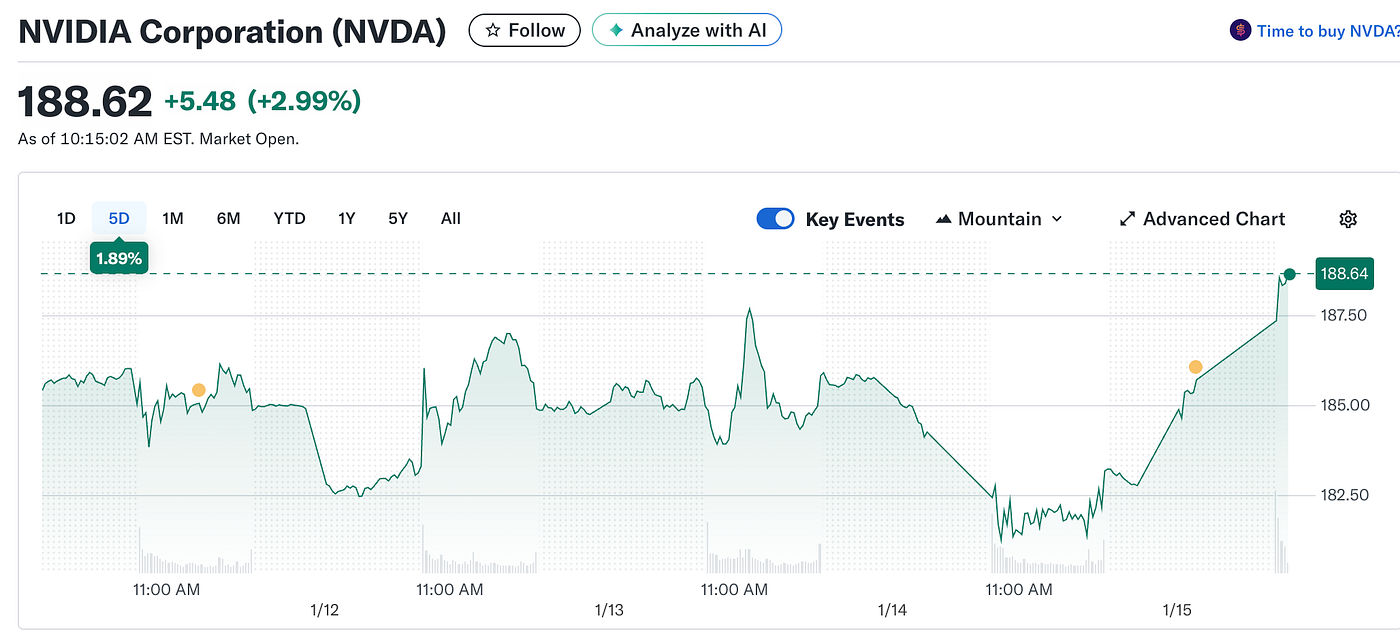
From an investor perspective, this whole saga is exhausting. The stock rallies on “China access,” then dips when that access evaporates again. Traders joke about puts and tariffs because gallows humor is all that’s left.
Short term? This kind of whiplash is bad for sentiment.
Long term? Nvidia still sells everything it can make. Demand outside China hasn’t slowed. The risk isn’t revenue collapse — it’s strategic fragmentation. A world where half the globe designs around Nvidia and half designs away from it.
That’s a slower burn. But it’s real.
The quiet shift: training vs. inference
One of the more interesting possibilities here is a split policy.
China may tolerate foreign chips for inference — running models — while reserving training for domestic hardware. Training is where data, intellectual property, and long-term capability live. That’s also where trust matters most.
Even if concerns about backdoors sound paranoid, national security planning doesn’t get the luxury of optimism.
If that split solidifies, it reshapes the AI supply chain in subtle but lasting ways.
The bigger picture
This isn’t about one shipment of GPUs.
It’s about who sets the rules for the next decade of computing — and who refuses to play by someone else’s.
China saying “no” to the H200, even temporarily, is a reminder that leverage runs both ways. The silicon war isn’t just about who has the best chip. It’s about who can afford to walk away from one.
And that’s the part markets — and a lot of policymakers — are still catching up to.
메타데이터
- post_id
- 6b45a28e41e3
- slug
- china-just-said-no-to-nvidia-s-h200-again-here-s-why-that-s-a-big-deal-6b45a28e41e3
- url
- https://medium.com/@PlanB./china-just-said-no-to-nvidia-s-h200-again-here-s-why-that-s-a-big-deal-6b45a28e41e3
- canonical_url
- https://medium.com/@PlanB./china-just-said-no-to-nvidia-s-h200-again-here-s-why-that-s-a-big-deal-6b45a28e41e3
- author_url
- https://medium.com/@PlanB.
- status
- ok
- fetched_at
- 2026-06-17 08:20:12