The Practical Trade-Offs Behind long distance measurement in Outdoor Optics
Long distance measurement sounds simple when you see it on a product page.
The Practical Trade-Offs Behind long distance measurement in Outdoor Optics
Long distance measurement sounds simple when you see it on a product page.
A rangefinder says it can measure 800 yards, 1,000 yards, 1,500 yards, or more. The bigger number feels better. It suggests more power, more capability, and maybe more confidence in the field.
But in real outdoor use, long distance measurement is not only about how far a laser rangefinder can reach under ideal conditions. It is also about what kind of target you are ranging, how steady your hand is, how clear the optics are, what the weather is doing, and whether that long-distance number actually helps the decision you need to make.
For golfers, hunters, hikers, and outdoor gear users, the real question is not always “How far can it range?” A better question is “How useful is that distance reading when I actually need it?”
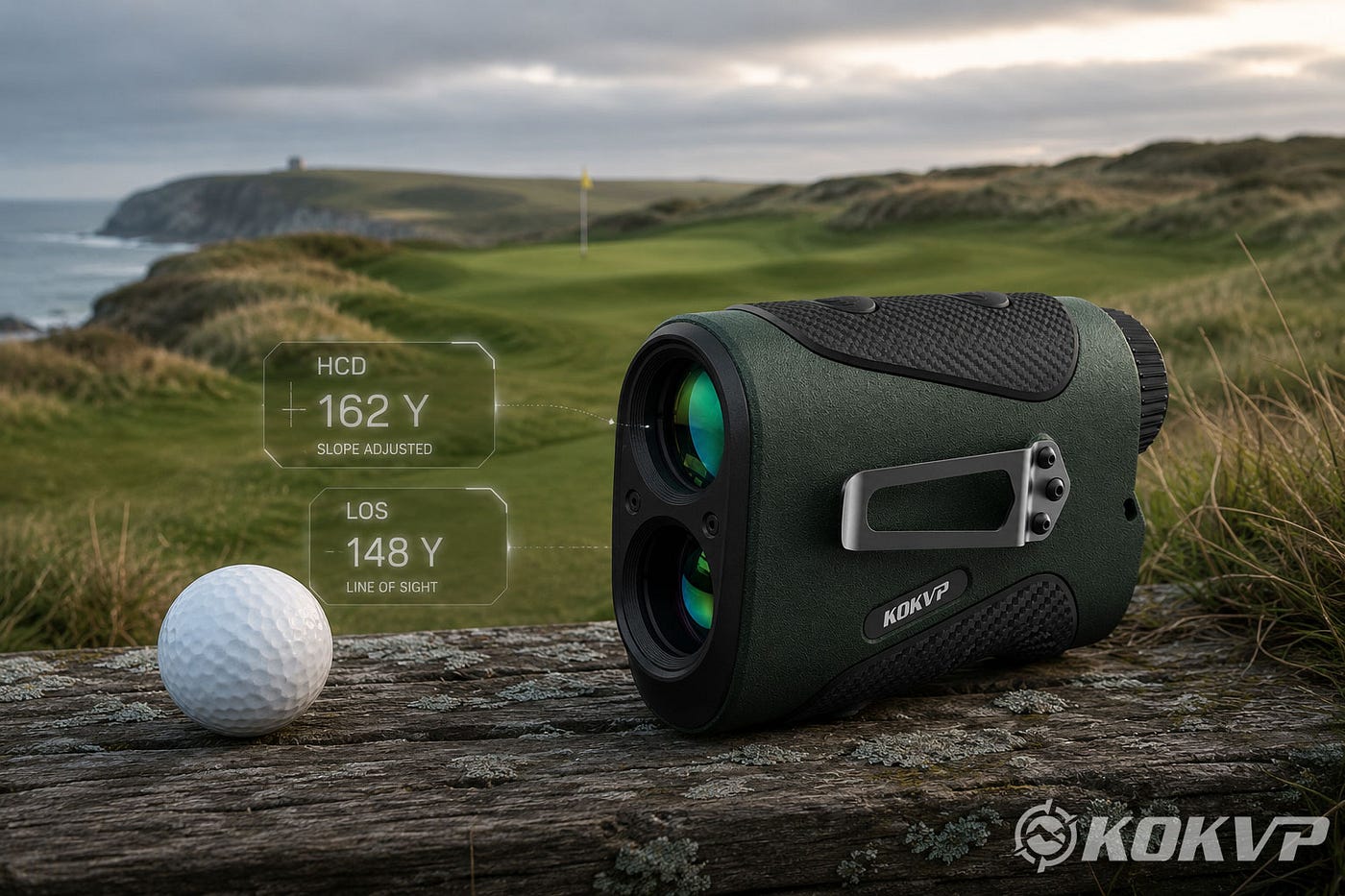
The Maximum Range Number Is Not the Whole Story
Most rangefinder buyers notice the maximum range first. That is understandable. It is easy to compare.
A 1,200-yard rangefinder sounds stronger than a 600-yard rangefinder. A 1,500-yard model sounds even better. But maximum range is usually measured under favorable conditions, often on reflective targets. A bright, flat, reflective surface is much easier to range than a deer in low light, a dark tree line, a flagstick in wind, or a dull rock on a cloudy morning.
This does not mean the number is useless. It gives you a rough idea of the device’s capability. But it should not be treated as a guarantee for every target in every environment.
In real field use, a rangefinder with a higher advertised maximum range may perform more confidently at medium distances. That is often the practical benefit. You may never need to range 1,200 yards, but the extra laser strength and sensor performance may help when you are trying to get a stable reading at 350 yards across uneven terrain.
Long Distance Requires Better Target Confidence
The farther you range, the more important target confidence becomes.
At short distance, it is usually easy to know what you are pointing at. At 40 yards in the woods or 150 yards on a golf course, the target is clear enough for most users. But at longer distances, small aiming errors matter more. A slight movement of your hand can shift the laser from a deer to the tree behind it, from the flag to the bunker slope, or from a rock to the hillside beyond it.
This is where optical clarity and magnification become important.
A rangefinder is not just a laser device. It is also an optical tool. If the view is blurry, dim, or narrow, long distance measurement becomes harder even if the laser itself is capable. You need to see the target clearly enough to aim at it with confidence.
That is one reason some users care more about practical optics than extreme specifications. A clear view at 500 yards may be more useful than a huge maximum range number paired with a view that feels hard to trust.
Steadiness Becomes a Real Limitation
Long distance measurement also exposes a very human problem: your hands move.
At close range, a little movement may not matter much. At long range, it can make the reading inconsistent. This is especially true when you are standing, breathing hard after a hike, wearing gloves, sitting in a tree stand, or holding the rangefinder one-handed.
Some rangefinders help with fast readings, scan mode, vibration feedback, or target priority modes. These features can make long-distance use easier. But they do not remove the need for a steady hold.
For hunters, this can matter when ranging across a field or valley. For golfers, it can matter when trying to lock onto a flag from a long approach or when checking a carry distance over water. For general outdoor use, it matters when measuring ridges, trail markers, towers, or distant landmarks.
The farther away the target is, the more the user becomes part of the measurement system.
Reflective Targets Are Easier Than Natural Targets
Not all outdoor targets return a laser signal equally well.
A road sign, building, metal object, or reflective marker is easier to range than dark brush, animal hide, tree bark, or rough ground. Natural surfaces absorb and scatter light differently. Weather, angle, color, and texture all affect the reading.
This is why long distance measurement can feel different in golf and hunting.
On a golf course, a flagstick may be narrow, but the target area is open and controlled. Many golf rangefinders include flag lock or pin-seeking features to help separate the flag from the background. That matters because the laser may otherwise catch trees or slopes behind the green.
In hunting, the target may be darker, moving, partly hidden, or surrounded by brush. A hunting rangefinder needs to perform in messier conditions. Long-range claims are still useful, but the real test is whether the device gives reliable readings on realistic field targets.
For outdoor optics, the environment always gets a vote.
Long Range Can Mean More Size, Cost, or Complexity
There is also a practical trade-off in the device itself.
Longer measurement capability can require better components, stronger processing, improved optics, or more advanced sensors. That can increase cost. It can also affect size, weight, battery use, and interface complexity.
For some users, the trade-off is worth it. A rifle hunter working open country may want stronger long-distance capability. A land surveyor, outdoor guide, or serious backcountry user may also benefit from extended range and stronger optics.
But a casual bow hunter in thick woods may not need that same capability. A weekend golfer who mostly needs flag distances inside 250 yards may be better served by a fast, simple, compact golf rangefinder with strong flag lock and clear display.
More range is not automatically better if it makes the device heavier, harder to use, or more expensive without improving your actual decisions.
Golfers Need Practical Yardage, Not Extreme Distance
For golfers, long distance measurement has a specific role.
You usually do not need to measure extremely far. Most useful golf readings are to the flag, bunker lips, trees, dogleg corners, water carries, or landing zones. These are often well within the capability of a standard golf rangefinder.
The important features are usually speed, flag lock, slope mode when allowed, vibration feedback, optical clarity, and ease of use. Long range can still help, especially on wide courses or when checking distant hazards, but it should not be the main reason to buy.
A good golf rangefinder helps with course management. It supports club selection and approach shot planning. It does not need to impress you with a distance you will almost never use.
Hunters May Need More Range Than They Shoot
For hunters, the equation is different.
A hunter may not intend to take a shot at extreme distance, but long distance measurement can still be useful for reading terrain. Ranging a ridge, tree line, fence corner, open field, or far landmark helps build a mental map of the area.
This is especially useful before an animal appears. You can range landmarks early, understand distance zones, and make calmer decisions later.
In this case, long range is not about encouraging risky shots. It is about understanding the landscape. A rifle hunter in open country may benefit from extra ranging capacity even if the final decision remains conservative. A bow hunter in steep terrain may care less about extreme distance and more about angle compensation, fast scan mode, and short-range accuracy.
The use case matters more than the advertised number.
Low Light Changes Everything
Long distance measurement gets harder when the light drops.
At dawn or dusk, your eyes have less contrast to work with. The rangefinder’s display may be harder to read. Targets blend into the background. Moisture, fog, or light rain can interfere with visibility and performance.
This is where optical quality becomes more important than many beginners expect. A brighter, clearer view helps you place the laser more accurately. A clean display helps you read the number without confusion. A simple interface helps when you do not want to think through settings in the cold or dark.
Low-light use also reminds us that a rangefinder is not a night vision tool. It can help confirm distance when the target and surroundings are already visible enough to identify safely. It should not be used to justify guessing at unclear targets.
Where KOKVP Fits Into the Conversation
For many outdoor users, the best rangefinder is not the most extreme model. It is the one that matches real conditions without feeling overbuilt for the job.
KOKVP fits naturally into this practical part of the outdoor optics conversation, especially for users comparing laser rangefinder options for golf, hunting, and general distance measurement. The point is not to chase the biggest number on paper. The point is to choose a tool that feels usable in the environments where you actually spend time.
That means balancing range, clarity, handling, mode selection, and price.
A Smarter Way to Compare Long Distance Performance
Instead of comparing only maximum range, compare rangefinders by real-use questions.
Can it read the types of targets you actually measure?
Is the display clear in bright sun and low light?
Does scan mode update smoothly when checking multiple landmarks?
Can you hold it steady enough at longer distances?
Does it offer angle compensation if you deal with hills, tree stands, or uneven terrain?
Is it compact enough that you will actually carry it?
These questions are less exciting than a big range number, but they lead to better buying decisions.
메타데이터
- post_id
- 6b45ce970c3e
- slug
- the-practical-trade-offs-behind-long-distance-measurement-in-outdoor-optics-6b45ce970c3e
- url
- https://medium.com/@poxiaoxi2/the-practical-trade-offs-behind-long-distance-measurement-in-outdoor-optics-6b45ce970c3e
- canonical_url
- https://medium.com/@poxiaoxi2/the-practical-trade-offs-behind-long-distance-measurement-in-outdoor-optics-6b45ce970c3e
- author_url
- https://medium.com/@poxiaoxi2
- status
- ok
- fetched_at
- 2026-06-24 18:57:25