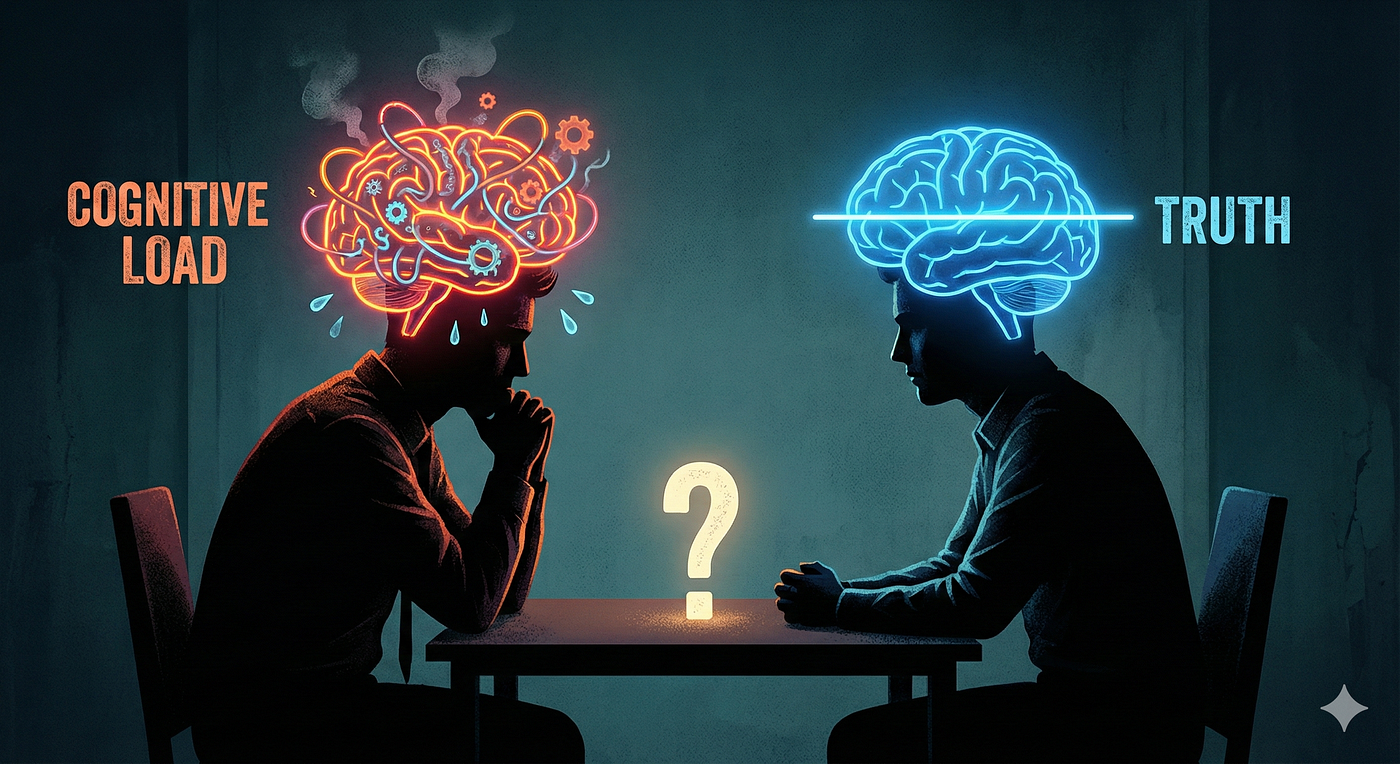
How Cognitive Load Theory Differs from Cognitive Load and Mental Workload
Demystifying the Confusion
How Cognitive Load Theory Differs from Cognitive Load and Mental Workload
Demystifying the Confusion

How Cognitive Load Theory Differs from Cognitive Load and Mental Workload
Introduction
Understanding cognitive psychology and instructional design is crucial for creating effective learning experiences. At the heart of these fields is the concept of cognitive load, which refers to the mental effort required to learn new information. However, there’s often confusion between “Cognitive Load Theory” (CLT) and the broader terms “cognitive load” and “mental workload.” Let’s dive into these concepts, their differences, and their implications.
What is Cognitive Load Theory (CLT)?
Cognitive Load Theory, developed by John Sweller in the late 1980s, focuses on the limitations of working memory during the learning process. The theory posits that effective instructional design can help manage cognitive load to enhance learning outcomes.
Types of Cognitive Load
Intrinsic Cognitive Load
Intrinsic cognitive load is the inherent difficulty associated with the material being learned. It varies based on the complexity of the content and the learner’s prior knowledge. For example, learning basic arithmetic has a lower intrinsic load compared to solving complex algebraic equations.
Extraneous Cognitive Load
Extraneous cognitive load arises from the way information is presented to learners. Poor instructional design can increase this load unnecessarily, hindering learning. An example would be using overly complicated diagrams that distract rather than aid understanding.
Germane Cognitive Load
Germane cognitive load refers to the mental effort dedicated to processing and understanding the material, which contributes to the formation of schemas in long-term memory. For instance, engaging with interactive simulations can enhance germane load by helping students actively construct knowledge.
Managing Cognitive Load in Instructional Design
To create effective learning experiences, educators must manage cognitive load carefully.
- Reducing Extraneous Cognitive Load: Use clear, concise instructions and well-organized materials to minimize unnecessary mental effort.
- Enhancing Germane Cognitive Load: Incorporate activities that promote critical thinking and deep understanding.
- Balancing Intrinsic Cognitive Load: Adjust the difficulty of tasks to match the learners’ skill levels, gradually increasing complexity as they advance.
Broader Concepts: Cognitive Load and Mental Workload
Cognitive Load
Generally, cognitive load refers to the amount of working memory resources utilized during any cognitive task. Factors influencing cognitive load include task complexity and the learner’s experience level. High cognitive load can hinder performance, making it harder to process and retain information.
Mental Workload
Mental workload, often synonymous with cognitive workload, encompasses the total mental effort required to perform a task. It considers both the objective demands of the task (task load) and the subjective experience of the individual. Mental workload can vary significantly among individuals based on their skills, experience, and the context of the task.
Application of Cognitive Load Theory in Education
In educational settings, applying CLT principles can lead to better learning outcomes. Effective instructional design practices include:
- Chunking Information: Breaking down complex information into manageable chunks.
- Using Multimedia Wisely: Combining text, audio, and visuals to enhance understanding without overwhelming the learner.
- Providing Scaffolding: Offering support and gradually removing it as learners gain competence.
Applications of Cognitive Load and Mental Workload in Various Fields
Ergonomics and Human Factors
In ergonomics, understanding cognitive load helps design user-friendly interfaces and work environments that reduce mental strain.
Psychology and Mental Health
Psychologists study cognitive load to understand how mental effort impacts stress and well-being.
Workplace Performance and Productivity
Managers can improve productivity by optimizing task design and workload distribution to align with employees’ cognitive capabilities.
Key Differences Between CLT, Cognitive Load, and Mental Workload
Focus and Scope
- CLT: Primarily focuses on instructional design and learning.
- Cognitive Load/Mental Workload: Encompasses general cognitive processing across various tasks.
Components and Influencing Factors
- CLT: Intrinsic, extraneous, and germane load.
- Cognitive Load/Mental Workload: Task complexity, individual experience, and task context.
Application Contexts
- CLT: Mainly used in educational settings.
- Cognitive Load/Mental Workload: Relevant in fields like psychology, ergonomics, and workplace performance.
Objectives and Outcomes
- CLT: Aims to enhance learning by managing cognitive load.
- Cognitive Load/Mental Workload: Seeks to understand performance and mental effort in various tasks.
Importance of Understanding These Distinctions
For educators, understanding these distinctions is crucial for designing effective learning experiences. For practitioners in other fields, such as ergonomics or psychology, it helps optimize task performance and reduce mental strain.
Hey 👋🏼 , Thanks for your time. Follow me(Ehsan Jamalzadeh) on Instagram, *linkedin and Behance to learn more about Human computer interaction an product design(UI/UX) related tips and tricks.*
Conclusion
In summary, while Cognitive Load Theory provides a framework specifically aimed at optimizing learning through instructional design, cognitive load and mental workload are broader concepts that apply to any cognitive task, emphasizing the overall mental effort required and its impact on performance. Understanding these distinctions is crucial for educators and practitioners in various fields to effectively manage cognitive demands and enhance learning and performance outcomes.
메타데이터
- post_id
- 6b6cf2fc2637
- slug
- how-cognitive-load-theory-differs-from-cognitive-load-and-mental-workload-6b6cf2fc2637
- url
- https://medium.com/design-bootcamp/how-cognitive-load-theory-differs-from-cognitive-load-and-mental-workload-6b6cf2fc2637
- canonical_url
- https://medium.com/design-bootcamp/how-cognitive-load-theory-differs-from-cognitive-load-and-mental-workload-6b6cf2fc2637
- author_url
- https://medium.com/@ehsanjamalzadeh
- status
- ok
- fetched_at
- 2026-06-26 08:21:59