What the Facts: When Saving Farmland Means Saving Farmers First
Every time a solar project pops up in a rural county, the same chorus starts: “Prime farmland is too valuable to give away.” And listen — I…
What the Facts: When Saving Farmland Means Saving Farmers First
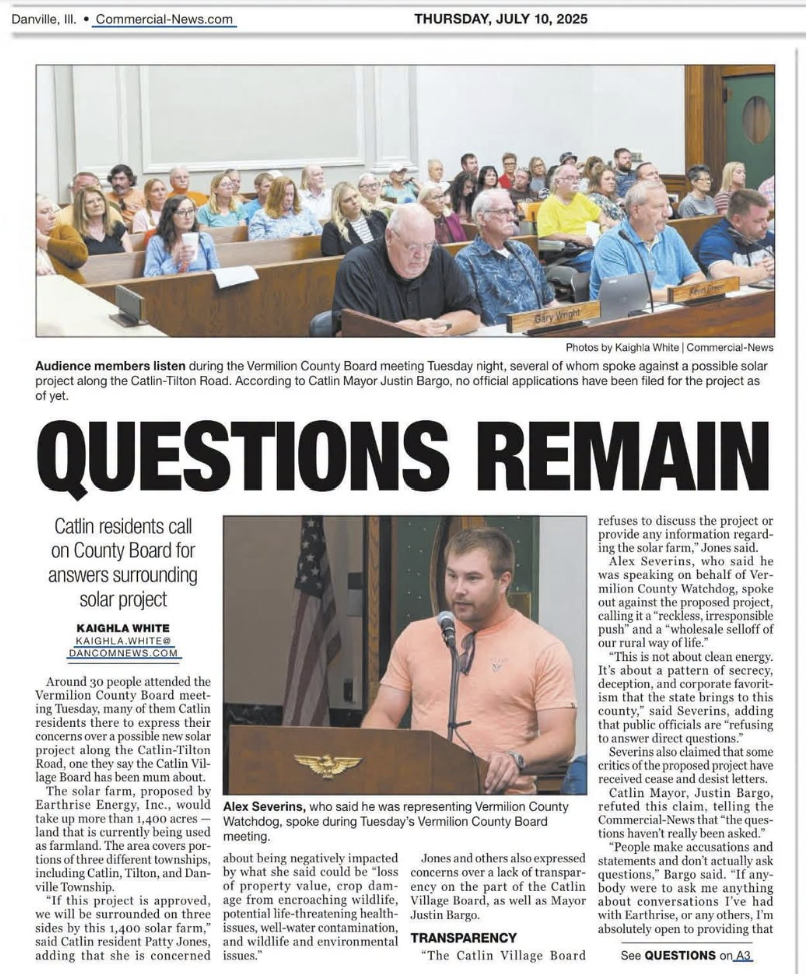
Every time a solar project pops up in a rural county, the same chorus starts: “Prime farmland is too valuable to give away.” And listen — I get it. Farmland is valuable. It feeds families, supports local economies, and anchors the identity of entire communities.
But here’s the part that never seems to make it into the Facebook debates or the public meetings:
Farmland is only valuable if farmers can afford to keep farming it.
And right now, across the United States, that’s becoming harder every single year.
What the Facts: The Numbers Don’t Lie
According to USDA data, net farm income dropped nearly 20% in 2023, while input costs — fertilizer, fuel, chemicals, machinery — rose more than 25% over the last two years. Many small farms are operating at a loss. Crop prices often don’t cover production expenses.
This isn’t a “feeling.” It’s math.
In 2025, the Midwest saw a 70% increase in Chapter 12 farm bankruptcies, with 121 filings — a spike so severe that state farm leaders called it a “real farm crisis.” Nationwide, bankruptcies rose 46%.
These aren’t abstract statistics. These are neighbors. These are families. These are farms that have already cut every corner they can cut.
What the Facts: Solar Leases Aren’t Replacing Farming — They’re Saving It
Leasing a portion of farmland for solar generation can provide $700–$1,500 per acre annually, depending on the contract. That’s not “extra money.” That’s survival money.
Solar lease income can:
- Cover property taxes
- Offset rising input costs
- Pay for insurance
- Keep the farm solvent
- Prevent selling land outright
- Allow the next generation to stay on the farm
When people say, “Farmers shouldn’t lease land to solar,” what they’re really saying is: “Farmers should keep farming even if it bankrupts them.”
Standing with farmers should never mean taking away one of the few financial lifelines they have left.
What the Facts: The Cost of Farming Has Exploded
Let’s talk equipment.
A new combine — one piece of machinery — costs over half a million dollars. Some models push toward $750,000–$1,000,000. And that’s before you buy the heads. — And they are only used for one thing at one time of year! Harvest — Tractors are used more often but also cost a lot.
Then there’s:
- Insurance (if you can afford it)
- Drying costs if crops come out too wet
- Lost income if crops come out too dry
- Fertilizer
- Herbicides
- Seed
- Tires
- Repairs
- Fuel
- And the deer that treat your soybeans like a salad bar
Some fields have poorer soil and lower yields, meaning they barely break even. Some years, they don’t break even at all.
And now, with grain contracts disappearing and grain prices dropping, farmers are being squeezed from every direction.
What the Facts: Even Electricity Costs Are Hitting Farms Hard
Electricity prices have climbed, and farmers feel it more than most. Grain dryers, barns, shops, irrigation — it all adds up.
I know farmers who’ve installed solar panels on their own farms just to power their dryers and homes. We added solar ourselves and honestly wish we’d installed more. We added batteries too — but an electric vehicle can serve as a battery backup when the power goes out.
And out in the country, when the power goes out, you don’t just lose lights. You lose water. No electricity means no well pump.
Solar isn’t just about selling power. Sometimes it’s about keeping the farm running.
What the Facts: Why Farmers Choose Solar Leases
Before anyone criticizes a farmer for signing a solar lease, ask one question:
Why did the farmer decide leasing was the better option?
I can almost guarantee they ran the numbers:
- How much they’d make farming that field
- How much they’d make leasing it
- How much they’d lose if they sold it
- How much capital gains would take
- How much they needed to stay afloat
And the lease won.
Even selling land isn’t the magic solution people imagine. When farmland has been in a family for generations, capital gains taxes can take a huge chunk of the sale. And once land is sold, it often doesn’t stay farmland — it becomes subdivisions, athletic complexes, or commercial development.
Solar leases, in contrast, keep the land in the family and keep the farmer on the farm.
What the Facts: Protecting Farmland Means Protecting Farmers
The post I’m responding to said:
“Prime farmland is one of the most valuable resources a community has.”
I agree.
But farmland doesn’t exist without farmers. And farmers can’t exist without financial stability.
Solar isn’t the enemy of agriculture. Bankruptcy is. Losing family farms is. Forcing farmers to operate at a loss is.
Clean energy shouldn’t come at the expense of rural communities — but neither should public pressure that removes the few tools farmers have to stay afloat.
If we want to protect farmland for future generations, we need to protect the people who steward it today.
And sometimes, that means supporting their decision to lease a field to solar so they can afford to keep farming the rest.
메타데이터
- post_id
- 6b7904a9f3db
- slug
- what-the-facts-when-saving-farmland-means-saving-farmers-first-6b7904a9f3db
- url
- https://medium.com/what-the-facts/what-the-facts-when-saving-farmland-means-saving-farmers-first-6b7904a9f3db
- canonical_url
- https://medium.com/what-the-facts/what-the-facts-when-saving-farmland-means-saving-farmers-first-6b7904a9f3db
- author_url
- https://medium.com/@k-richter
- status
- ok
- fetched_at
- 2026-07-13 23:23:57