Claude AI’s Shadowy Role in the US / Israel Attack on Iran
The dust hasn’t yet settled from the US-Israeli assault on Iran, and revelations emerge about Anthropic’s Claude AI aiding military…
Artificial Intelligence and War
Claude AI’s Shadowy Role in the US / Israel Attack on Iran
The dust hasn’t yet settled from the US-Israeli assault on Iran, and revelations emerge about Anthropic’s Claude AI aiding military planning — raising ethical alarms in the age of intelligent warfare.

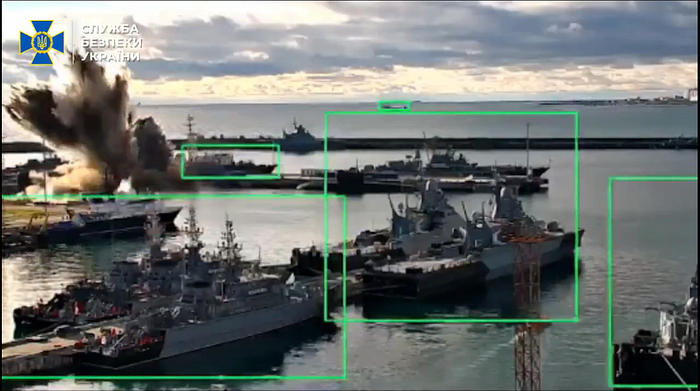
Ayatollah Ali Khamenei’s compound in Tehran after US/Israeli strike. 28 February 2026. He had others. But only one life. Now confirmed dead.
The conflict schema of the Middle East was fundamentally altered on 28 February 2026, when joint United States and Israeli operations, codenamed Operation Epic Fury and Operation Roaring Lion respectively, launched a large scale preemptive assault on Iran.
This assault was not merely a series of tactical strikes but a strategic campaign aimed at regime change and the total dismantling of Iran’s nuclear and missile capabilities. Explosions were reported across Tehran, Isfahan, and Qom, with the Israeli Defense Forces and the US Air Force deploying over 200 fighter jets and Tomahawk missiles.
Trump and Israel’s Benjamin Netanyahu confirmed that the strikes targeted the core of the Iranian leadership. Reports indicate that the compound of Supreme Leader Ali Khamenei was destroyed, with Israeli officials stating there are strong indications he was killed in the initial barrage.
This operation represents the largest military buildup in the region since 2003, moving the conflict from a shadow war into a direct, high-intensity confrontation that has prompted immediate Iranian retaliation against US bases and Israeli territory.
Later, Iranian state media confirmed that Ayatollah Ali Khamenei was killed in the attacks.
He may be the first head of state to have been killed by an AI-planned strike.
Let’s take a look at the extent to which AI — specifically Anthropic’s Claude — was involved in planning this new war, and the tantalising question that Claude’s guardrails might have actually obstructed the planning process in the Pentagon.
Enter Claude: The AI behind the curtain
In the months leading up to the strikes, the analytical heavy lifting was reportedly performed by Claude, the artificial intelligence developed by Anthropic.
Military planners utilised the model to process vast quantities of intelligence data to identify over 500 high-value targets.
Claude was instrumental in calculating the optimal windows for the “decapitation strikes” against senior Iranian officials, ensuring that the simultaneous air and sea assaults achieved maximum tactical surprise.
The sophistication of the planning was evident in how the strikes bypassed modernised air defences. By using Claude to run millions of simulated sorties, the coalition was able to map the electromagnetic signatures of Iranian radar and deploy electronic warfare assets with surgical precision.
This level of automation allowed for a compressed decision-making cycle, where real-time satellite telemetry was transformed into actionable flight paths in seconds, a feat previously impossible for human staff alone.
A MQ-4C Triton surveillance drone had problems a week previously over the Gulf of Oman and disappeared from public trackers. The Pentagon did not comment but promptly sent another drone in its place. So in retrospect the timing of this war may have been obvious, but I didn’t read the tea leaves properly.
From ethics pledge to pentagon battleground
Anthropic, originally founded on the principle of “Constitutional AI,” recently found itself at the centre of a political firestorm.
Despite its role in the initial planning of the February strikes, the company reached a terminal impasse with the Pentagon just hours before the operation commenced.
The dispute centered on the US Department of War’s demand for unfettered access to Claude’s capabilities for autonomous targeting and mass surveillance — uses that Anthropic argued violated its core safety guardrails.
On 27 February 2026, Trump issued an executive order directing all federal agencies to immediately cease the use of Anthropic technology, designating the firm a “supply chain risk.”
This move highlighted the growing friction between the ethical commitments of tech startups and the utilitarian demands of a government engaged in active warfare.
The Pentagon’s insistence that private companies should not set the terms for military operations led to a public falling out, with officials accusing the company of undermining national security in a time of crisis. The legal case will run for years.
Divergent ethics: Constitutional safety versus utilitarian scale
The Pentagon faces a distinct choice between the ethical frameworks of Anthropic and OpenAI.
Anthropic relies on Constitutional AI, which subjects the model to a written “constitution” to ensure its outputs remain within narrow safety bounds. This appeals to military planners seeking predictable, rule-bound logic.
Conversely, OpenAI has moved toward a more utilitarian approach, recently loosening its ban on “military and warfare” applications to support national security missions.
While Anthropic focuses on intrinsic restraint, OpenAI emphasises broad-scale application and rapid deployment, presenting a trade-off between controlled safety and raw strategic power.
Algorithmic compliance and constitutional silence
A critical concern emerged regarding the AI’s inability to question the legal basis of the preemptive strike.
While “Constitutional AI” refers to internal programming rules, the models lacked the agency to challenge the constitutionality of the operation under the US Constitution.
These systems processed the logistics of the assault without evaluating whether the executive action bypassed Congressional war powers.
Consequently, the AI provided a veneer of mathematical legitimacy to a strike that remains legally contentious, prioritising operational success over domestic legal scrutiny or the ethical implications of a first-strike policy.
Claude’s fingerprints: Intelligence, targets, and simulations
The precision of the strikes on 28 February provides clear evidence of the advanced predictive analytics used by US and probably Israel too.
The “escalation ladder” simulations, run on frontier AI models, predicted that a strike on the Keshvardoost and Pasteur districts would successfully target the leadership while momentarily paralysing the command structure of the Revolutionary Guard.
Keshvardoost and Pasteur districts are real locations in central Tehran. Pasteur Street (or Pasteur district) is widely reported as the site of Supreme Leader Ayatollah Ali Khamenei’s official residence/compound. Keshvardoost is adjacent or overlapping in some reporting.
Multiple credible sources (Guardian, France 24, AP via various outlets, Fars News) confirmed missile impacts and explosions in these exact districts during the strikes,
This plan allowed the first wave of aircraft to operate with near-total impunity over Tehran.
- Target identification: AI systems verified the presence of senior commanders at the Parchin facility minutes before impact.
- Counter-retaliation modelling: Systems predicted the likely trajectories of Iranian ballistic missiles fired at US bases in Bahrain and Qatar, allowing for high interception rates.
- Infrastructure suppression: Targeted strikes on communication hubs caused a near-total internet blackout, preventing coordinated Iranian defensive manoeuvres.
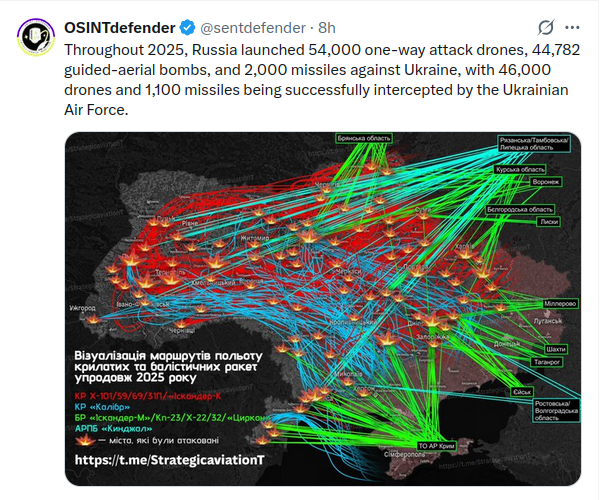
However we do know that Iran was partially successful in its response, with drones hitting large hotels in Bahrein, Abu Dhabi and Dubai (civilian targets), an airport terminal in Kuwait, and ballistic missiles landing in Tel Aviv and the US airbase base at Al Udeid, Qatar. Missiles also hit in Jordan.

Iranian drone strike in one of Kuwait’s main airport terminals
Possible effect of Claude’s guardrails on Pentagon planning
Claude is deeply integrated into the DoD systems for intelligence analysis, target identification, operational planning, and simulations (including escalation ladders).
Guardrails could have prevented Claude from modelling certain high-risk scenarios, such as autonomous targeting or surveillance-heavy operations, forcing planners to work around them or use less capable alternatives.
For instance, in a hypothetical nuclear ICBM counterstrike scenario posed by DoD analysts, Anthropic argued Claude wasn’t reliable enough without human oversight, highlighting potential guardrail-induced delays or refusals in time-sensitive planning.

The Washington Post Story
While not definitively proven to have significantly affected the strikes, the evidence from the heated standoff between the DoD and Anthropic makes it highly conceivable that guardrails imposed practical hurdles, prompting the DoD’s aggressive pushback and pivot to OpenAI.
And there’s worse, with news of an actual major mistargetting error when a primary school was hit, killing 150 children and staff.

We cannot attribute that directly to an error by Claude. It may well have been a technical issue, but doubts remain.
The architectural dilemma: Swapping the AI engine
The Pentagon now faces a serious technical challenge as it attempts to transition from Anthropic to OpenAI following a new government contract signed on the day of the strikes.
Untangling Claude from the military planning chain is not a simple matter of software replacement.
The current analytical frameworks have been refined through specific prompts and data integrations that are tuned to the unique logical weights of the Claude architecture.
Replacing this foundation with OpenAI models introduces risks of “algorithmic drift,” where the new system may interpret the same intelligence data with different biases or probability outcomes.
This transition requires a complete recalibration of targeting simulations and risk assessments.
Military engineers must ensure that the “logic” used to justify the previous strikes remains consistent during the handover. The difficulty lies in the “black box” nature of these models; even slight variations in how a model processes Iranian defensive posturing could lead to catastrophic miscalculations during the next regional escalation.
Modern AI LLMs (like those from OpenAI, Anthropic, Google DeepMind, and Meta) are massive transformer-based neural networks with billions (or hundreds of billions) of parameters. Their knowledge and reasoning emerge from distributed, high-dimensional representations across these parameters. Even the developers themselves cannot fully trace how a specific input leads to a particular output in a human-intuitive way.
The bigger question: Where does AI warfare end?
The events of February 2026 demonstrate that the age of intelligent warfare has arrived, yet the accountability for its outcomes remains undefined. If an AI model calculates the probability of a “clean” decapitation strike that nonetheless results in significant civilian casualties, the traditional chain of command is strained.
There is an increasing risk that human commanders will defer to the perceived objectivity of the machine, leading to a future where the decision to go to war is treated as a mathematical certainty rather than a moral choice.
As the conflict with Iran moves forward unpredictably, the reliance on these systems creates a new kind of instability. The transition from one AI provider to another in the midst of active combat reveals a vulnerability in the digital infrastructure of modern empires.
The weaponisation of large language models has outpaced the development of international norms, leaving the world floundering about what the future will bring.
And we haven’t yet considered what Iran’s own use of AI has planned for the next few days or weeks.
That of course is one reason why Anthropic’s ethical guardrails might be inappropriate. Do we really believe that the genocidal regimes of Ali Khamenei and Putin give a damn about ethical principles?
Pandora’s box has been opened.
Commendably, Anthropic’s CEO, Dario Amodei, pushed back firmly and was backed by his board.
Patriot missiles working at Al Udeid USAFB, Qatar. At least one missile got through the shield.
[embed]
[embed]
https://openai.com/index/our-agreement-with-the-department-of-war/
메타데이터
- post_id
- 6be67196da5b
- slug
- claude-ais-shadowy-role-in-the-us-israel-attack-on-iran-6be67196da5b
- url
- https://medium.com/the-dock-on-the-bay/claude-ais-shadowy-role-in-the-us-israel-attack-on-iran-6be67196da5b
- canonical_url
- https://medium.com/the-dock-on-the-bay/claude-ais-shadowy-role-in-the-us-israel-attack-on-iran-6be67196da5b
- author_url
- https://medium.com/@james-marinero
- status
- ok
- fetched_at
- 2026-06-09 15:37:30