Everyone Wants A Villian. Almost Nobody Wants To Talk About What Happened Before The Stabbing
Two seventeen-year-old boys walked into a track meet in Frisco, Texas. Only one walked away. Austin Metcalf, a white teenager, lost his…
Everyone Wants A Villian. Almost Nobody Wants To Talk About What Happened Before The Stabbing
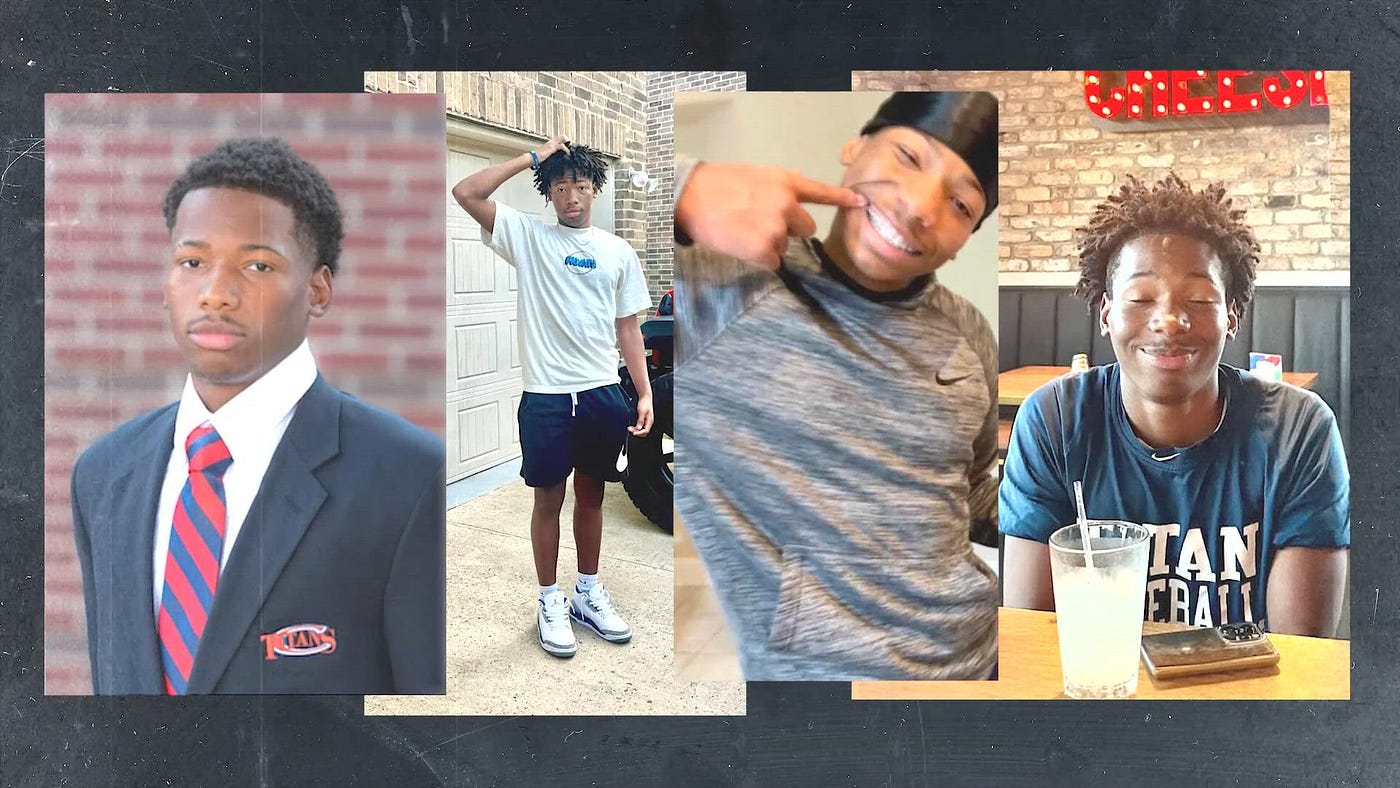
Two seventeen-year-old boys walked into a track meet in Frisco, Texas. Only one walked away. Austin Metcalf, a white teenager, lost his life after being stabbed during an altercation.
Karmelo Anthony, a Black teenager, was later arrested, charged, and recently convicted of murder. A jury ultimately rejected Anthony’s claim of self-defense and sentenced him to decades in prison.
One family buried a son. Another family watched a son lose much of his future. Somehow, despite the devastation on both sides, the public conversation quickly became a familiar exercise in choosing teams.
Pick a side. Declare a villain. Declare a victim. Move on. But I can’t stop thinking about everything that happened before the stabbing. Because while America is obsessed with what happened in those final moments, we seem far less interested in asking what happened in the weeks, months, or years that may have led up to them.
That’s a problem.
We Only Care About Bullying After Someone Ends Up Dead
One of the most frustrating aspects of this case is how quickly conversations about bullying get dismissed. People say things like:
“Everybody gets bullied.”
“Kids are mean.”
“That’s just part of growing up.”
But is it? Or have we become so accustomed to cruelty that we’ve normalized it?
If reports of bullying, harassment, humiliation, and racial targeting are true, then those experiences matter. They matter not because they justify violence. They do not. But they matter because they help us understand how conflict escalates and why some young people eventually reach a breaking point.
Understanding is not the same thing as excusing. We seem to understand that concept when discussing adults. When adults commit harmful acts, journalists, psychologists, and criminologists routinely examine family histories, trauma, environmental stressors, and social circumstances. Nobody accuses them of excusing behavior.
Yet when the person involved is a teenager, many people suddenly become uncomfortable with context. They want the story reduced to a single moment. A single choice. A single act.
No complexity allowed. No nuance is permitted. Just guilt or innocence. Good or evil. Victim or monster. But we know life is rarely that simple.
Black Boys Are Rarely Allowed To Be Vulnerable
There is another reason this case has generated such intense debate — race. Some people insist that race had absolutely nothing to do with this case and the ultimate verdict, while others are calling out the judicial process for being inequitable and pointing to other cases in which non-Black individuals have been acquitted after killing a Black person.
For instance, Chikei Rick Chow, a 61-year-old Asian American convenience store owner in South Carolina, was recently acquitted for the May 2023 murder of an unarmed 14-year-old Black teen, who he wrongfully suspected of stealing water.
That said, the immediate reaction to look to race alone is worth examining. For generations, Black boys have occupied a complicated position in American society.
They are often viewed as older than they actually are. More threatening than they actually are. More responsible for their actions than their white peers. Yet, less innocent, less vulnerable, and less deserving of grace.
Researchers call this adultification bias. The result is that Black children are frequently perceived through a lens that denies them some of the protections typically afforded to childhood itself. That history doesn’t automatically determine the outcome of every case involving a Black teenager.
But pretending that history doesn’t exist isn’t honesty; it’s avoidance, denial, and perpetuates racism and bias. If we’re being honest, many people are not simply reacting to Karmelo Anthony’s conviction. They’re reacting to generations of experiences that shape their views of the criminal justice system in the first place. A system that has historically operated inequitably toward Blacks.
The Question Nobody Can Answer
Did race influence the verdict? I don’t know. Neither do most people commenting online. What I do know is that the question keeps surfacing because trust in American institutions is fractured — and maybe, rightfully so.
People are asking whether a Black teenager accused of killing a white teenager could ever receive the same presumption of humanity that others might receive. People are asking whether the venue mattered. Whether jury composition mattered. Whether media narratives mattered.
Maybe the answer to all those questions is no, and maybe it's yes. But the fact that so many people are asking them reveals something important about the state of public trust in this country.
A justice system does not simply need to be fair. People must also believe it is fair, and increasingly, many Americans don’t.
Two Families Lost
What troubles me most about this story is that we keep talking as though somebody won. Nobody won. A teenager is dead. Another teenager will spend much of his young adulthood in prison.
Two families will carry unimaginable grief for the rest of their lives. The internet wants a winner. Social media wants a winner. Political commentators want a winner.
But there isn’t one. There’s only loss. There’s only tragedy. There’s only a collection of decisions, circumstances, systems, and failures that somehow culminated in a moment that can never be undone.
What If We Paid Attention Earlier?
Cases like this often generate passionate conversations about punishment. Those conversations are inevitable. But they are also incomplete. The more important question is whether there were opportunities to intervene before the tragedy occurred.
Were there signs that were ignored?
Were there conflicts that were minimized?
Were there adults who could have stepped in?
Were there opportunities for counseling, mediation, mentorship, or support?
Could somebody have interrupted the trajectory before it ended in death?
We’ll never know. What we do know is that our society has a habit of treating adolescent mental health, bullying, conflict resolution, and racialized harassment as secondary concerns. Until something happens.
Then suddenly everyone wants answers. Then suddenly, everyone wants accountability. Then suddenly everyone wants to know how we got here.
The truth is that by the time we’re asking those questions, we’re usually asking them too late. That may be the hardest lesson of all. Because while America debates what happened between Karmelo Anthony and Austin Metcalf that day in Texas, I keep thinking about the possibility that the most important part of the story happened long before either teenager arrived at that track meet in April 2025.
메타데이터
- post_id
- 6c20e4866461
- slug
- everyone-wants-a-villian-almost-nobody-wants-to-talk-about-what-happened-before-the-stabbing-6c20e4866461
- url
- https://zora.medium.com/everyone-wants-a-villian-almost-nobody-wants-to-talk-about-what-happened-before-the-stabbing-6c20e4866461
- canonical_url
- https://zora.medium.com/everyone-wants-a-villian-almost-nobody-wants-to-talk-about-what-happened-before-the-stabbing-6c20e4866461
- author_url
- https://medium.com/@mnhoskin25
- status
- ok
- fetched_at
- 2026-06-16 19:09:56