Collect, Analyze, and Scale with Ecommerce Data APIs
Every product page tells a story. Prices change, reviews reveal customer sentiment, inventory fluctuates, and new products appear every…
Collect, Analyze, and Scale with Ecommerce Data APIs
Every product page tells a story. Prices change, reviews reveal customer sentiment, inventory fluctuates, and new products appear every day. For businesses operating in ecommerce, keeping up with these changes manually is nearly impossible.
This is where **Ecommerce Data APIs** make a difference.
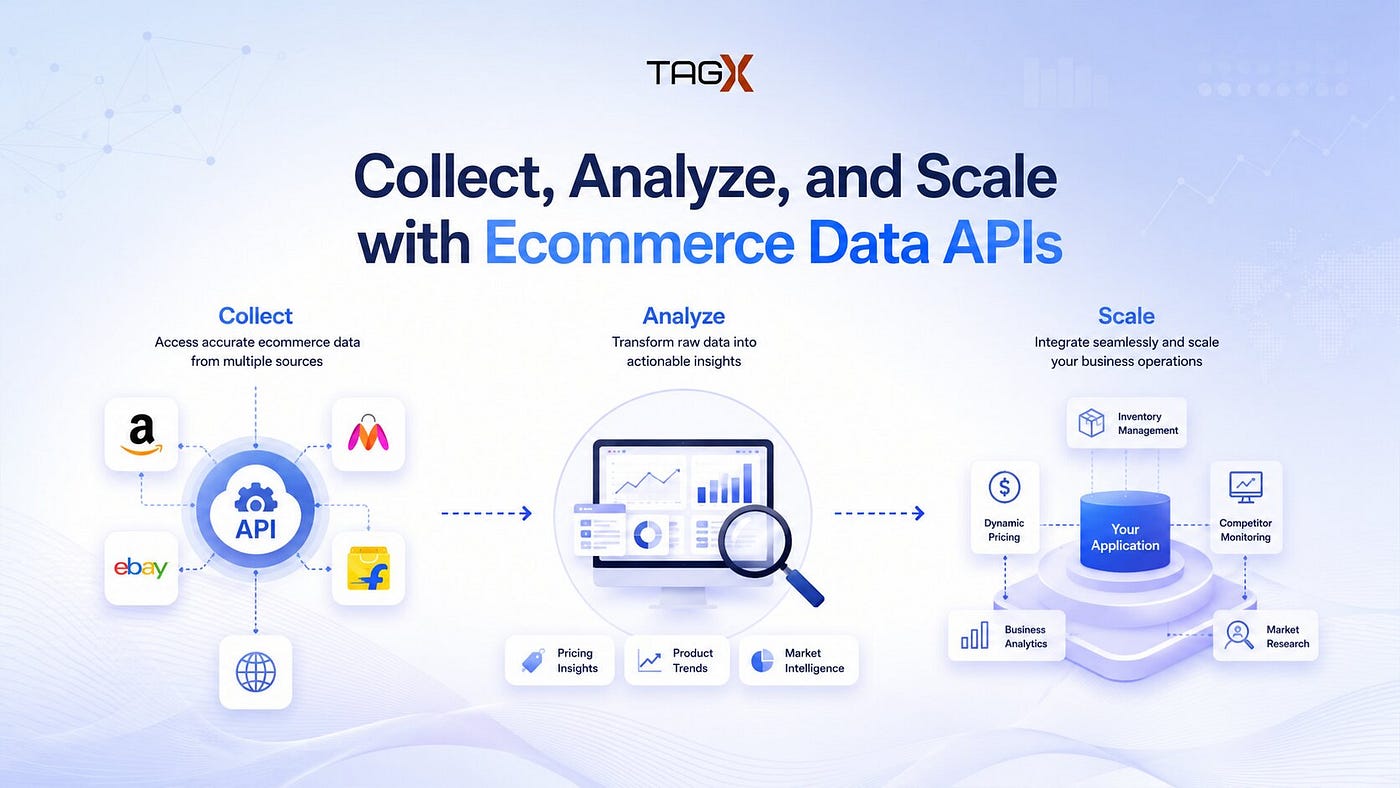
Rather than collecting data from dozens of marketplaces manually, an Ecommerce Data API delivers structured product details, pricing, ratings, reviews, and availability directly into your apps or analytics workflows, helping teams make faster decisions with less effort.
Why Ecommerce Data Matters
Modern ecommerce moves quickly. A competitor can launch a promotion overnight, customer reviews can shift buying behavior within hours, and inventory changes can impact pricing strategies almost instantly.
Businesses that rely on outdated or incomplete information often struggle to respond effectively.
Access to fresh, structured ecommerce data enables teams to monitor market changes, evaluate competitors, identify product trends, and make informed pricing decisions before opportunities disappear.
The Value of an Ecommerce Data API
Instead of building and maintaining complex scraping infrastructure, businesses can integrate a single API to retrieve the information they need in a consistent format.
A robust Ecommerce Data API typically provides:
- Product titles, descriptions, specifications, and images
- Current and historical pricing
- Ratings and customer reviews
- Stock availability
- Seller and Buy Box information
- Category rankings and product metadata
Because the data is already structured, development teams spend less time cleaning datasets and more time building features that deliver business value.
Business Use Cases
Reliable ecommerce data supports a wide range of business applications:
- Retailers use it to monitor competitor pricing and optimize their own pricing strategies.
- Market intelligence teams analyze product launches and category performance to identify emerging opportunities.
- Price comparison platforms depend on accurate product feeds to deliver better user experiences.
- Brands monitor reviews to understand customer feedback and improve products.
- Developers also benefit by integrating standardized data into internal tools, reporting platforms, and customer-facing apps.
Scaling Without the Complexity
As businesses grow, so do their data requirements.
Monitoring hundreds or even thousands of products across multiple marketplaces can quickly become difficult with manual processes or custom-built scrapers.
An API-based approach removes much of this operational burden.
Data can be delivered in standardized formats, integrated into existing systems, and refreshed according to business needs.
This allows organizations to focus on analyzing insights instead of maintaining data collection infrastructure.
Final Thoughts
Ecommerce success depends on more than great products and competitive pricing. It also requires fast access to reliable market data.
An Ecommerce Data API helps businesses monitor competitors, follow pricing changes, and respond to market shifts with confidence, freeing teams to focus on strategy, growth, and better decisions.
If your business depends on accurate ecommerce intelligence, **TagX** can help simplify data collection and turn raw information into actionable insights that support smarter, faster, and more scalable operations.
메타데이터
- post_id
- 6c33f7d9bef2
- slug
- collect-analyze-and-scale-with-ecommerce-data-apis-6c33f7d9bef2
- url
- https://medium.com/@prashijain90/collect-analyze-and-scale-with-ecommerce-data-apis-6c33f7d9bef2
- canonical_url
- https://medium.com/@prashijain90/collect-analyze-and-scale-with-ecommerce-data-apis-6c33f7d9bef2
- author_url
- https://medium.com/@prashijain90
- status
- ok
- fetched_at
- 2026-07-18 07:26:19