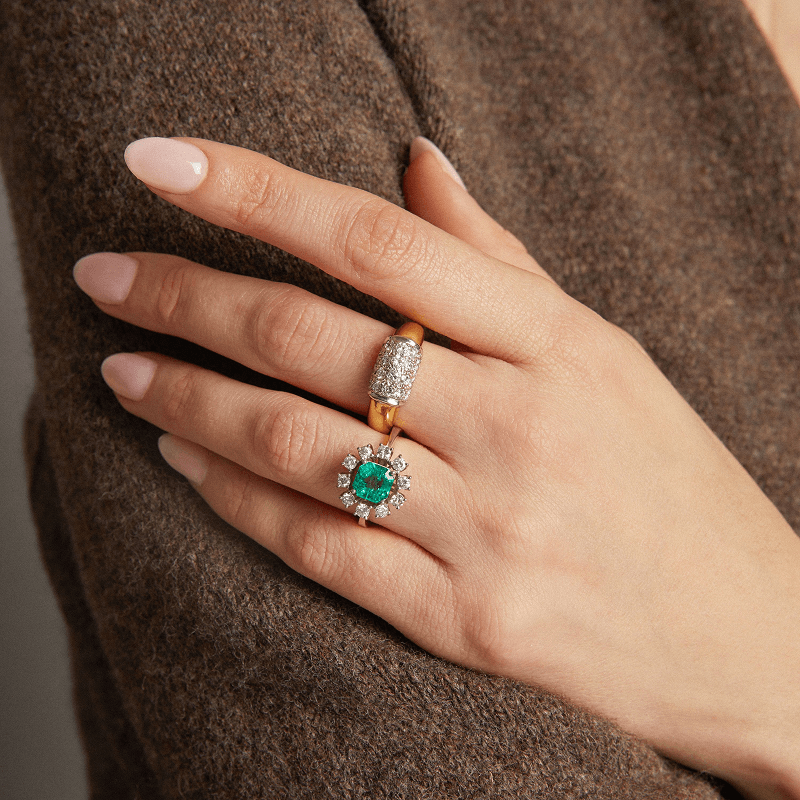
Why Most People Get Less Than They Should When Selling Estate Jewelry
Written by Louis Martin Jewelers. Independent vintage and estate specialists in Midtown Manhattan.
Why Most People Get Less Than They Should When Selling Estate Jewelry
Written by Louis Martin Jewelers. Independent vintage and estate specialists in Midtown Manhattan.
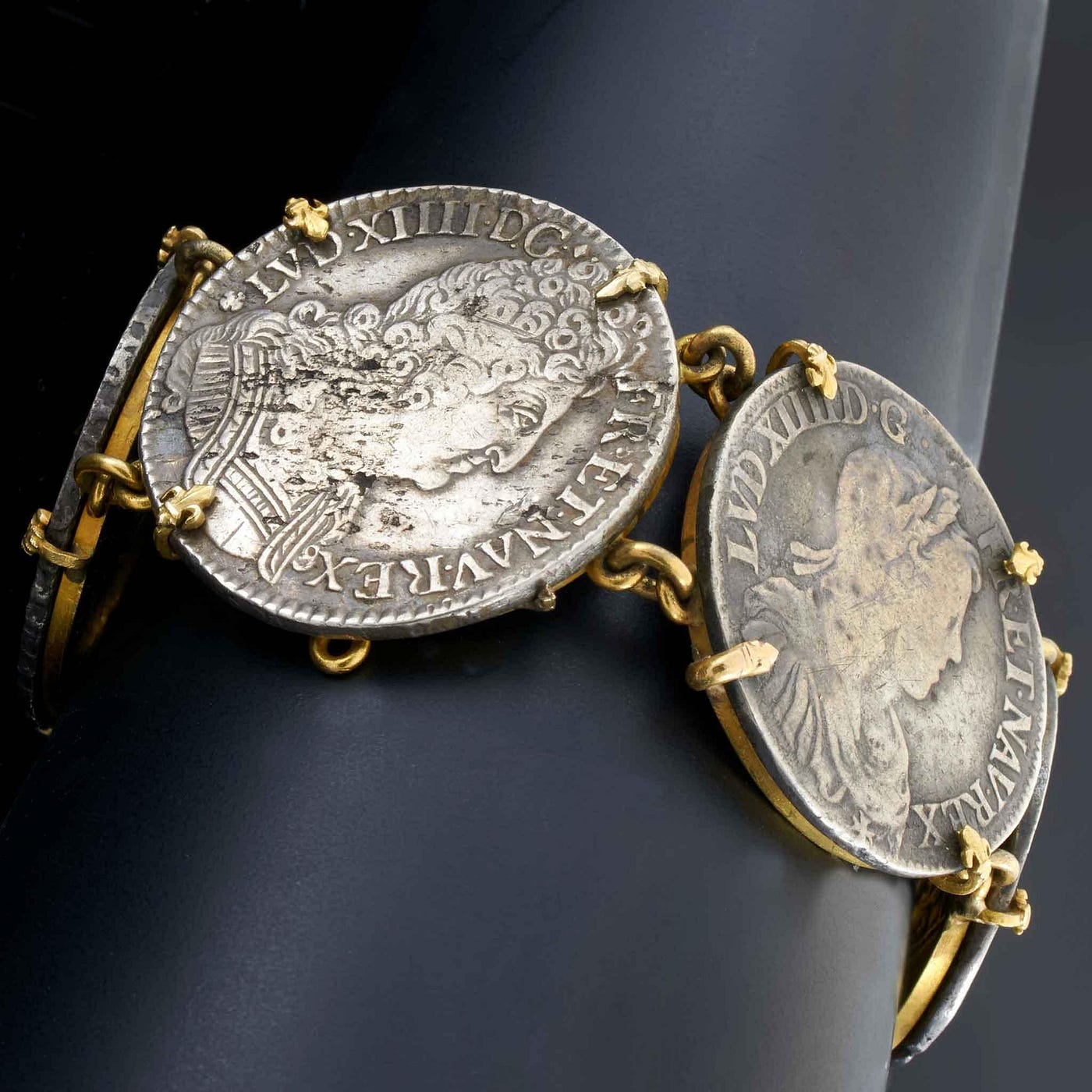
Antique French Louis XIV–XV Sterling Silver Coin Bracelet in 18KT Yellow Gold
The First Mistake Happens Before They Walk In
Most people selling estate jewelry come in with a number already in their head. That number usually comes from one of three places.
- What they paid for it originally.
- What they saw was a similar piece listed online.
- Or what a family member told them it was worth years ago.
None of those numbers are reliable. And anchoring to them before a proper evaluation almost always leads to disappointment, whether the offer comes in higher or lower than expected.
The estate jewelry market doesn’t work like retail. There’s no standard pricing. There’s no manufacturer-suggested retail price to reference. Value is determined by what the market is actually paying right now for that specific type of piece in that specific condition. That number changes. Sometimes significantly.
Why Online Listings Are Misleading
This is one of the most common issues we see.
Someone finds a piece that looks similar to theirs listed on a resale platform for three thousand dollars and assumes that’s what their piece is worth. What they don’t account for is that the listed price is what the seller is asking, not what anyone has paid. Unsold listings sit online for months. Sometimes years.
Sold prices tell the real story. What did comparable pieces actually transact for, recently, in the current market? That data is harder to find and requires access to auction records, dealer networks, and real transaction history. It’s not something you can pull from a quick search.
A fair offer is based on sold prices, not asking prices. If your buyer can’t explain the difference, that’s worth paying attention to.
The Pawn Shop Problem
We hear this regularly. Someone took their piece to a pawn shop first, got a number that felt insultingly low, and walked out frustrated.
Pawn shops aren’t jewelry specialists. They’re generalists who deal in volume and need a significant margin to make their business model work. The offer reflects that, not the actual value of the piece.
The problem isn’t that pawn shops are dishonest. It’s that they’re not equipped to evaluate estate jewelry properly. They can’t tell you why a signed piece carries a premium over an unsigned one. They’re unlikely to recognize period-correct construction details that affect authenticity. And they have no reason to pay collector value for something they’ll sell to a general buyer.
Selling estate jewelry well requires a buyer who actually knows the category.
What Determines a Fair Offer
This is where most sellers benefit from some context before they walk into any conversation.
Metal content is the floor, not the ceiling. Gold, platinum, and silver have a melt value based on live spot prices. Every piece has a baseline number regardless of design or history. But that baseline is just the starting point.
Stones add value above metal, but only when they’re properly assessed. Cut, clarity, color, and carat weight all affect the number. So does the condition. A chipped stone or a replaced stone affects the offer.
Maker and signature matter more than most sellers expect. A signed piece from a recognized house carries value beyond the materials. That premium can be substantial on the right piece. An unsigned piece of identical weight and stone quality will appraise differently.
Rarity and current demand are the factors most sellers don’t think about. Some pieces are actively sought by collectors right now. Others aren’t. A buyer who’s active in the market knows the difference. One who isn’t will offer you melt value regardless.
Consignment Isn’t Always the Answer
When sellers hear that a direct offer feels low, the natural instinct is to ask about consignment. If someone sells it for more, they reason, everyone wins.
That’s sometimes true. For certain signed pieces with strong collector appeal, consignment through the right channel can result in a better outcome. It takes longer and it’s not guaranteed, but it’s worth considering on the right piece.
For most estate jewelry though, consignment introduces more uncertainty than it resolves. The piece sits. The market shifts. The seller waits months for a result that might not be better than the original direct offer.
The honest answer is that consignment makes sense for a narrow category of pieces. A good buyer will tell you which category your piece falls into rather than defaulting to one option for everything.
What a Good Selling Experience Looks Like
It starts with a conversation, not a transaction.
A buyer who knows the market should be able to tell you what your piece is, what era it’s from, what the materials are worth, whether the maker adds a premium, and what comparable pieces have actually sold for recently. They should show their work. Not just hand you a number and wait.
You should leave that conversation knowing more about your piece than when you walked in, regardless of whether you sell. That knowledge is yours. It helps you make a better decision, whether that’s selling that day, getting a second opinion, or holding onto the piece a little longer.
If the buyer across the table can’t give you that conversation, it’s worth finding one who can. Our estate jewelry buying process starts exactly there.
Louis Martin Jewelers has been buying estate jewelry directly from the public in New York City for over 40 years. Our store is at 30 Rockefeller Plaza in Midtown Manhattan, open every day. Learn more at louismartin.com.
메타데이터
- post_id
- 6c482ccbd9c4
- slug
- why-most-people-get-less-than-they-should-when-selling-estate-jewelry-6c482ccbd9c4
- url
- https://medium.com/@alex_80533/why-most-people-get-less-than-they-should-when-selling-estate-jewelry-6c482ccbd9c4
- canonical_url
- https://medium.com/@alex_80533/why-most-people-get-less-than-they-should-when-selling-estate-jewelry-6c482ccbd9c4
- author_url
- https://medium.com/@alex_80533
- status
- ok
- fetched_at
- 2026-08-04 19:37:56