Lauren Ancel Meyers: The Code-Breaker Who Went After Outbreaks
Most older models of how disease spreads treat everyone as the same, mixing evenly like gas in a box. A newer approach treats people as a…
Lauren Ancel Meyers: The Code-Breaker Who Went After Outbreaks
Most older models of how disease spreads treat everyone as the same, mixing evenly like gas in a box. A newer approach treats people as a network: who actually touches whom, and how often. A nurse and a hermit are not the same risk, and a model that averages them away misses where an outbreak really goes. Meyers built that idea into a working method, and a 2007 paper of hers laid it out using a piece of math borrowed from physics called bond percolation. Putting all that together into a model that could actually forecast a real outbreak is hard.
As a kid she liked reading about plagues, the scary kind of science. That stayed an interest. While she was a math student at Harvard, she twice briefly worked at the National Security Agency, breaking ciphers, using advanced math on real problems instead of textbook ones. Codebreaking wasn’t the thing. None of this was a straight line toward a goal. She had a couple of interests that didn’t obviously connect, math and disease, and no field that needed both yet.
Then came the years that actually turned that into a career. She did a PhD in mathematical biology at Stanford under Marcus Feldman, a serious figure in the math of evolution, and her early work was abstract evolutionary theory, not disease at all. Then a postdoc, partly at Emory with Bruce Levin, who studies how infections evolve and spread. That’s where the two interests finally fused and tilted toward pathogens. By the time she got to UT in 2003, she’d spent close to a decade quietly building one skill out of two, with no outbreak in sight.
Then, newly arrived at UT in 2003, she got a call from British Columbia asking for help with an outbreak that turned out to be SARS. Her first live one, and she has said it set the course for everything after. She didn’t plan that moment. She was ready for it because the work was already done.
What all of it built was judgment: a sense of which question is worth asking. It’s the same thing that matters when I think about machines. I worry, like a lot of people my age, that AI will leave nothing for a person to do. Her work argues the opposite. A colleague said the rare part is that she can build the models and also understand what a mayor or a health department actually needs to hear. She’s blunt about the models themselves: no single one is good enough to trust, so her teams run many and read across them. When her lab found COVID was spreading silently before symptoms, the CDC’s first reaction was that she must have made a mistake and should check her math. She didn’t fold. The math was right. The computer does the forecasting. A person decides which question is worth asking and what to do when the answer comes back ugly. That part is getting more important, not less.
Her newest work, from 2025, is almost a demonstration of this, and it’s clever. There are two kinds of forecasting models, and each is good at what the other is bad at. One kind is built on the biology of how diseases spread, so it knows an epidemic has to slow down as people gain immunity, but it’s rigid and doesn’t fit messy real data well. The other kind just learns patterns from the incoming numbers, which makes it flexible and accurate day to day, but it doesn’t know any biology. So when cases are climbing, that second kind tends to assume they’ll keep climbing, and it overshoots right at the peak, which is exactly when hospitals need the number to be right so they can have enough beds and staff ready. Her team’s method, which they call epimodulation, feeds the biological knowledge into those flexible data-driven models, so they keep their accuracy but also expect the turn. On real flu and COVID data it improved hospital forecasts at the peak by up to 55 percent. The machine still does the forecasting. It got better because people who understood the disease taught it what to expect. She now runs a CDC-funded center called epiENGAGE that builds these tools for cities and states.
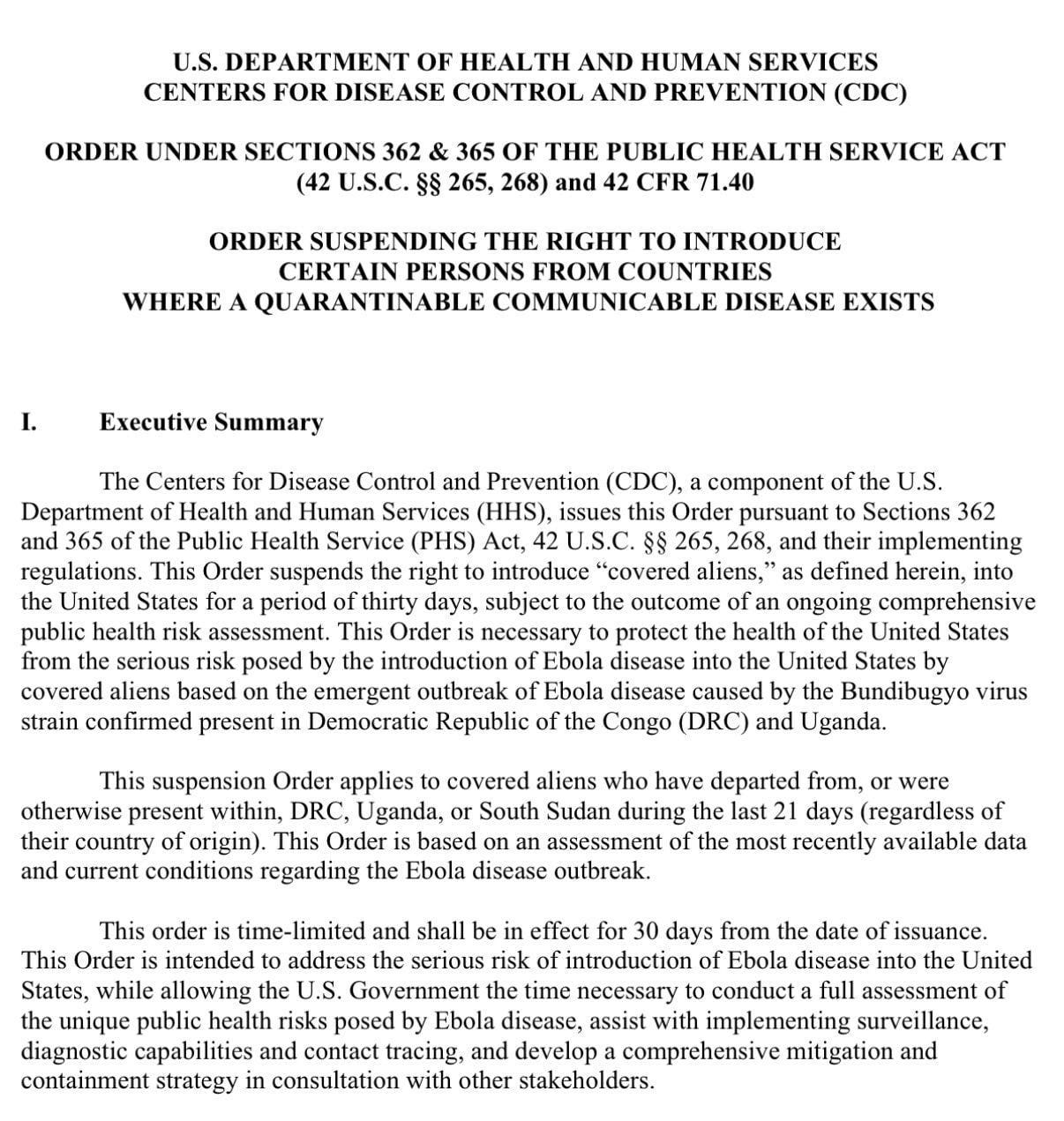
Her tools matter right now. In May 2026 the WHO declared a new Ebola outbreak in the Democratic Republic of the Congo and Uganda a public health emergency of international concern, with more than 700 suspected cases reported in the first week. As of this post, the ongoing outbreak has reached 1427 confirmed cases and 440 deaths. That kind of spread is exactly what her network-based models were designed to study. Knowing when the peak will hit, and which contact networks carry the spread, is the difference between a response that’s ready and one that’s caught off guard.
She calls the pandemic the most horrible two years of her life, mostly from watching leaders make choices the data showed would cost lives. She and others had hoped it would be a Manhattan Project moment, the best minds converging on one enemy. It didn’t happen. Most people would file that under “the system failed” and move on. She did the opposite, helping the CDC build a national outbreak-forecasting network and starting a nonprofit that war-games pandemics before they arrive. In a way she went back to where she started, treating disease the way the NSA treats threats.
What I take from her is that the training that pays off later is rarely the training that looks pointed at a job. She spent close to a decade on math, then on disease, with no outbreak in sight. The work she did was useful when SARS arrived because she had built tools, not because she had picked a career. The classes I’m tempted to dismiss as unrelated to what I want to do are exactly the ones I should pay closest attention to. Which parts of your training will end up combining is impossible to see from the inside, in any era, and more so now that AI is changing what counts as work. A sense of which question is worth asking is the part no model does for you.
This is part of a series that starts with The Patients I never Saw.
Articles I Read:
• Meyers Lab, The Lauren Ancel Meyers Research Group (her lab’s site, The University of Texas at Austin).
• Will Bostwick, “The UT Professor War-Gaming the Next Pandemic,” Texas Monthly (2023).
• Santa Fe Institute, 2019 Ulam Lectures: Lauren Ancel Meyers on preventing the next pandemic (video).
• “New forecasting tool improves accuracy of epidemic peak and hospital demand predictions,” Phys.org (2025), on her team’s “epimodulation” method.
Background, read for the main idea:
• L.A. Meyers, “Contact network epidemiology: Bond percolation applied to infectious disease prediction and control,” Bulletin of the American Mathematical Society 44 (2007): 63–86.
• L.A. Meyers, M.E.J. Newman, M. Martin, S. Schrag, “Applying network theory to epidemics: Control measures for Mycoplasma pneumoniae outbreaks,” Emerging Infectious Diseases 9 (2003): 204–210.
메타데이터
- post_id
- 6c4dd975b19c
- slug
- lauren-ancel-meyers-the-code-breaker-who-went-after-outbreaks-6c4dd975b19c
- url
- https://medium.com/@adityagullapalli2/lauren-ancel-meyers-the-code-breaker-who-went-after-outbreaks-6c4dd975b19c
- canonical_url
- https://medium.com/@adityagullapalli2/lauren-ancel-meyers-the-code-breaker-who-went-after-outbreaks-6c4dd975b19c
- author_url
- https://medium.com/@adityagullapalli2
- status
- ok
- fetched_at
- 2026-07-31 05:18:52