Does AI Really Think, or Is It Just a Trillion-Dollar Parrot?
If you asked a robot, “Do you understand me?” and it said, “Yes,” how would you feel? Now suppose I told you this: that robot doesn’t know…

Does AI Really Think, or Is It Just a Trillion-Dollar Parrot?
If you asked a robot, “Do you understand me?” and it said, “Yes,” how would you feel? Now suppose I told you this: that robot doesn’t know what you’re asking or even that you exist.
Would you still feel the same way?
In the 1980s, a philosopher named John Searle proposed a very troubling scenario;
Think of it this way: You’re locked in a room. Pieces of paper with Chinese characters written on them are slipped under the door. You don’t know even the basics of Chinese, but you have a massive rulebook in your hands. It says, “If you see this shape, draw that shape and send it back.” So you do it. The people outside get excited, saying, “Wow, the guy inside knows Chinese like the back of his hand!”
But all you’re doing inside is matching shapes. Understanding? Zero.
AI is exactly that guy in the room.

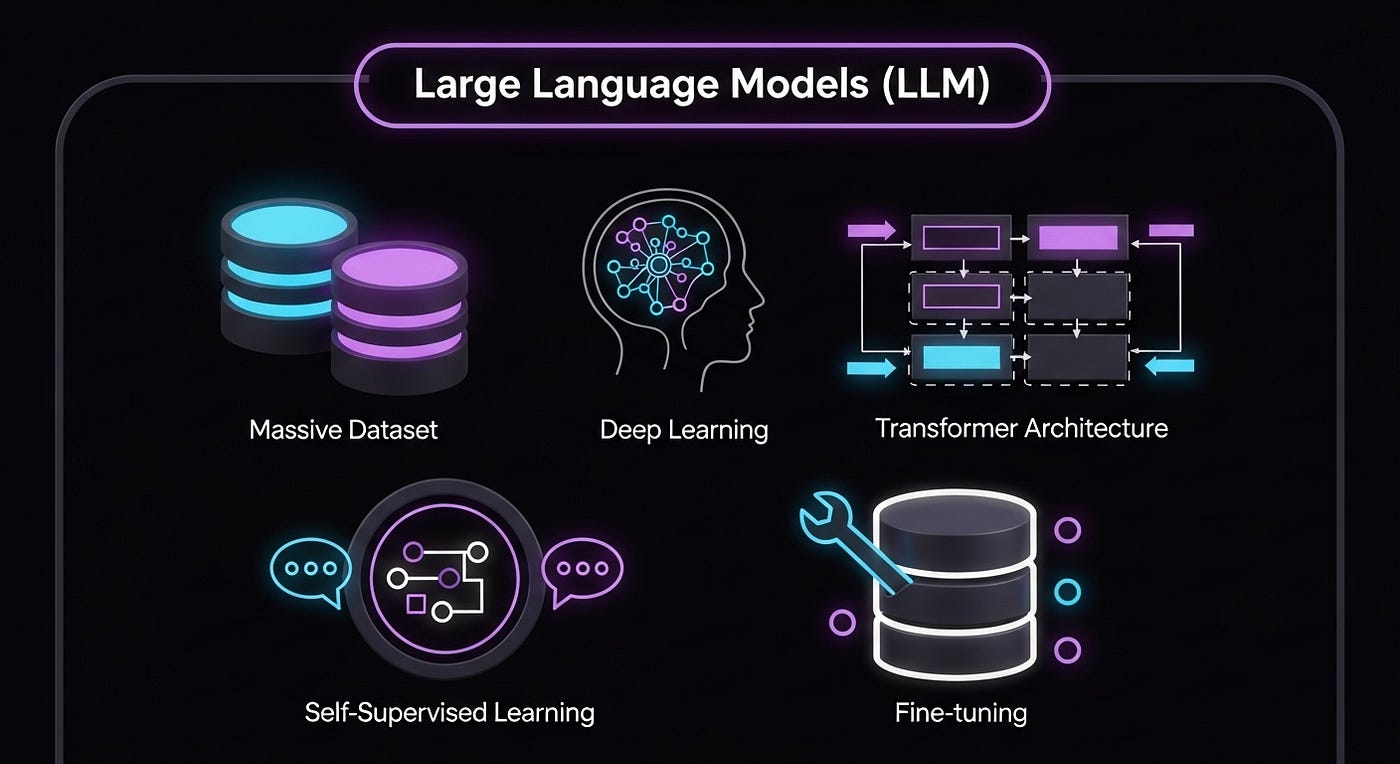
In academia, they call this “Stochastic Parrots,” or random parroting. When you say, “The sun rises in the east…,” it writes “rises.” It’s not because it’s thinking. It’s because, by looking at the billions of sentences in its training data, it calculates that “the most likely next word is this one with a 99% probability.” This is called Next-Token Prediction. There’s no mind inside it. It’s just a massive probability engine.
Well, have you ever thought about this?
What if we’re just like parrots?
That’s my take on it, but wait a minute. How does a baby learn language? By processing the data it’s repeatedly exposed to. It hears a word, imitates it, and reinforces it. There’s a concept called “grokking”: once the amount of data exceeds a certain threshold, the system starts to behave as if it has suddenly “figured it out.” This could apply to both artificial neural networks and the human brain.
But there’s a difference. Human knowledge is “tacit” based on lived experience, the body, and experience. You know how to ride a bike, but you can’t fully explain it in words. The mysterious aspect of AI, on the other hand, consists solely of mathematical weights. The two are truly different things.
A horse can feel fear, desire, and joy. It builds itself from within. A motorcycle, on the other hand, is fast but is manufactured in a factory. It can’t even tighten a single screw without external intervention. AI is exactly like that motorcycle. It’s very fast, very efficient. But it lacks that “spark of life” inside.
A simulation is not the same as real life experience.

If you asked AI a question while making your morning coffee and the answer surprised you, wait a second. It didn’t surprise you. It told you what you wanted to hear. Understanding this difference instantly makes you a much better user.
Don’t just tell the AI, “Write this.” Remember the “Chinese Room” argument: the clearer the rules you give the person in that room, the better the output you’ll get. Tell it, “Use this tone, avoid these words, structure it this way.” When your boss sends that annoying email, don’t expect creativity or empathy from the AI. Use it as a structure-building tool. Let it generate the draft, and you add the finishing touches. This way, you’ll save time and avoid disappointment.
As you scroll through TikTok, keep this in mind: The algorithm you encounter works on the same principle. It doesn’t know you. It simply tracks the icons you tap and your viewing time. To it, you’re not a person you’re a data set. Knowing this might help you view that endless scrolling loop from a slightly more detached perspective.
This is where the real problem begins.
AI explains things without understanding them, but with incredible confidence. This is called a hallucination. And it’s not just a technical glitch. It stems from the very nature of the system. A probability engine devoid of meaning can pass off false information as absolute truth.

In the 1770s, there was a chess-playing automaton called the “Mechanical Turk.” It defeated Napoleon. It defeated Benjamin Franklin. Everyone said, “There it is a thinking machine!” But inside was a secret chess master a real human being. Today, the situation has completely reversed. There’s no human inside, but it acts as if there were. And here’s the difference: The master inside the Mechanical Turk had true understanding. Inside artificial intelligence, however, there are only algorithms pulling the strings.
If we start to confuse this simulation with reality, the problem goes far beyond individual error. Medical advice, legal documents, political decisions… All of them could be generated by a system that “appears to understand but actually does not.” And people might accept them without ever asking, “Wait, could this be wrong?” An intelligence disconnected from meaning can erode our sense of truth without us even realizing it.

When you lie in bed and stare at the ceiling, think about this:
If one day a machine were able to perfectly mimic what we call “meaning” without feeling anything, how would we know whether this thing called “meaning” actually exists?
Perhaps the real question isn’t whether machines think. Perhaps we, too, are merely prisoners in our own biological cells, poring over our genetic rulebooks and projecting only the most likely response outward.
And we’ll never truly know.
메타데이터
- post_id
- 6c4f53afbce1
- slug
- does-ai-really-think-or-is-it-just-a-trillion-dollar-parrot-6c4f53afbce1
- url
- https://medium.com/@nimpai/does-ai-really-think-or-is-it-just-a-trillion-dollar-parrot-6c4f53afbce1
- canonical_url
- https://medium.com/@nimpai/does-ai-really-think-or-is-it-just-a-trillion-dollar-parrot-6c4f53afbce1
- author_url
- https://medium.com/@nimpai
- status
- ok
- fetched_at
- 2026-07-09 23:07:12