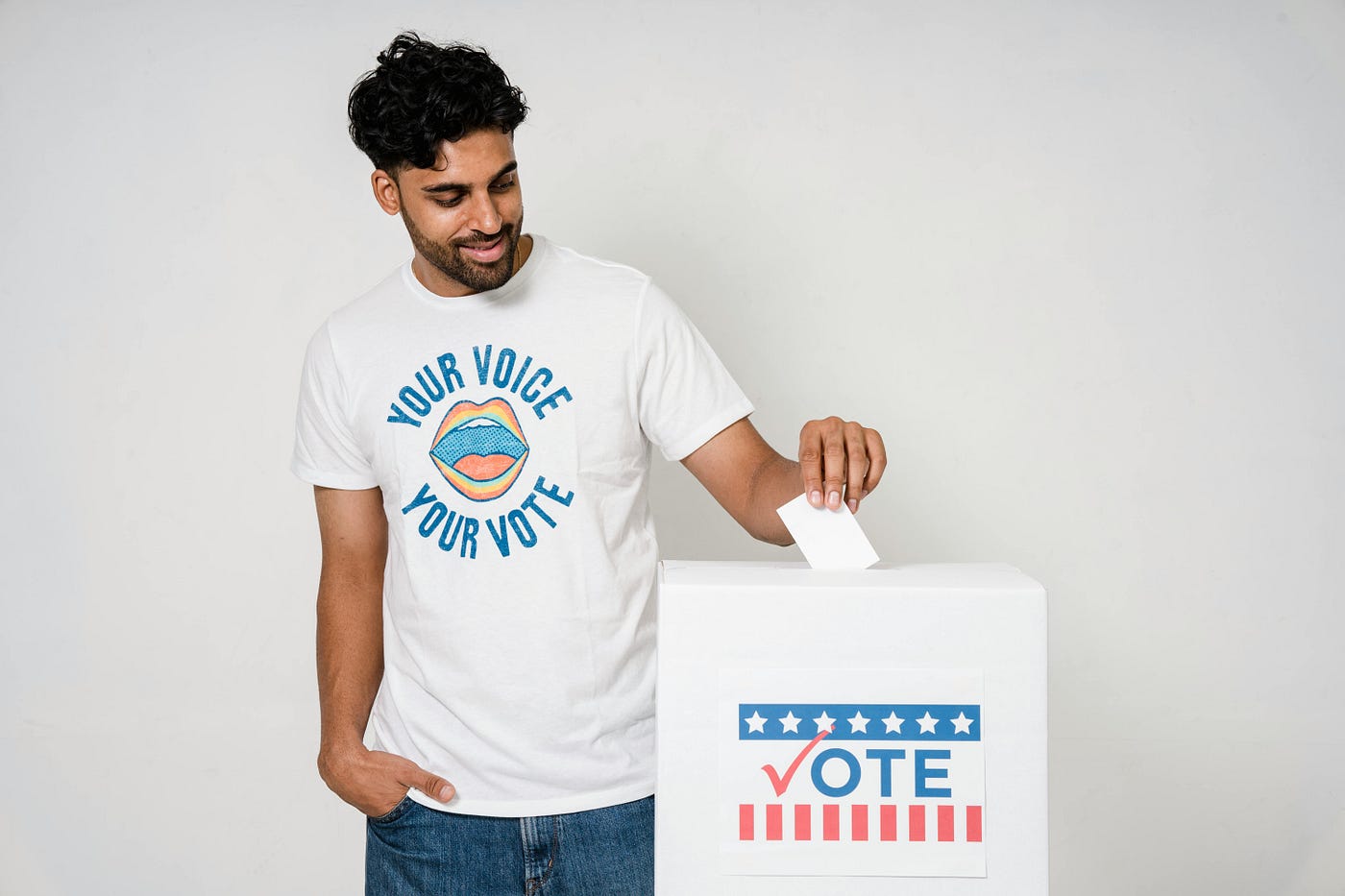
Turning Civil Rights Upside Down
Terry H. Schwadron

Turning Civil Rights Upside Down
Terry H. Schwadron
Jan. 7, 2026
When it’s not busy taking over countries, the Trump administration is busying itself by turning civil rights enforcement on his head.
A couple of weeks ago, a video from the Equal Employment Opportunity Commission began airing on X, the social media channel. In it chairwoman, Andrea Lucas asks, “Are you a White male who has experienced discrimination at work based on your race or sex?”
The video invites the nearly six million viewers who have clicked on it to file claim to recover money under federal civil rights laws “as soon as possible.”
That unprecedented appeal to White men reflects the sea change at the EEOC that is central to Donald Trump’s agenda — to stamp out “illegal discrimination” arising from diversity, equity and inclusion (DEI) programs and “anti-American bias,” Lucas recently told The Washington Post in written responses to submitted questions.
Trump has issued executive orders to gut affirmative action, purged the EEOC board and insisted on enforcement of rules guarding pregnancy and religious bias — all drawing challenge from employers, civil rights advocates and others confused by where the turnabout is leading. Current EEO leadership insists that previous administrations have ignored White complainants — as a statement explained, “many employees thought they weren’t the “right” kind of plaintiff, that our civil rights laws only protected certain groups, rather than all Americans.”
Recognizing a Problem
The EEOC started in 1964 to enforce emerging federal Civil Rights federal laws that make it illegal to discriminate against a worker or job applicant based on race, sex, religion, age, disability and other factors. Most employers with at least 15 employees are bound by EEOC regulations on hiring, firing, promotions and wages. The agency has recouped billions in monetary rewards for victims of workplace bias and harassment during the past decade.
In January, Trump dismissed two Democratic members of the independent commission to a Republican majority that could start the new outlook. The commission, which normally has handled 200–300 complaints a year of maybe 30,000 submitted, cut that to 93 with suits alleging discrimination based on race or national origin. About a third of those involved complaints of mistreatment of pregnant employees. Another 22 involved religious discrimination.
The EEOC has moved away from complaints filed under claims of disparate impact, a legal theory that holds that policies including height or lifting requirements can have discriminatory outcomes. In April, Trump barred use of disparate impact by agencies, calling it a “pernicious movement” that ignores “individual strengths, effort or achievement.
The reasoning has been to move away from seeing complainants as part of groups — racial or gender groups — and only as individual cases.
Those who support the change, including the conservative Center for Equal Opportunity, argue that there has been a need to correct for past administrations that “used the tools in the toolbox to push things up to, and even over, the line because of their goals,” especially with DEI and other social issues.
Labelling DEI ‘Illegal’
“DEI” refers to practices companies use to ensure equal opportunity in their ranks, from recruiting and mentorship programs. After the Supreme Court struck down the use of racial considerations in college admissions in 2023, many companies reassessed their diversity, equity and inclusion programs. Lucas and others in the Trump administration often refer to “illegal DEI.”
Civil Rights advocate Valerie Wilson, director of EPI’s Program on Race, Ethnicity, and the Economy, argue that like dismantling DEI have “turned the mission of the EEOC on its head, in a way that weaponizes it against the people that it was intended to protect.”
Earlier this year, the EEOC targeted 20 law firms to ask about hiring and promotion practices. Two lawsuits that EEOC has pursued alleged bias against U.S.-born workers in favor of foreign ones, including one settled with a hotelier in Guam.
The EEOC has dismissed cases filed on behalf of transgender workers and stopped processing new gender identity complaints to comply with Trump’s executive order that prohibits agencies from using federal funds to support gender-identity issues, Over the summer, the agency resumed processing some transgender discrimination cases, although the complaints will be subject to a heightened level of review.
It takes a deep breath and a whole lot of chutzpah to look away from those who historically have carried the burden of discrimination who no longer qualify as a priority for an agency meant to enforce civil rights.
메타데이터
- post_id
- 6c847e850eca
- slug
- turning-civil-rights-upside-down-6c847e850eca
- url
- https://medium.com/@terryschwadron/turning-civil-rights-upside-down-6c847e850eca
- canonical_url
- https://medium.com/@terryschwadron/turning-civil-rights-upside-down-6c847e850eca
- author_url
- https://medium.com/@terryschwadron
- status
- ok
- fetched_at
- 2026-06-16 19:09:56