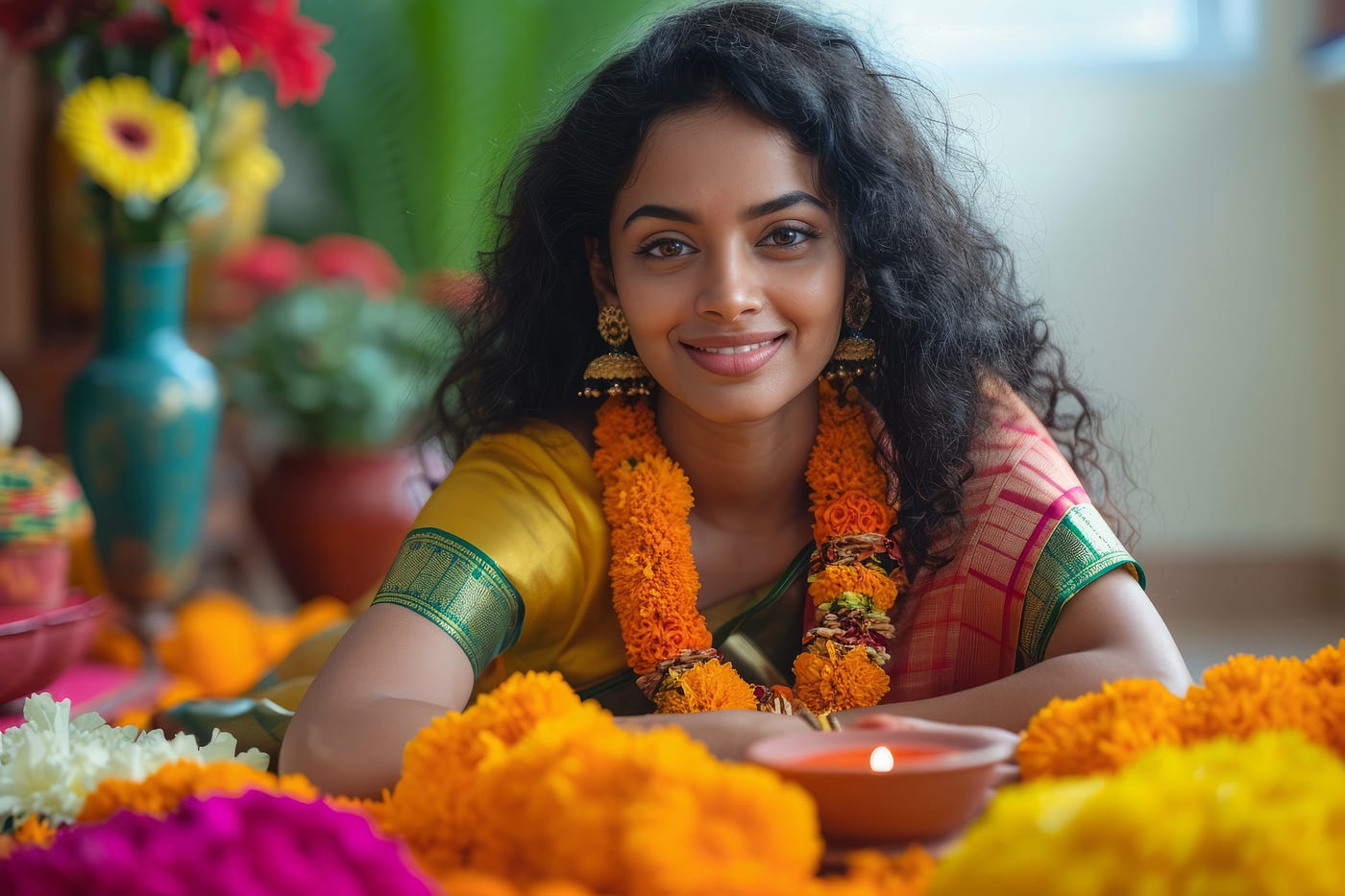
The Importance of Vishu
Vishu celebration in Kerala, India
CULTURE-INDIA
The Importance of Vishu
Vishu celebration in Kerala, India

Vishukkani — Image by author
What is Vishu?
Vishu in Sanskrit means equal. On Vishu day the day and night will be equal time in India. Vishu is commemorated on the first day of the Malayalam month of Medam, which typically falls on April 14 or 15 in the Gregorian calendar.
Vishu in Kerala
This day is celebrated as New Year in Kerala and called Vishu festival. This year Vishu falls on 14th of April 2025, (first day of Malayalam month Medam). Those who are staying away from their homes for the sake of employment or studies will try to reach their homes for the celebration of the festival with their families.
Konnapoo — Photo by COARSE + FINE on Unsplash
In other parts of India
This festival is celebrated not only in Kerala, it is also celebrated in other parts of India with different names. It is Puthandu in Tamil Nadu, in Punjab it is called Baishakhi, in West Bengal it is called Pohela Boishakh, Bihu in Assam, and Pana Sankranthi in Odisha. This festival is celebrated all these places with much passion and fervour.
Legends behind this festival
Vishu festival is steeped in legends and folklore. It is believed that on Vishu day, Lord Krishna, the 8th incarnation of Lord Vishnu, killed a demon called Narakasura, to restore peace. Another legend goes like this. Ravana, the demon king, who had prevented the Sun God arising from the east, was killed by Lord Rama on this day and then the Sun God began to rise in the east. In both these stories, the main idea was bringing hope and prosperity to the people.
How is Vishu celebrated in Kerala?
An age-old tradition of Vishu is the display of Vishukkani. The word ‘kani’ literally means ‘that which is seen first.’ It is believed that this sight at the dawn of the day of Vishu would bring prosperity and luck for the whole year.
On the previous night of the Vishu, the head woman of the family (mother or grandmother) sets a Vishukkani, the most important part of the festival. This Vishukkani is set in a big brass tray called ‘uruli’ filled with auspicious items like fruits, vegetables, religious book like Ramayana, gold, flowers and coins. The most important ones among them are golden cucumber (yellow colour cucumber), coconut cut into two halves, lemon, mango, jackfruit, betel leaves, one-rupee coins (these days replaced by notes), valkkannadi (a type of mirror), with a metal lamp called Nilavilakku alongside, etc. The idol of Sri Krishna or Vishnu is kept in the center and decorated with kasavu mundu, and the golden color konnapoos (Cassia fistula). This konnapoos are a MUST for the kani.
There is an interesting story about the importance of konnapoos for Vishu, which I will write in another post later.
Before everyone wakes up, the mother wakes up at dawn and lights the Nilavilakku and sees these auspicious items through the mirror (vaalkkannadi), for a prosperous and happy year ahead and offer her prayers to God for blessing her family in abundance. Then she wakes up others in the family and brings them to see the Vishnukkani in the glorious light of the Nilavilakku and the happy face of the God’s idol. The sight is a feast to the eyes. They too offer their prayers there.
As kids I remember we were taken blindfolded to avoid seeing anything else before Vishukkani.
The next step is bursting firecrackers to announce the welcome of the new year like Deepavali.
After having a bath, everyone will go to the nearby Vishnu (Krishna) temple, in their new clothes bought for the festival.
All Krishna temples in Kerala will be crowded with devotees to have His darshan on this auspicious day.
Then the head of the family gives Vishukkaineettam (cash) to all the members of the family, wishing them to have a great year ahead. Other members of the family too give Vishukkaineettam to the members who are younger to them. Everyone rejoices with Vishukkaineettam and the kids check with each other how much they have received in toto.
The Vishukkaineettam is given not only to the members of the family, but it is also given to the people who work for the family and wish them a prosperous year ahead. Along with it, they are also given new clothes.
Then breakfast is served which is special item called Vishu kanji made with rice and coconut.
A special lunch called sadya is served with varieties of vegetable dishes on banana leaf, which involves all types of tastes, reminding them that life ahead is with all flavours (joys and sorrows). The family members sit together and enjoy the lunch followed by payasam (a sweet desert).
Thanks for reading. I’d like to know your thoughts on this.
메타데이터
- post_id
- 6c8ba79de1f9
- slug
- the-importance-of-vishu-6c8ba79de1f9
- url
- https://medium.com/the-heritage-pub/the-importance-of-vishu-6c8ba79de1f9
- canonical_url
- https://medium.com/the-heritage-pub/the-importance-of-vishu-6c8ba79de1f9
- author_url
- https://medium.com/@infoesiv
- status
- ok
- fetched_at
- 2026-07-16 00:34:44