Realistic Launch Timeline for a Porter Clone: A Founder’s Playbook
Every vendor site promising a Porter clone in “two weeks” is selling you a demo, not a business. A real launch one with paying drivers…
Realistic Launch Timeline for a Porter Clone: A Founder’s Playbook
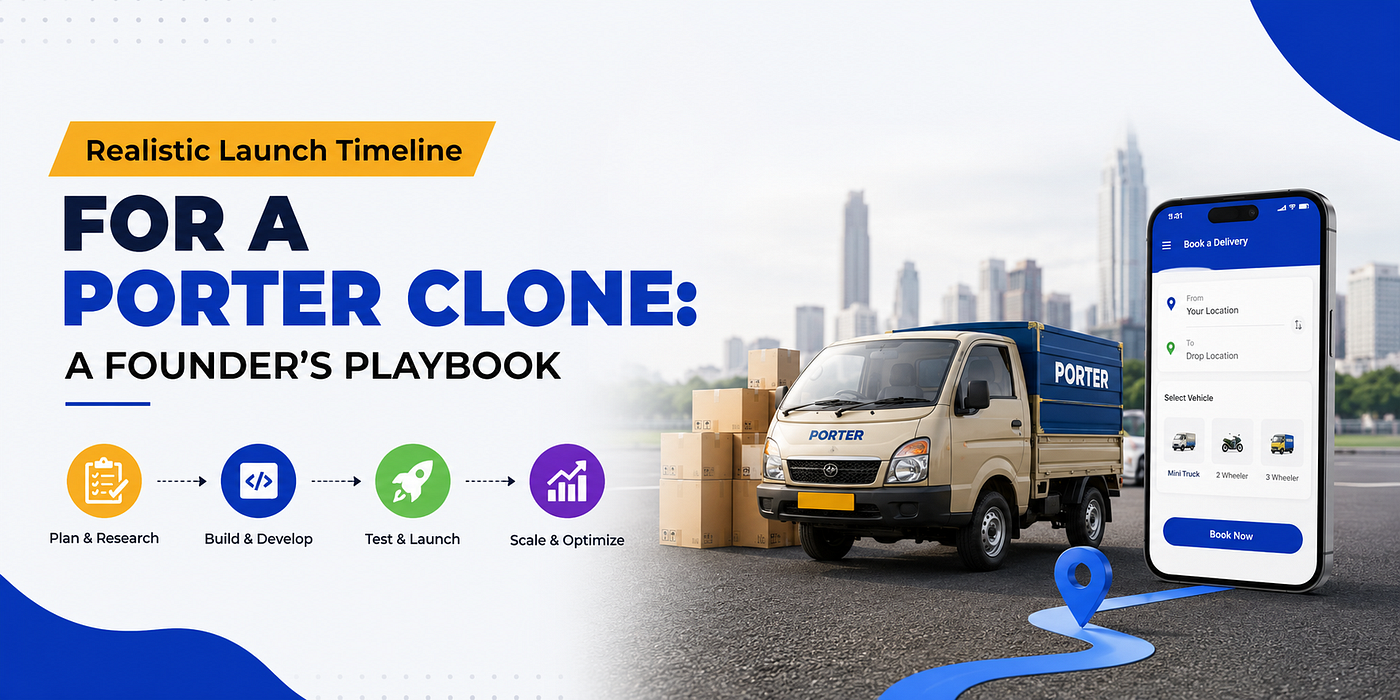
Every vendor site promising a Porter clone in “two weeks” is selling you a demo, not a business. A real launch one with paying drivers, working payments, and a customer base that trusts your app — takes longer. Not because the technology is hard, but because logistics apps live and die on operational details most timelines skip entirely. Here’s what an honest twelve-week runway actually looks like, based on how these launches tend to play out in practice.
Weeks 1–2: Discovery and Scope
- Define your service area and vehicle categories (bikes, mini trucks, tempos)
- Lock your pricing model before writing a line of code
- Decide build-from-scratch versus licensing an existing script
- Map local regulatory requirements for logistics operators
Weeks 3–6: Core Build
- Booking flow: pickup, drop, item details, fare estimate
- Driver app: trip acceptance, navigation, status updates
- Admin panel: driver approval, commission settings, dispute handling
- If you’re using a white-label script, this phase compresses to one to two weeks
Weeks 7–8: Payments and Compliance
- Payment gateway integration and testing (this always takes longer than planned)
- Driver payout structure and settlement cycle
- Terms of service, insurance disclaimers, data privacy policy
Weeks 9–10: Driver Pilot
- Onboard fifteen to twenty drivers in a single zone only
- Run real bookings with your own team as test customers
- Fix the bugs that only show up under real GPS and real traffic
- Collect driver feedback on the app’s usability, not just customers’
Weeks 11–12: Soft Launch
- Expand to a single city zone, not the whole city
- Track cancellation rate, driver response time, and repeat bookings
- Hold off on marketing spend until your operational metrics are stable
What Actually Delays Launches
- Payment gateway approval taking longer than expected
- Underestimating driver onboarding and training time
- Scope creep adding features before the core flow is proven
- Skipping a pilot phase and going straight to a full-city launch
The Budget Reality Check
- Custom build: three to five months, higher upfront cost, full ownership
- White-label script: three to five weeks to launch, lower upfront cost, faster revenue validation
Neither path is universally “better” it depends on how much runway you have to prove the model before you need revenue.
Conclusion
If your goal is to validate demand before committing to a long custom build, a pre-built option shortens that twelve-week runway considerably. Porter clone script comes with the driver onboarding, payments, and admin controls described above already in place, worth considering if speed to your first pilot matters more than building everything in-house.
메타데이터
- post_id
- 6c97edab91a2
- slug
- realistic-launch-timeline-for-a-porter-clone-a-founders-playbook-6c97edab91a2
- url
- https://medium.com/@katherineroyii31/realistic-launch-timeline-for-a-porter-clone-a-founders-playbook-6c97edab91a2
- canonical_url
- https://medium.com/@katherineroyii31/realistic-launch-timeline-for-a-porter-clone-a-founders-playbook-6c97edab91a2
- author_url
- https://medium.com/@katherineroyii31
- status
- ok
- fetched_at
- 2026-08-02 17:00:01