Middle Management
When something breaks, my family calls me. Recently, that included a vertebra.
Middle Management
When something breaks, my family calls me. Recently, that included a vertebra.

Senior moments, by Jsme MILA for PEXELS
“Hey, Mom!” I said into the phone on a Friday evening a few weeks ago. A piece of my writing was published, and I was already mentally on my weekend.
There was a pause, and I could hear some background noise on the phone.
“June, I’m in the ER.” Before I could respond, Mom continued in her normal upbeat voice, “I wanted to let you know, but I’m okay. How are you?” The emphasis was on the last sentence.
How was I? The first time this happened, I was frantic. Mom was in her eighties, lived alone, and I lived several hundred miles away. This time around, I just sighed and said, “What happened?”
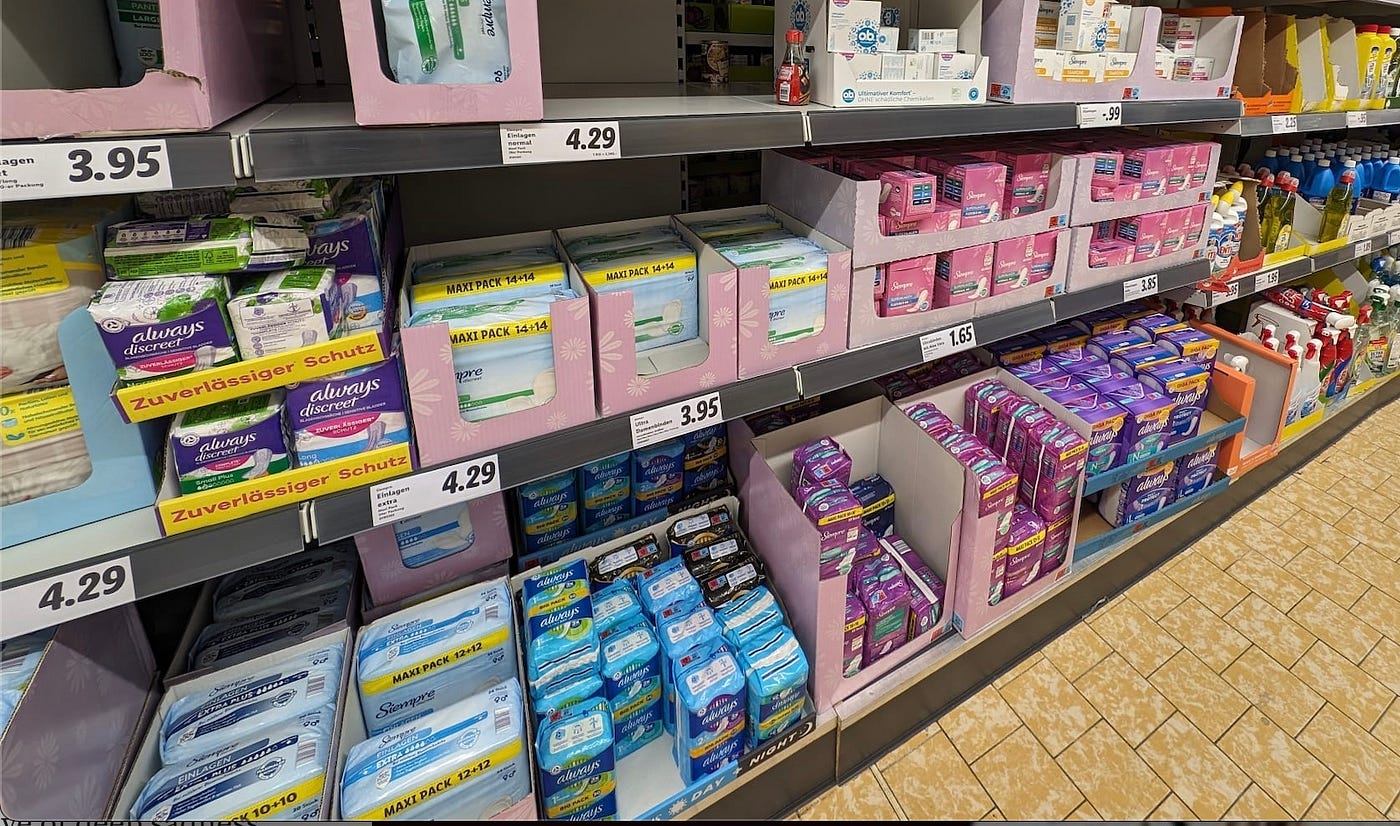
“Well, I was trying to get a cart at Aldi, and when I pulled, I fell backward and hit my head. It hurt, but I was able to get up and do my shopping.”
I tried to imagine this happening as Mom continued. I pictured her wearing a bright fuchsia turtleneck and jangly earrings, sprawled out on the black pavement.
“Once I got my groceries from Aldi, I went to Giant because I needed a few other things,” she said nonchalantly. “Aldi has good prices, but they don’t have everything. When I got home, I put the groceries away and decided to lie down because I was tired and the area around my kidneys hurt.”
I thought about mom lugging grocery bags up three flights of concrete stairs. I was horrified, but at some level, her stubbornness was frankly aspirational. Evidently, she rationalized that I would have suggested she get checked out, so she decided to take a Lyft to the hospital.
Her call reminded me of my son, who was away at college, a few hundred miles in the opposite direction from Grandma. Over FaceTime, he asked me about how to treat various ailments and deal with challenges. Inevitably, my son would imitate me and say, “I’m here if you need anything.”
Even my mother-in-law, who was an hour away, and my adult daughter, a few miles away, knew I was the go-to person just in case. I was the one my daughter called when she had medical questions, ranging from her annual gynecological exam to the eczema that we had been treating since she was a toddler. My mother-in-law eschews doctors, though she worries about a host of things that she now needs help to handle — from air conditioner installation to taxes to spam texts that she feels must be intended for her. Thankfully, nothing was dire, though I felt responsible.
My friends talk a lot about this feeling of being responsible. Some people have labeled it the sandwich generation, yet that sounds soft and manageable. Mine is more like a panini press on stale gluten-free bread.
Back to my mom. I knew I couldn’t get to the hospital quickly, so I texted my stepbrother’s wife (my stepfather’s long gone, but his son and family have maintained an amazing relationship with my mom). She dropped everything and got to the hospital in time to bring Mom home. Having a network in the area, when I couldn’t be present, was pivotal. My sister-in-law texted updates on my mom’s condition, editorializing freely. The diagnosis was a fractured T11 vertebra, which explained the kidney pain. I made a note to call in the morning.
That next morning, Mom was okay, but my husband reminded me that the meds likely hadn’t worn off. A few hours later, that was abundantly clear when my phone rang.
“June, I need you.” There was no upbeat banter and no pivoting to something else.
It was like getting calls from day care when my kids were little; no matter what I was doing, I needed to drop everything and get to the day care ASAP. So, I said, “Okay, I’ll pack my stuff and head down.”
I threw clothes into a bag, grabbed my laptop, and shoved my just-made overnight oats into a cooler. Last year, Mom fell on ice, fracturing her shoulder, and then fell again, fracturing her foot, when we were at a wedding — so I sort of knew the drill. This time, I tried to figure out how many days of clothes and how many daily breakfasts of overnight oats a stay for a spinal fracture would require.
Four plus hours later, I opened her front door, revealing her living room. Mom trudged into the middle of the room — nightgown, salon hair (albeit a bit smushed in the back), and a wince she couldn’t quite hide. Mom has always accessorized for the occasion. This was not the occasion she’d planned.
I hugged her lightly, cautious that any pressure might hurt.
“What can I help you with?” I asked. My mom was still mentally astute; it was her body that wasn’t cooperating. So, I knew that she was in the best position to tell me what she needed.
As she explained the list of things she needed help with, from putting on the back brace that the hospital gave her to showering, I realized that, like parenting my kids without a manual, there was no Dr. Spock-like book that explained how to care for your aging parents. I have an MBA. I’ve managed programs, navigated bureaucracies, and created strategies for large companies. None of it had prepared me to fasten a back brace on my 82-year-old mother while she winced and told me I was doing it wrong.
That night, as I camped out on her sofa, I realized that I’d have additional time to help her with other things. Even though I had recently visited my mom and helped with a few items on her task list, a longer list of chores surely awaited me.
Over the next few days, I worked through her condo the way I always do — methodically, slightly obsessively (my daughter would say maniacally), and with the energy of someone who had nowhere else to be and a lot of feelings to redirect.
I cleaned out the fridge, which contained a container of something she thought might have been chicken, enough condiments and salad dressing to suggest she was one week away from opening a diner, and some other things that had an aroma that reminded me of the Pixar Ratatouille quote, “You know, if you could sort of muscle your way past the gag reflex, all kinds of food possibilities open up.”
Undeterred, I cleared her desk, updated her doctor portal logins, and submitted her passport renewal, which felt optimistic for reasons neither of us mentioned. I repaired her necklace, her earrings, a glass dreidel, the dishwasher rack, two board game boxes, the paper towel holder, and a nightgown that had quietly given up on one of its seams. I rearranged the area around the television. I made meals. I cleaned up after the meals. I considered billing by the hour.
She watched me from various chairs strategically placed near me, directing traffic and answering questions.
“That goes on the left.”
“I know, Mom,” I said, half-exasperated, half-exhausted.
“The other left.”
There is a particular kind of love that expresses itself entirely through tasks. I come from it; I am fluent in it. Somewhere in the back of my mind, I understood that if I fixed enough small things, the big thing — the stairs, the isolation, the third broken bone in fourteen months— might feel more manageable. It didn’t, quite. But the dreidel was intact, her passport was submitted, and her condiment situation was under control. I was choosing to count this as a win.
Our last conversation before I left was about my wardrobe.
“You should wear brighter colors,” she said, her face illuminated by her bright yellow shirt.
I explained that I live in New York, that black is practically a uniform, that drab colors are having a moment, and that I genuinely liked my clothes.
She considered this. “You don’t have to do what everyone else is doing.”
I didn’t know what to say (though my eyes may have rolled). It was clearly time to leave. So, I verified Mom had her medications, enough food, and someone coming to check on her. Then I kissed her goodbye, got in the car in my perfectly acceptable dark clothing, and started the four hours home.
I was tired in the specific way that comes from being needed without pause for several days straight, which is a different tired than regular tired and should honestly come with its own diagnosis. Three weeks from now, I’d be driving in the opposite direction to move my son out of his dorm. I was already mentally preparing for his fridge.
The sandwich doesn’t make itself. But everyone was fed, no one was in the ER, and I was wearing exactly the right amount of black.
Ⓒ 2026, June Capulette.
Note: June is working on a memoir in parallel to preparing for her next career pivot. Names have been modified.
메타데이터
- post_id
- 6cbf15bc433d
- slug
- middle-management-6cbf15bc433d
- url
- https://medium.com/middle-pause/middle-management-6cbf15bc433d
- canonical_url
- https://medium.com/middle-pause/middle-management-6cbf15bc433d
- author_url
- https://medium.com/@junecapulette
- status
- ok
- fetched_at
- 2026-06-18 00:10:23