How Ideas Spread and Behavior Forms: Understanding Diffusion of Innovation and Social Cognitive…
By Monica R
How Ideas Spread and Behavior Forms: Understanding Diffusion of Innovation and Social Cognitive Theory
By Monica R
In a world driven by constant change, have you ever wondered why some people rush to buy the latest smartphone while others stick to older models for years? Or why trends from fitness routines to fashion styles spread like wildfire on social media? The answers lie in two powerful communication theories: Diffusion of Innovation (DOI) and Social Cognitive Theory (SCT).
These theories help us understand not only how ideas and technologies spread through society, but also how human behavior is shaped by observation, environment, and personal belief. Together, they offer a fascinating lens into the way modern society evolves.
Diffusion of Innovation: How New Ideas Take Over
The Diffusion of Innovation Theory, developed by Everett Rogers in 1962, explains how new ideas, technologies, or practices spread within a society over time. Rather than everyone adopting an innovation at once, the process happens gradually, influenced by communication, social networks, and individual decision-making.
At its core, diffusion is about movement how something new travels from a small group of people to the wider population. Rogers famously described it as a process where an innovation is communicated through certain channels over time among members of a social system.
The Four Key Elements of Diffusion
To understand how diffusion works, it’s important to break it down into its essential components:
- Innovation: The new idea, product, or practice being introduced such as a new app, technology, or lifestyle trend.
- Communication Channels: The ways in which information spreads, including social media, advertising, word of mouth, and news platforms.
- Time: Adoption doesn’t happen instantly; it occurs over stages.
- Social System: The community or group within which the innovation spreads.
These elements work together to determine how quickly or slowlyan innovation gains acceptance.
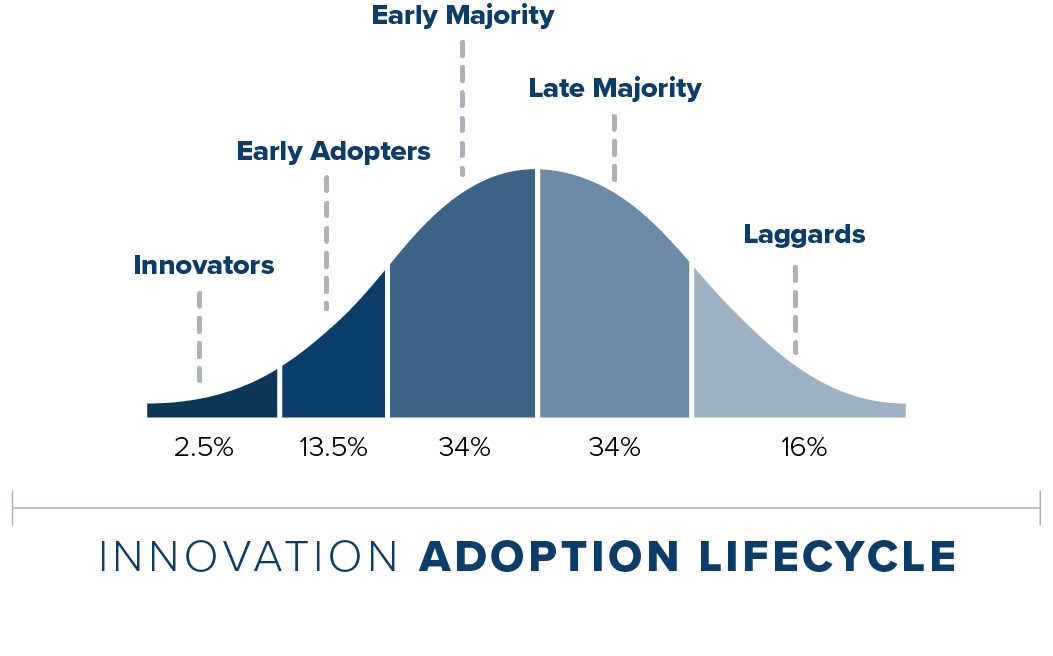
The Five Types of Adopters
One of the most interesting aspects of DOI is how it categorizes people based on how quickly they adopt new ideas:
- Innovators: The risk-takers who are the first to try something new.
- Early Adopters: Influential individuals who embrace innovation early and help spread it.
- Early Majority: People who adopt after seeing evidence that the innovation works.
- Late Majority: Skeptical individuals who adopt only when it becomes mainstream.
- Laggards: Those who resist change and adopt last, if at all.
This pattern explains why trends often start small, grow steadily, and eventually become widespread.
Real-World Examples of Diffusion
In today’s digital age, Diffusion of Innovation is more visible than ever. Consider how smartphones, social media platforms, or AI tools have spread. Initially, only tech enthusiasts experimented with them. Over time, as their benefits became clear, they reached the masses.
Companies like Apple Inc. and Tesla Inc. strategically target early adopters to build momentum. Once influencers and tech savvy users embrace a product, it quickly gains popularity among the general public.
Similarly, viral trends on platforms like Instagram or YouTube follow the same pattern starting with a few creators and eventually reaching millions.
Strengths and Limitations of DOI
Diffusion of Innovation is widely used in marketing, healthcare, and communication strategies because it helps predict how people respond to new ideas. It is particularly useful for planning product launches and public awareness campaigns.
However, the theory has its limitations. It often assumes that all innovations are beneficial, which is not always the case. It may also overlook cultural resistance and emotional factors that influence decision-making. Additionally, labeling slower adopters as “laggards” can seem unfair or overly simplistic.
Social Cognitive Theory: Learning by Watching
While Diffusion of Innovation explains how ideas spread, Social Cognitive Theory focuses on how people learn and adopt behaviors. Developed by Albert Bandura, this theory emphasizes that learning occurs not just through direct experience, but also through observation.
Bandura challenged the traditional idea that behavior is shaped only by rewards and punishments. Instead, he proposed that people observe others, interpret what they see, and then decide whether to imitate that behavior.
The Power of Observation
One of the key principles of SCT is observational learning, also known as modeling. This means that people can learn simply by watching others.
Bandura’s famous Bobo Doll Experiment demonstrated this concept. Children who observed adults behaving aggressively toward a doll were more likely to imitate that behavior. This experiment highlighted the powerful role of media and environment in shaping actions.
Triadic Reciprocal Determinism
At the heart of Social Cognitive Theory is a concept called Triadic Reciprocal Determinism. It suggests that behavior is influenced by three interconnected factors:
- Personal Factors: Thoughts, beliefs, and emotions
- Behavior: Actions taken by an individual
- Environment: External influences such as social settings and media
These elements constantly interact with each other. For example, a person’s belief in their ability (self-efficacy) can influence their actions, which in turn affects their environment and future beliefs.
Key Concepts of SCT
- Self-Efficacy: The belief in one’s ability to succeed. Higher confidence often leads to better performance.
- Reinforcement: Responses to behavior that increase or decrease its likelihood.
- Observational Learning: Learning by watching others.
- Reciprocal Determinism: The dynamic interaction between individual, behavior, and environment.
SCT in the Modern World
Social Cognitive Theory is incredibly relevant today, especially in the age of social media and digital content.
Think about influencer culture. When people see their favorite influencers promoting a lifestyle, fitness routine, or product, they are more likely to imitate those behaviors. This is SCT in action.
Similarly, YouTube tutorials, online classes, and study vlogs demonstrate how people learn by observing others. Even health campaigns use role models to encourage positive behavior, such as exercising regularly or eating healthy.
In classrooms, students often learn by watching teachers and peers. In workplaces, employees pick up skills by observing experienced colleagues. SCT explains all these scenarios.
Strengths and Limitations of SCT
Social Cognitive Theory provides a comprehensive understanding of how learning occurs in real-world settings. It highlights the importance of social influence, making it valuable in education, media studies, and behavioral psychology.
However, it also has limitations. Measuring internal thoughts and beliefs can be challenging, and the theory may not fully account for biological or genetic factors. Additionally, not all observed behaviors are imitated — people still make choices.
Connecting the Two Theories
When combined, Diffusion of Innovation and Social Cognitive Theory offer a powerful framework for understanding modern society.
- DOI explains how ideas spread.
- SCT explains how behaviors are adopted.
For example, a new fitness trend may spread through social media (DOI), but individuals adopt it by watching influencers and believing they can achieve similar results (SCT).
This combination is especially visible in digital culture, where trends and behaviors evolve rapidly.
Conclusion: Understanding Change in a Connected World
In today’s fast-paced, media-driven environment, ideas and behaviors are constantly evolving. Diffusion of Innovation helps us understand how new concepts gain popularity, while Social Cognitive Theory reveals how individuals learn and adopt behaviors through observation.
Together, they remind us that we are both influenced by and contributors to the world around us. We adopt ideas, share them, and shape the behaviors of others — often without even realizing it.
By understanding these theories, we become more aware of how trends influence us and how we, in turn, influence others. And in a world where change is constant, that awareness is more valuable than ever.


메타데이터
- post_id
- 6cd75c7f46be
- slug
- how-ideas-spread-and-behavior-forms-understanding-diffusion-of-innovation-and-social-cognitive-6cd75c7f46be
- url
- https://medium.com/@dgvaishnavjournalism/how-ideas-spread-and-behavior-forms-understanding-diffusion-of-innovation-and-social-cognitive-6cd75c7f46be
- canonical_url
- https://medium.com/@dgvaishnavjournalism/how-ideas-spread-and-behavior-forms-understanding-diffusion-of-innovation-and-social-cognitive-6cd75c7f46be
- author_url
- https://medium.com/@dgvaishnavjournalism
- status
- ok
- fetched_at
- 2026-06-22 17:31:34