F5 Syndrome
My inbox is empty, there’s nothing new, I still press F5.
F5 Syndrome
My inbox is empty, there’s nothing new, I still press F5.
and for social media, I know that much is new. I refresh.
One of the invisible obsessions of the modern age is how my hand automatically goes to the “refresh” button as if something is waiting for me there.
And I know it’s not.
I know there’s nothing new.
But maybe.
Maybe that message finally came.
Maybe that notification will drop at this exact moment.
I decided to call it “F5 syndrome.” And no, I’m definitely not the only one suffering from it these days.
This is the digital reflection of the moments when my mind can’t cope with emptiness.
Not a physical void, but a mental stillness, a stretch of silent anticipation. And right at that moment, B. F. Skinner’s conditioning theories make an entrance. Because this isn’t just a habit — it becomes an “accustomed expectation.”
The moment something important appeared in that inbox once, the possibility of it etched itself into my brain. And now, every silent space echoes that possibility back to me.
Our minds struggle to cope with emptiness, and in the absence of noise, we compulsively reach for the comfort of familiar gestures.
Even when nothing new is expected…
The mailman came at roughly the same time every day. The act of expecting a letter was tied to the rhythm of the physical world, and we knew when to check the mailbox.
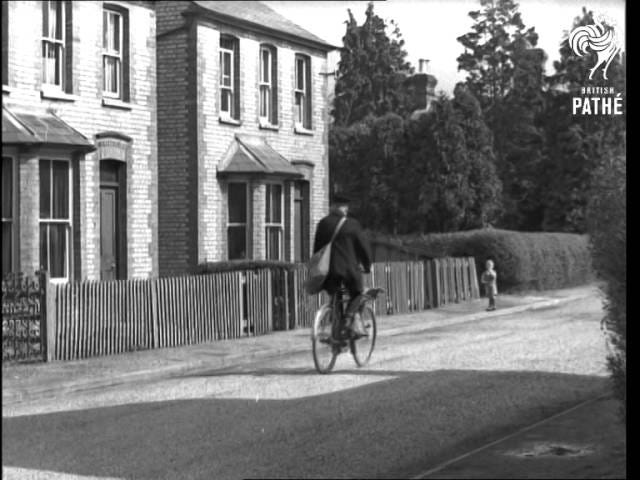
Source: Movie — The Postman (1940–1949)
No point in checking twenty times a day; you either caught the timing or you didn’t.
But now? Notifications arrive whenever, wherever. The rhythm is broken. The anticipation has no anchor. The uncertainty of timing keeps us on alert, and the hope of “maybe now” fuels the loop.
Especially in mobile interfaces, the pull-to-refresh gesture — sliding your finger downward to reload — is like a modern-day digital rosary. A repetitive motion tied to anticipation.

Source: TCM
This is not accidental — it’s behavioral design. What psychologists call intermittent reinforcement: when rewards are unpredictable, the behavior becomes harder to break.
Our brain doesn’t need a reward every time; the possibility is enough. Dopamine gets triggered not by receiving the notification, but by the expectation of it.
So what can we do? We begin, always, with noticing.
Second, restructure your life.
You can really give radical decisions, for example mine for Instagram:
[embed]I Stopped Using Instagram 3 Years Ago. Am I Happy?medium.com
Reframe mental silence not as void, but as presence. Emptiness can be generative. That “boring” moment could be where the next idea forms.
I truly believe that emptiness is so important:
[embed]Emptiness Why should we love emptiness?medium.com
Be gentle with yourself. This isn’t a war. These behaviors took years to condition. Noticing them is already a win. You may still pull down and refresh — and that’s okay.
The difference is that you’re aware.
The pull-to-refresh compulsion is a small but telling symptom of our age. Our hands repeat the same motion, again and again, like digital prayer beads — hoping something, anything, will come.
And perhaps it’s in that moment — when nothing arrives — that the mind is finally free!

Source: Stock
메타데이터
- post_id
- 6ce47a352bcd
- slug
- f5-syndrome-6ce47a352bcd
- url
- https://medium.com/psychology-behind/f5-syndrome-6ce47a352bcd
- canonical_url
- https://medium.com/psychology-behind/f5-syndrome-6ce47a352bcd
- author_url
- https://medium.com/@ozge.ynbl
- status
- ok
- fetched_at
- 2026-06-14 11:28:49