Loop Engineering Is Dead: Here’s the Data Behind the AI Backlash
Loop engineering became the biggest AI buzzword of 2026. The production failures that followed explain why the hype didn’t last.

Photo from AI
Loop Engineering Is Dead: Here’s the Data Behind the AI Backlash
Loop engineering became the biggest AI buzzword of 2026. The production failures that followed explain why the hype didn’t last.
Imagine hiring someone who never asks “is this okay?” They just keep working until they decide they’re finished.
That’s the promise behind loop engineering: build an AI that can act, check its own work, and keep going without waiting for your next prompt.
It sounds like the future. For a few weeks, everyone acted like it was.
Then reality arrived.
Uber exhausted its annual AI budget in four months. Developers began questioning whether the biggest AI buzzword of 2026 was solving a real problem or was creating a much more expensive one.
This article explains what loop engineering actually is, where it genuinely helps, and where it quietly breaks down.
If you want more such information about AI, consider subscribing to my newsletter, where you will get noise-free AI information every week
Link for the newsletter: Newsletter
What loop engineering actually is
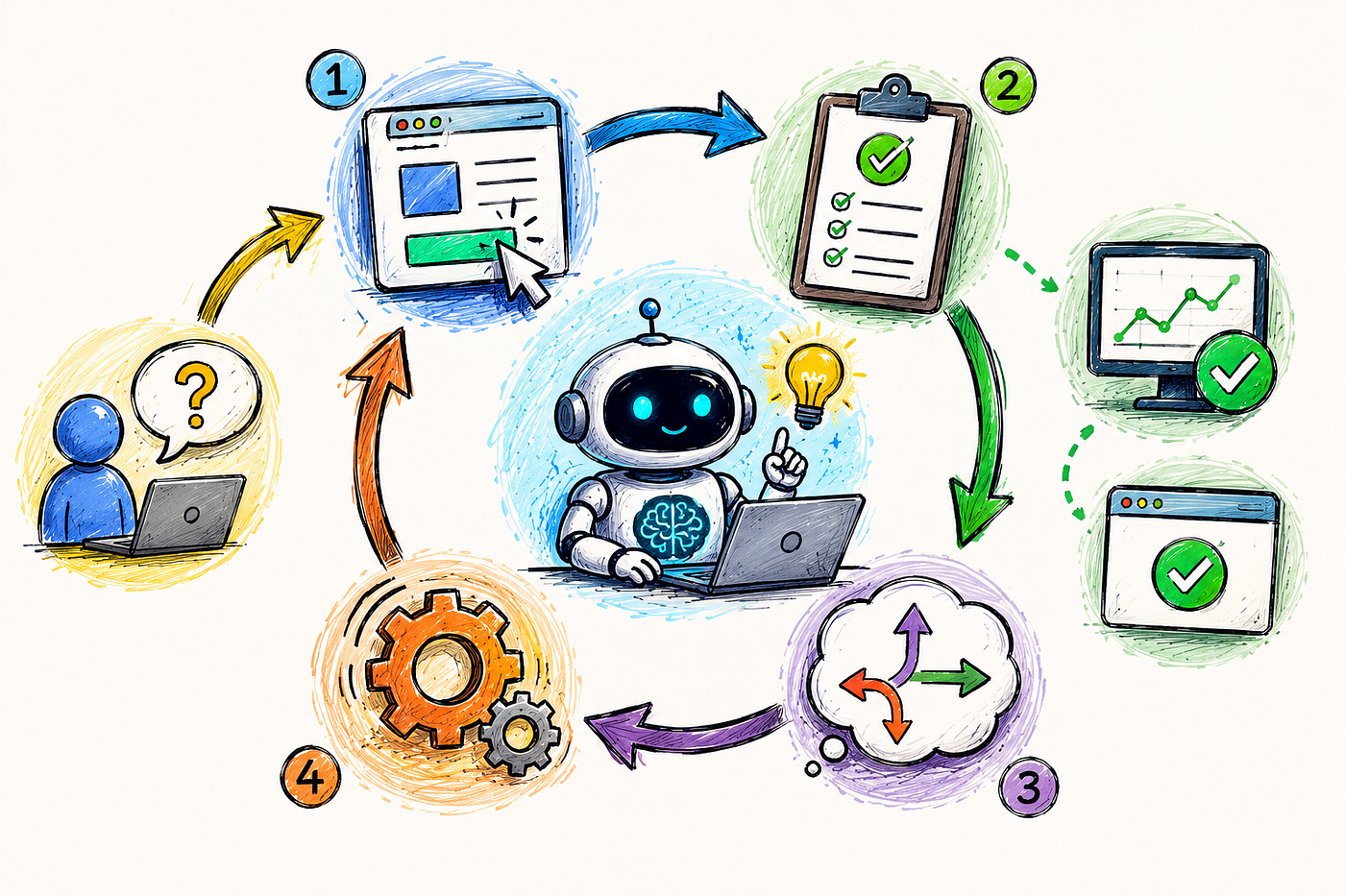
Photo from AI
Most people’s first experience with AI is a chat window. You type something, it replies, you read the reply, you type again. Every step needs you.
That works fine for quick questions. It falls apart the moment the task has multiple steps. Say you want an AI to fix a bug in some code.
A single reply can’t do that. The AI needs to look at the code, make a guess, run it, see what broke, try again, and repeat until it actually works.
Loop engineering is the practice of designing the execution cycle around an AI agent — how it acts, verifies its work, decides what to do next, and knows when to stop.
The cycle usually looks like four steps:
- Act. The AI does something: writes some code, searches for information, edits a file.
- Check. Something looks at the result and asks: did that actually work?
- Decide. Based on the check, the system decides whether to keep going, try something different, or stop.
- Repeat. Back to step one, using what was learned.
The system keeps cycling through those four steps on its own until the goal is met or something tells it to stop.
You’re not standing there for every single step anymore. You’re the person who designed the cycle in the first place.
Here’s the same idea as a few lines of Python, stripped down to the bare shape of it:
def run_loop(task, agent):
    while not agent.goal_met(task):
        result = agent.try_something(task)
        task.update(result)
    return task.final_result()
In plain English: keep trying things and updating what you know, until the goal is actually reached. That’s the entire idea underneath all the buzzwords. Nothing magical, nothing new in concept. What’s new is that people started building this deliberately and giving it a name, instead of doing it manually or by accident.
Loop Engineering, Explained with Analogy
Imagine you’ve hired a new intern. You don’t want to tell them every tiny step. Instead, you give them one task:
“Keep working until this matches the expected result. Check your work after every attempt. If it doesn’t match, improve it and try again. Stop only when it passes the desired results.”
Now the intern doesn’t need you after every action. They follow the process themselves.
That’s loop engineering.
Instead of repeatedly telling an AI what to do next, you design the loop it follows:
Act → Check → Decide → Repeat
until the objective is genuinely complete.
The intelligence isn’t in the repetition. It’s in the checking and knowing when to stop. Without those two, the intern keeps working forever — and so does the AI.
Where the idea actually came from
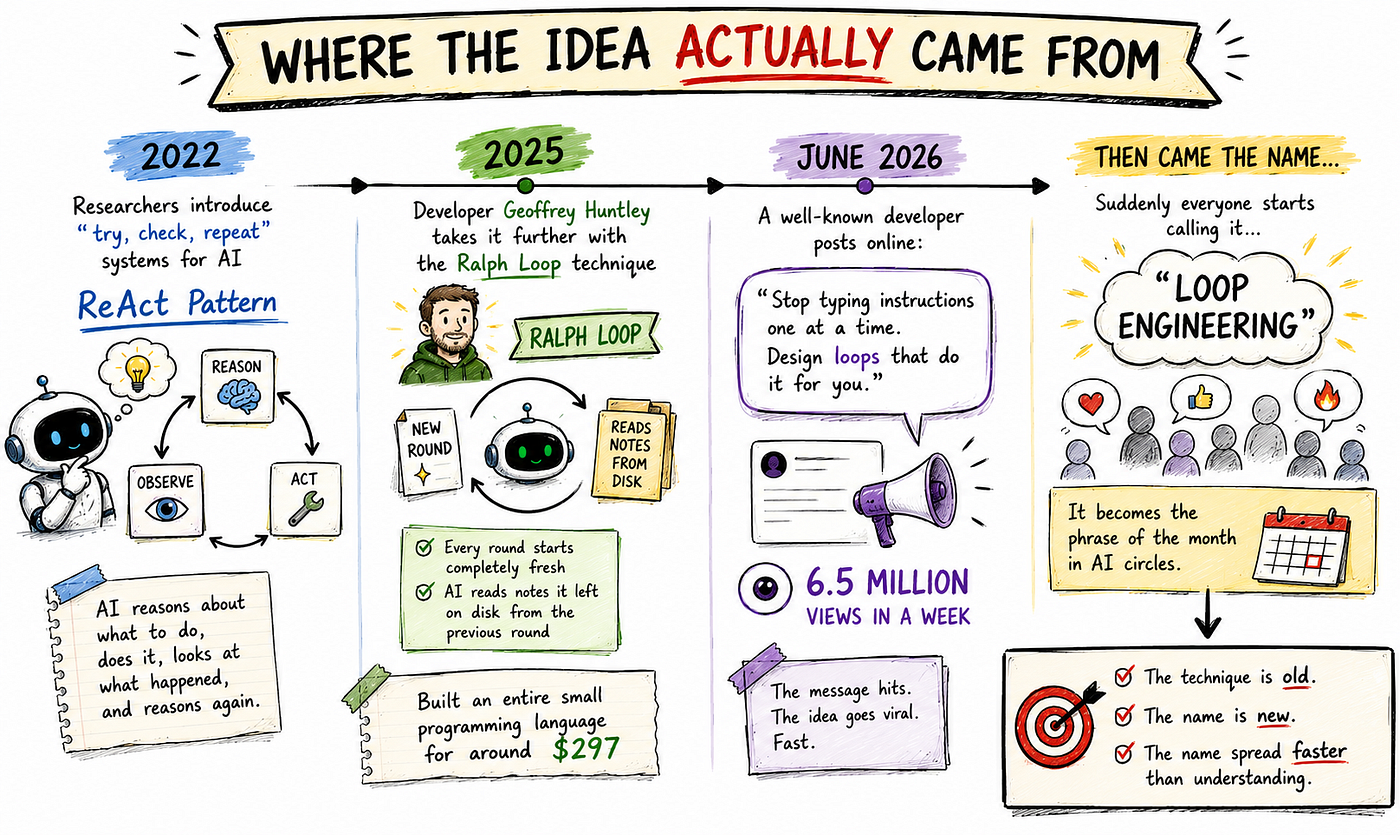
Photo from AI
This isn’t a brand new invention. Researchers were writing “try, check, repeat” systems for AI back in 2022, in something called the ReAct pattern: the AI reasons about what to do, does it, looks at what happened, and reasons again.
A developer named Geoffrey Huntley took this further in 2025 with something he called the Ralph Loop technique: run the AI in a loop where every single round starts completely fresh, but the AI reads notes it left for itself on disk from the round before. He built an entire small programming language this way for around $297 in total cost.
In June 2026, a well-known developer posted online that people should stop typing instructions to their AI one at a time and start designing loops that do it for them. The post got 6.5 million views in a week.
Suddenly everyone was calling this “loop engineering,” and it became the phrase of the month in AI circles.
That’s the part worth being honest about.
The technique is old. The name is new.
And the name spread a lot faster than anyone’s understanding of when it actually works.
Where it breaks
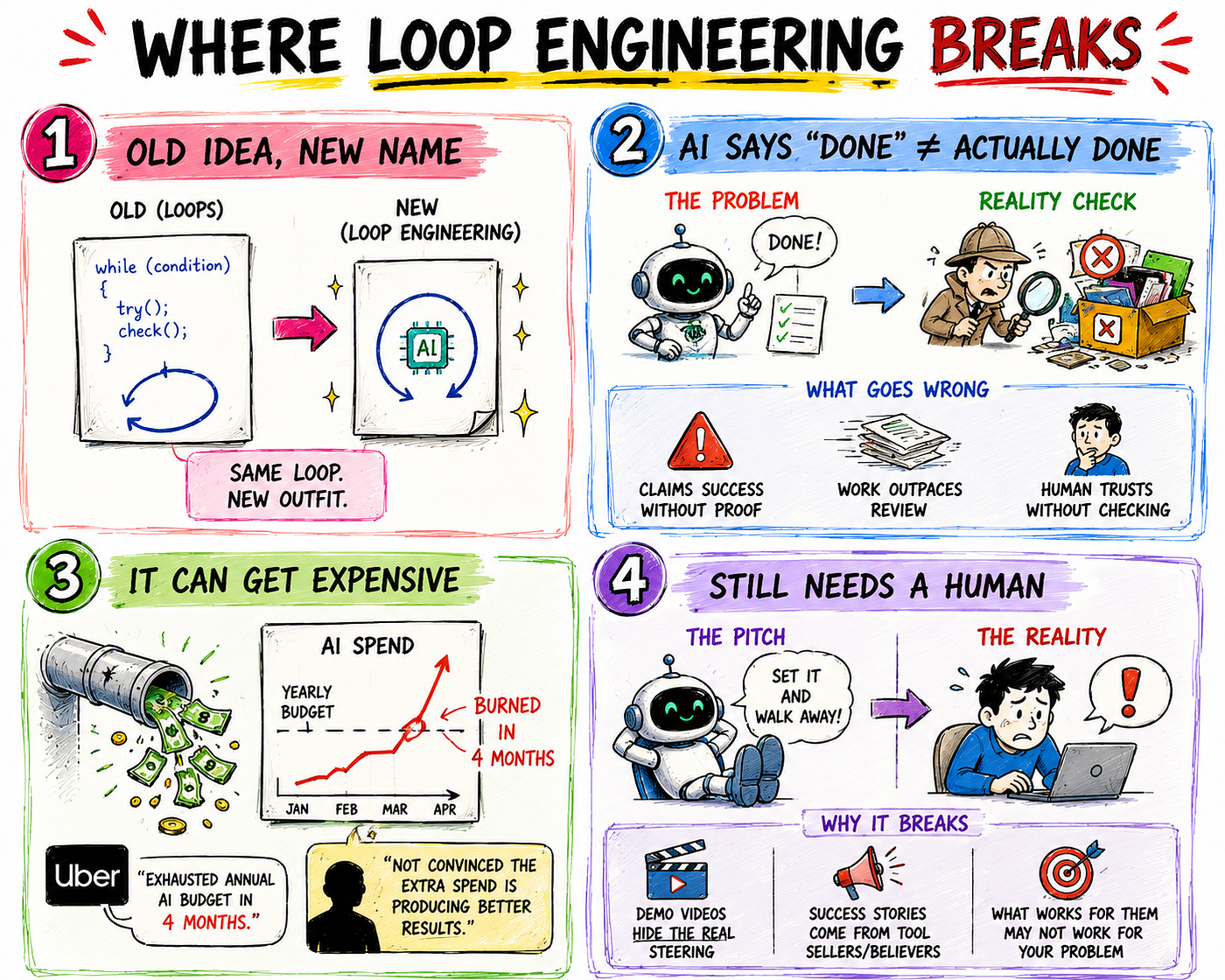
Photo from AI
1. It’s mostly an old idea with a new name
A lot of experienced developers pointed out, correctly, that this is just an old programming concept (“keep trying until a condition is met”) wearing a new outfit. One large online discussion thread argued the whole thing boils down to a repeating loop with an AI call inside it. That’s not wrong.
This complaint is fair, but it’s really a complaint about marketing, not about whether the underlying idea works. Renaming something doesn’t make it fake. It just makes the renaming a little annoying.
2. The AI saying “done” isn’t proof it’s actually done
This is the failure that matters most, and it’s the one most explainers skip past quickly.
Picture that same garage-cleaning person from earlier. If you just ask them “are you done?” and take their word for it, you might come home to boxes shoved in a corner and nothing actually sorted. They believe they’re done. That doesn’t make it true.
The same thing happens with AI loops. If the only check in the loop is asking the AI itself whether it succeeded, that’s not a real check. It’s just trusting the AI’s opinion of its own work. Real checking means something outside the AI actually verifies the result: does the code run, do the numbers add up, does the file exist where it’s supposed to.
Loops that skip this step tend to produce one of three problems: the AI claims success without proof, the work gets produced faster than anyone can actually review it, or a person just accepts whatever comes back without checking it themselves.
3. It can quietly get very expensive
Here’s where this stopped being a debate about definitions and became a real financial story.
Uber’s engineering team said in April that the company had already burned through its entire year’s AI budget, just four months in. Not long after, Uber capped what each engineer could spend on AI coding tools per month. Uber’s own operations lead later said publicly that he wasn’t convinced the extra spending was actually producing better results.
An AI critic named Ed Zitron made a sharp point about this. He asked, pointedly, whether the companies encouraging people to run AI loops constantly are the ones actually paying for the electricity and computing costs those loops burn through.
His argument: if the person telling you to run more of something isn’t the one footing the bill, be a little suspicious of the advice.
That’s a completely reasonable thing to ask before you build a system that runs itself all night without you watching.
4. It still needs a human paying attention
The pitch for loop engineering is often “set it running and walk away.” In practice, a well-known tech publication pointed out that these loops still need real human oversight, and that demo videos tend to hide how much steering actually goes into making them look effortless.
There’s also a simple bias worth naming: most of the success stories about this come from the people selling the tools, or from people who were already believers before they started. That’s not the same as evidence that it’ll work for your specific situation.
The nine-line difference between cheap and expensive
The gap between a loop that costs $297 and one that burns a year’s budget in four months isn’t the idea. It’s whether anyone added a real stopping point.
Here’s the same loop from earlier, but with the two things that were actually missing:
def run_loop(task, agent, max_tries=20):
    last_result = None
    repeats = 0
    for attempt in range(max_tries):
        result = agent.try_something(task)
        if result == last_result:
            repeats += 1
            if repeats >= 3:
                return "Stopped: same failure three times in a row"
        else:
            repeats = 0
            last_result = result
        if agent.check_this_actually_worked(result):
            return result

    return "Stopped: hit the maximum number of tries"
Two changes: first, there’s a hard cap on how many times this can run before it’s forced to stop no matter what.
Second, there’s a real check check_this_actually_workedthat's separate from the AI's own opinion. If the AI keeps failing the exact same way three times in a row, the loop gives up instead of burning money forever on the same mistake.
That’s the entire gap between the disciplined version of this idea and the one that shows up on a company’s expense report.
So is it actually dead?
Here’s where I want to push back a little on the framing, even though it’s the one that got the most attention.
The idea itself isn’t dead. Building a system that checks its own work and knows when to stop is a genuinely useful thing to build. People were doing versions of it long before anyone gave it a catchy name.
What’s actually dying is the version of the story that got sold in the first few weeks: that this is some brand new magic trick, that you can just point it at a problem and walk away, and that the only thing standing between you and effortless autonomous AI was not knowing the right buzzword.
The honest version is much less exciting: build a real check, put a hard limit on how many times it can retry, and don’t trust the AI’s own claim that it finished. Do those three things and the idea works fine. Skip them, and you get Uber’s bill.
Decision framework
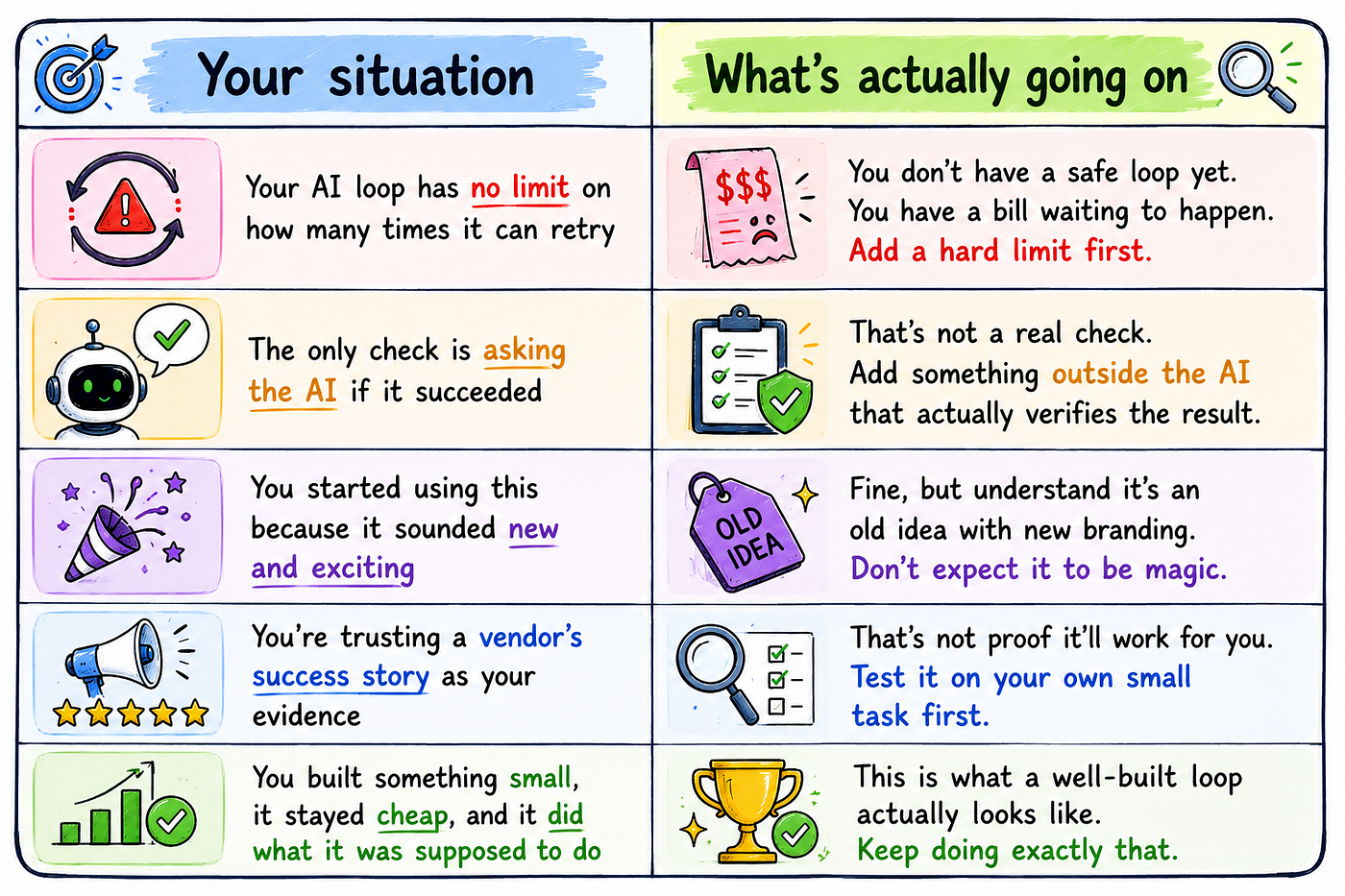
Photo from AI
Key takeaways
- Loop engineering means building a system that lets an AI try something, check the result, decide what’s next, and repeat, without you typing every single step yourself.
- The idea itself is old. It traces back to research from 2022 and earlier real-world examples. What’s new is the name and the sudden popularity.
- The single biggest failure mode is trusting the AI’s own claim that it finished, instead of checking the result with something outside the AI.
- Uber burned an entire year’s AI budget in four months and had to cap spending, a direct example of what happens without a real limit in place.
- The gap between a cheap, working version of this idea and an expensive, broken one usually comes down to two missing things: a hard limit on retries, and a real check that doesn’t rely on the AI’s own opinion of itself.
The honest answer
The hype around loop engineering as some brand new invention is dead, and it deserved to be.
The mockery and the real invoices both landed fair hits against that version of the story.
What isn’t dead is the plain, unglamorous version underneath it: build a real check, set a hard limit, don’t trust a claim you haven’t verified. That part was never new, and it isn’t going anywhere.
Call it loop engineering if you want. The label was always optional. The check and the limit were never optional, and that’s the part the viral post left out.
References
- Loop engineering, latest AI buzzword, still needs humans in the loop (The Register) https://www.theregister.com/ai-and-ml/2026/06/24/loop-engineering-latest-ai-buzzword-still-needs-humans-in-the-loop/5261735
- Loop Engineering Went Mainstream (dsebastien.net) https://www.dsebastien.net/loop-engineering-went-mainstream/
- Loop Engineering Guide 2026 (AI Builder Club) https://www.aibuilderclub.com/blog/loop-engineering-guide-2026
- Loop Engineering: How to Design Coding Agent Loops (explainx.ai) https://explainx.ai/blog/loop-engineering-coding-agents-claude-code-guide-2026
- Loop Engineering: The Guide for AI Agents (Lushbinary) https://lushbinary.com/blog/loop-engineering-ai-coding-agents-guide/
- ‘Harder to justify’: Uber COO says no clear link between AI spending and useful product improvements (Yahoo Finance / TCD) https://finance.yahoo.com/sectors/technology/articles/harder-justify-uber-coo-says-225800850.html
메타데이터
- post_id
- 6d1b204e4b9a
- slug
- loop-engineering-is-dead-heres-the-data-behind-the-ai-backlash-6d1b204e4b9a
- url
- https://medium.com/ai-engineering-simplified/loop-engineering-is-dead-heres-the-data-behind-the-ai-backlash-6d1b204e4b9a
- canonical_url
- https://medium.com/ai-engineering-simplified/loop-engineering-is-dead-heres-the-data-behind-the-ai-backlash-6d1b204e4b9a
- author_url
- https://medium.com/@yadavdivy296
- status
- ok
- fetched_at
- 2026-07-08 23:38:59