Nurturing Spiritual Longings through Prayer and Fasting
Hungering for the Bridegroom
Nurturing Spiritual Longings through Prayer and Fasting
Hungering for the Bridegroom

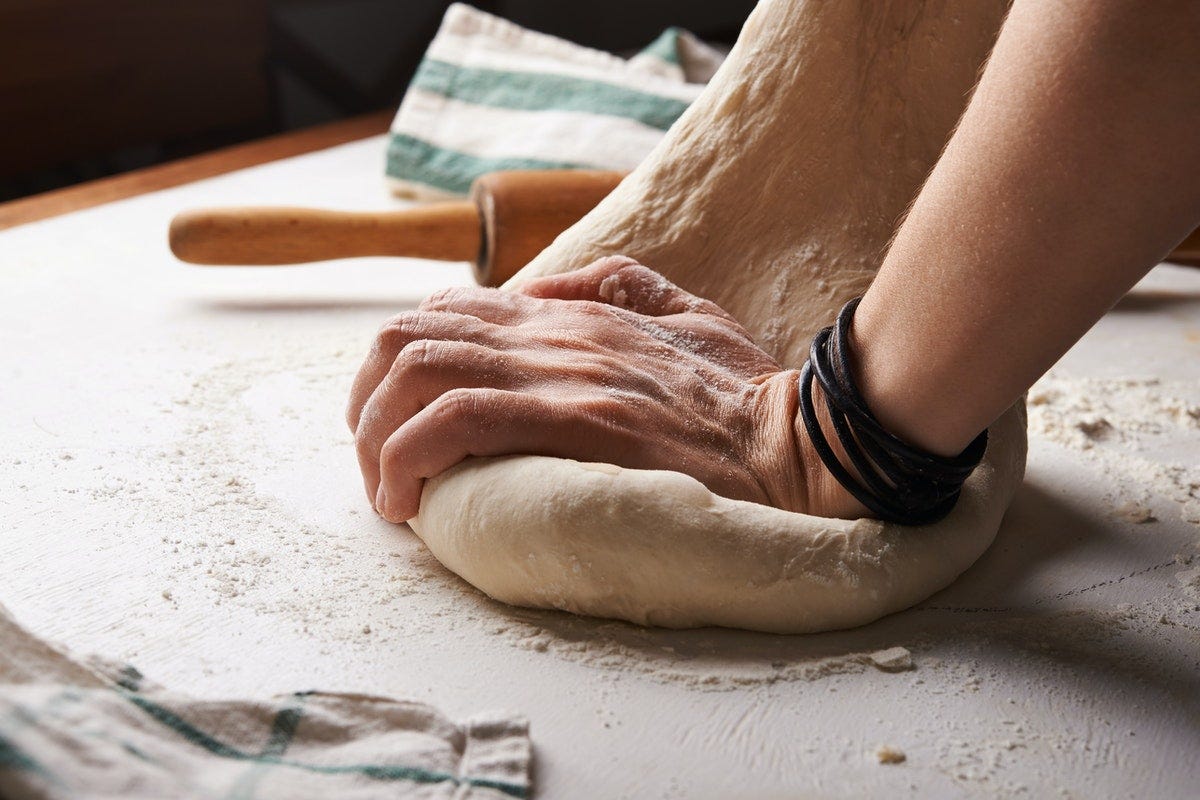
Image was created by the author with Meta AI
When Jesus was on earth with His disciples, many pivotal moments of discipleship happened over meals. He fed the five thousand and the four thousand. He established the new covenant at the Passover feast, opened the eyes of the disciples on the road to Emmaus in the breaking of bread, and fed the disciples barbecued fish by the seaside. In His resurrected body, He ate broiled fish and honeycomb to show them that he was not a spirit (Luke 24:41–43). Yet, He also clearly taught that His disciples would fast when He, the Bridegroom, was no longer physically with them. How does a twenty-first-century Christian practise praying and fasting in a country, such as Singapore, where there is a near-constant preoccupation with food?
What Jesus taught about fasting — longing for the Bridegroom
18 Now John’s disciples and the Pharisees were fasting. Some people came and asked Jesus, “How is it that John’s disciples and the disciples of the Pharisees are fasting, but yours are not?”19 Jesus answered, “How can the guests of the bridegroom fast while he is with them? They cannot, so long as they have him with them. 20 But the time will come when the bridegroom will be taken from them, and on that day they will fast (Mark 2:18–22, NIV).
Why so?
At its heart, fasting is about desire. John Piper puts it memorably: it is about the Bride, His church, longing for the Lord Jesus to return:
“It’s putting our stomach where our heart is to give added intensity and expressiveness to our ache for Jesus” (John Piper, Desiring God).
He added that it is also about our ache and longing for Jesus’ power to be manifested because we want to see people saved, healed, and marriages redeemed. Surely, the broken condition of our world should touch us on a visceral level, so that we choose to abstain from food and pray for God’s will to be accomplished. Fasting is one way of telling God, with our bodies as well as our lips, that He and His will matter more to us than even life’s sustenance.
Jesus answered, “It is written: ‘Man shall not live on bread alone, but on every word that comes from the mouth of God ”(Matthew 4:4, NIV).
When His disciples urged Jesus to eat, He answered that His food was to do the will of God who sent Him and to finish His work (John 4:34). Thus, fasting and praying mean putting God at the centre of our lives. When we choose not to eat but to pray, we are telling Him that we desire to put God first, to connect with Him more deeply, and to be satisfied in Him alone. Though fasting may seem to be an act of deprivation, it is also an act of reordering. We deny one appetite to strengthen a greater one. We abstain from bread for a time so that we may feast more deeply on the Bread of Life.
What may motivate us to abstain from food? As believers, we do not wish to be satiated with food and become spiritually dull while our Lord is away, while some members of the Body of Christ are sick and suffering, while too many march towards perdition, ignorant of or unmoved by the gospel, while youths are bewitched by doomscrolling, while moral confusion spreads unchecked, while unreached people groups languish in darkness globally.
What Jesus taught about fasting — seek first His kingdom and His righteousness
In Matthew 6:16, the Lord Jesus told His disciples, “when you fast …” This shows us that it was an ordinary and expected discipline. He also promised that those who do so would be rewarded by the Father who sees in secret.
“Take heed that you do not do your charitable deeds before men to be seen by them. Otherwise you have no reward from your Father in heaven” (Matthew 6:1, NKJV).
In contrast to the NKJV translation, the New International Version renders it more accurately from the Greek text.
“Be careful not to practise your righteousness in front of others to be seen by them. If you do, you will have no reward from your Father in heaven” (Matthew 6:1, NIV).
In Matthew 6, the righteous practices refer to giving, praying and fasting — practical ways of seeking first God’s kingdom and His righteousness (Matthew 6:33). That verse is often quoted, but not nearly enough considered in its practical outworking. Seeking first the kingdom is not a vague spiritual slogan. It is embodied in habits that train the heart to love God above comfort and appetite.
“For the kingdom of God is not a matter of eating and drinking, but of righteousness, peace and joy in the Holy Spirit “(Romans 14:17, NIV).
Guard against the sin of gluttony
“If you find honey, eat just enough –too much of it, and you will vomit” (Proverbs 25:16, NIV).
We could easily substitute “honey” with “steaks”, “pizzas”, “chicken rice”, or whatever food we love to eat. Positively, praying and fasting express our souls’ longing for our Bridegroom and our desire to seek first His kingdom and His righteousness. Negatively, they help us resist the sin of gluttony, an unruly and unregulated appetite for food that competes with God for our affection. It is not a sin to enjoy food, but when it preoccupies us or overrules our devotion to God, it is a form of idolatry.
Inspiring examples
The holy and lawful fast has three ends in view. We use it either to mortify and subdue the flesh … or to prepare the better for prayer and holy meditation; or to give evidence of humbling ourselves before God.” — **John Calvin*, Institutes of the Christian Religion*, Book IV, Chapter 12
Jesus fasted for 40 days and 40 nights in full dependence on the Father in preparation for His earthly ministry. Anna, the prophetess, “never left the temple but worshipped night and day, fasting and praying” (Luke 2:37). In Acts 13, the leaders in the church at Antioch were worshipping the Lord and fasting when the Holy Spirit spoke to them about setting apart Paul and Barnabas for the work of the gospel. In Acts 14, Paul and Barnabas appointed elders in each church with prayer and fasting, discerning men whom they could trust.
The Didache (Greek word for “teaching”), probably written in the late first or early second century, was a practical guide for Christian living and practices. In it, the early Christians were instructed to fast on Wednesday and Friday, and to pray the Lord’s prayer three times a day, demonstrating the rhythm of an ordered and disciplined life. Fasting was an ordinary obedience for the early church.
Cultivating the spiritual discipline
Let us pray to the Father to deliver us from the evil one, who uses food — a good gift — to ensnare us in its unbridled enjoyment that blunts our spiritual senses. We can ask the Lord to increase our longing for Him, and we can embody that prayer by fasting.
We may start simply by setting aside one meal a week to pray, read Scripture, and intercede for others. When we ask God for grace to fast, He grants it. Our spirit, soul and body enter into a state of rest. Over time, what begins as discipline may become a delight.
We may also consider gathering a community of believers who will commit themselves to fasting — say, at least one meal per week — for accountability, perseverance and mutual encouragement. Such a community can help us recover an ancient discipline in an age of indulgence.
What is your experience of praying and fasting? I would love to hear how this ancient discipline has shaped your walk with Christ, especially in a culture where food is plentiful and distractions are many.
Notes and Bibliography John Piper, “What Is the Purpose of Fasting?,” Desiring God, April 3, 2002, https://www.desiringgod.org/interviews/what-is-the-purpose-of-fasting. Desiring God
메타데이터
- post_id
- 6d72a3d384a4
- slug
- nurturing-spiritual-longings-through-prayer-and-fasting-6d72a3d384a4
- url
- https://medium.com/koinonia/nurturing-spiritual-longings-through-prayer-and-fasting-6d72a3d384a4
- canonical_url
- https://medium.com/koinonia/nurturing-spiritual-longings-through-prayer-and-fasting-6d72a3d384a4
- author_url
- https://medium.com/@aletheiachan
- status
- ok
- fetched_at
- 2026-06-25 12:15:08