The Older I Get, the Less Impressed I Am by Optimization
What years of illness quietly taught me about success, attention, and being alive

The Older I Get, the Less Impressed I Am by Optimization
What years of illness quietly taught me about success, attention, and being alive
There are evenings when the hospital empties so gradually that the silence seems to arrive by accident.
The fluorescent lights remain bright long after the conversations soften. Elevator doors continue opening onto nearly deserted floors. Somewhere in the distance, a cart rattles across tile before disappearing again into the enormous machinery of the building. Outside the parking garage, the sky turns the strange violet-gray color that belongs to exhausted cities, winter coastlines, and places where people have spent too much time indoors thinking about important things.
For years, I believed success lived in these hours.
Not consciously, perhaps, but deeply enough that I organized much of my life around usefulness, efficiency, movement, and forward momentum. Medicine rewards those instincts. Modern culture does too. The people who answer fastest, optimize relentlessly, remain visibly busy, and move quickly through enormous amounts of work are often treated as though they possess a superior understanding of life itself. Somewhere along the way, productivity quietly becomes morality. Exhaustion becomes evidence of seriousness. Rest begins to feel vaguely irresponsible, like stepping away from an assembly line no one explicitly asked us to operate, but everyone seems strangely devoted to maintaining it.
And then, usually much later, something starts to feel off.
Not dramatic at first. Just a growing suspicion that life is becoming increasingly efficient without becoming more alive.
A few weeks ago, I listened to Alain de Botton’s TED Talk on success and status anxiety again. It has circulated for years because it touches something many people recognize immediately but rarely say aloud. Modern life quietly teaches people to confuse achievement with emotional security. Over time, success stops being merely about work or accomplishment. It becomes tangled up with belonging, admiration, reassurance, and the fear that without visible achievement, our lives may somehow matter less.
The older I get, the more I suspect he is right. But what struck me this time was not the philosophy alone. It was how closely his observations resemble conversations I have heard repeatedly in medicine, especially near the end of life, when people become less interested in performance and strangely honest about what actually stayed with them.
The Things People Remember Are Rarely the Things They Measured Most Carefully
There is a persistent cultural fantasy that serious illness instantly transforms people into philosophers. Occasionally, that happens. More often, the conversations are quieter and far more ordinary.
People talk about a lake they visited forty years ago. A brother they wish they had called more often. Rain is falling outside a small restaurant in another country. Music, they stopped making time for. The smell of coffee was very strong in the morning, before the children woke up, and the house became noisy. A conversation that stretched unexpectedly late into the night because nobody wanted to leave the table.
Very few people speak longingly about optimization.
I do not say that dismissively. Achievement matters. Work matters. Building meaningful things matters. Some of the most impressive people I know are deeply driven, and medicine itself would not exist without disciplined people willing to sacrifice comfort in pursuit of difficult goals. But after enough years around illness, another pattern becomes difficult to ignore: people rarely describe the best parts of their lives in terms of efficiency.
They remember moments when they felt vividly present inside their own existence rather than merely productive within it.
A child asleep on their chest. A walk taken without checking a phone every three minutes. A dinner that somehow became unforgettable despite being completely ordinary at the time. What people remember most clearly is often not performance, but attention.
And attention, increasingly, is what modern life trains people to fragment.
A few months ago, I wrote another essay about the quiet erosion of attention and conversation in modern life, and readers responded in ways that surprised me. Again and again, people described how profoundly they missed long unhurried interactions with other human beings. Many wrote some variation of the same sentence: “I didn’t realize how absent everyone had become until recently.”
That observation stayed with me because absence is increasingly normalized. People move through entire days physically present yet psychologically elsewhere, their attention fractured across notifications, obligations, comparisons, and low-grade anticipatory stress.
I write often about the quieter forms of strain modern people carry long before burnout becomes obvious, and about the subtle ways attention, physiology, and emotional overload shape daily life. If these themes resonate with you, you can read more here:
Modern Life Quietly Turns Human Beings Into Ongoing Evaluations
One of de Botton’s sharpest observations is that modern life has transformed society into a kind of permanent school reunion. Previous generations compared themselves mostly within narrow geographic circles. Today, comparison follows people everywhere.
A physician in Seattle compares himself to a startup founder in Austin. A middle-aged executive compares his ordinary exhaustion to carefully curated glimpses of everyone else’s momentum, discipline, travel, marriage, and apparent success. A college student compares herself to influencers who seem permanently optimized, attractive, energetic, and emotionally untroubled.
The human nervous system was probably never designed for this level of social exposure, and yet people absorb these comparisons continuously, often without fully realizing it.
Even those who intellectually reject status culture frequently remain physiologically trapped inside it. Their bodies still respond to the subtle pressure of inadequacy. They still feel behind. Still suspect everyone else has discovered some secret they somehow missed.
In the clinic, I sometimes meet people who appear extraordinarily successful from the outside yet live in a nearly continuous state of internal insufficiency. Stillness makes them uneasy. An unanswered email creates disproportionate tension. A free afternoon produces anxiety instead of relief. Vacation becomes difficult because unstructured time forces them to confront thoughts and emotions that constant productivity usually keeps submerged.

Many people become highly skilled at managing life while becoming less certain how to inhabit it.
What looks like ambition is sometimes fear wearing professional clothing.
Beneath much of modern striving sits a surprisingly universal longing: the desire not merely to succeed, but to feel significant. People want evidence that their lives matter, that they are admired, respected, valued, and not quietly disappearing beneath the enormous machinery of modern life.
Illness Makes Randomness Impossible to Ignore
One of the most psychologically difficult ideas in modern culture is the belief that people fully deserve their outcomes. We rarely state this explicitly anymore, but the assumption sits quietly beneath much of contemporary life.
If someone succeeds, we assume they earned it completely. If someone struggles, we subtly suspect some failure of discipline, intelligence, character, or drive. Modern meritocracy sounds compassionate on the surface because it promises opportunity, but it also contains a hidden cruelty. If society insists that talent and effort determine success, then failure begins to feel not unfortunate, but deserved.
Medicine complicates this narrative very quickly.
Spend enough years around illness, and randomness becomes impossible to ignore. One patient develops metastatic cancer despite decades of disciplined, healthy living. Another lives into old age after ignoring nearly every recommendation imaginable. One family inherits extraordinary resilience. Another inherits vulnerability before life even properly begins.
Human lives contain far more contingency than modern culture comfortably admits.
This does not mean effort is meaningless. It means humility is appropriate. One of the quieter emotional dangers of modern achievement culture is that people begin to treat themselves as ongoing verdicts. Every setback becomes identity. Every comparison becomes evidence. Every disappointing outcome feels intensely personal.
That is exhausting in ways people often fail to recognize.
Increasingly, I suspect many people are not physically tired nearly as much as they are existentially overburdened. They are under constant pressure to prove their worth within systems that quietly encourage permanent self-evaluation.
The People Who Age Best Often Share One Quiet Trait
Over the years, I have noticed another pattern that interests me far more than optimization culture does.
The people who age especially well often create a distinct emotional atmosphere around themselves. Not all are wealthy. Not all are conventionally successful. Not all optimized their lives aggressively. But many possess a remarkable depth of presence that becomes increasingly noticeable with age.
They remain curious. They continue noticing beauty. They ask questions. They stay interested in other people. They preserve some relationship with awe.
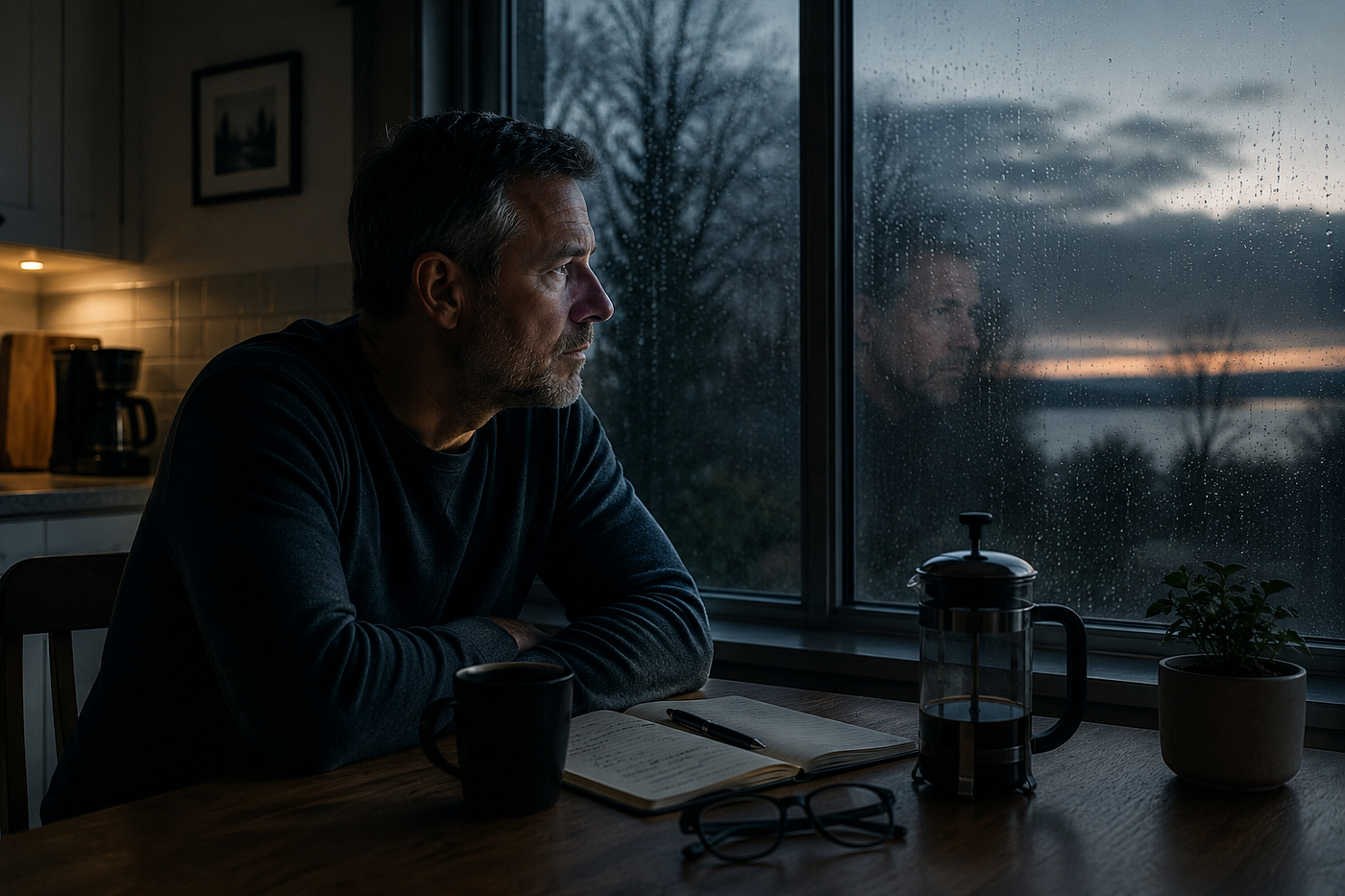
One patient in his eighties once spent twenty minutes describing birds visiting the cedar trees outside his kitchen window. Another told me he listened to Bach each morning before sunrise because it reminded him that the world still contained order and beauty despite everything happening inside his body. A woman undergoing treatment for breast cancer once described rain falling on the streets of Kyoto while she and her husband searched unsuccessfully for a tiny restaurant someone had recommended decades earlier. She spoke about that evening with greater emotional intensity than she spoke about most professional accomplishments.

Many people spend decades optimizing their lives before realizing they rarely pause long enough to fully inhabit them.
What stays alive in people is often surprisingly ordinary.
Not optimized. Not performative. Not algorithmic. Simply alive in the deepest sense of the word.
And the older I get, the more I suspect that many people are starving not for achievement, but for presence. They are exhausted by the feeling that every part of existence must justify itself through measurable output. Even leisure begins feeling instrumental. Walks become productivity tools. Meditation becomes cognitive optimization. Exercise becomes biomarker management. Reading becomes self-improvement rather than pleasure.
People become increasingly skilled at managing life while becoming less certain how to inhabit it.
That distinction matters more than many realize.
Because attention is not merely a productivity resource. Attention is how people experience being alive.
Final Thoughts
The older I get, the less impressed I become by relentless optimization alone.
I still admire discipline. I still admire meaningful ambition. I still believe deeply in purposeful work. But medicine has made it increasingly difficult for me to believe that a successful life can be measured only by visible achievement.
People remember how others made them feel. They remember presence, warmth, curiosity, calm, humor, generosity, and conversations that briefly illuminated ordinary moments. Near the end of life, many people begin realizing that some of the most meaningful parts of existence were never the things modern culture taught them to measure carefully in the first place.

Many people spend years trying to become more impressive and far less time learning how to become fully present.
Success matters. But increasingly, I suspect that a good life depends on protecting parts of ourselves from being fully consumed by the relentless pressure to perform.
If you want to stay with these ideas a little longer, I write regularly about attention, aging, health, modern overload, and the quieter patterns that shape how people experience life:
Michael Hunter, MD, is a radiation oncologist who writes about health, attention, aging, and how small, quiet changes shape the experience of being alive.
메타데이터
- post_id
- 6dc1fb287dcb
- slug
- the-older-i-get-the-less-impressed-i-am-by-optimization-6dc1fb287dcb
- url
- https://medium.com/dr-michael-hunters-wellness/the-older-i-get-the-less-impressed-i-am-by-optimization-6dc1fb287dcb
- canonical_url
- https://medium.com/dr-michael-hunters-wellness/the-older-i-get-the-less-impressed-i-am-by-optimization-6dc1fb287dcb
- author_url
- https://medium.com/@drmichaelhunter
- status
- ok
- fetched_at
- 2026-06-09 15:37:30