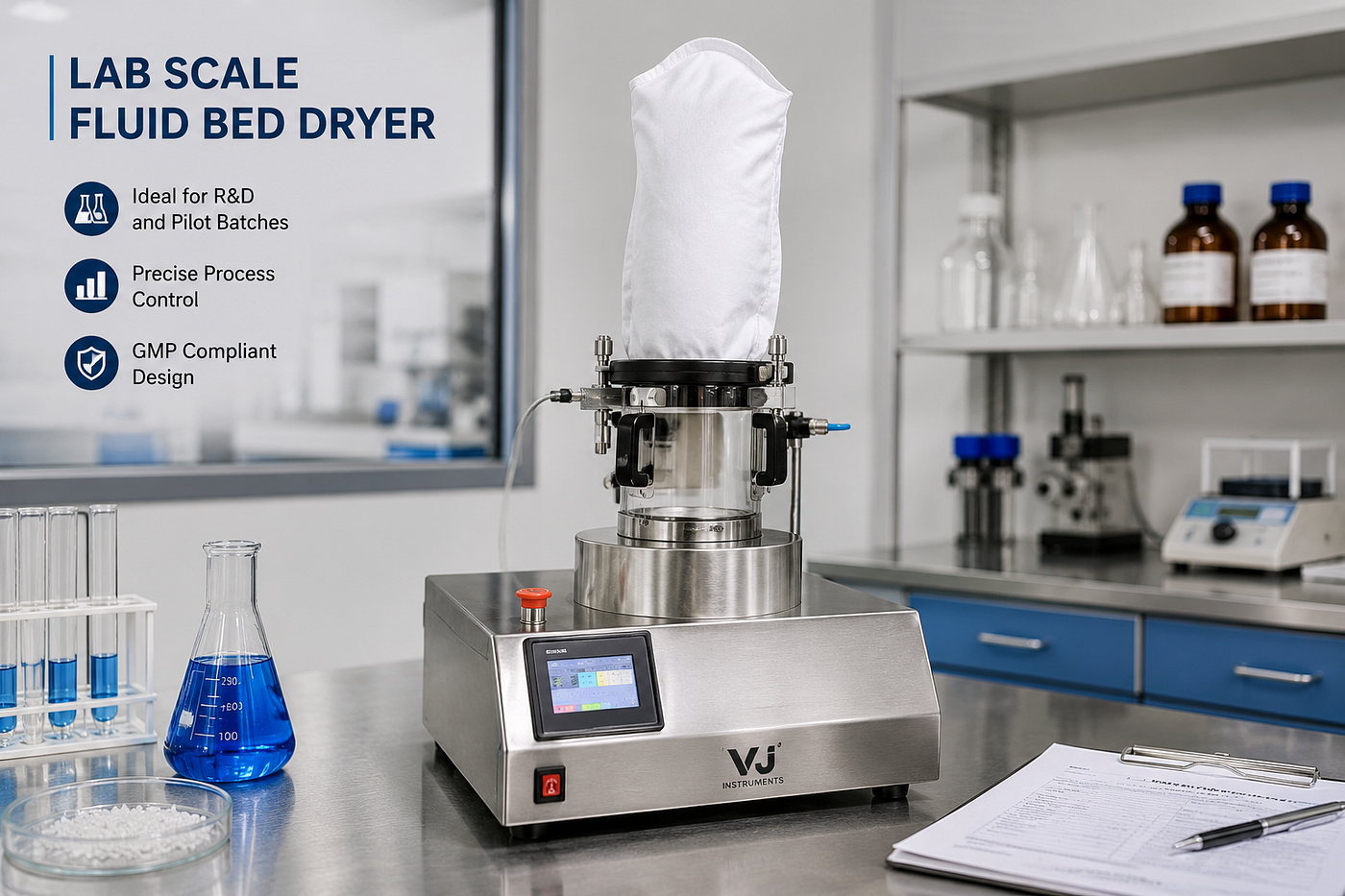
Why Rapid Dryer Selection Decides Drying Outcomes in Solid Dosage Lines
A rapid dryer sits at a sensitive point in any granulation line, where moisture removal directly affects tablet hardness, dissolution, and…
Why Rapid Dryer Selection Decides Drying Outcomes in Solid Dosage Lines
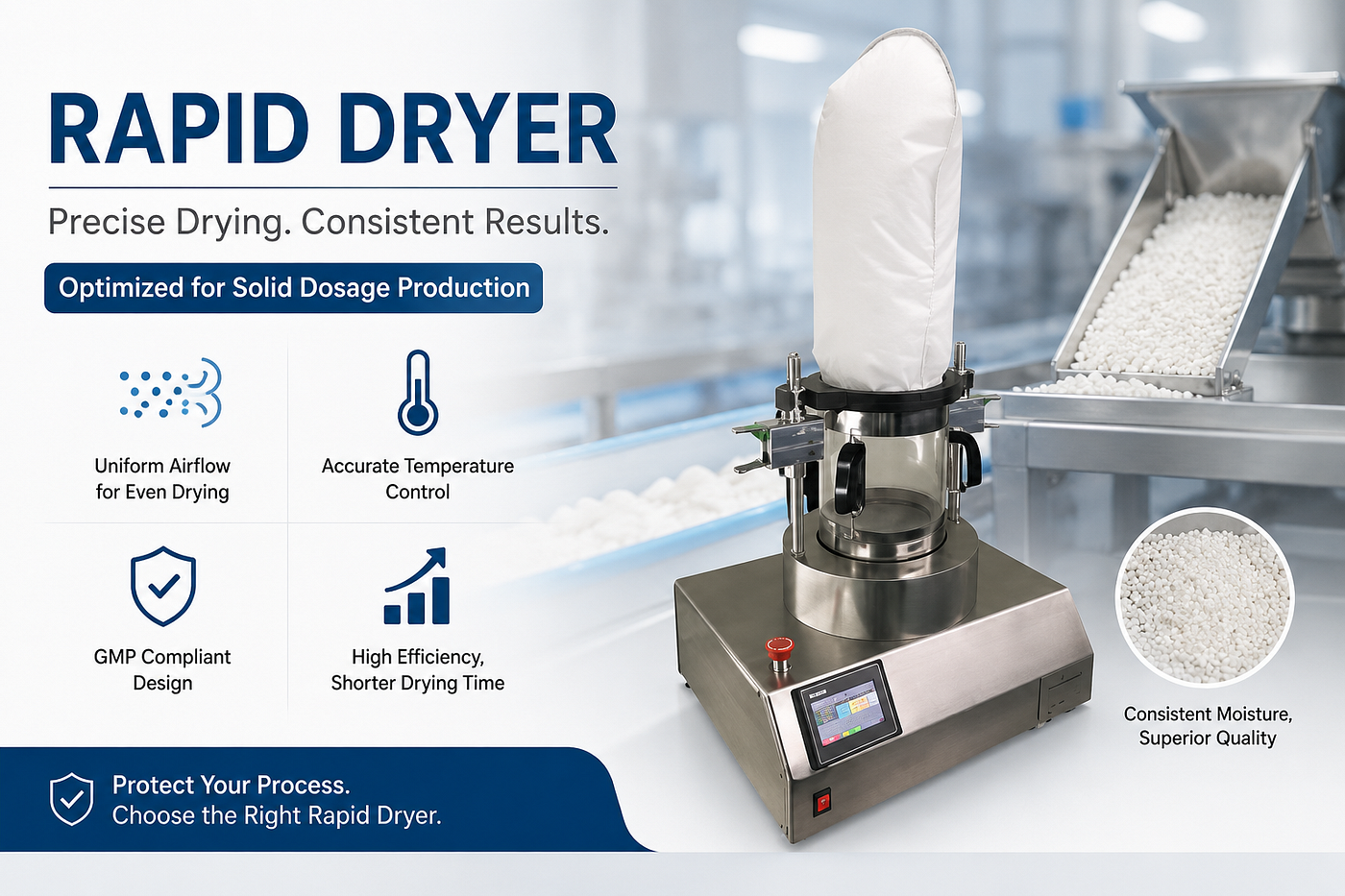
A rapid dryer sits at a sensitive point in any granulation line, where moisture removal directly affects tablet hardness, dissolution, and batch release. Procurement teams often treat drying as a commodity step, yet the wrong specification can stall an entire production schedule. Understanding how the unit behaves under real load helps buyers avoid costly validation delays and protect release timelines.
Moisture Control Under Production Pressure
On a busy formulation floor, a single drying bottleneck can push three downstream batches off schedule. When inlet air distribution drifts, the granule bed dries unevenly, leaving pockets of retained moisture. That variation shows up later as inconsistent compression force and rejected tablets. Airflow uniformity and accurate bed temperature sensing therefore matter more than raw capacity. A validation risk emerges when temperature mapping is skipped during qualification, because regulators expect documented evidence of even drying. Buyers who request airflow profiling data before purchase reduce the chance of requalification after installation, and they gain a clearer baseline for future scale-up.
Matching Drying Capacity to Upstream Granulation
Drying rarely operates alone. A rapid mixer granulator feeds wet mass directly into the drying stage, so any mismatch in batch volume creates idle equipment or rushed cycles. Consider a pilot lab scaling a wet granulation process: if the rapid mixer granulator produces a larger batch than the dryer can handle, operators split loads and lose reproducibility. The technical point is that drying time scales with bed depth, not just mass. A rapid dryer chosen without reference to upstream granulator capacity often runs longer cycles, raising energy cost per batch. Aligning both units during specification protects throughput and keeps qualification simpler. Utility load, exhaust handling, and floor footprint should be checked at the same stage, since a late discovery there can delay commissioning by weeks.
Pellet Lines and Surface Sensitivity
Extrusion and spheronization add further drying demands. A die roller extruder shapes wet extrudate that must hold structure before rounding, and a spheronizer then forms those extrudates into uniform pellets. Excess surface moisture entering the rapid dryer can cause pellets to agglomerate, ruining size distribution. One contract manufacturer traced a recurring yield loss to drying pellets that left the die roller extruder slightly over-wetted, which then clumped before the bed stabilized. The insight is that drying parameters must be set against pellet fragility, not generic powder behavior. Gentle fluidization and staged temperature ramps preserve the sphericity gained from the spheronizer while still meeting moisture targets, which keeps coating uniformity within specification downstream.
Documentation That Survives an Audit
A rapid dryer purchase is incomplete without traceable qualification records. Inlet air filters, probe calibration certificates, and cycle logs form the backbone of any audit response. Skipping these creates a validation gap that surfaces during inspection, when missing data forces batch holds and unplanned investigations. Specifying data logging and accessible service support at the procurement stage prevents this. The preventive action is direct: confirm that documentation scope is written into the purchase agreement before the unit reaches the floor.
Frequently Asked Questions
How is rapid dryer capacity matched to a batch?
Capacity is matched by bed volume and target drying time, checked against upstream granulator output rather than weight alone.
Does the dryer suit moisture-sensitive pellets?
Yes, when fluidization and temperature ramps are tuned to pellet fragility, preventing agglomeration during the cycle.
What documentation should be requested before purchase?
Airflow profiling, temperature mapping, and calibration certificates, all written into the supplier agreement to support qualification.
Can existing granulation lines be retrofitted?
Retrofitting works when batch volumes and connection points align, though airflow and footprint should be checked first.
메타데이터
- post_id
- 6ddbbca8e05d
- slug
- why-rapid-dryer-selection-decides-drying-outcomes-in-solid-dosage-lines-6ddbbca8e05d
- url
- https://medium.com/@vjinstruments08/why-rapid-dryer-selection-decides-drying-outcomes-in-solid-dosage-lines-6ddbbca8e05d
- canonical_url
- https://medium.com/@vjinstruments08/why-rapid-dryer-selection-decides-drying-outcomes-in-solid-dosage-lines-6ddbbca8e05d
- author_url
- https://medium.com/@vjinstruments08
- status
- ok
- fetched_at
- 2026-07-08 10:09:58