The Room Within: What Silence Reveals About the Soul and Brain
What contemplative spirituality and neuroscience reveal about silence, attention, and the hidden interior life
NEUROSCIENCE + SPIRITUALITY
The Room Within: What Silence Reveals About the Soul and Brain
What contemplative spirituality and neuroscience reveal about silence, attention, and the hidden interior life

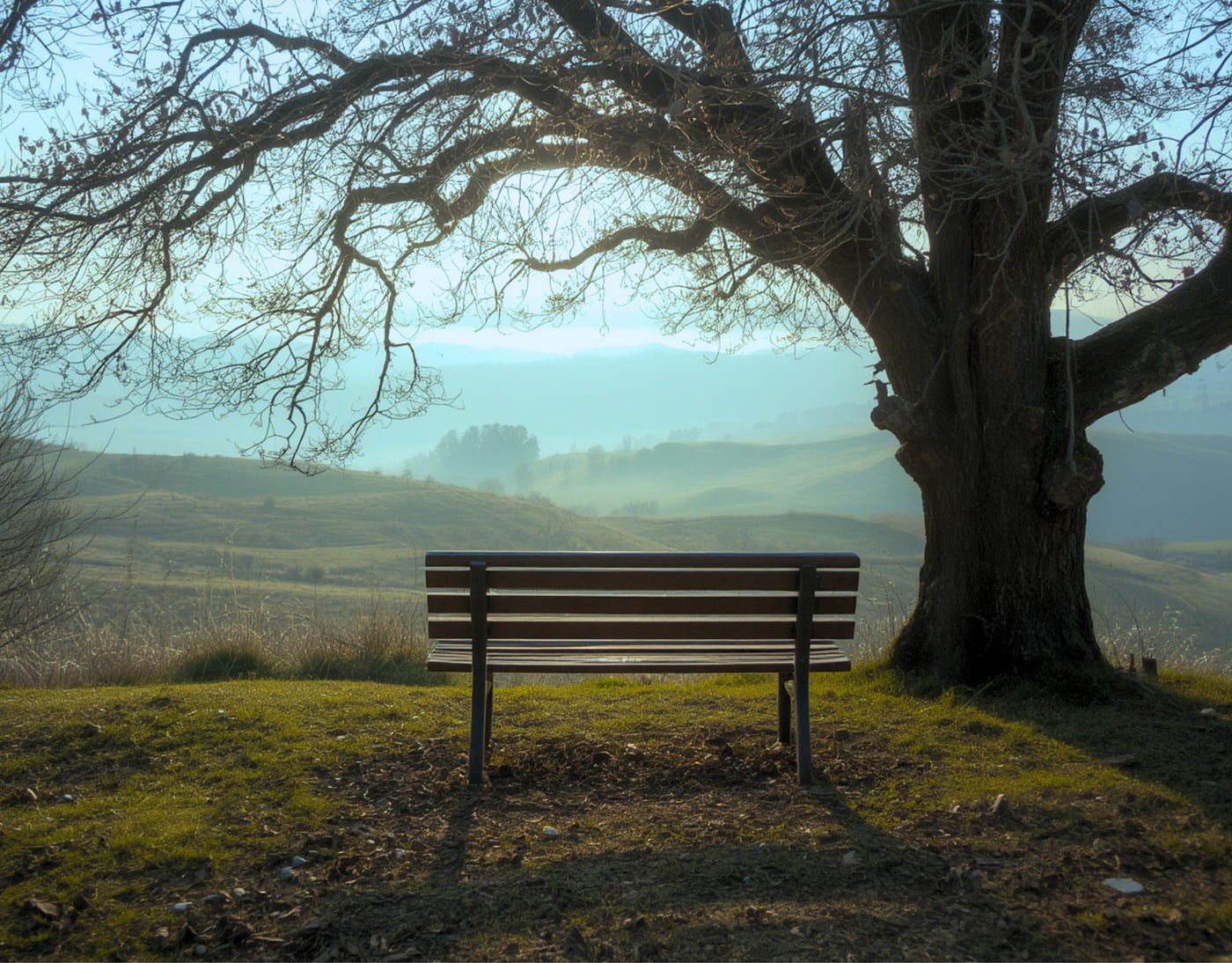
There are moments when slowing down becomes its own kind of healing. Image credit: Canva
“A room devoted to silence honors and invites the unknown, the untamed, the wild, the shy, the unfathomable — that which rarely has a chance to surface within us.”
— Gunilla Norris, Sharing Silence**
The voice within me that doesn’t know how to shout arrives softly like mist over water.
But most days the world is too loud and I don’t notice
So it waits.
Patiently, it waits. Quietly, it waits beneath the noise of my life.

I wonder if the world is deeply uncomfortable with silence.
Think about the empty moments you spend during your day that get filled. We add music while driving instead of letting the silence usher us into compassion. We listen to podcasts when we walk and scroll through social media when waiting.
When we create that much noise in our days, our nervous system doesn’t experience true spaciousness.
Is it that silence feels strange and unsettling?
It’s not that the silence is empty, but maybe it’s because we know that silence allows something else to surface.
It’s the grief we pushed away, or the exhaustion we normalized. Maybe it’s a longing we buried underneath productivity, or perhaps it’s a deeper self waiting beneath all the performance. Which is it for you?
I can relate to all of them — turning to work when my body is screaming to rest, or normalizing fatigue because my doctor told me I am in a state of adrenal exhaustion, and though I can’t physically sit up, I then scroll on social media for hours. Meanwhile, the silence patiently waits for me to show up.
The “unknown, the untamed, the wild, the shy, the unfathomable” is how Gunilla Norris defines silence, describing it as something so far removed from our souls. I can’t help but wonder if we are all starving for exactly this type of inner room. It’s a place where we gently encounter the truth of who we are and no longer have to manage an image of ourselves.
Doesn’t that sound delightful?
Silence isn’t emptiness
If you think about many spiritual traditions, silence is often referred to as presence, not absence. It’s more of a listening presence and a spaciousness when something deeper becomes visible and appreciated.
We have learned from the Desert Fathers and Mothers who withdrew into silence that they weren’t escaping life, but wanted to hear more clearly. The same is true of Buddhist contemplative traditions, teaching us that beneath constant mental activity lies another way of seeing. The Mystics of many different faith traditions describe silence as a doorway into communion, awareness, and awakening.
Silence is a doorway into communion, awareness, and awakening.
Neuroscience has been catching up to this concept, too. The brain needs periods of quiet reflection in order to integrate emotion, memory, identity, and meaning.
When our attention is continuously fragmented and disrupted, our nervous system remains focused on reacting to and responding to stimulation, and as we introduce moments of stillness, it allows our minds to process experiences differently, with less drama and impatience.
Silence creates conditions where deeper awareness can emerge.
And yes, it’s true that what surfaces first can be uncomfortable because once the noise fades to the background, we hear ourselves more honestly.
Why we resist the quiet
True story: I was leading a retreat, and we were in a remote forest area. I had covered some key points on learning to understand who we really are in God’s eyes, and after a break, I passed a basket around the room, asking everyone to put their phones in it. I assured them they would get them back after the next exercise.
That caused more of a stir than I expected. Then, I announced that everyone was to go find a spot and be quiet for four hours. No talking to others, just enjoy the silence and listen.
The first response was, “Four hours?!”
Everyone seemed to have a deer-in-headlights look, so I paused and said, “Two hours, but no less.” They weren’t happy with it, but they agreed to try it.
After the two-hour silent retreat, they all gathered back in our room, and I scanned their faces. They all seemed to be glowing, no lie. I felt like I was standing in a room full of glowing light. So, I asked how it went. Slowly, each person responded. I heard things like, “It was so amazing. I heard God for the first time,” and “I thought it was going to be difficult, and it was at first, but then I enjoyed it,” and “I never thought I could have that kind of experience. It was so lovely.”
Then, I asked, “Would you do it again on your own?”
There was a very long pause. Then, one person said, “Maybe.”
To me, that was success. I think I even threw my arms above my head and shouted, “Yay!”
I think many of us fear silence because silence removes distraction.
The reality is that without constant input, we are left to face:
- our restlessness
- our loneliness
- our grief
- our uncertainty
- our desires
- our unhealed wounds
Silence can feel exposing, and yet, that is exactly where healing begins.
It’s not about forcing ourselves into becoming someone new and different. It’s about becoming quiet enough to notice what has always needed our attention.
Neuroscience and neuroplasticity, in particular, teach us that the brain is rewired and shaped by repeated attention. What we consistently return to influences neural pathways, emotional responses, and even how we perceive ourselves and the world around us.
This is one reason why contemplative practices matter, whether it be prayer, meditation, breathwork, stillness, sacred reading, or walking slowly in nature. It all helps rewire and refocus our attention towards new neural pathways.
These practices, though spiritual in nature, become ways of gently retraining our attention toward presence and away from constant survival. In the process, we lean more toward spaciousness rather than impatience, and less toward endless performance than being.
The hidden self beneath performance
Have you ever thought about how much of adult life becomes an attempt to remain functional enough that we don’t fully encounter ourselves?
As adults, many of us become efficient, accomplished, productive, and … busy.
Underneath all that is another self, waiting patiently and quietly. It’s your shy self, creative self, grieving self, tender self, and the you that is capable of wonder.
Like wild animals approaching a clearing they don’t fear, some parts of us only emerge when finally sensing safety. And maybe that’s why silence is such a prominent ritual of faith traditions.
Silence is hospitality, not punishment. It’s a way of saying, you no longer need to hide here.
Meditation
[embed]
If you feel comfortable, close your eyes. Take a slow, deep breath in through your nose and exhale through your mouth. Repeat one more time.
Imagine yourself entering a quiet inner room. There’s no need for performance. There are no expectations, and no urgency. Just your presence.
Now, repeat out loud, “I do not need to fear what silence reveals. I can meet myself with compassion. There is wisdom within me that doesn’t need to be rushed.”
Remain here for a few moments and just listen.
Reflection
- What part of yourself rarely has space to surface? What would it look like if that part of yourself had more space?
- When was the last time you sat in silence without trying to escape it?
- What do you think your soul is trying to say underneath all the noise of your life?
Ways to Practice
- Create a small space for silence: Choose a corner, chair, candle, or small area in your home and devote it only to quiet presence. Let it become a physical reminder that your inner life deserves attention, too.
- Practice 5 minutes of unfilled quiet: Sit without any distractions. No phone, music, or multitasking. Let the silence allow whatever surfaces to surface without judgment.
- Notice what your nervous system avoids: Pay attention to those times when you instinctively reach for stimulation and pause. Ask yourself, what feeling is waiting underneath?
- Take a slow walk without any tech gadgets: This week, take a walk without headphones or distractions. If you can, leave your phone at home. Let the world speak to you. Listen to the birds and any other nature sounds.
Silence isn’t just the absence of sound. It’s a sacred opening.
Neuroscience and spirituality suggest that humans need quiet spaces to heal, integrate, reflect, and reconnect with ourselves. It is in the stillness that our nervous systems soften and attention deepens, and there, in that space, is where the deeper self becomes easier to hear.
Maybe that’s exactly what the invitation of silence offers. It’s not to become someone else but to finally make room for the parts of ourselves that have been waiting quietly and patiently to be welcomed home.

May you find moments of quiet within the noise of your days. May silence become less fearful and more familiar. May the hidden parts of you feel safe enough to emerge, And may you remember … beneath the noise, performance, and endeavors, there is a soul waiting quietly and patiently for your return.
May it be so.
May you know that you are loved because you matter. May your soul be refreshed.
sdg

Read more from other Refresh the Soul writers:
[embed]Your Inner Child Wants to Heal There is an urge within you to healmedium.com
[embed]Time to Break Some Eggs–AKA Taste New Flavors Beyond the edges of my safe and comfy zonemedium.com
Click here to follow Refresh the Soul to stay updated with the latest!

메타데이터
- post_id
- 6df52b8d07f8
- slug
- the-room-within-what-silence-reveals-about-the-soul-and-brain-6df52b8d07f8
- url
- https://medium.com/refresh-the-soul/the-room-within-what-silence-reveals-about-the-soul-and-brain-6df52b8d07f8
- canonical_url
- https://medium.com/refresh-the-soul/the-room-within-what-silence-reveals-about-the-soul-and-brain-6df52b8d07f8
- author_url
- https://medium.com/@nblackman
- status
- ok
- fetched_at
- 2026-06-13 12:55:53