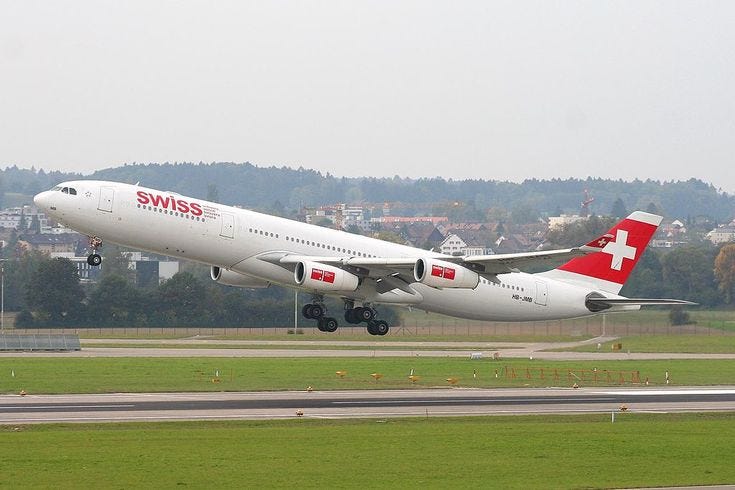
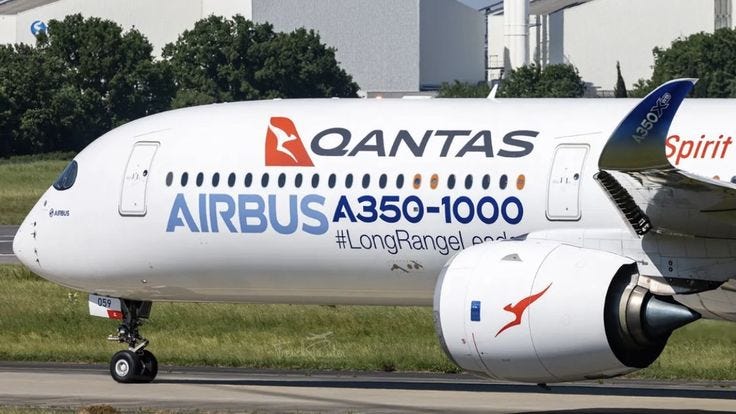
The Battle of the Skies: Comparing the Narrowbody Fleets of SAA, KQ, and Ethiopian Airlines
The sky over Africa is the stage for a fascinating, multi-billion-dollar battle of corporate strategies. If you step onto the tarmac at…
The Battle of the Skies: Comparing the Narrowbody Fleets of SAA, KQ, and Ethiopian Airlines
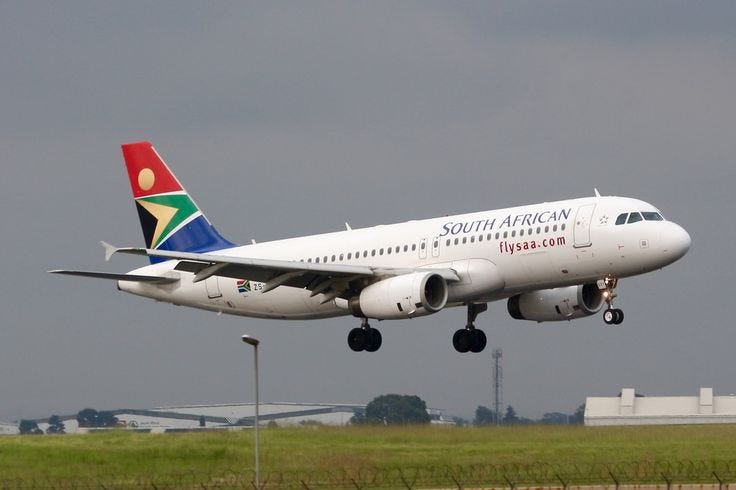
A South African Airways Airbus A320 about to touch down.
The sky over Africa is the stage for a fascinating, multi-billion-dollar battle of corporate strategies. If you step onto the tarmac at Africa’s three most prominent aviation hubs — Johannesburg, Addis Ababa, and Nairobi — you will notice a sharp divergence in the aircraft parked at the gates.
South African Airways (SAA) relies heavily on the Airbus A320 family for its medium-haul regional operations. Yet, if you look at its fierce continent-spanning rivals, Ethiopian Airlines and Kenya Airways (KQ), the A320 is entirely absent. Instead, their single-aisle operations are dominated exclusively by the Boeing 737 family.
This is not a matter of coincidence. It is a calculated reflection of history, financial restructuring, and the distinct geographic challenges of each airline’s home base.
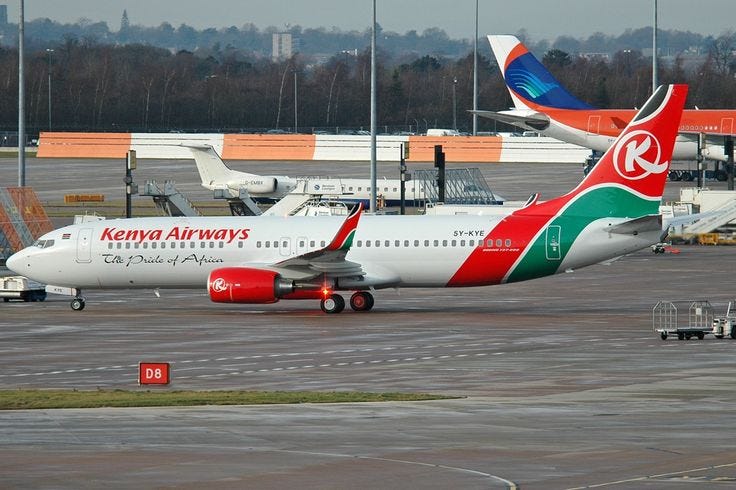
A Kenya Airways Boeing 737 staged at the terminal, representing the airline’s narrowbody operations.
1. SAA’s Post-Bankruptcy Reality: The “All-Airbus” Bridge
To understand why SAA flies the A320, you have to look at the airline’s turbulent survival story. Following years of business rescue, restructuring, and a complete post-pandemic operational reset, SAA emerged as a smaller, more disciplined airline.
The Fleet Legacy: Before its financial collapse, SAA had already established deep institutional knowledge, maintenance infrastructure, and pilot training programs tailored to Airbus aircraft. The Post-Pandemic Lean: When SAA restarted operations, it needed to pick a reliable, readily available workhorse to serve its regional “trunk” routes out of Johannesburg (such as Harare, Lusaka, and domestic golden triangles). As of mid-2026, SAA operates 14 leased Airbus A320–200s, with plans to inject more throughout the year. The Cost of Switching: For a re-emerging airline tracking every single rand, switching to a completely different aircraft type like the Boeing 737 would be financial suicide. SAA sticks to the A320 because its pilots are already certified, its engineers at SAA Technical are already trained, and the short-term leasing market for mid-generation A320s is highly favourable.
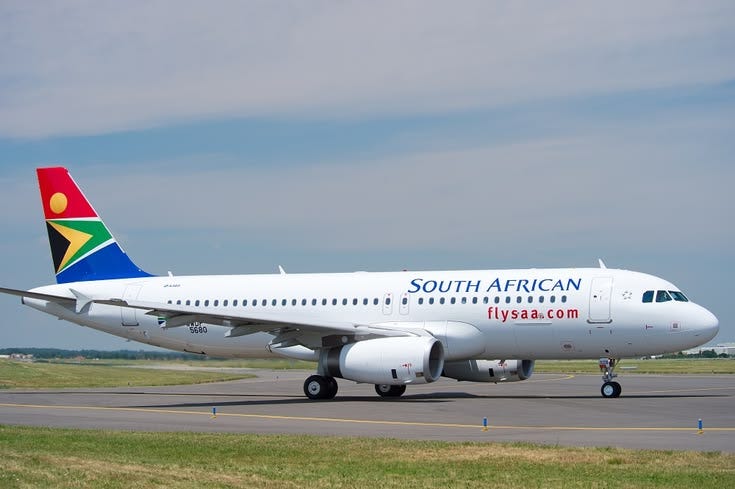
The Airbus A320: Preferred by airlines for its superior cabin width and fuel-efficient narrowbody design.
2. Ethiopian Airlines: The Unyielding Power of the Boeing 737
In sharp contrast, Addis Ababa-based Ethiopian Airlines — the undisputed economic powerhouse of African aviation — is fundamentally a Boeing house when it comes to narrowbodies.
Massive Scale: Ethiopian operates a medium-range passenger fleet consisting of nearly 55 Boeing 737 variants, split between older 737–800NGs and the next-generation 737 MAX 8. The Logistics Moat: Ethiopian doesn’t just fly planes; it operates a massive, self-sustaining aviation academy and MRO (Maintenance, Repair, and Overhaul) facility in Addis Ababa. By keeping its narrowbody fleet exclusively Boeing, Ethiopian maximizes its purchasing power for spare parts and streamlines its massive crew training operations. A Future Lock: Ethiopian’s commitment to Boeing is set in stone for the next decade. Following massive multi-aircraft order confirmations, the airline currently has more than 40 additional Boeing 737 MAX jets on order to feed its rapidly expanding global hub.
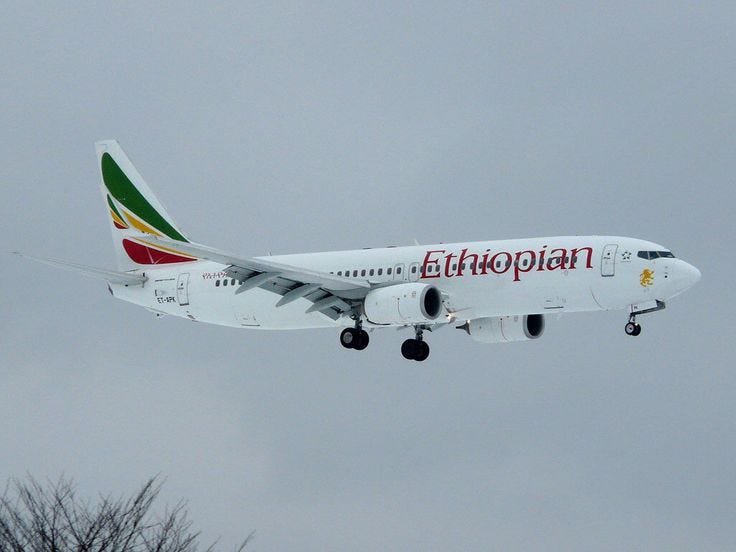
An Ethiopian Airlines Boeing 737 in flight, showcasing the airline’s iconic livery.
3. Narrowbody Fleet Composition (2026 Snapshot)
| Feature | South African Airways (SAA) | Ethiopian Airlines | Kenya Airways (KQ) | | Primary Narrowbody | Airbus A320–200 | Boeing 737 MAX 8 / 737–800 | Boeing 737–800NG | | Fleet Philosophy | Short-term lease flexibility | Scaled sub-hub dominance | Consolidation to Boeing core | | Narrowbody Order Book | Evaluating long-term RFP | 44+ Boeing 737 MAX | Negotiating 737 MAX leases |
4. Kenya Airways: Squeezing Efficiency from the 737–800
Nairobi’s Kenya Airways mirrors Ethiopian’s loyalty to Boeing single-aisle aircraft, though on a smaller, more consolidated scale.
Fleet Rationalization: In the mid-2010s, Kenya Airways went through a heavy fleet rationalization process to cut costs. They eliminated fleet complexity by centering their entire medium-haul operation around the Boeing 737–800NG. The Growth Phase: Having stabilized its operations post-pandemic, KQ’s leadership team confirmed they are actively looking to grow their narrowbody fleet from 37 to 60 aircraft. Their transition strategy involves moving away from consolidation and securing leases for newer Boeing 737–8 MAX aircraft to bolster capacity out of Nairobi Jomo Kenyatta International.
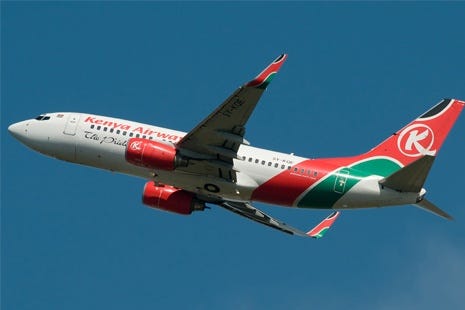
A Kenya Airways aircraft in flight, highlighting the carrier’s distinct livery and its role in regional aviation connectivity.
5. Hot and High: The Aerodynamic Challenge of Johannesburg
There is a final, highly technical reason why SAA’s relationship with the Airbus A320 works so well for its specific location.
Johannesburg’s O.R. Tambo International Airport (JNB) sits at an elevation of 5,558 feet (1,694 meters) above sea level. In aviation terms, JNB is a notorious ”hot and high” airport. High altitude combined with blistering African summer heat creates thin air, which significantly reduces an aircraft’s engine thrust and aerodynamic lift at take-off.
Low Altitude Hub (e.g., Mombasa/Durban) -> Dense Air -> Maximum Lift/Thrust vs. “Hot & High” Hub (Johannesburg/Addis) -> Thin Air -> Reduced Lift/Thrust (Requires higher engine performance)
The Airbus A320–200, particularly variants fitted with specialized engine ratings or drag-reducing sharklets, offers exceptional airfield performance out of JNB’s thin air. It allows SAA to fill the passenger cabin and cargo hold to maximum capacity on regional hops without running into the strict weight-restriction penalties that often plague older aircraft types leaving Johannesburg on hot afternoons.
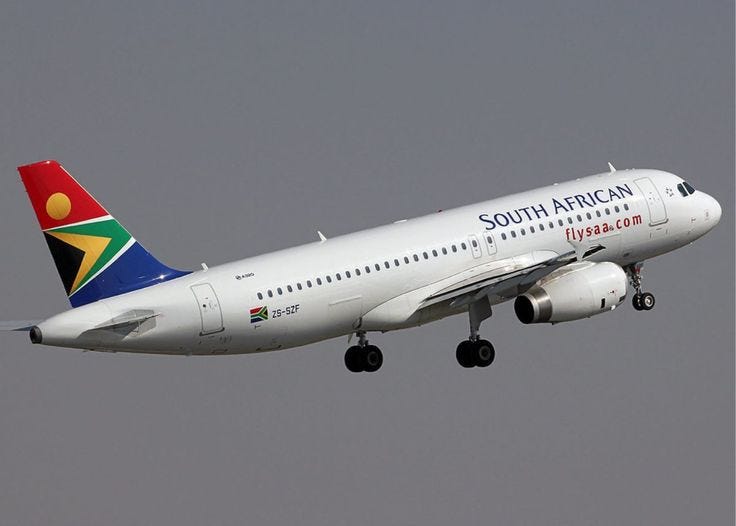
The Airbus A320–200 has the perfect combination of maximum passenger capacity and cargo thanks to sharklets and other features on short haul routes.
Final Thoughts: A Strategic Divide
Ultimately, the choice of narrowbody hardware is a story of corporate trajectory.
Ethiopian and Kenya Airways are aggressive global network players. They rely on massive, standardized fleets of Boeing 737s to maintain a seamless, highly integrated ecosystem of parts, training, and hub-and-spoke efficiency.
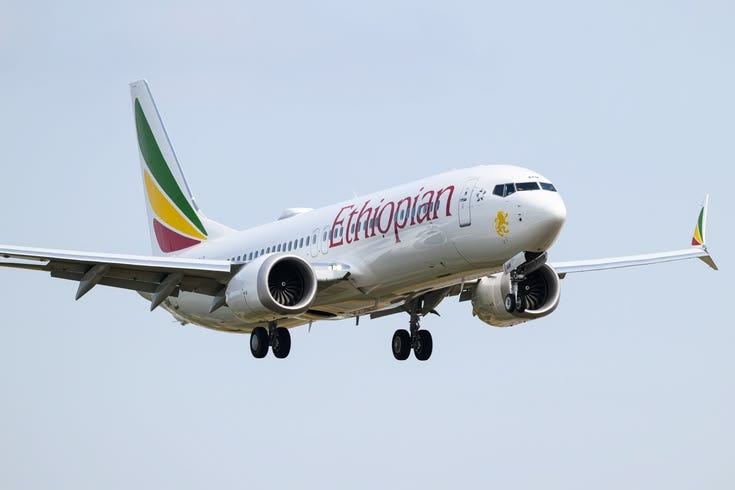
Ethiopian Airlines Boeing 737 MAX 8 powering through the skies. The modern twinjet narrowbody has revolutionised the way Ethiopian Airlines flies.
South African Airways, on the other hand, is playing a tactical, localized game of chess. By utilizing the Airbus A320, SAA has successfully stabilized its post-bankruptcy network using an airframe that is deeply familiar to its pilots, perfectly optimized for Johannesburg’s demanding altitude, and financially safe as the carrier prepares to issue a massive Request for Proposals (RFP) to renew its long-term fleet.
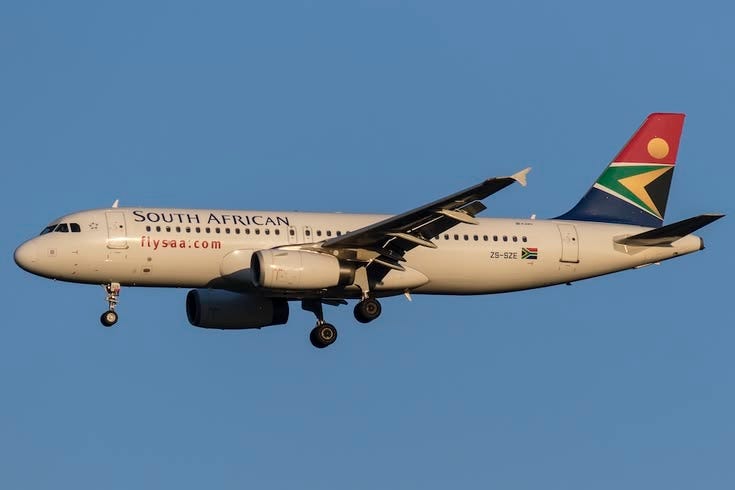
SAA Airbus A320 side profile. These leased A320’s will continue to form the backbone of the regional and domestic markets os the Southern African carrier.
메타데이터
- post_id
- 6dfd75bce5b3
- slug
- the-contrast-in-the-skies-why-saa-uses-the-airbus-a320-whilst-other-operators-dont-6dfd75bce5b3
- url
- https://medium.com/@trueboysareboys/the-contrast-in-the-skies-why-saa-uses-the-airbus-a320-whilst-other-operators-dont-6dfd75bce5b3
- canonical_url
- https://medium.com/@trueboysareboys/the-contrast-in-the-skies-why-saa-uses-the-airbus-a320-whilst-other-operators-dont-6dfd75bce5b3
- author_url
- https://medium.com/@trueboysareboys
- status
- ok
- fetched_at
- 2026-07-08 00:36:00