The Bootlick on the Bench: Judge Joe Brown, Karmelo Anthony, and the Black Men Who Protect the…
When a Black teenager defended himself and went to prison for 35 years, one of the most famous Black judges in America called him a punk…
He was the first Black prosecutor in Memphis. He presided over James Earl Ray’s last appeal. He built a television empire on the idea that he understood justice. Then Karmelo Anthony happened. And Joe Brown showed us exactly who he is.
The Bootlick on the Bench: Judge Joe Brown, Karmelo Anthony, and the Black Men Who Protect the System That Destroys Us
When a Black teenager defended himself and went to prison for 35 years, one of the most famous Black judges in America called him a punk. The receipts on Joe Brown are worse than you think

CBS Cancels ‘Judge Joe Brown’ Amid Salary Dispute (2026)
There is a particular kind of damage that gets done when a Black man in a position of authority decides that his job is to protect the system rather than the people the system was built to destroy.
It is not the damage of overt white supremacy, which at least has the honesty of announcing itself. It is the damage of the trusted insider, the familiar face, the man who looks like you and sounds like you and then uses everything you trusted him with to hold the door closed.
Judge Joe Brown is seventy-eight years old. He was born in Washington D.C., raised in South Central Los Angeles, and graduated valedictorian from Dorsey High School.
He earned his undergraduate degree and his law degree from UCLA. He became the first African American prosecutor in Memphis, Tennessee, then director of the Memphis Public Defender’s Office, then a judge on the Shelby County Criminal Court.
He presided over James Earl Ray’s last appeal of his conviction for the assassination of Martin Luther King Jr., before being removed from the case by an appellate court for demonstrated bias.
He built a television empire that ran for fifteen seasons and made him the second highest paid daytime television personality in America behind only Judge Judy.
That is a remarkable life. It is also a life that has earned Joe Brown the kind of credibility that makes what he did in June 2026 so much more damaging than if a stranger had done it.
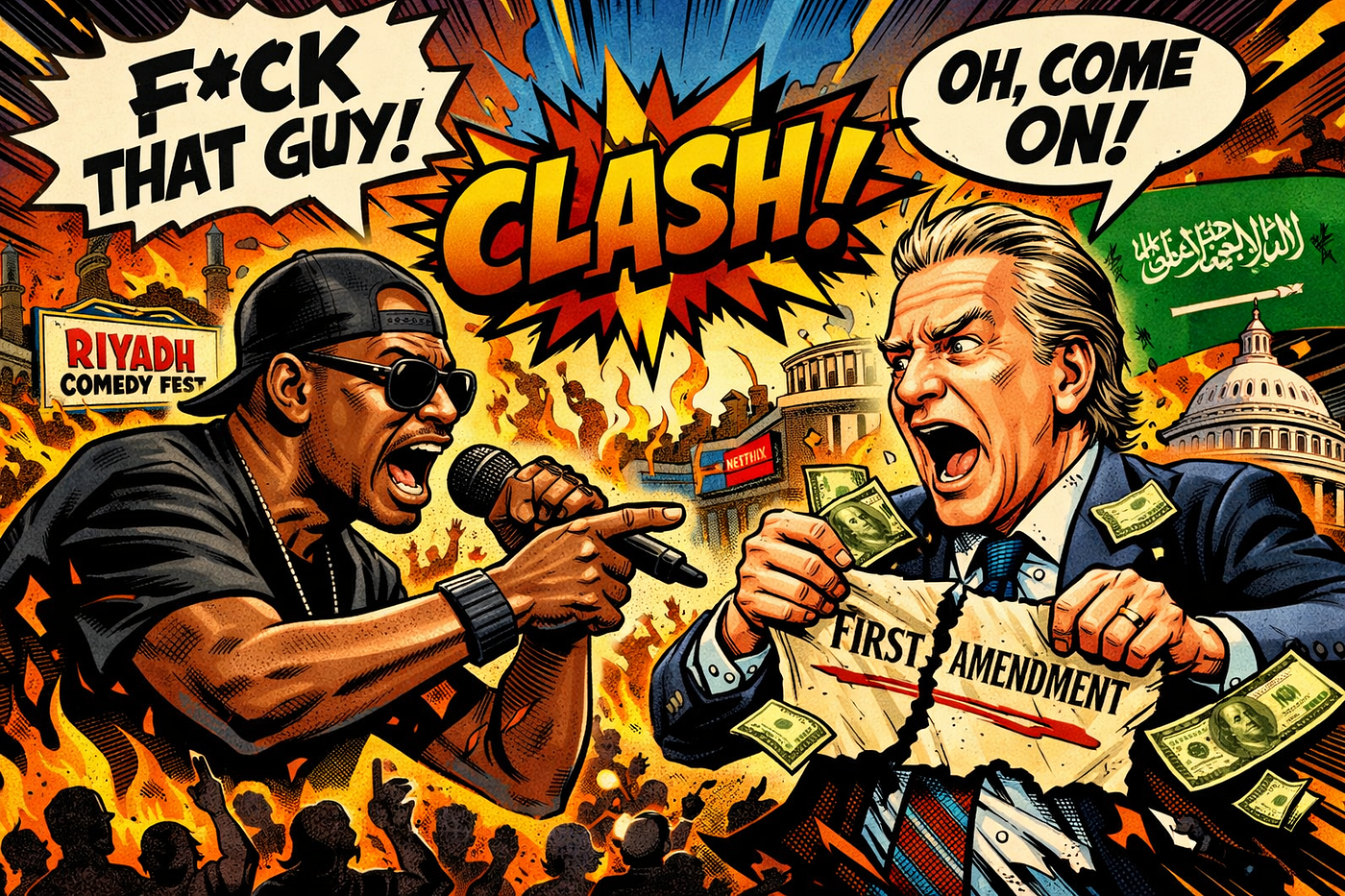
When Karmelo Anthony — a nineteen-year-old Black honors student with a 3.7 GPA and no prior criminal record — was convicted of murder by an all-white jury in Collin County, Texas, and sentenced to 35 years in prison after claiming self-defense, Judge Joe Brown went on camera and called him a punk!
What Brown Actually Said
It is important to be precise about this, because precision is what Joe Brown claims to value above all else.
Brown called Anthony’s decision to use a knife in self-defense a punk play and said he was embarrassed that people were defending him. He said Anthony, as the captain of his football team, should have embraced physicality and fought with his fists.
He asked why did he have to kill him. He described Anthony’s response to a physical confrontation as dishonorable, disgusting, and an example of cowardice. He said he hoped they would really wreck him.
He said this about a Black teenager who had warned his attacker not to touch him, who was physically confronted anyway, who used the means available to him to protect himself, and who was then convicted of murder by a jury from which every qualified Black juror had been systematically removed.
Let us be precise about something else.

WATCH: Tim Kaine rejects claims Karmelo Anthony verdict was racist | 930 WFMD Free Talk
Joe Brown had initially defended Karmelo Anthony in April 2025 when the case first broke. He correctly argued that the $1 million bond was excessive and unjust. He said Anthony was a victim, not a perpetrator. He said bail exists to ensure a defendant returns to court, not to punish them, and that a teenager with no criminal record posed no flight risk.
That analysis was legally correct. It was also the Joe Brown that his audience recognized and trusted.
Then something shifted. The video of the confrontation was released. The indictment came down. And Brown pivoted completely, calling Anthony a punk, invoking a code of masculine honor that he applied exclusively to a Black child defending himself and conspicuously withheld from the white men whose violence he has never similarly condemned.
The Standard He Does Not Apply Equally
Judge Joe Brown did not call Daniel Penny a punk.

Jordan Neely: What happened in NYC subway chokehold case?
Daniel Penny is the white Marine veteran who in May 2023 placed Jordan Neely, an unarmed Black man, in a chokehold on a New York City subway and held it for six minutes while other passengers told him Neely was dying.
Penny outweighed Neely significantly. He approached Neely from behind. He was not being physically threatened. Jordan Neely had not touched anyone. Penny was acquitted in December 2024. Judge Joe Brown praised Daniel Penny.
Think about what that means. A man who choked an unarmed Black man to death from behind on a subway, who was not being attacked, who had every opportunity to retreat and chose instead to hold his grip while people begged him to stop, is honorable in Joe Brown’s framework.
A teenager who warned his attacker not to touch him and then defended himself when the attacker did is a punk.
The difference between the two cases is not about fists versus knives. It is not about honor. It is about the race of the person using force and the race of the person on the receiving end of it.
Joe Brown applies one standard to white men who use lethal force against Black people and a different standard to Black people who use force against white people. That is not a legal analysis.
That is the logic of white supremacy delivered in a Black man’s voice.

Biracial man charged with fatally shooting White teen was acting in self-defense, attorney says | CNN
Brown also did not express outrage when Marc Wilson, a biracial Black man, was convicted of involuntary manslaughter in Georgia after firing his legally owned handgun at a pickup truck of white teens who were yelling racial slurs and trying to run his car off the road.
Wilson received 10 years. The white teenagers who initiated the confrontation were not charged.
He did not weigh in on Marissa Alexander, the Black Florida woman who fired a warning shot near her abusive ex-husband and received 20 years while George Zimmerman walked free for killing an unarmed Black teenager with actual bullets.

Marissa Alexander on Life in Prison, Her Case, and Moving On
He had nothing to say about Ralph Yarl, the Black teenager shot in the head for ringing the wrong doorbell in Missouri in April 2023.

Racially motivated shooting of black teen angers Kansas community
But when a Black teenager defended himself against a white attacker and went to prison for it, Joe Brown found his voice. He hoped they would wreck him.
The Numbers Brown Chose to Ignore
Judge Joe Brown knows the law. He has a UCLA law degree, a decade on the Shelby County Criminal Court bench, and fifteen years presiding over televised legal proceedings. He knows what Batson v. Kentucky says. He knows what the research on all-white juries shows. He knows exactly what it means when a prosecutor strikes every qualified Black juror from a pool of 589 people in a county that is 10.8 percent Black.
He chose not to discuss any of it.
Research from the Duke Center for Firearms Law found that when the shooter is white and the victim is Black, the rate of justifiable homicide is 34 percent. When the shooter is Black and the victim is white, that rate falls to 3 percent. The same act. The same law. Eleven times the disparity based solely on the race of the parties.
Between 2005 and 2010, there were 1,210 homicides with a Black shooter and a white victim. Just 17 of them — slightly more than one percent — were ruled justified. One percent. Joe Brown knows this. He has known it his entire legal career. He did not mention it once in any of his commentary on the Karmelo Anthony case.
Instead he talked about fist fights and manhood and honor. He talked about football captains needing to embrace physicality. He invoked a warrior code that conveniently requires Black teenagers to absorb whatever a white aggressor decides to deliver and respond only in the manner the white aggressor would find acceptable. That is not a legal standard. It is a submission standard. And Joe Brown dressed it up in the language of honor so that it would go down easier.
The Record Brown Would Rather You Forget
It is worth examining what Joe Brown’s actual record looks like outside the television studio, because the man presenting himself as an authority on honor and legal integrity has a complicated relationship with both.
Brown was removed from James Earl Ray’s last appeal by the Criminal Court of Appeals for demonstrated bias. The man who presided over the final legal proceeding of Martin Luther King Jr.’s assassin was found by an appellate court to have shown bias on the bench and was removed. That is not a minor footnote. That is the most significant case of his judicial career and he lost it for lack of impartiality.
Judge Joe Brown, has long maintained that Ray did not kill Martin Luther King Jr., arguing he was a scapegoat and disputing the ballistics tying the recovered rifle to the fatal shot. Brown’s position echoes the King family’s own stance and the findings of a 1999 civil jury that found a broader conspiracy was involved. It remains a minority view, however:
the House Select Committee on Assassinations matched the rifle found near the scene — a Remington Gamemaster bearing Ray’s fingerprints — closely enough to the wound type and recovered bullet fragments to support it as the murder weapon, though ballistics on the fatal bullet itself were never fully conclusive due to the condition of the fragments.
A later Department of Justice review reached a similar conclusion, finding that the evidence still points to Ray as the shooter, even as questions about possible accomplices or a financial conspiracy persist.

Judge Joe Brown arrested, charged | CBC News
In March 2014, Brown was arrested and charged with five counts of contempt of court in Shelby County Juvenile Court after he became verbally abusive and combative during a child support hearing. He was jailed. He appealed. He lost.
He served five days at the Shelby County Corrections Facility in August 2015. The chief magistrate who presided told ABC News:
this is not Hollywood. This is the real thing and as an officer of the court he should have known better.
His Tennessee law license was subsequently placed on disability inactive status due to health issues, with a disciplinary petition placed on indefinite hold, suspending his ability to practice law in the state.
In 2014, he ran for District Attorney of Shelby County, Tennessee.
This is the man who called Karmelo Anthony a punk and said he lacked honor.
Why It Matters That Brown Is Black
If a white commentator had said what Joe Brown said about Karmelo Anthony, it would have been condemned immediately and universally as what it is:
a defense of a racially corrupted verdict delivered from a position of privilege.
The condemnation would have been swift. The receipts would have been clear.
When a Black man with Brown’s credentials says it, something more insidious happens. It provides cover.
It allows the people who benefit from the verdict — the Collin County district attorney, the judge who let every Black juror be struck, the system that produced a 35-year sentence for a teenager who claimed self-defense — to point to Joe Brown and say:
see, even Black people agree he was wrong.
That is the function Brown is serving. Not because he is uniquely evil. But because he has decided, at this point in his life, that the opinion of the institutions that gave him his platform matters more to him than the rights of the Black teenager sitting in the Wallace Pack Unit in Navasota, Texas.
Malcolm X named this dynamic sixty some years ago.
He called it the house Negro versus the field Negro. The house Negro identified so completely with the master’s interests that when the master got sick, the house Negro asked:
master, is we sick?
When the master’s house caught fire, the house Negro worked harder than anyone to put it out. The field Negro, beaten and excluded and with nothing invested in the master’s comfort, prayed for wind.
Joe Brown is not putting out fires for white supremacy because he agrees with white supremacy. He is doing it because somewhere along the way he decided that his access to white institutions — his television show, his legal credentials, his invitations to speak, his residual checks — were worth more than his solidarity with the people those institutions were designed to control.
Karmelo Anthony is nineteen years old. He is at the Wallace Pack Unit in Navasota, Texas. He filed his appeal the day after sentencing. He described himself in court documents as penniless and unable to afford counsel. He had a 3.7 GPA. He warned Austin Metcalf not to touch him. When Metcalf touched him anyway, he defended himself. A jury from which every qualified Black juror had been removed convicted him in under three hours.
And Judge Joe Brown called him a punk.
That is the verdict on Joe Brown. Not from a rival, not from an enemy, not from someone who never respected what he built. From the record. From the numbers. From the documented history of a man who had every tool necessary to speak truth in this moment and chose instead to audition for an audience that was never going to give him his show back.
We were not sick, Joe. You were. And now we know.
If this piece reached you, give it however many claps you think it deserves and share it with someone who still thinks Joe Brown speaks for Black America. The receipts say he stopped doing that a long time ago.
Further Reading
Judge Joe Brown Shares Shocking Thoughts on Karmelo Anthony, Total Pro Sports, June 2026
Judge Joe Brown Drops Nugget Regarding Karmelo Anthony’s Bail Reduction, Black Enterprise, April 2025
Background on Judge Joe Brown, WLBT News, Memphis
Joe Brown, Judge, Encyclopedia.com
Judge Joe Brown Jailed in Tennessee, ABC News, March 2014
Judge Joe Brown in Jail for Contempt of Court, ABC News, August 2015
The Dangerous Expansion of Stand Your Ground Laws and Its Racial Implications, Duke Center for Firearms Law, 2022
Stand Your Ground Laws and the Presumption of Dangerousness, Equal Justice Initiative, 2023
The Trial of Maurice Byrd Will Test Stand Your Ground in Pennsylvania, The Trace, April 2025
Black Man Who Used Stand Your Ground Defense Gets 10 Years in Prison, Yahoo News, 2022
Karmelo Anthony to Appeal Murder Conviction, CBS News Texas, June 2026
Tags: Judge Joe Brown, Karmelo Anthony, Criminal Justice, Race, Self-Defense, Stand Your Ground, Black Accountability
메타데이터
- post_id
- 6e048219d9b7
- slug
- the-bootlick-on-the-bench-judge-joe-brown-karmelo-anthony-and-the-black-men-who-protect-the-6e048219d9b7
- url
- https://medium.com/illumination/the-bootlick-on-the-bench-judge-joe-brown-karmelo-anthony-and-the-black-men-who-protect-the-6e048219d9b7
- canonical_url
- https://medium.com/illumination/the-bootlick-on-the-bench-judge-joe-brown-karmelo-anthony-and-the-black-men-who-protect-the-6e048219d9b7
- author_url
- https://medium.com/@jusbouey
- status
- ok
- fetched_at
- 2026-06-22 05:41:33