Common GHG Accounting Mistakes to Avoid
Imagine this: you’re the sustainability lead at a promising mid-sized company. Your CEO has tasked you with preparing your first-ever…
Common GHG Accounting Mistakes to Avoid
Imagine this: you’re the sustainability lead at a promising mid-sized company. Your CEO has tasked you with preparing your first-ever greenhouse gas (GHG) inventory. You’ve spent weeks gathering data, talking to department heads, and reading up on the latest carbon accounting frameworks. The final report looks polished, complete with pie charts and emission breakdowns. But when you submit it to a third-party auditor, the feedback comes back harsh: “Incomplete data. Major emissions sources missing. Needs significant revisions.” Sound familiar?
This story isn’t uncommon. Many companies, even those with the best intentions, fall into common pitfalls when it comes to GHG accounting. Let’s explore some of these missteps — and, more importantly, how to avoid them.

GHG Accounting calculation strategies
Mistake 1: Incomplete Data Collection
One of the most common errors is not gathering enough data. Think of your operations: from the electricity powering your offices to the diesel fueling your fleet, every activity has a carbon footprint. Yet, many organizations overlook critical sources. For example, a logistics company might forget to include emissions from outsourced transportation. Or a retailer might exclude emissions from product manufacturing.
How to Avoid It:
- Start with a comprehensive checklist. Identify all activities and assets that contribute to your operations.
- Engage stakeholders. Department heads, facility managers, and suppliers can provide data you might not have access to.
- Invest in tracking tools. Modern software can automate much of the data collection process, reducing human error.
Mistake 2: Neglecting Scope 3 Emissions
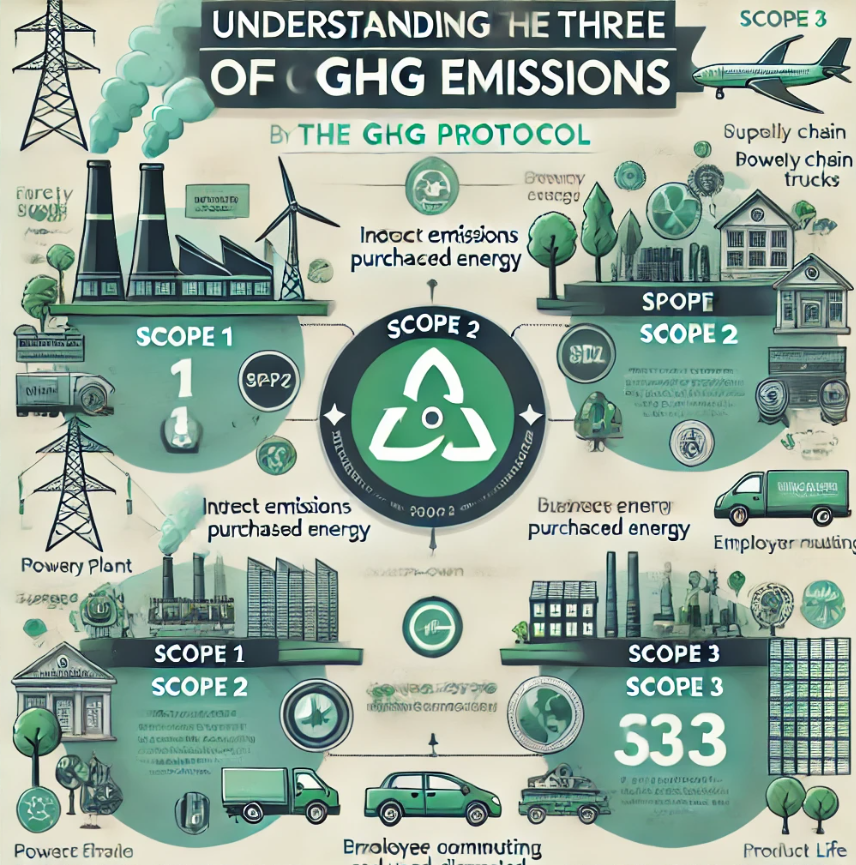
Scope 3 emissions — those indirect emissions from your supply chain, product use, and waste — are often the largest share of a company’s carbon footprint. Yet, they’re also the hardest to track. It’s tempting to exclude them from your inventory altogether, especially if data isn’t readily available.
Why This Matters: Ignoring Scope 3 emissions is like cleaning only the visible part of a dirty window. Stakeholders, especially investors and regulators, want transparency. Leaving out Scope 3 data can make your efforts appear half-hearted.
How to Avoid It:
- Focus on materiality. Not all Scope 3 categories will be relevant. Prioritize the ones that contribute the most emissions.
- Collaborate with suppliers. Work with them to obtain accurate emissions data.
- Use proxy data. When actual data isn’t available, industry averages can serve as a temporary substitute.
Mistake 3: Misaligned Boundaries
Determining the boundaries of your GHG inventory — which emissions are “yours” to report — can be tricky. Some companies report only what’s under their direct control, ignoring joint ventures or leased assets.
How to Avoid It:
- Follow established standards. The GHG Protocol provides clear guidelines on organizational boundaries.
- Consult legal and operational teams. They can clarify which assets and activities fall under your control or influence.
- Document your decisions. Transparency in your boundary-setting process builds trust.
Mistake 4: Lack of Quality Assurance
Even with the best data collection methods, errors can creep in. Units get mixed up. Emissions factors are applied incorrectly. Or key data points are simply missing.
How to Avoid It:
- Double-check calculations. Use third-party verification or peer reviews.
- Train your team. Equip them with the knowledge to spot and fix common errors.
- Conduct regular audits. This helps you catch mistakes early and build a culture of accountability.
The Good News: Help Is Available
The world of GHG accounting can feel overwhelming, especially if you’re new to it. But you don’t have to navigate it alone. I specialize in helping businesses like yours build robust, accurate GHG inventories. From data collection to Scope 3 assessments, I’m here to simplify the process and set you up for success.
Want to know how you’re doing? I’m offering a free one-on-one consultation to assess your current GHG accounting practices. Together, we’ll identify gaps, find opportunities for improvement, and ensure your sustainability efforts are on the right track.
Final Thoughts
GHG accounting isn’t just about compliance; it’s about leadership. By avoiding these common mistakes, you’re not only improving your carbon reporting — you’re building credibility with stakeholders and positioning your company as a sustainability leader. So, what’s your next step? Let’s make sure your story doesn’t include an audit gone wrong. Reach out today and let’s write a success story together.
메타데이터
- post_id
- 6e08053a125b
- slug
- common-ghg-accounting-mistakes-to-avoid-6e08053a125b
- url
- https://medium.com/@naveedul/common-ghg-accounting-mistakes-to-avoid-6e08053a125b
- canonical_url
- https://medium.com/@naveedul/common-ghg-accounting-mistakes-to-avoid-6e08053a125b
- author_url
- https://medium.com/@naveedul
- status
- ok
- fetched_at
- 2026-06-16 19:09:56