Ukraine’s Nemesis Brigade Is Waging a Silent War on Russian Weapons
We have always known that war is a game of chess, not checkers. For every move the enemy makes, you need a countermove — and ideally, you…
Ukraine’s Nemesis Brigade Is Waging a Silent War on Russian Weapons
We have always known that war is a game of chess, not checkers. For every move the enemy makes, you need a countermove — and ideally, you need to see ten steps ahead. For a long time, the Russians believed that if they parked their most expensive air defense systems far behind the front lines, they would be safe. They thought that distance was their armor.
They were wrong.

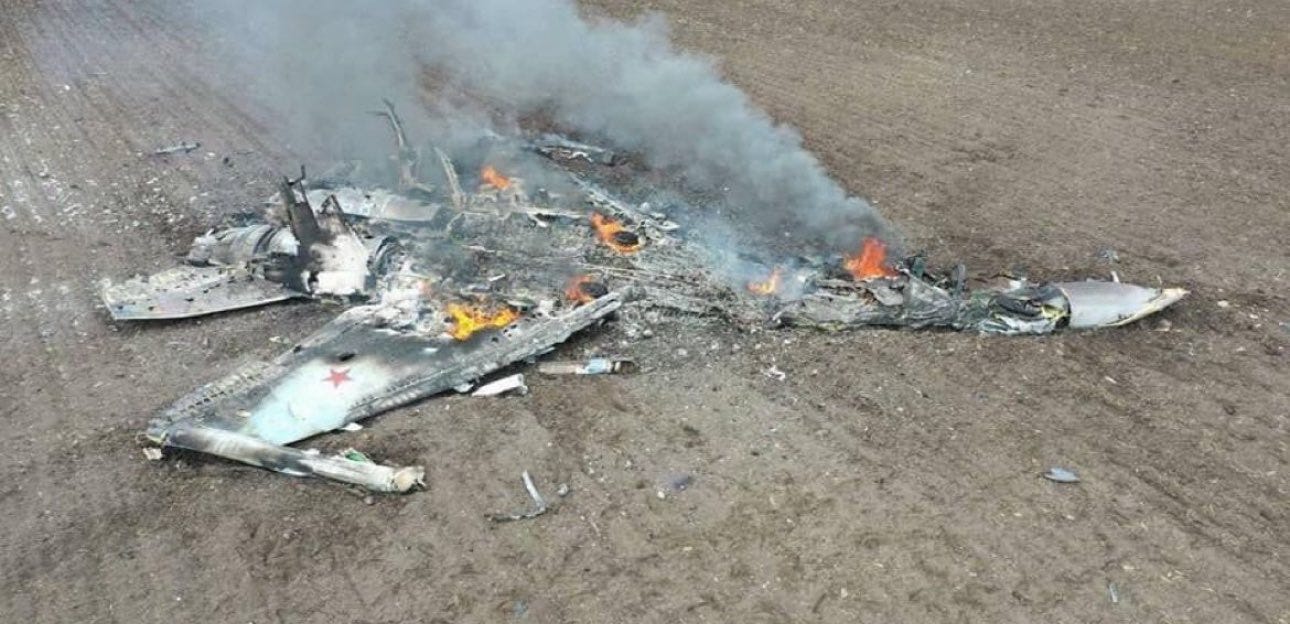
In the last year, we have rewritten the rules of engagement. You’ve heard the term “deep strike” — those daring hits on oil depots and factories thousands of kilometers inside Russia. But none of that would be possible without the dirty work done in the middle zone. We call them “midstrike” drones. And here, in the 412th Nemesis Brigade, we have turned the 200-kilometer depth behind enemy lines into a wasteland for their armor.
I want to tell you how we are doing it, how we are systematically dismantling the “invincible” Russian air defense, and why the rear areas are no longer a sanctuary for the enemy.
The Birth of the “Middlestrike”
When we first started, our unit didn’t even have a name. We had an idea and a lot of desperation. We would take a heavy bomber drone — the kind that usually works just a few kilometers past the treeline — and we would launch it in one direction. We knew there was a valuable target out there, but we also knew the drone wasn’t coming back. There was no live video feed for precision adjustments, no second chances. We called it our “suicide run.”
We got lucky. We confirmed a hit on a Buk air defense system at a distance of 50 to 57 kilometers. Back then, those were unattainable distances for a small UAV. That hit proved a concept: we could reach out and touch the enemy’s throat, even if we couldn’t see the result.
Today, things are different. We don’t launch blind anymore. The “middlestrike” has evolved into a precise scalpel. As of May 2, 2026, the Nemesis Brigade alone has hit or destroyed 83 units of enemy air defense systems. That includes everything from the close-range TOR and BUK systems to the massive radars of the S-300. The Russians are bleeding metal, and they cannot keep up.
Why Their “Shield” Is Full of Holes
You might ask, “If the Russians have all this fancy technology, why can’t they just shoot your drones down?”
The answer is simple: math and physics.
First, look at the math. We count every system we destroy. We know roughly how many they can build in a month. The Defense Forces are destroying significantly more Russian air defense systems than Russia is producing. That means every week they are in this war, their shield gets thinner. They are forced to pull units away from the front to protect oil refineries in Ryazan or Moscow. When they pull back, the front line gets even weaker.
Second, look at the physics. Most of their radar technology is Soviet-designed. Those giant rotating antennas are fantastic at spotting a metal fighter jet coming over the horizon. But a small drone? With a composite plastic body and a small engine? That is a different story. We are just a ghost on their screens.
But the real secret is our tactics. We fly low. We fly very low. Many of their missiles have a minimum engagement altitude; they literally cannot lock onto us if we hug the terrain. We fly in pairs. While one drone distracts or acts as bait, the second watches. The second sees the explosion, adjusts the trajectory, and finishes the job if the first one missed. You cannot hide from a pair of eyes that never blinks.
The “Corridor” Strategy
There is a misconception that we just launch drones randomly to cause chaos. That is not how Nemesis works.
We treat the battlefield like a highway system. Imagine the enemy’s air defense is a series of toll booths blocking the road to Moscow. You cannot send a truck full of explosives through if there are ten machine guns pointed at the windshield.
So, we send the “middlestrikes” first. We hit the S-300 radar. We blow up the TOR launcher. We force them to turn off their radars or move their positions. Suddenly, the “toll booth” is empty. That is when the deep strike units — the long-range missiles and the heavy bombers — fly through the corridor we just opened to hit the oil infrastructure 1,500 kilometers away.
The war has become a complex symphony. Sometimes we “thin out” the air defense so our reconnaissance can fly deeper. Sometimes we hit the logistics first to starve the frontline, and then hit the air defense when they try to retreat. There is no template. There is only the mission.
A Day in the Silent War
So, what does a typical operation look like on our end?
It starts with a puzzle. Our intelligence units build a picture using every tool we have — satellites, agents, signal intercepts. We identify a high-value target, perhaps a rare S-350 Vityaz system or a North Korean Koksan artillery piece.
Once the target is confirmed, the planning begins. We don’t just launch “a” drone. We launch a complex operation. The weather is the only boss we answer to; if it’s bad, we wait. But if the sky is clear, the clock starts ticking.
We fly our reconnaissance assets to get a live picture. Then the “Middlestrike” crew lifts off. We control the drone from hundreds of kilometers away, watching through the nose camera. When we see the target — maybe a radar dish or a missile launcher — we dive.
What makes us different is the feedback loop. In the past, you fired a rocket and hoped. Now, we watch the explosion in real-time. We see the secondary detonation. We see the crew running. We see the smoke. We know instantly if we succeeded or if we need to send the second drone to correct. From planning to destruction, if the target is important, it takes hours.
The New Reality: No Safe Zone
The results of this silent war are becoming visible even to the Russian public. Look at what happened to their “invincible” air defense ring around Moscow recently. Drones got through. They hit refineries, technology parks, and military facilities. The Kremlin didn’t know what to say.
Why? Because we destroyed the gatekeepers.
By hammering the Pantsirs and the S-300s in the occupied territories and the border regions, we created a gap. The Russian military is now forced to use老旧 equipment from the 1960s to try to protect their capital. They are putting anti-aircraft guns on the roofs of Moscow high-rises because they don’t have enough modern missiles left.
This changes everything for the soldier on the ground. If you are a Russian logistics officer trying to bring shells to the front, you are not safe 100 kilometers behind the line anymore. You are not safe 180 kilometers behind the line. We are hunting you.
This forces the enemy to spread their logistics thinner and thinner. They have to drive further, take longer routes, and hide in the dark. That slows down their offensive. It breaks their momentum. It turns their “special military operation” into a desperate struggle to survive.
The Future Is Here
Some people ask me if this is a “weapon of mass destruction.” It is not. Mass destruction is artillery firing hundreds of shells to hit one trench. That is the old way.
“Middlestrikes” are the weapon of the intelligent. We are a startup fighting a dinosaur. We fail fast, we learn fast, and we adapt faster than any army in history.
The 412th Nemesis Brigade has destroyed enemy equipment worth an estimated $3 billion. We have turned the “deep rear” into the “immediate front line.”
The Russian army is learning, slowly. They are trying to deploy interceptor drones and electronic warfare. But they are playing catch-up. We are already planning the next move.
The war is changing. The front line is no longer a line on a map. It is everywhere their radar can see — and increasingly, everywhere it can’t. We are the Nemesis. And we are just getting started.
About every third sortie we conduct ends in an effective defeat.
At the same time, there is a difference between “hit” and “destroyed.” Hit is when the object is damaged and can be restored. Destroyed is when it is no longer. Therefore, effectiveness is not only about hitting. It is whether the weapon reached its destination, whether it found its target, or whether it was hit.
Another important point: even the very fact of a “middlestrike” entering the target area already creates an effect. It’s like with the “Shaheds”: even when they are shot down and they don’t reach the target, they still create tension, force air defense to work, and divert resources. The same here — each sortie creates pressure on the enemy and influences his actions.
Is it difficult to learn to fly a Middlestrike drone?
Middlestrike operators are a different quality of training than smaller drones. These are expensive assets, and you want them to work as efficiently as possible. Therefore, operators are more often people with experience.
Such drones are now very close to classic aviation, and the approach is the same: pilots constantly train on simulators, practicing various scenarios. Conventionally, an hour of real flight can be replaced by two hours on a simulator. Therefore, even if the number of flights is limited, the operators’ skills are kept active.
Where to start? You come to us, work with simpler and cheaper drones, where the cost of a mistake is lower. You gain experience — you move on to more complex and expensive ones. It’s like in aviation: first a light aircraft, then a more complex one, and only then — large machines. You can’t immediately get behind the “Boeing”. Because the difference is very tangible.
You can fly a small plane — understand the basic principles, aerodynamics. But when you move to a large plane, it’s a completely different level: working with systems, mission planning, autopilot, other control modes.
It’s the same here — people gradually grow within the unit and move on to more complex tasks.How long does this operator training take?
A year ago, this class of tools practically didn’t exist, and now we are already forming a training system for it. You can learn the basics in 30–60 days.
There are people who grow very quickly. In a year they can reach a very strong level. And vice versa — it happens that a person flies, but “his hands don’t stand still”. Here, too, a lot depends on abilities.
In what direction will “middle strikes” now develop technologically? Warhead, guidance systems, autonomy?
In general, these drones have a few key things.
The first is the weight of the warhead. The second is the range. The third is the autonomy. The fourth is the communication. And the fifth is the maneuverability.
“Middlestrike” is a different type of mission. There are weapons that can work on dynamic targets — for example, when the equipment is moving. There you need maneuverability to catch up and hit.
And there are vehicles that operate against stationary targets — warehouses, bases, control points. They may not be maneuverable, but they can carry a large warhead and operate against large objects.
I personally expect a greater variety of ammunition and greater categorization of them. That is, not just high-explosive or cumulative — but more diverse, more “creative” solutions for different tasks.
The second is to increase the weight of the warhead while maintaining range and maneuverability. This, in my opinion, should definitely appear.
As for guidance systems, this is already a must-have. Optical guidance — when you set a target and the vehicle then reaches it on its own — this already exists and will continue to develop.
As for targeting radar emitters, that’s also possible, and I’d like to see it become a more widespread option. But there’s a caveat: the enemy uses radars very carefully. They turn them on in short sessions — “click-click” — and turn them off because they understand that they’re visible. And so “catching” a working radar is almost a jackpot.
In general, we expect that in the near future, I think within this year, there will be simply revolutionary changes in the middlestrike class on our part. Revolutionary.
This means that some weapons will be able to fly much further. Accordingly, we will be able to hit deeper targets. This will lead to a redistribution of the enemy’s efforts and an increase in our pressure on rear facilities.
How do you rate the quality of boards from Ukrainian manufacturers? Do they have to be modified in workshops, and do companies respond quickly to your comments?
I’ll start with feedback — manufacturers react very quickly. This is a new class of products, and we are actually going through this experience together. They are interested in making a better product, so they listen and make changes quickly.
Moreover, this often happens virtually online: either the manufacturers work next to us, in the backroom workshop, or we provide feedback remotely — and this is taken into account in subsequent deliveries.
We say directly: if some things are not fixed, we will not take such measures. And then it is their task to find a solution.
As for quality, manufacturers are trying, but these are new solutions that are currently being developed and implemented in parallel. That’s why we check everything.
Overall, the quality is at the “satisfactory plus” level.
There are manufacturers who work very closely with divisions: they choose one or two core divisions, test their tools there, get feedback quickly, and make changes quickly. They are the ones who move faster and make a better product.
Because if you just make something and try to sell it to everyone at once, it doesn’t work. The right approach is when you work with specific crews, know the people, get direct feedback from them, and quickly refine the product.
How do you assess the provision of “middlestrike” means? Is the current bottleneck in pilots, quality targets, or the drones themselves?
The situation is this: we have an understanding of how to do it, we have experience, but we lack the means themselves. We are provided with pilots for the current volume of deliveries. But the brigade’s staff provides for a larger number of crews, and we continue to fill it. That is, if there are more means, we will form more crews and be able to scale the work.
And another important point is that this is an expensive tool. The state invests a lot of money in it, so it needs to be given high-quality goals. Simply “hitting anywhere” with such means is wrong.
But if tomorrow supplies increase two or three times, we will adapt and there will definitely be targets. Let’s not forget that “middle strike” is not one specific tool. It is a “zoo” of different solutions for different tasks.
메타데이터
- post_id
- 6e22a51597f5
- slug
- ukraines-nemesis-brigade-is-waging-a-silent-war-on-russian-weapons-6e22a51597f5
- url
- https://medium.com/@Nisha2123/ukraines-nemesis-brigade-is-waging-a-silent-war-on-russian-weapons-6e22a51597f5
- canonical_url
- https://medium.com/@Nisha2123/ukraines-nemesis-brigade-is-waging-a-silent-war-on-russian-weapons-6e22a51597f5
- author_url
- https://medium.com/@Nisha2123
- status
- ok
- fetched_at
- 2026-06-09 15:37:30