Butterfly effect
Nature photographer and guide Court Whelan travels the world to share — and protect — Earth’s wonders.
Butterfly effect
Nature photographer and guide Court Whelan travels the world to share — and protect — Earth’s wonders.
This story was featured first in the Summer 2026 edition of the Florida Gator Magazine. Want to grab your copy? Print versions are mailed to all UF Alumni Association members three times a year.
By David Finnerty
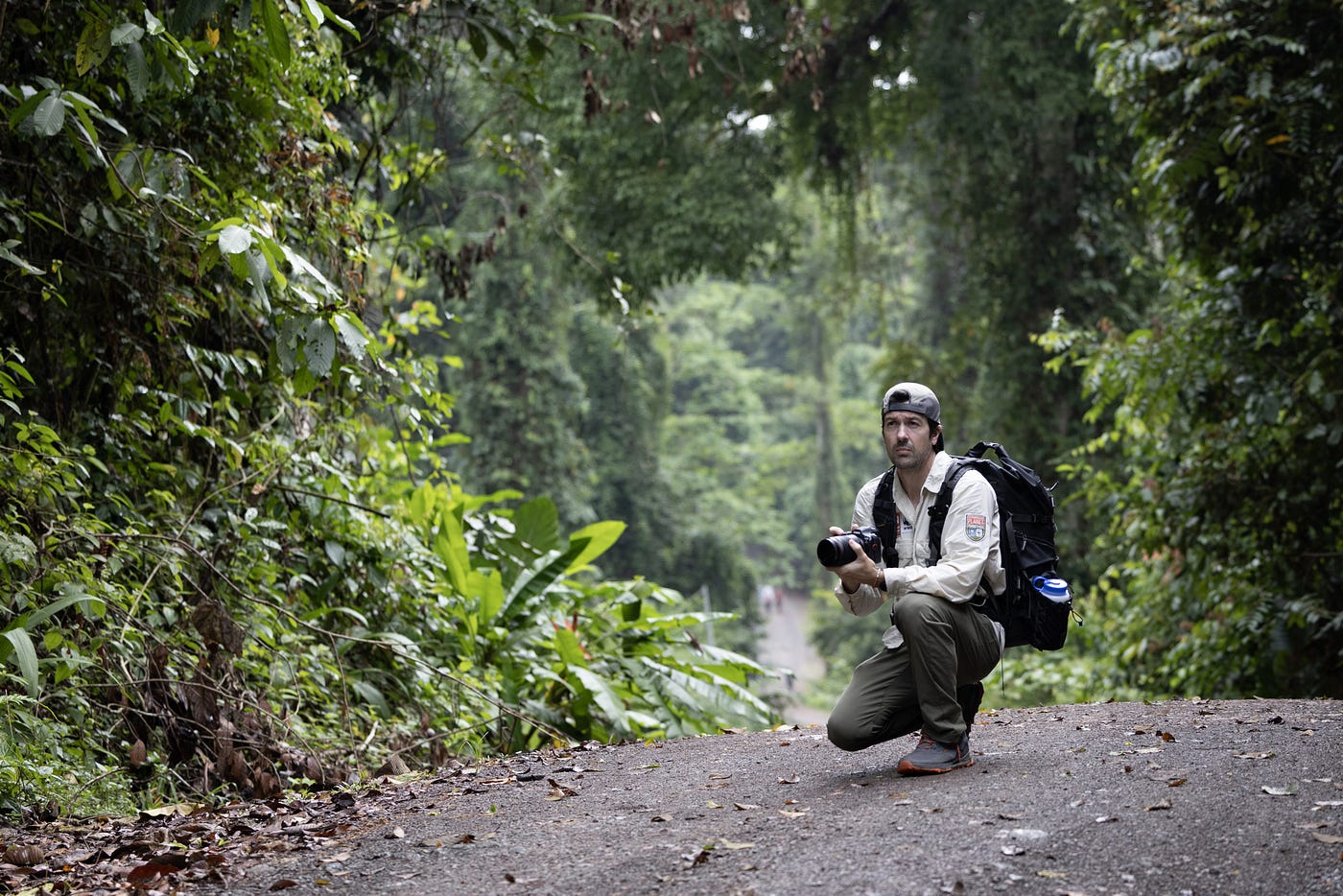
Photographer Court Whelan in Borneo in 2025.
It started with a flutter.
A flit.
A wisp.

Or, more precisely, millions of them in a Mexican mountaintop forest so thick with Monarch butterflies that their combined weight snapped tree branches.
Then came the polar bears and orangutans, the grizzlies and baobab trees, the lemurs and the aurora borealis, the lions and penguins and glaciers — grand landscapes and stunning wildlife witnessed in blinks and whispers and captured in a camera lens.
“It’s been an absolute magical dream,” Court Whelan says of his two-decade adventure as a nature photographer and wildlife guide.
It’s a dream lush with expeditions to the Canadian Arctic, Borneo, Madagascar, Himalaya and other distant places on every continent. One rich with photos featured in magazines like National Geographic and in a coffee table book. It’s a journey brimming with unforgettable experiences, like a 60 Minutes segment with Anderson Cooper that aired this past September. And Whelan (BS ’05, MS ’08, PHD ’12) owes it all to a humble point-and-shoot camera he’d bought on a whim.

With Anderson Cooper for a 60 Minutes segment in 2025.
Well, that camera … and an idea that took wing when he was studying entomology and ecotourism at UF.
Back then, Whelan was figuring out how to weave his love for science and conservation into a career. Things clicked while working under celebrated UF lepidopterist Tom Emmel at the university’s Florida Museum of Natural History.
Whelan had just started dabbling in photography when he went on an enrichment trip to Mexico with the museum to see the wintering Monarchs. There, he snapped photo after photo of the Monarchs: an orange-and-black bouquet in flight, a pulsating carpet on the forest floor, a cluster of butterfly-wrapped pines, a lone insect clinging to a leaf.
“I didn’t grow up as an outdoor kid or a camping kid. It was kind of love at first sight when I got that camera. That first interaction, that first photograph literally led to my photos being shown on 60 Minutes and seen by tens of millions of people.”

A single square yard can yield more intrigue and awe than just about any other place on the planet in the Monarch sanctuaries of Mexico.
A doctoral dissertation on the butterflies and several upgraded cameras later, and now he’s more comfortable wearing hiking boots and leading small groups into the wilds than he ever would have been in a laboratory.
And his old craving to blend science and conservation? Check that box, too.
Whelan’s guided trips with Natural Habitat Adventures, his photographs and twice-a-month The Wild Photographer podcast do more to protect the places and animals he loves than he’d ever imagined.

“I was fortunate enough to hit my seventh continent, Antarctica, as a guide at age 28. I’m grateful that my eye for photography allowed me to see the world and help save it … one photo at a time.”
“The thing that continues to surprise me is the tremendous impact this micro industry has on conservation,” he says. “There’s a saying: ‘You cannot save what you do not love, and you cannot love what you do not know.’ My superpower is getting people to know things and love things.”
His expedition guests, for instance, have close encounters with Mother Nature. People who see his photos are treated to moments of awe that are here and gone in a wink. Gateway communities — hotels, restaurants, souvenir shops, outfitters and such — get an economic boost, and with it a reason to be good stewards of the region’s wild animals and landscapes.


(Left) Nature collaborated — wind, lighting, color — to produce this favorite shot of African crowned crane. | (Right) In Manitoba, Canada, just under the “auroral oval,” a zone of high magnetic activity directs solar particles toward Earth.
“I realized [in college] that if I could go into this field as a conservation biologist, having an expertise on how to channel all that knowledge and information into this [ecotourism] industry, I could leave, hopefully, a beneficial mark on the world — with the idea that I love doing it in the first place,” Whelan says.
Twenty years into channeling that superpower, he isn’t even close to tapping into its whole potential, he says.
“There’s a beautiful world out there, still full of immense discoveries,” Whelan promises. “There’s a lot in need of saving and there’s a lot of opportunity in saving. I want to extinguish apathy. To quote Jane Goodall: ‘Apathy is the enemy.’”
Below is a selection of some more photographs from Whelan’s collection.

Astrophotography in our own backyard, aka Bryce Canyon National Park, is one of the best places to see the Milky Way with your naked eye.
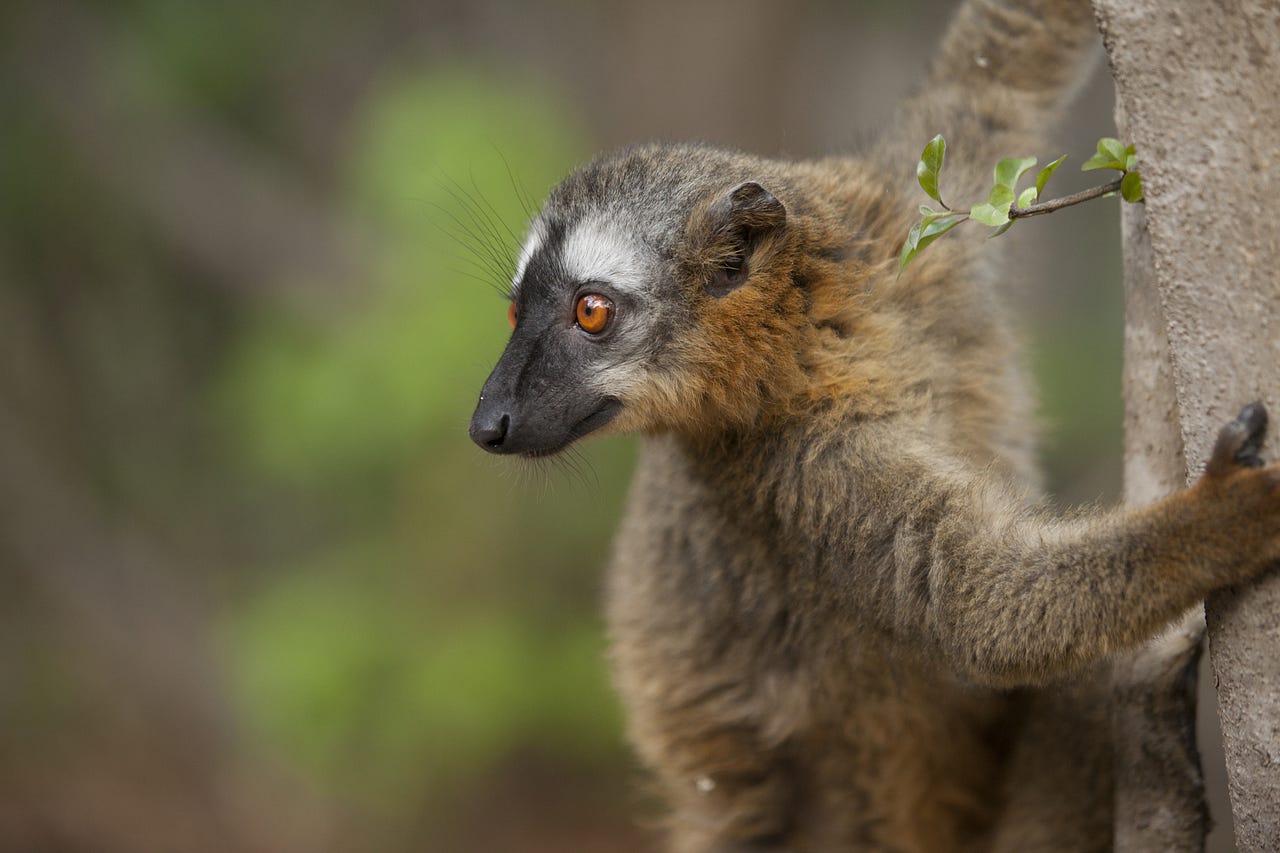
A brown lemur through the dark and moody forests of Madagascar.

When not hunting, male polar bears spar, testing their power and competition for when it counts: mating season.

“I don’t always drink my morning coffee in the company of large rainforest beetles, but when I do, I’m happier. When gearing up for a day of photography in Borneo’s Danum Valley, I stopped to take a photo of my morning companion.”

What is for some a wonder of the world is just the morning commute for others in Madagascar’s Avenue of the Boababs.

The mountain gorillas of Uganda and Rwanda are a conservation success story. When their habitat was almost turned into cattle ranches, the Ugandan government was petitioned to protect the forests. Today, what would have earned local communities around $77,000 a year via cattle is a $34 million ecotourism business.

“Showing how we do what we do is central to my job. These ‘gravel planes’ sit beneath a towering glacier in Kenai Fjords National Park.”

Wild dogs can be rare to see throughout Africa, but Botswana is an exception — they’re the most successful carnivore on Earth.
All photos courtesy of Court Whelan.
Connect with and follow Whelan at the links below.
메타데이터
- post_id
- 6e2b1b79b9d0
- slug
- butterfly-effect-6e2b1b79b9d0
- url
- https://medium.com/florida-gator-magazine/butterfly-effect-6e2b1b79b9d0
- canonical_url
- https://medium.com/florida-gator-magazine/butterfly-effect-6e2b1b79b9d0
- author_url
- https://medium.com/@gatornation
- status
- ok
- fetched_at
- 2026-07-11 21:40:30






