The Factory Took Your Body. The Office Took Your Time. The Algorithm Takes Your Soul.
And you signed each contract with a smile.
The Factory Took Your Body. The Office Took Your Time. The Algorithm Takes Your Soul.
And you signed each contract with a smile.

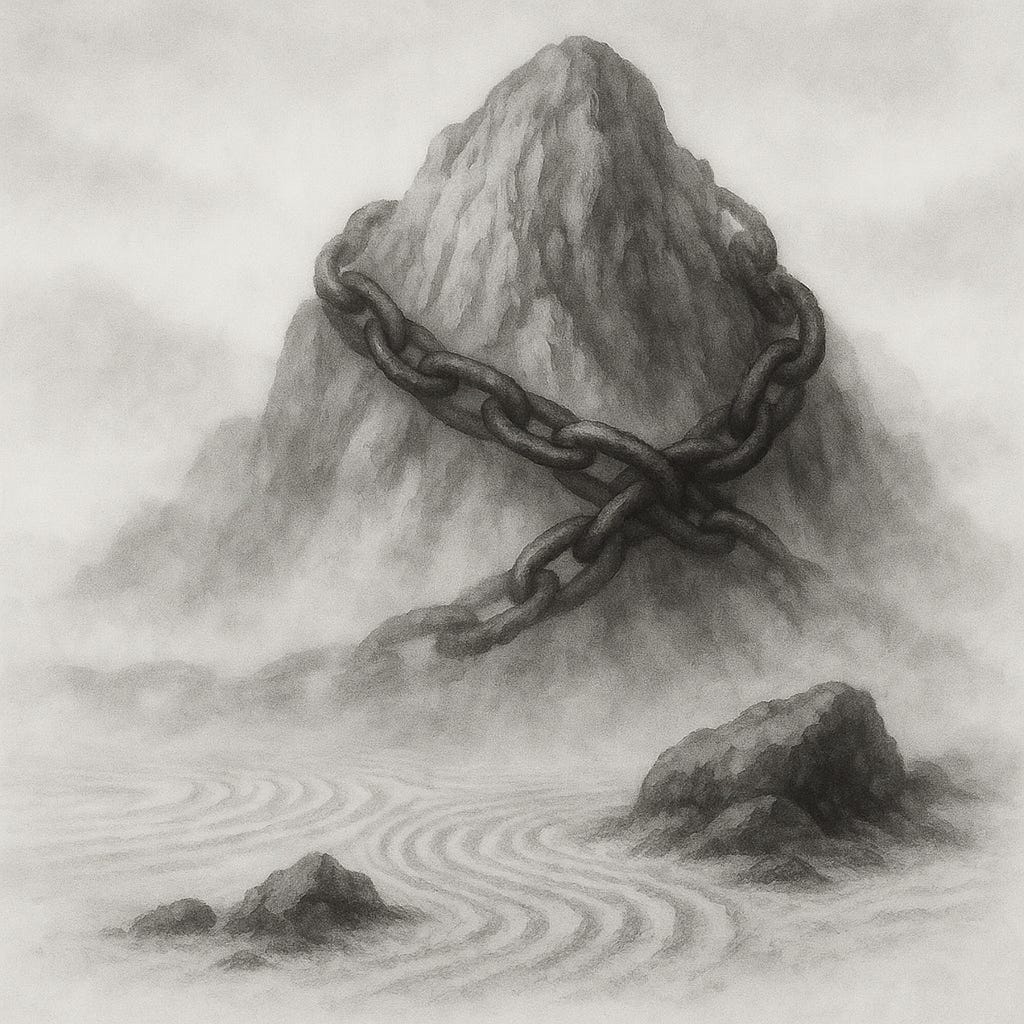
Image — Created by the author
Imagine your great-grandfather on the factory floor in 1923.
Twelve hours. Six days. A machine that never tired, never complained, never asked why — and he fed it with his fingers, his back, his decade. The factory didn’t hate him. It simply didn’t see him. He was torque. He was throughput. He was interchangeable.
We look back now and feel the injustice of it, clean and obvious from a century away.
But what if we’re inside the same story — and can’t see it yet?
The First Extraction
The factory was honest, at least, in its brutality.
It wanted your body. Your hands. Your stamina. The deal was visible — you could feel the ache in your spine every night. You knew exactly what was being taken, even if you couldn’t stop it.
Unions formed because the harm was legible. You could point to the injury. You could measure the hours. You could count the fingers lost.

Image — Created by the author
The body, it turns out, was the easiest thing to organize around. It bleeds. It gives out. It demands rest. And in its very fragility, it became a site of resistance.
The factory could take your labor. It could not take your solidarity.
The Second Extraction
Then came the office.
White collar. Clean hands. Climate control. The deal looked better — and in many ways, it was. But the extraction shifted. The factory wanted your body from nine to five and nothing more. The office wanted something subtler.
Your time.
Not just the hours you were there. The hours you were supposedly free — but thinking about a deadline. The Sunday evenings hollowed out by Monday’s anxiety. The vacation where your laptop came along “just in case.” The invisible overtime that never appeared on any invoice.

Image — Created by the author
The office worker didn’t lose fingers. She lost evenings. He lost weekends. They lost the slow, unstructured hours that make a life feel inhabited rather than managed.
You can’t organize around time the way you can around blood. Time disappears quietly. It doesn’t leave a mark.
Have you counted, lately, how many of your hours actually belong to you?
The Third Extraction
Now comes the algorithm.
And it doesn’t want your body — you can work from anywhere. It doesn’t want your time — technically, you set your own hours. What it wants is something the factory and the office never dared reach for.
Your attention. Your desire. Your sense of self.
This is the extraction that leaves no visible wound.
Picture a Tuesday morning. You open your phone before you’ve said a word to another human being. The feed knows what made you angry last week. It knows what made you feel briefly superior, briefly seen. It serves you another portion — calibrated, optimized, designed by engineers whose sole metric is engagement, which is just a clinical word for could not look away.
You are not the customer.
You are the raw material.

Image — Created by the author
The factory processed steel. The algorithm processes you — your fears, your loneliness, your hunger for belonging — and sells the processed version to anyone willing to pay for targeted access to a human in a vulnerable moment.
And unlike the factory floor, you go back voluntarily. Every hour. Every day.
What Makes This Extraction Different
The factory worker knew she was being exploited. The office drone suspected it. The algorithm user isn’t even sure something is happening.
That’s the design.
When Facebook’s early engineers described their goal as “a slot machine in every pocket,” they were describing a system engineered to scramble your dopamine loop so thoroughly that you’d lose the ability to distinguish between what you want and what you’ve been trained to reach for.
You didn’t choose to feel anxious when you haven’t checked your phone in an hour.
That anxiety was installed.
You didn’t choose to feel inadequate after scrolling someone else’s curated highlight reel.
That inadequacy was engineered.
The factory took something from you that you knew you were giving. The algorithm takes something you don’t know you have until it’s gone.
When is the last time you were bored — genuinely, uninterruptedly bored — and sat with it instead of reaching for your phone?
The Consent Form You Didn’t Read
Here is the uncomfortable truth.
Every previous extraction came with visible coercion — economic desperation, limited options, systemic power imbalances. We could name the villain. The robber baron. The corporation. The time clock.
This one comes wrapped in a different story.
Freedom. Connection. Community. Empowerment.
The algorithm presents itself as your friend, your entertainer, your village square. You joined willingly. You post willingly. You return willingly. And so the critique feels strange, feels paranoid, feels ungrateful.
But consider: the cigarette companies also said their product was a pleasure, a choice, a personal freedom. It took decades to name what was actually happening beneath the advertising.
We are in those decades now.
The terms of service you clicked through — in the 2 seconds you spent skimming 47 pages of legal text — included a clause nobody reads aloud: in exchange for free access to this platform, you agree to let us study you until we understand you better than you understand yourself, and then use that understanding against you commercially, indefinitely.
You signed.
We all did.
The society that separates its scholars from its warriors will have its thinking done by cowards and its fighting done by fools. — Thucydides, History of the Peloponnesian War**
This Isn’t Nostalgia
The factory era was not better. Let’s be precise about that.
The office era was not better. More comfortable, perhaps. More invisible in its cruelties. Not better.
What each era did give us, eventually, was the vocabulary to name the harm. And once you can name a harm — once you can say this is being taken from me, this is what it costs, this is what I’m trading and for what — something becomes possible.
Resistance. Refusal. Redesign.
The workers who built the eight-hour day didn’t have the language for it at first either. They had the ache. They had the exhaustion. And slowly, out of that, they built the argument.
What is the ache you’re carrying right now that you haven’t yet found the language for?
What Would Reclaiming Look Like?
Not a digital detox. Not a weekend retreat.
Something harder and more structural.
What would it mean to treat your attention the way the labor movement treated the body — as something with limits, with value, with rights that can be organized around?
What would it mean to ask, seriously, who profits from your distraction? From your outrage? From your loneliness?
What would it mean to want things that no algorithm recommended to you?
The factory couldn’t be reformed by workers who didn’t believe they deserved better. The office couldn’t be humanized by employees who thought exhaustion was virtue. The algorithm cannot be resisted by users who don’t yet believe their soul is worth protecting.
That’s where this begins.
Not with an app blocker. Not with willpower.
With the slow, radical act of deciding that what happens inside your mind — your attention, your desire, your sense of what matters — belongs to you.
And that some things are not for sale.
Even if you already clicked agree.
The most common form of despair is not being who you are. — Søren Kierkegaard, The Sickness Unto Death**
The factory left scars you could show. The office left burnout you could name. The algorithm leaves something harder to point to — a subtle hollowing, a restlessness, a forgetting of who you were before you were a user.
Name it anyway. That’s how it starts.
It is not that we have a short time to live, but that we waste a great deal of it. — Seneca, On the Shortness of Life**
메타데이터
- post_id
- 6e6b8fb0eb7c
- slug
- the-factory-took-your-body-the-office-took-your-time-the-algorithm-takes-your-soul-6e6b8fb0eb7c
- url
- https://futuremonger.com/the-factory-took-your-body-the-office-took-your-time-the-algorithm-takes-your-soul-6e6b8fb0eb7c
- canonical_url
- https://futuremonger.com/the-factory-took-your-body-the-office-took-your-time-the-algorithm-takes-your-soul-6e6b8fb0eb7c
- author_url
- https://medium.com/@yogeshmalik
- status
- ok
- fetched_at
- 2026-06-09 15:37:30