The Myth of Donald Trump, Master Dealmaker
For decades, Donald Trump has promoted himself as the ultimate dealmaker — a titan of negotiation whose business savvy would revolutionize…
Opinion | The Myth of Donald Trump, Master Dealmaker
For decades, Donald Trump has promoted himself as the ultimate dealmaker — a titan of negotiation whose business savvy would revolutionize American politics. He even titled his 1987 memoir The Art of the Deal, casting it as a blueprint for success. But behind the brand lies a different reality: Trump has consistently proven himself to be a poor negotiator, both in business and in public office. The myth of Trump the dealmaker is just that — a myth.
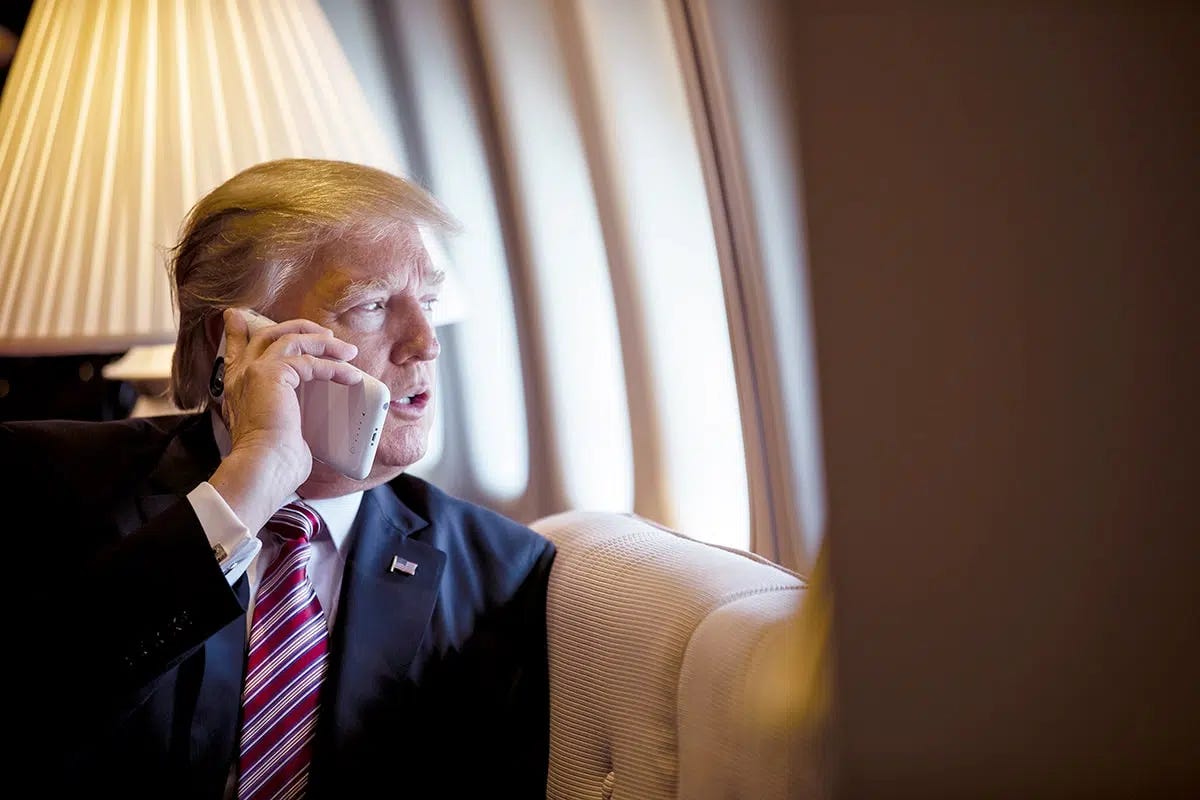
Before his rise in politics, Donald Trump was a fixture in the business world, known for ventures that stretched far beyond real estate. Credit: Shealah Craighead / Trump White House Archive / Public Domain
Let’s begin with the pattern visible throughout Trump’s business career. While he inherited a sizable fortune from his father, he squandered much of it through a series of overleveraged and poorly managed ventures. Trump casinos went bankrupt. Trump Steaks flopped. Trump University closed amid fraud lawsuits. The Trump Shuttle folded. These failures weren’t just missteps; they revealed a businessman more skilled at self-promotion than execution.
Even in cases where deals were struck, Trump’s approach was often marked by bluster and brinkmanship rather than thoughtful strategy. He thrives on spectacle, not substance. His modus operandi — threaten, demand, retreat — has rarely led to lasting success. In the business world, that meant broken contracts and bruised reputations. As president, it has led to instability at home and embarrassment abroad.
Nowhere was Trump’s weakness as a dealmaker more evident than during his presidency — and now again in his second term. In 2017, he promised to repeal and replace the Affordable Care Act “on day one.” But despite a Republican-controlled Congress, his effort failed because he treated it like a boardroom negotiation rather than a complex legislative process that required planning, coalition-building, and compromise.
Trump’s trade war with China was similarly ill-conceived. His administration imposed tariffs, triggering retaliatory measures that hurt American farmers and manufacturers. The so-called “Phase One” deal signed in 2020 was vague and unenforceable, offering little relief before it fell apart amid COVID-19 tensions. It was, at best, a photo op masquerading as policy.
His dealings with North Korea were even more surreal. After fiery threats and equally dramatic summits, Trump declared that the nuclear threat from Pyongyang was “over.” In reality, nothing of substance was achieved. North Korea retained its weapons and continued its missile testing. Trump’s declarations of victory were hollow.
Even when Trump reaches agreements, he struggles to maintain them. His impulsive decisions to exit multilateral deals — the Paris Climate Agreement, the Iran nuclear deal, the Trans-Pacific Partnership — isolated the United States and damaged its credibility as a negotiating partner. Reliable dealmakers build trust over time. Trump erodes it.
In his second term, the pattern continues. His so-called “One Big Beautiful Bill Act” may deliver temporary tax breaks, but critics point to its long-term cost, lack of fiscal discipline, and regressive structure. His sweeping executive orders, numbering over 150 in just five months, often substitute strongman theatrics for real governance.
Perhaps most telling is Trump’s recent war against Harvard University. Branding it a den of foreign influence and “radical leftism,” his administration revoked its ability to enroll international students, froze billions in funding, and threatened its tax-exempt status. The move has been widely condemned as a politically motivated stunt, now blocked by the courts. As with so many of Trump’s “deals,” it created chaos without resolution, undermining American higher education in the process.
So why does the myth persist?
Because Trump is a master of image. He confuses confrontation with strength, slogans with strategy. His followers admire his bravado and misread it as effectiveness. But real negotiations — whether in business or diplomacy — require listening, compromise, attention to detail, and above all, consistency. Trump lacks all of these.
In the end, Trump’s greatest success has been selling himself, not making deals. He’s a marketer, not a manager; a provocateur, not a policymaker. His record is clear: broken promises, failed ventures, abandoned agreements, and rising costs left for others to clean up.
The American people deserve more than theatrics. They deserve leaders who understand that successful negotiation is about more than winning headlines. It’s about crafting lasting solutions — quietly, carefully, and with a long view. That’s something Donald Trump has never done and likely never will.
메타데이터
- post_id
- 6e7a51feee1f
- slug
- the-myth-of-donald-trump-master-dealmaker-6e7a51feee1f
- url
- https://medium.com/@lankiewicz/the-myth-of-donald-trump-master-dealmaker-6e7a51feee1f
- canonical_url
- https://medium.com/@lankiewicz/the-myth-of-donald-trump-master-dealmaker-6e7a51feee1f
- author_url
- https://medium.com/@lankiewicz
- status
- ok
- fetched_at
- 2026-07-07 14:10:04