Why digital work feels more exhausting than before
Work became faster and more connected, but for many people it also became mentally heavier than ever before.
Why digital work feels more exhausting than before
Work became faster and more connected, but for many people it also became mentally heavier than ever before.
Work no longer happens in one place
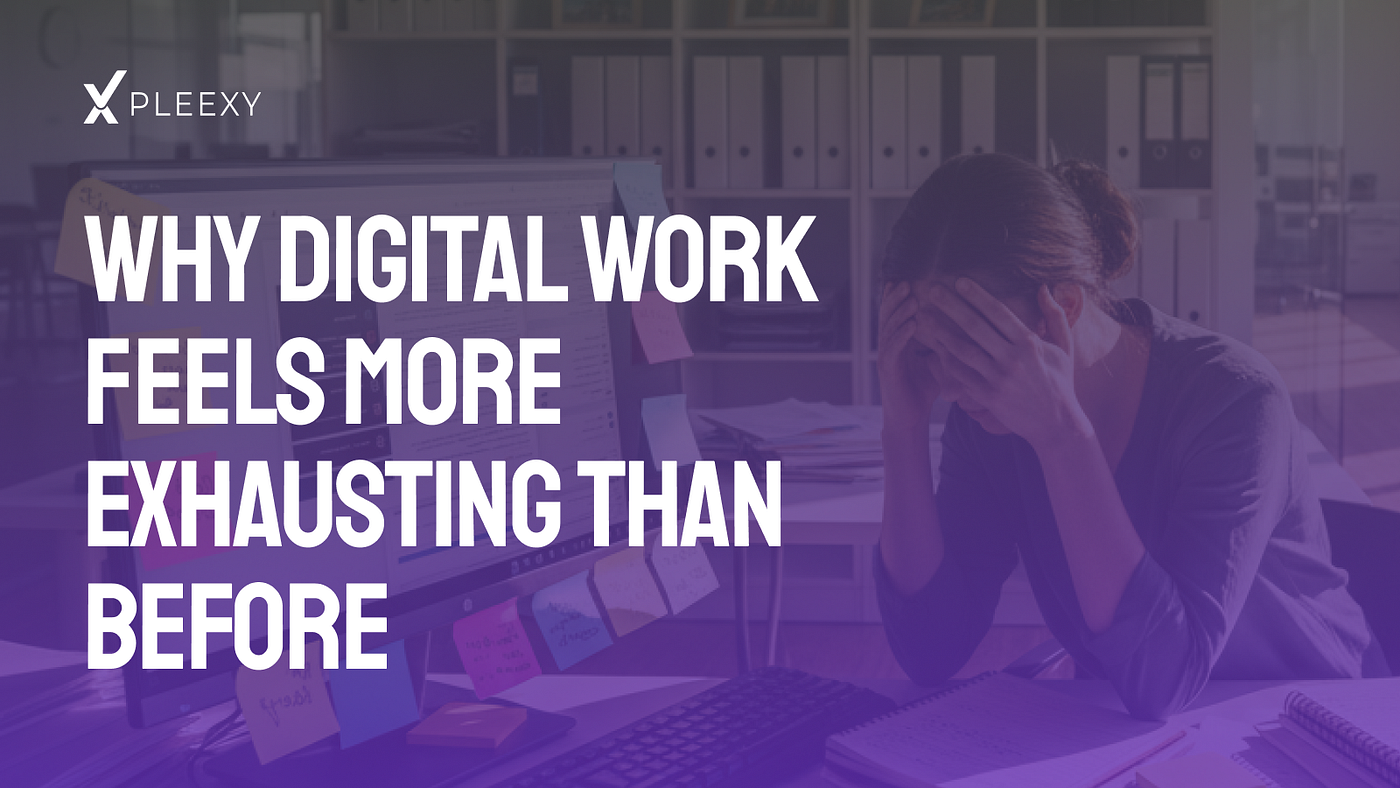
Today, a normal workday happens across multiple platforms at the same time. Emails, Slack messages, meetings, calendars, documents, task managers, and endless tabs constantly compete for attention throughout the day.
Even simple tasks now require moving between different digital spaces just to gather information or understand what needs to be done. The work itself is not always more difficult, but the experience around work has become much more fragmented.
This creates a constant flow of digital inputs that the brain has to process continuously. Instead of focusing deeply on one thing, people spend a large part of the day reacting to notifications, switching between platforms, and trying to reconnect scattered information.
Over time, that fragmentation starts to feel mentally exhausting.
Notifications silently drain mental energy
Many forms of digital exhaustion happen so constantly that people stop noticing them.
Notifications appear while typing. Messages interrupt meetings. Emails arrive in the middle of focused moments. Even when interruptions only last a few seconds, they force attention to constantly restart throughout the day.
According to the study *Managing Digital Notifications and Stress*, constant notifications and interruptions significantly increase cognitive load and stress levels because the brain continuously redirects attention between competing digital stimuli.
This means mental exhaustion does not only come from difficult tasks. It also comes from the constant pressure of staying connected and available across multiple spaces at the same time.
The brain constantly switches context
One of the main reasons work feels heavier today is because attention rarely stays in the same place for long.
A person may start working on a document, check a notification, reply to a message, open another platform, search for information, and then try to return to the original task minutes later. This pattern repeats continuously throughout the day.
According to Marcel F. Hinss, Anke M. Brock, and Raphaëlle N. Roy in the PLOS ONE study The double task-switching protocol, constantly switching between tasks creates “task-switching costs,” reducing efficiency and increasing mental fatigue because attention needs time to readjust after every interruption.
Digital work environments completely normalized this behavior. But even if every interruption seems small individually, the accumulation of constant switching slowly drains mental energy and makes work feel much heavier over time.
Multitasking creates cognitive overload
Modern work also normalized multitasking as something productive and efficient. People reply to messages during meetings, work with multiple tabs open, and constantly divide attention between platforms.
But the brain is not designed to process multiple competing inputs at the same time for long periods.
According to the study available on DergiPark, media multitasking forces people to constantly switch between devices and digital inputs, something associated with poorer sustained attention and greater cognitive fatigue.
The study also explains that high levels of digital multitasking can negatively affect attention because the brain has a limited mental capacity for processing multiple competing stimuli simultaneously.
That is why digital exhaustion often feels invisible. The actions seem small individually, but the mental accumulation becomes exhausting.
Organizing work also became work
Modern work is no longer only about completing tasks. It also involves managing systems, organizing platforms, and trying to keep information connected across multiple digital spaces.
Searching for files, checking apps, updating tasks, and remembering where every conversation happened slowly became part of everyday work.
For many people, staying organized inside fragmented digital environments consumes a huge amount of mental energy. Small moments of friction begin accumulating throughout the day and create a constant feeling of mental clutter.
The exhausting part is not always the work itself. Many times, it is everything surrounding the work.
Attention never fully rests
One of the biggest differences in modern digital work is that attention almost never fully disconnects.
Notifications remain visible. Tasks stay open in tabs. Messages continue arriving even during breaks. The brain keeps processing pending inputs in the background throughout the day.
This creates a constant low-level cognitive stimulation where attention never fully settles or recovers.
Over time, that permanent state of digital availability starts affecting focus, mental clarity, and energy.
The solution is not going backwards
Unlike before, work now happens across too many places at the same time. Everything is more connected, faster, and constantly competing for attention, making work feel more chaotic and mentally exhausting.
But the solution is not going backwards or disconnecting from digital work. Modern work already functions this way. The real solution is building a clearer structure that removes all the invisible friction created when tasks, messages, and responsibilities are spread across too many platforms.
Pleexy is built around that idea. Instead of forcing people to constantly check multiple spaces, it helps centralize tasks and keep work connected inside one clearer and more organized flow. This reduces part of the mental load that comes from searching for things, reorganizing information, or trying to stay updated across too many places at the same time.
The goal is not only to work faster. It is to make work feel mentally lighter again.
Why clarity matters more than ever
As work becomes more digitally fragmented, clarity becomes increasingly valuable.
People are no longer only looking for productivity tools. They are also looking for ways to reduce friction, lower mental overload, and make work feel less chaotic.
When tasks, conversations, and workflows are spread across too many spaces, mental energy gets consumed trying to reconnect everything. But when work feels more centralized and easier to navigate, the entire experience becomes mentally lighter.
Reducing digital overload is no longer only about efficiency. It is also about protecting attention and reducing mental exhaustion in everyday work.
메타데이터
- post_id
- 6e7d5ebdd0b9
- slug
- why-digital-work-feels-more-exhausting-than-before-6e7d5ebdd0b9
- url
- https://blog.pleexy.com/why-digital-work-feels-more-exhausting-than-before-6e7d5ebdd0b9
- canonical_url
- https://blog.pleexy.com/why-digital-work-feels-more-exhausting-than-before-6e7d5ebdd0b9
- author_url
- https://medium.com/@pleexy
- status
- ok
- fetched_at
- 2026-06-10 08:17:25