Step-by-Step Joseph’s Well Build Guide: How to Create a More Resilient Emergency Water Plan
Most people assume their water supply is secure.
Step-by-Step Joseph’s Well Build Guide: How to Create a More Resilient Emergency Water Plan
Step-by-Step Joseph’s Well Build Guide: How to Create a More Resilient Emergency Water Plan
Most people assume their water supply is secure.
As long as the faucet works, there’s nothing to worry about.
But history tells a different story.
Power outages, natural disasters, infrastructure failures, and supply chain disruptions can interrupt access to clean water with little warning. And when that happens, many families discover a hard truth: storing a few cases of bottled water isn’t enough.
The real problem isn’t a lack of water.
It’s relying on a single source.
That’s why more people are exploring alternative ways to strengthen their emergency preparedness plans — including atmospheric water generation.
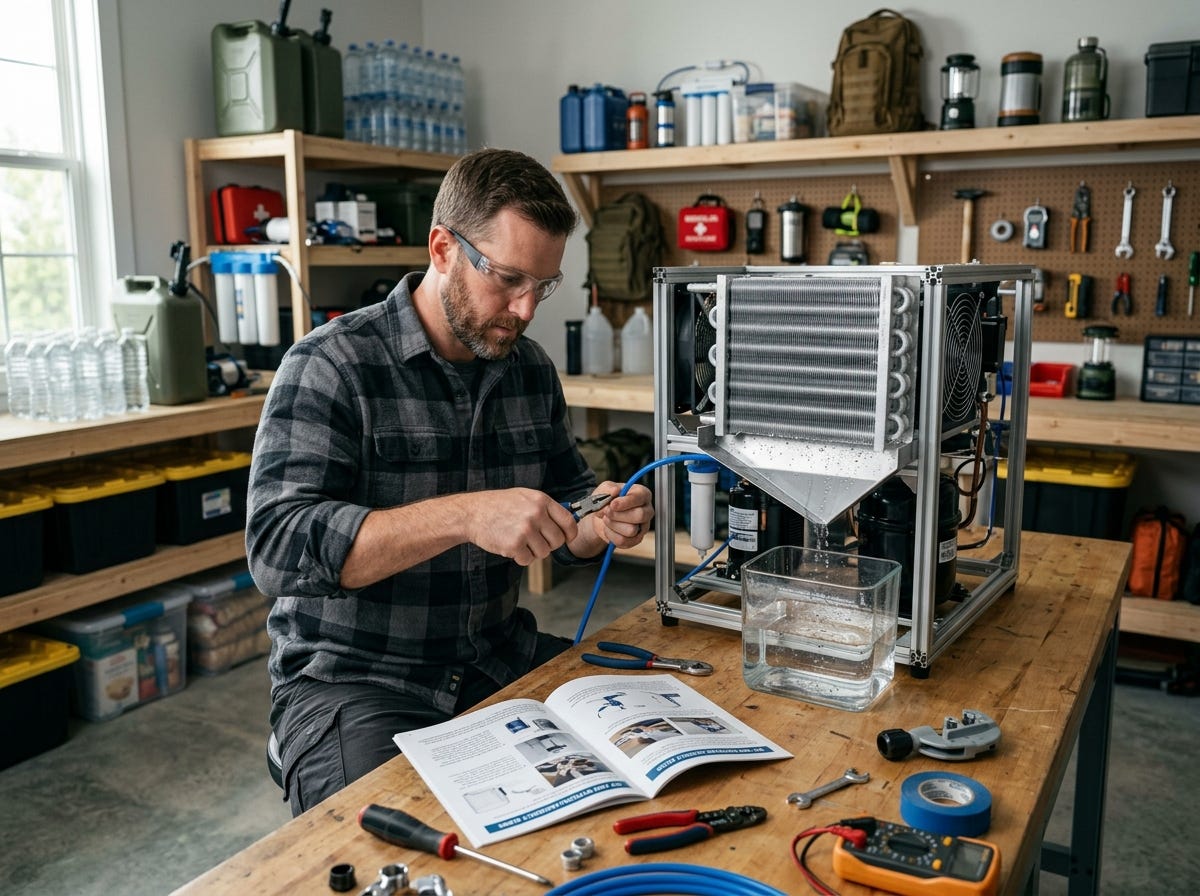
One of the most talked-about solutions is Joseph’s Well, a DIY guide designed to help people understand how to collect moisture from the air and turn it into a supplemental water source.
But does it actually make sense for the average person?
Let’s take a closer look.
The Wake-Up Call That Changed Everything
A few years ago, Mark thought he was prepared.
He had extra batteries, canned food, flashlights, and a small emergency kit stored in his garage.
Then a severe storm knocked out power across his area for several days.
The grocery stores emptied within hours. Bottled water disappeared even faster.
Although Mark had stored some water, he quickly realized he had underestimated his family’s needs.
Cooking, drinking, hygiene, and basic sanitation required far more water than he expected.
After the situation returned to normal, he decided to rethink his preparedness strategy.
He discovered that relying solely on stored water created a major vulnerability.
What if the emergency lasted longer?
What if he couldn’t replenish his supply?
Those questions led him to explore alternative water solutions.
That’s when he discovered Joseph’s Well.
At first, he was skeptical.
Generating water from air sounded unrealistic.
But the science behind it was surprisingly simple.
Why Traditional Emergency Water Plans Often Fall Short
Most families approach emergency preparedness the same way:
They buy bottled water, store it in a closet, and assume they’re covered.
Unfortunately, that approach has limitations.
Stored water takes up space.
Plastic bottles degrade over time.
Supplies eventually run out.
And replacing large quantities of water can become expensive.
Even rainwater collection systems have drawbacks.
They depend on weather conditions, require storage capacity, and may not provide a consistent supply.
The emotional cost is equally significant.
When access to clean water becomes uncertain, stress levels rise quickly.
Water affects every aspect of daily life — from drinking and cooking to hygiene and sanitation.
Without a reliable backup plan, uncertainty can become overwhelming.
What if there was a way to access water without relying entirely on stored supplies? Discover the idea here:
[embed]Joseph's Well Josephmnour-fm.systeme.io
Discovering an Alternative Approach
Joseph’s Well stood out because it approached the problem differently.
Instead of focusing exclusively on storing water, it explores how to access moisture already present in the atmosphere.
The concept isn’t new.
The air around us contains water vapor at all times.
Under the right conditions, that moisture can be collected through condensation.
Joseph’s Well provides a structured, step-by-step guide designed to help people understand and apply this principle.
Rather than promoting expensive equipment or complicated systems, the guide focuses on practical methods and accessible information.
For people seeking greater self-reliance, that simplicity is appealing.
What Is Joseph’s Well?
Joseph’s Well is a digital preparedness guide that explains how atmospheric water generation works and how it can fit into a broader emergency water strategy.
The guide walks users through:
- The science of collecting moisture from the air
- Environmental factors that affect water production
- System design principles
- Practical setup considerations
- Ways to integrate atmospheric water generation with other preparedness methods
The goal isn’t to replace traditional water storage.
The goal is to diversify your options.
Because resilience comes from having multiple solutions — not relying on a single one.
How Joseph’s Well Works
The system is based on a simple concept.
Warm air naturally holds moisture.
When that air encounters a cooler surface, condensation occurs.
You’ve seen this process before:
- Water droplets on a cold glass
- Morning dew on grass
- Fog on a bathroom mirror
Joseph’s Well explains how to apply this natural process to collect water from the atmosphere.
The amount of water produced depends on factors such as:
- Humidity levels
- Temperature
- Airflow
- Climate conditions
- System efficiency
This means results vary depending on location and environment.
Understanding these variables is essential for setting realistic expectations.
The Benefits of Adding Joseph’s Well to Your Preparedness Plan
Increased Water Resilience
Multiple water sources reduce risk.
Greater Self-Reliance
Less dependence on municipal infrastructure.
Enhanced Preparedness
Creates additional options during emergencies.
Beginner-Friendly Approach
Designed for people without technical expertise.
Flexible Integration
Can complement water storage, filtration systems, and rainwater collection.
The greatest benefit may not be the water itself.
It’s the confidence that comes from knowing you have another option.
Addressing Common Questions
Does Joseph’s Well Really Work?
Atmospheric water generation is based on established scientific principles.
However, results vary depending on environmental conditions.
Is It Worth It?
For people interested in preparedness and self-reliance, adding another layer of water security can provide significant value.
Is It Safe?
Collected water should always be filtered or purified according to recommended guidelines before consumption.
Is It Beginner-Friendly?
The guide is designed to be accessible to people with little or no prior experience.
An Honest Review
Pros
- Encourages self-reliance
- Explains a practical preparedness concept
- Beginner-friendly approach
- Complements existing water strategies
- Focuses on diversification rather than dependency
Cons
- Results vary by climate
- Requires realistic expectations
- Not a replacement for stored water
- Performance depends on humidity levels
Best For
- Preppers
- Homesteaders
- Off-grid enthusiasts
- DIY-minded individuals
- Families building emergency plans
Not Ideal For
- People seeking instant solutions
- Those expecting unlimited water production
- Individuals unwilling to diversify their preparedness strategy
Before and After: The Real Transformation
Before discovering Joseph’s Well, many people rely entirely on bottled water and municipal systems.
They feel prepared — until they consider what happens if those systems fail.
After adding alternative water strategies to their preparedness plans, they gain something far more valuable than additional supplies.
They gain confidence.
Instead of depending on a single solution, they create multiple pathways to access one of life’s most essential resources.
That shift transforms preparedness from a source of anxiety into a source of peace of mind.
Final Thoughts
No single water solution can solve every challenge.
The most effective emergency plans combine multiple strategies:
- Water storage
- Filtration and purification
- Rainwater harvesting
- Alternative water generation
Joseph’s Well isn’t designed to replace these methods.
It’s designed to strengthen them.
If you’re looking for practical ways to improve your emergency preparedness and build greater water resilience, learning more about atmospheric water generation may be a worthwhile next step.
Learn more here:
메타데이터
- post_id
- 6ea7e609027d
- slug
- step-by-step-josephs-well-build-guide-how-to-create-a-more-resilient-emergency-water-plan-6ea7e609027d
- url
- https://medium.com/@rayan2026/step-by-step-josephs-well-build-guide-how-to-create-a-more-resilient-emergency-water-plan-6ea7e609027d
- canonical_url
- https://medium.com/@rayan2026/step-by-step-josephs-well-build-guide-how-to-create-a-more-resilient-emergency-water-plan-6ea7e609027d
- author_url
- https://medium.com/@rayan2026
- status
- ok
- fetched_at
- 2026-07-17 02:49:50