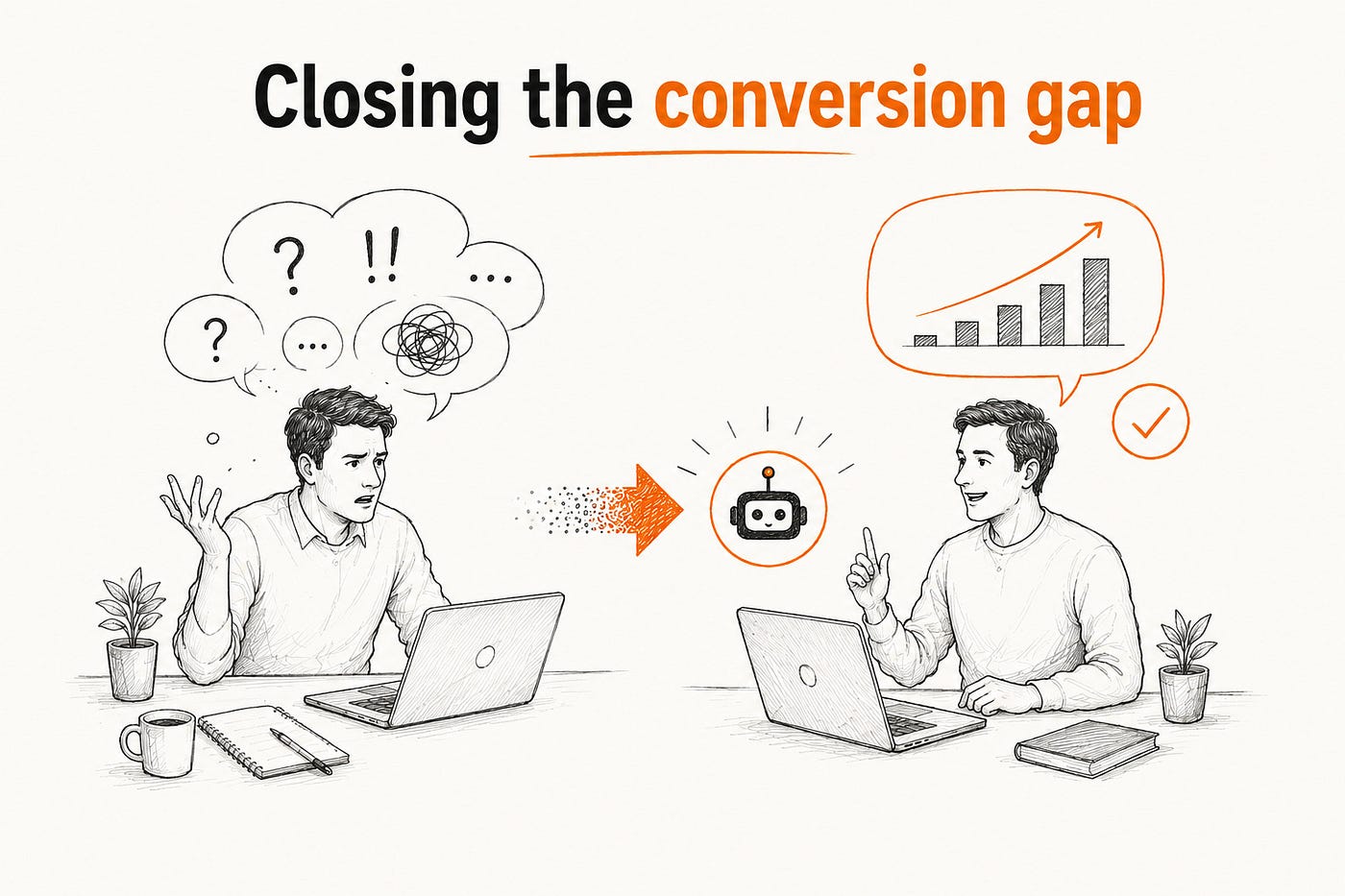
Most Websites Personalize the First Page. Then They Let Go. That’s Why It Doesn’t Work.
There’s a version of personalization that almost every marketing team has done at some point.
Most Websites Personalize the First Page. Then They Let Go. That’s Why It Doesn’t Work.
There’s a version of personalization that almost every marketing team has done at some point.
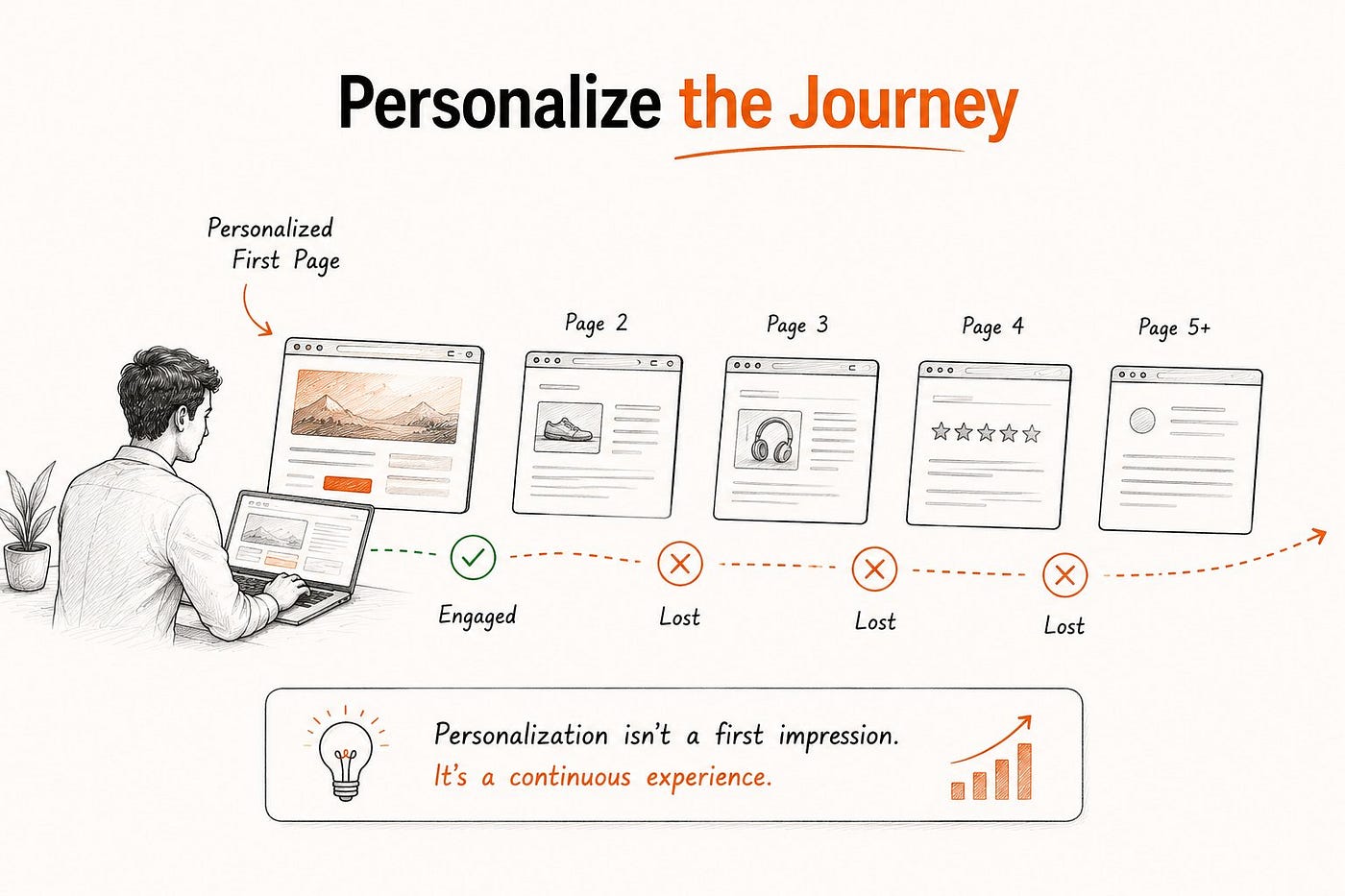
They match the landing page to the ad. The headline mirrors the keyword. The CTA reflects the offer. The visitor clicks through from a travel rewards campaign and lands on a page that talks about travel rewards. It feels relevant. It feels right.
And then the visitor clicks deeper into the site.
Product page. Same generic copy as everyone else. Pricing page. Same. Any page beyond the first. Same.
The experience that was carefully constructed for that specific visitor, based on where they came from and what they were looking for, completely unravels the moment they take their second step. The first page said “this is for you.” Every page after it said “this is for everyone.”
That’s not personalization. That’s a personalized front door on a generic building.
The reason this happens is structural, not intentional.
Most personalization tools were built to solve a specific problem: making the landing page match the ad. That’s a real problem and solving it moves the needle. But it treats personalization as a moment rather than a journey. If you want to go deeper on what real personalized web experiences actually look like in practice, we broke it down here: Personalized Web Experience: What It Is and How to Build One. It optimizes the entry point and then hands the visitor off to whatever the website was already doing.
The result is a funnel that feels inconsistent in a way most teams don’t fully measure. They see the landing page conversion rate improve and call it a win. What they don’t see is how many visitors dropped off on the second page because the context that brought them there evaporated the moment they clicked.
Intent doesn’t reset between pages. A visitor who came for travel rewards is still thinking about travel rewards when they hit the product page. A visitor who arrived from a campaign targeting small business owners is still thinking about their small business when they reach the pricing section. The context they arrived with travels with them. The website just stops responding to it.
There’s a specific type of visitor that makes this gap even more obvious right now.
Someone opens ChatGPT and asks for a recommendation. The model suggests a product. The visitor arrives on the website already informed, already past the awareness stage, already carrying a specific intent based on what the AI told them.
The website shows them a top-of-funnel awareness page. The same one it shows someone who has never heard of the company before.
That mismatch is jarring in a way that older personalization gaps weren’t. Because the visitor didn’t just click an ad. They had a conversation with an AI that built up a specific expectation about what they were about to find. When the website ignores that context, the disconnect is immediate.
25% of web traffic is now coming from AI-driven sources. That number is going up. And almost no website is built to handle it as a distinct visitor type with distinct needs.
The fix is not complicated in principle. It’s just not how most personalization tools were built.
Context needs to travel with the visitor. Not just to the landing page. Across the entire journey. The signal that identified this visitor as a travel rewards seeker, or a small business owner, or someone arriving from an AI recommendation, should still be informing the experience on the third page, the fifth page, the conversion step.
That requires treating personalization as a funnel-level decision rather than a page-level one. It requires the page experience to carry the context of where the visitor came from, what they’ve already seen, and what they’re most likely looking for next.
When that works, something shifts. The visitor doesn’t feel like they’re navigating a generic website that occasionally says their name. They feel like the website actually understands what brought them there and is helping them get there faster.
That’s the version of personalization most teams are aiming for. Most are stopping two steps short of it.
The brands that are getting this right aren’t necessarily the ones with the biggest budgets or the largest engineering teams. They’re the ones that stopped treating personalization as a landing page problem and started treating it as a journey problem.
Every visitor arrives mid-story. They clicked something, searched something, or followed a recommendation that created a specific expectation before they even hit the first page. The website’s job is to pick up that story and carry it forward, not start from scratch every time someone clicks a link.
Most websites are still starting from scratch. And the visitors can feel it even if they can’t name it.
메타데이터
- post_id
- 6ea8a4b4408e
- slug
- personalization-should-continue-beyond-the-first-click-not-end-there-most-6ea8a4b4408e
- url
- https://medium.com/@ankurgoyal07/personalization-should-continue-beyond-the-first-click-not-end-there-most-6ea8a4b4408e
- canonical_url
- https://medium.com/@ankurgoyal07/personalization-should-continue-beyond-the-first-click-not-end-there-most-6ea8a4b4408e
- author_url
- https://medium.com/@ankurgoyal07
- status
- ok
- fetched_at
- 2026-07-10 00:02:58