“I Hate My Accent” — But What If You’re Afraid of the Wrong Thing?
What if the real problem isn’t your accent, but whether people actually understand you?
“I Hate My Accent” — But What If You’re Afraid of the Wrong Thing?
What if the real problem isn’t your accent, but whether people actually understand you?

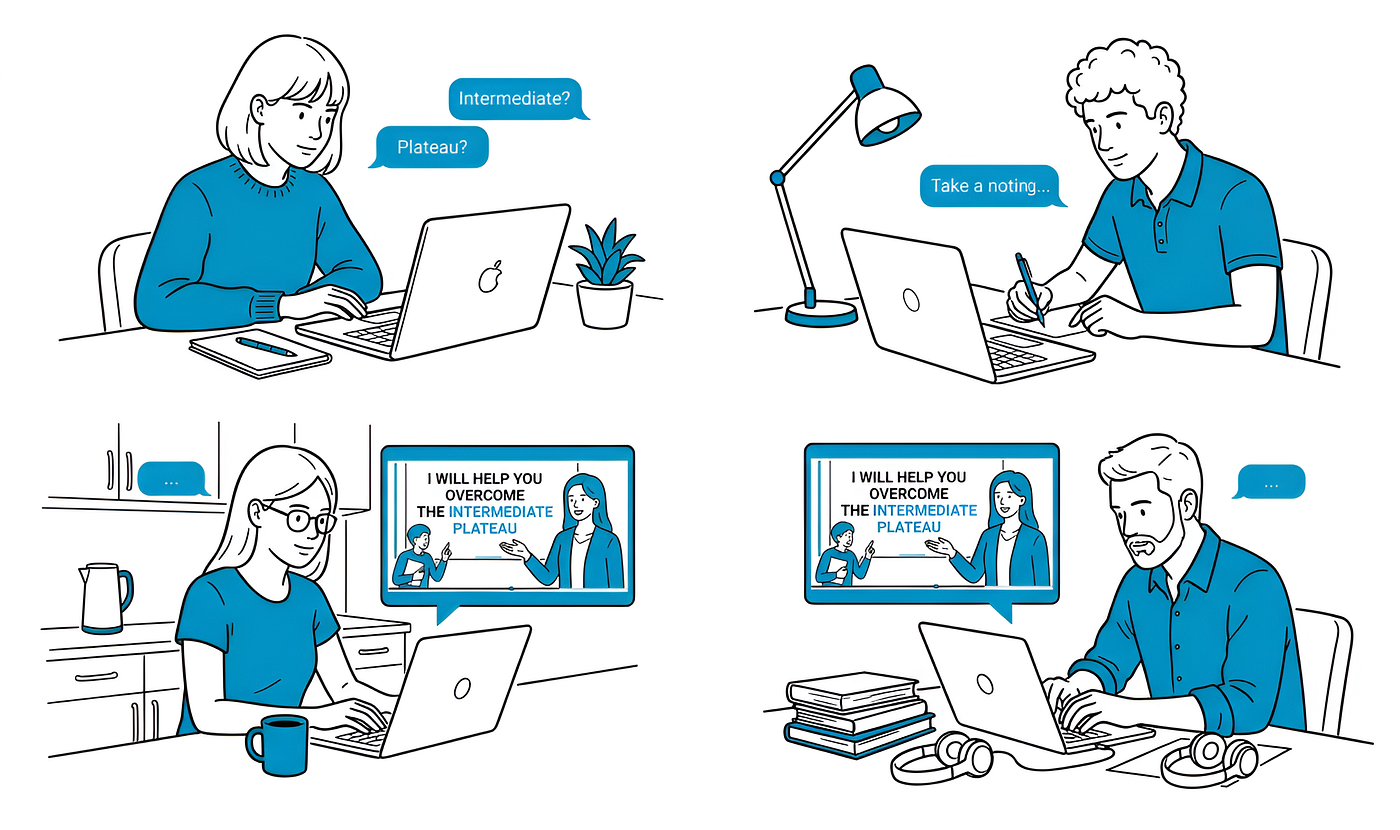
Image generated by the author with Gemini
“I hate my accent so much I rehearse sentences in my head before I say them out loud — and then I still don’t say them.” — overheard on Threads.
The tiny hesitation where you calculate: will I sound stupid?
And sometimes the calculation takes so long that you just… don’t say it at all.
This article is for everyone who’s ever swallowed a sentence whole because their accent felt like a confession of something shameful.
Wait — Should You Actually Be Embarrassed?
Let me be direct: I’m not embarrassed by my accent.
I genuinely don’t know how I could be (my husband basically says I have no shame and I’m not shy, but that’s not the point, haha).
I speak four languages. Four.
Each one took years of work — failed conversations, mispronounced words, pushing through the stage where everything felt awkward.
My accent in each language is the sound of all that effort.
How exactly am I supposed to be ashamed of that?
“My accent is a proof that I did the work.” — spotted on Instagram
Why should you apologize for your hard work?
Why hide the evidence of something most people never even attempt?
An accent is a cultural imprint, something uniquely yours.
It says where you came from.
It says you were brave enough to step into someone else’s language and try.
Linguist David Crystal has noted that an accent often reflects where someone is from, not how intelligent they are. The embarrassment is almost always coming from inside the learner’s head.
I Was Afraid of the Wrong Thing
But don’t think it has always been like this in my case.
There was a time when I was self-conscious about my strong Ukrainian accent. I tried to soften it, smooth it out, hide it.
I spent energy trying to sound right instead of just speaking.
And then I realized: I was afraid of the wrong thing.
Because my strong Ukrainian accent wasn’t failing me. People understood me.
The real danger was something else entirely — when a sentence is built in a way that the other person interprets differently than I meant.
That’s the actual communication problem. Not the accent.
The goal of spoken language is to be understood.
“People are never judging your accent as harshly as you are. They’re just happy you’re speaking their language.” — seen on Threads
There’s a specific turning point in every confident multilingual speaker’s story — the moment they stopped performing fluency and started just communicating.
The learners who progress fastest aren’t the ones with the cleanest pronunciation.
Confidence is a skill, and it’s built the same way all skills are: through repetition until the discomfort becomes boring.
Your accent isn’t bad English, or bad French, or bad Spanish. It’s your English. Your French. A language filtered through everything you already are.
Being Understood Is the Only Goal That Matters
Let’s look at three things people actually say about accents — and talk about each one honestly.
If you’ve ever spent time doom-scrolling and came across reels or shorts, just like I did, where a wife complains that she’s afraid to talk to locals in another country despite having a B1 level, while her husband confidently makes a million mistakes with his barely hanging-on A2, then this is exactly what I’m talking about.
“I rehearse the whole sentence in my head before I speak. And then I still don’t say it.”
All that mental rehearsal is just practicing silence. The accent isn’t what’s keeping you quiet. The pause is.
“I spoke for 5 minutes straight and they just said — sorry, can you repeat that?”
Painful moment. But ask yourself: was it really the accent that caused the confusion — or was it a word choice, a sentence structure? Most of the time, when communication breaks down, the accent takes the blame for something else entirely. And that something else is actually fixable.
“Native speakers just seem so effortless. I sound like I’m trying.”
You are trying. That’s the whole point.
Every person you find “effortless” has accumulated thousands of hours to get there. The distance between you and them is only time.
The goal was always to be understood — and that’s a problem with real, practical solutions.
What Actually Works
Before you dismiss any of the techniques below as silly, remember that TV news anchors do strange tongue twisters and warm up their mouths before going on air. Nobody questions why. It’s just work on speech quality.
You have the same job.
- Shadowing
Take any audio or video in your target language. Listen and repeat out loud simultaneously — copying the rhythm and intonation. Not to get rid of your accent, but so your speech feels natural and clear to the person listening. This is one of the most effective techniques that exists.
If shadowing is new to you, I wrote a separate breakdown of how it actually works in practice, without the million boring academic articles:
2. Record yourself
Once a day. Not to judge — to get used to your own voice in the language. The cringe fades faster than you think. And eventually, you stop hearing embarrassing and start hearing progress.
3. Explain things out loud — to yourself, to a mirror, to the wall
Read something interesting?
Retell it out loud in your target language. To a mirror if needed. This isn’t strange — it’s a technique used in medical schools, public speaking courses, and language pedagogy. When you explain, you think and speak at the same time. That’s real language ownership.
4. Talk to an AI assistant
If speaking to real people still feels too scary — that’s a valid stage to be in. An AI conversation partner doesn’t get tired, doesn’t judge, and is available at 2 am.
I’ve already written about this separately — read it here if you’re still too nervous for live conversations:
5. Notice when you’re understood
Most of the time, you will be. Start collecting those moments instead of the embarrassing ones.
6. Say the thing you almost didn’t say
Once a day, push past the hesitation. Open your mouth before you have time to talk yourself out of it. That’s the whole exercise.
Don’t be afraid of your accent.
Be afraid of not being understood — and work on that instead.
That’s the whole point.
People don’t remember the exact sounds you made. They remember whether the message landed. Whether they understood you. Whether the conversation moved forward.
Everything else is background noise.
Your accent will keep evolving as long as you keep speaking. But the real skill is the willingness to be heard while you’re still imperfect.
Haven’t you noticed that extroverts tend to succeed more and make new friends even while mixing up perfectly ordinary words and making a thousand mistakes?
It took me years to figure this out. It took you just this article.
If this resonated with you, I write more about practical, real-world language learning — how to improve faster, speak more confidently, and stop wasting time on things that don’t actually matter.
You can find more posts like this on my blog.
메타데이터
- post_id
- 6eb5a552cd37
- slug
- i-hate-my-accent-but-what-if-youre-afraid-of-the-wrong-thing-6eb5a552cd37
- url
- https://medium.com/thoughts-reflections/i-hate-my-accent-but-what-if-youre-afraid-of-the-wrong-thing-6eb5a552cd37
- canonical_url
- https://medium.com/thoughts-reflections/i-hate-my-accent-but-what-if-youre-afraid-of-the-wrong-thing-6eb5a552cd37
- author_url
- https://medium.com/@polskizleo
- status
- ok
- fetched_at
- 2026-06-14 16:15:44