I Spent Years Saving Money When I Should Have Been Building This Instead
The Wealth Principle Most Professionals Overlook
I Spent Years Saving Money When I Should Have Been Building This Instead
The Wealth Principle Most Professionals Overlook
For years, I thought I was doing everything right financially.
I saved aggressively.
I tracked every expense.
I built emergency funds.
I opened fixed deposits.
I read books about investing and spent hours learning about compound interest, retirement planning, and wealth management.
I believed financial security came from saving more money.
And to be fair, saving money is important.
But looking back, I realize I made a mistake that quietly slowed my wealth-building journey.
I spent years focusing almost exclusively on growing my savings while neglecting an asset that had the potential to increase my income, create opportunities, and transform my career.
Looking back, I spent years saving money when I should have been building this instead.
The surprising part?
It wasn’t a stock portfolio.
It wasn’t real estate.
It wasn’t cryptocurrency.
It was my personal brand, professional authority, network, and digital assets.
And once I started investing in those assets, everything changed.
Quick Answer
What should I have been building instead of focusing only on saving money?
Alongside saving and investing, I should have been building leverage through a personal brand, professional authority, industry relationships, digital assets, and online visibility. These assets increase earning potential, attract opportunities, build trust, and create scalable income opportunities that traditional savings alone cannot provide.
Why Saving Money Alone Has Limits
Most personal finance advice begins with the same principles:
- Spend less than you earn.
- Build an emergency fund.
- Save consistently.
- Invest for the long term.
- Avoid unnecessary debt.
All of this is excellent advice.
But there is one major limitation.
Saving money can only multiply the income you already earn.
If your income remains stagnant, your ability to build wealth also becomes constrained.
Imagine two professionals.
Both save 20% of their income.
Professional A earns $50,000 annually.
Professional B earns $150,000 annually.
Even with identical savings habits, the wealth-building outcomes are dramatically different.
Income matters.
Which raises an important question:
What increases income?
In today’s economy, the answer often goes far beyond hard work.
The Asset Nobody Taught Me to Build
Growing up, I heard countless discussions about:
- Savings accounts
- Stocks
- Fixed deposits
- Mutual funds
- Retirement plans
- Real estate
Rarely did anyone talk about:
- Personal branding
- Professional reputation
- Industry authority
- Online visibility
- Digital assets
- Reputation capital
Yet these assets frequently determine who receives opportunities.
And opportunities often determine income.
This realization completely changed how I think about wealth.
The Moment I Realized Hard Work Wasn’t Enough
For years, I believed expertise alone would create opportunities.
If I became exceptional at my work, opportunities would naturally follow.
Sometimes they did.
Often they didn’t.
Then I noticed something fascinating.
Professionals with similar — or sometimes even less — experience were receiving:
- Better job offers
- More consulting opportunities
- Speaking invitations
- Partnership requests
- Media opportunities
- Industry recognition
At first, I assumed they were simply more talented.
But after observing closely, I realized something else.
They were more visible.
People knew who they were.
People trusted them.
People remembered them.
They had built leverage.
Understanding Leverage: The Wealth Principle Most Professionals Overlook
The highest earners rarely rely solely on effort.
They rely on leverage.
Leverage means creating systems, assets, and relationships that continue producing value without requiring proportional increases in time.
Without leverage:
More work = More income.
With leverage:
The same amount of work can create exponentially greater results.
Examples include:
- Personal brands
- Digital content
- Online courses
- Professional networks
- Industry authority
- Intellectual property
These assets continue generating opportunities long after they’re created.
Why Personal Brands Have Become Financial Assets
A personal brand is often misunderstood.
Many people assume it’s about becoming famous online.
It isn’t.
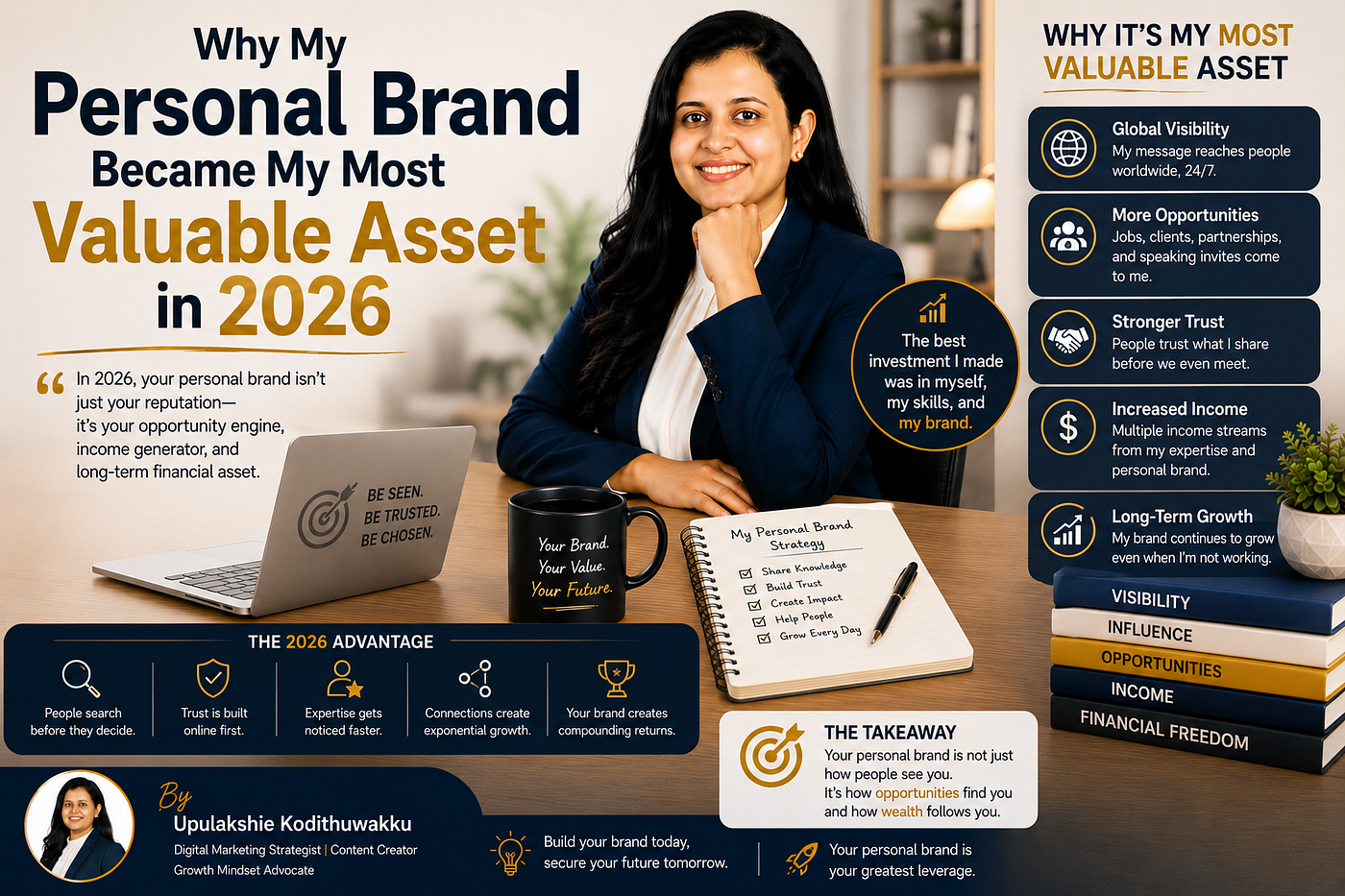
A personal brand is your professional reputation at scale.
It’s what people think about when they hear your name.
It’s the answer to questions such as:
- What are you known for?
- What expertise do you possess?
- Why should people trust you?
- What problems can you solve?
Whether you intentionally build a personal brand or not, people are already forming opinions.
The question is whether you’re shaping those opinions intentionally.
How Building a Personal Brand Increased My Income
The impact wasn’t immediate.
It happened gradually.
But once it started, it accelerated.
As I consistently shared expertise, built relationships, and created content, opportunities began appearing.
New Opportunities Included:
- Consulting inquiries
- Freelance projects
- Speaking engagements
- Training opportunities
- Industry partnerships
- Media requests
- Professional referrals
Most of these opportunities came from people I had never met.
They found my content.
Then they found me.
That changed everything.
Why Digital Assets Are Powerful Wealth Builders
Traditional work stops generating income when you stop working.
Digital assets behave differently.
Examples include:
- Articles
- Blog posts
- Newsletters
- Videos
- Podcasts
- E-books
- Frameworks
- Course
A single article published today could generate opportunities years from now.
That’s leverage.
Digital assets work while you sleep.
They scale expertise.
They build trust.
And they increase discoverability.
Traditional Assets vs Leverage Assets
Let’s compare them.
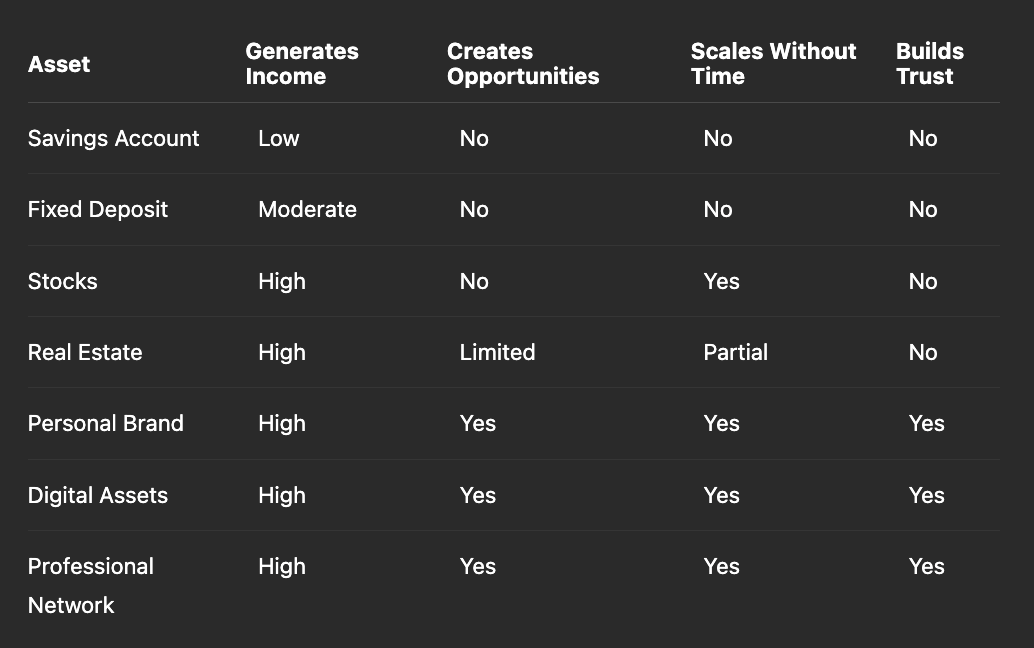
Traditional assets grow money.
Leverage assets create opportunities.
And opportunities often create wealth.
The Compound Effect of Visibility
Most people understand compound interest.
Far fewer understand compound visibility.
Year One
You publish content.
Very few people notice.
Year Two
Your audience grows.
Your network expands.
Year Three
People recognize your expertise.
Opportunities increase.
Year Five
Your reputation creates opportunities before you ask for them.
This is why personal branding behaves like a long-term investment.
Small efforts compound.
Why Authority Matters More Than Ever
The internet has changed how trust is built.
Before hiring someone, people often research them.
They look for:
- LinkedIn profiles
- Articles
- Case studies
- Interviews
- Recommendations
- Educational content
When they repeatedly encounter valuable insights, trust begins to develop.
Trust dramatically reduces friction.
And reduced friction creates opportunities.
Authority is essentially trust at scale.
The Rise of Reputation Capital
Financial capital isn’t the only type of capital that matters.
Reputation capital may be equally important.
Reputation capital consists of:
- Credibility
- Trust
- Industry recognition
- Authority
- Relationships
Strong reputation capital can:
- Increase pricing power
- Attract clients
- Accelerate promotions
- Generate referrals
- Create partnerships
Many of the world’s highest earners possess extraordinary reputation capital.
Why AI Is Increasing the Value of Personal Brands
Artificial intelligence is changing professional discovery.
Increasingly, AI systems surface:
- Experts
- Authors
- Consultants
- Industry leaders
- Trusted sources
Professionals who have invested in digital visibility benefit disproportionately.
The stronger your digital footprint, the easier it becomes for people — and AI systems — to discover your expertise.
This trend is making personal branding even more valuable.
Real-World Example: Two Professionals
Consider two consultants.
Consultant A
- Works extremely hard.
- Focuses entirely on client work.
- Has little online presence.
Consultant B
- Works hard.
- Publishes industry insights.
- Builds relationships.
- Creates educational content.
After five years:
Consultant B often receives:
- More referrals
- More inbound lead
- Better opportunities
- Higher fees
The difference isn’t necessarily skill.
It’s leverage.
The Emotional Cost of Learning This Lesson Late
The hardest part isn’t realizing that visibility matters.
The hardest part is realizing how many opportunities you may have missed.
Opportunities you never knew existed.
Clients who searched for expertise.
Recruiters looking for talent.
Partners seeking collaborators.
Conference organizers searching for speakers.
They couldn’t choose you because they couldn’t find you.
That’s a difficult realization.
But it’s also empowering.
Because unlike many financial circumstances, visibility can be improved.
Common Wealth-Building Mistakes Professionals Make
1. Focusing Only on Saving
Saving is essential.
But savings alone rarely create extraordinary wealth.
2. Ignoring Personal Branding
Visibility is increasingly becoming a professional necessity.
3. Building No Digital Assets
Many professionals work for decades without creating assets that outlive their effort.
4. Waiting Until They Feel Ready
Many people delay sharing expertise because they don’t feel like experts.
Perfection is unnecessary.
Consistency matters more.
5. Underestimating Relationships
Relationships often create opportunities faster than qualifications.
Expert Insight: The Future Belongs to Leverage Builders
One trend has become impossible to ignore.
The professionals who thrive over the next decade will likely be those who build leverage.
They will invest in:
- Personal branding
- Authority
- Relationships
- Digital assets
- Reputation capital
- Scalable knowledge
Hard work will always matter.
But hard work alone is becoming insufficient.
The future increasingly rewards professionals who transform expertise into assets.
Frequently Asked Questions (FAQ)
What should I build besides saving money?
Personal branding, professional authority, digital assets, industry relationships, and reputation capital.
Is saving money still important?
Absolutely. Saving provides stability. Building leverage increases opportunity and earning potential.
Can a personal brand increase income?
Yes. Personal branding can attract clients, partnerships, job opportunities, and referrals.
What are digital assets?
Digital assets include articles, videos, courses, newsletters, podcasts, and other content that continues creating value over time.
How long does it take to build a personal brand?
Meaningful results often appear within months, while significant authority usually develops over years.
Do employees benefit from personal branding?
Absolutely. Employees often gain better career opportunities, promotions, and recruiter interest.
What is reputation capital?
Reputation capital is the trust, credibility, and authority associated with your name.
Why is leverage important for wealth building?
Because leverage allows income and opportunities to grow without requiring proportional increases in time worked.
Key Takeaways
- Saving money is essential, but it has limits.
- Personal brands, authority, and digital assets create leverage.
- Leverage often increases income more effectively than working longer hours.
- Visibility amplifies expertise.
- Reputation capital has significant economic value.
- Digital assets continue generating value after they’re created
- AI-powered discovery systems are increasing the value of personal branding.
Actionable Next Steps
If you want to avoid learning this lesson too late:
- Continue saving and investing consistently.
- Optimize your LinkedIn profile.
- Define your area of expertise.
- Publish one useful piece of content each week.
- Build meaningful professional relationships.
- Create long-term digital assets.
- Focus on becoming discoverable.
The goal isn’t replacing traditional investments.
It’s building assets that increase your ability to create future wealth.
Conclusion
If I could go back and give my younger self one financial lesson, it would be this:
Keep saving money.
But don’t stop there.
Spend equal energy building assets that increase your opportunities, authority, and earning potential.
Because wealth isn’t created only by growing money.
It’s also created by growing visibility.
By building trust.
By creating leverage.
By becoming discoverable.
Savings accounts protect your future.
But personal brands, professional authority, and digital assets help create it.
And looking back, I spent far too many years focusing on one while neglecting the other.
That’s the wealth-building lesson I learned too late.
메타데이터
- post_id
- 6ed4c7bb6710
- slug
- i-spent-years-saving-money-when-i-should-have-been-building-this-instead-6ed4c7bb6710
- url
- https://medium.com/@upulakshiek/i-spent-years-saving-money-when-i-should-have-been-building-this-instead-6ed4c7bb6710
- canonical_url
- https://medium.com/@upulakshiek/i-spent-years-saving-money-when-i-should-have-been-building-this-instead-6ed4c7bb6710
- author_url
- https://medium.com/@upulakshiek
- status
- ok
- fetched_at
- 2026-06-27 07:40:21