Food and Drink Histories
Eating and drinking in America: unappetizing, fascinating
Food and Drink Histories
Some true, some maybe not so true
Matt Siegel writes about food. His book The Secret History of Food begins by quoting Jean Anthelme Brillat-Savarin, a famous foodie who published a famous cookbook in 1825:
“A dinner which ends without cheese is like a beautiful woman with only one eye.”
This is Siegel’s appetizer. The rest of the menu for this book can be even more unappetizing. I might even say triggering.
The author states that Asia replaced knife blades at the dinner table with chopsticks in order to cut back on fatalities. He states that here in the unwashed colonies, we ate with two knives or our hands until the Industrial Revolution introduced the fork.
Wow. We sure were a backward people.

Photo by Olesia Libra on Unsplash
The American Revolution, he claims, was triggered not by over-taxation by the British monarchy but by the over-stimulated digestive systems of the Patriots. Huh?
See, according to this book, the revolutionaries ate pie for breakfast, lunch, and dinner. At that time, pie crust was thick and heavy, making savory meat pies or fruited dessert pies easy to eat with one’s hands…but hard to digest. Boston, the author says, was full of “pie-biters” who had so much gastrointestinal distress they overreacted to something as mildly annoying as authoritarianism by dumping shiploads of imported tea into the Harbor.
Hmmmm…
Siegel tells us apples were not grown in the Americas when the Mayflower pulled ashore in 1620. Luckily, apple seeds were on board, and soon planted, and eventually the colonists had created 17,000 new varieties. That way they could drink a lot of hard cider.
Okay, sure. I’d buy that. Sounds plausible, right?
But one’s fact-o-meter might drop a red flag when reading how reports of vampires in 18th century Europe were actually cases of corn-derived niacin deficiency.
Corn had become a dietary staple at the time and an affiliated disease followed: the symptoms of pellagra included insomnia, dementia, aggression, and the need to avoid sunlight.
A vampire connection, however, seems unlikely.
The author has a dark overview in general. He contends that modern agriculture is bad, we should have stuck to hunting and gathering.
Pie is bad too.
Cold cereal is bad, and the Battle Creek breakfast inventors were a bunch of religious lunatics.
They were kooky, some were liars, but…
Corn is bad, even if it no longer turns eaters into vampires. Honey is bad because it is sold under fraudulent labeling, made with corn syrup, or illegally imported from China and thereby contaminated with lead and antibiotics.
Ice cream has a lot of nasty stuff in it. Vanilla isn’t real vanilla 99% of the time.
Olive oil could be made with almost anything — beware.
Siegel calls food labeling “a meaningless sham.” For example, nobody was buying Patagonian toothfish until 1994 when it was renamed Chilean sea bass. (Which is not from Chile, nor is it bass.) And sea urchin were once called whore’s eggs, and served as a metaphor for women’s pubic hair. And…
Wait, what?
I’m no prude, but this book has an awful lot of weird sexual references. Someone should count up how often words like penis, breasts, genitals, masturbation, hymen, and semen are repeated throughout.
I will tell you my estimate: too many times for a book on food history.
Was the book written to educate or titillate?
Is it actually factual?
The author admits, “No one knows if the story is true…” Occasionally he begins with an introductory, “Some say…” Or he will add afterward, “allegedly.”
By the time he described something he calls penis water, however, my appetite had totally evaporated.
If what the author shares are food secrets, how come he backs them up with 50+ pages of footnotes?
Apparently, his secrets have already been published elsewhere.
The book includes many, many asides and digressions. Like how teens in New York were sucking subway tokens from turnstiles back in 1983. Huh?

Photo by Luke Stackpoole on Unsplash
Inquiring minds want to know: did Fidel Castro really eat 18 scoops of ice cream in one sitting? Does the fryer oil used in McDonald’s contain a chemical also found in breast implants? Is Hooters called by those in-the-know a “breastaurant”?
And did Matt Siegel really compare eating hot peppers to getting spanked by prostitutes? In a food history book?
To whet my palate again, I picked up Drinking in America by Susan Cheever. Well written, carefully researched, and often surprising, her book relies on facts rather than innuendo. And it’s fun, not triggering.
For example, when a storm blew the Mayflower off course on the way to colonial Virginia, the Pilgrims landed at Cape Cod. They made camp in what would later become Provincetown. Why not continue on their way?
Because they were running out of an essential staple: beer.
Everyone drank around a gallon of beer a day because the water onboard ship was unsafe. They had learned to avoid potentially contaminated water supplies in Europe.
When the Puritans arrived later on, they brought 10,000 gallons of beer.
America was founded on beer.
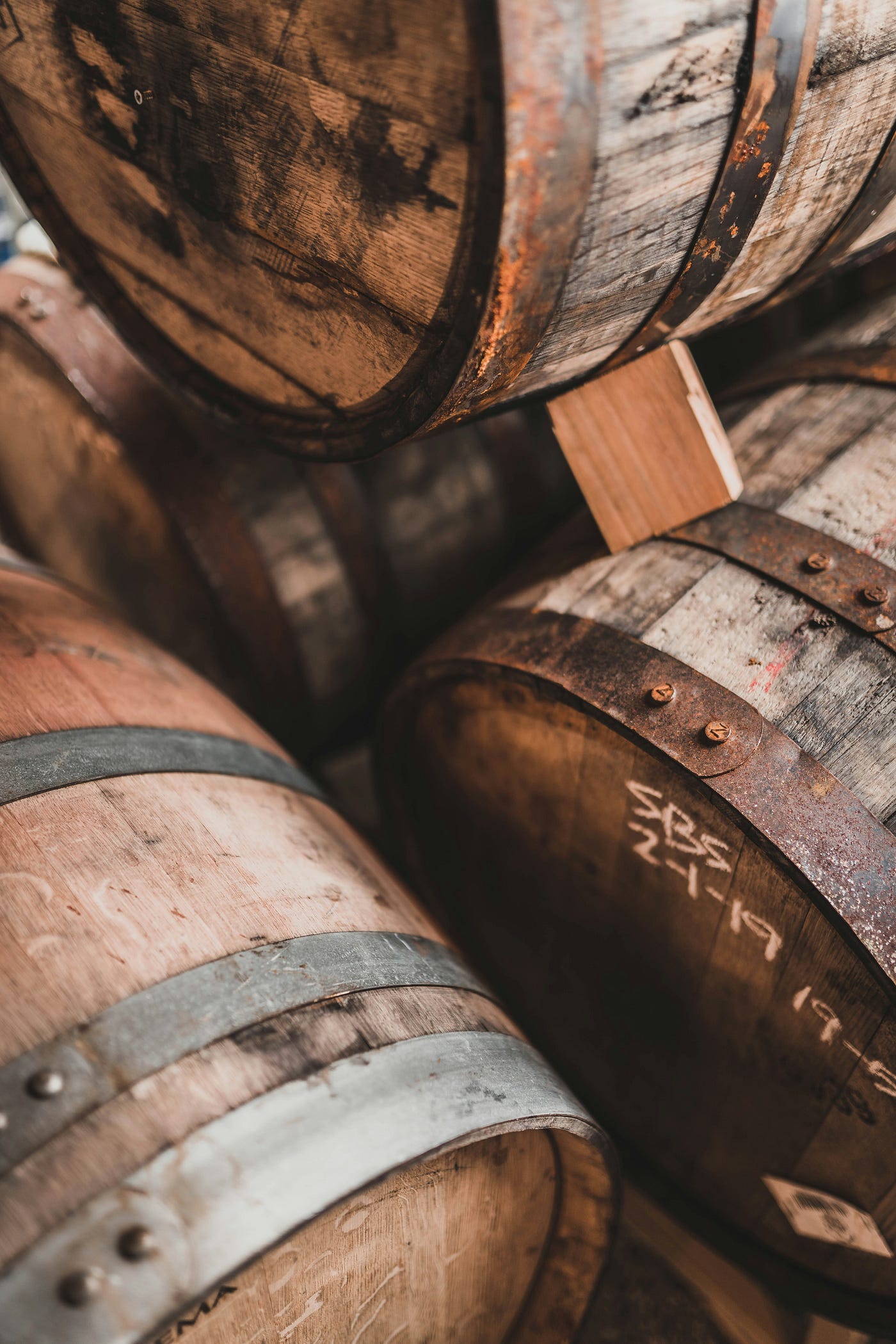
Photo by August Phlieger on Unsplash
After settling in Plymouth, the Pilgrims immediately built a brewery, followed by a tavern. The tavern served as the town hall, court house, inn, and community hangout.
As New England grew and the oppression from abroad increased, the Patriots planned the American Revolution in the many taverns that served as their secret meeting houses. Military leaders like George Washington gave their men alcohol to boost courage and aggression, stimulating the willingness to take risks and fight the British army.
Molasses from the Caribbean was cheap and accessible. New Englanders built distilleries, and the manufacture and export of rum became their biggest industry.
Casks of rum were set inside store doorways so that shoppers could help themselves. Voters were lured to the polls with free rum.
Once residents learned how to make whiskey from corn, new distilleries and homemade stills popped up all over 18th century America.
Everybody loved hard cider, which was why the frontiersmen were so happy to see Johnny Appleseed coming: he planted the sour varieties — not for eating, but perfect for making alcoholic applejack.
In early America, babies were given rum to calm them, children drank beer or hard cider before school, farmers kept jugs of whiskey in their fields, and factories gave workers frequent drinking breaks.
Irish immigrants were promised 32 ounces of whiskey daily while digging the 400-mile Erie Canal.
America ran on alcohol.
From the Pilgrims stranded on what Thoreau called “the sandy fist” of Cape Cod right up to the present day, the American character has been shaped by an ongoing love-hate relationship with booze.
Read Cheever’s book, it’s a fascinating way to look at our history.

Matt Siegel, The Secret History of Food, Ecco, 2021.
Susan Cheever, Drinking in America: Our Secret History, Twelve, 2015.
메타데이터
- post_id
- 6ee2d637426e
- slug
- food-and-drink-histories-6ee2d637426e
- url
- https://medium.com/@virginiaaronsonwriter/food-and-drink-histories-6ee2d637426e
- canonical_url
- https://medium.com/@virginiaaronsonwriter/food-and-drink-histories-6ee2d637426e
- author_url
- https://medium.com/@virginiaaronsonwriter
- status
- ok
- fetched_at
- 2026-07-15 19:43:36



