RWAS IN 2026: RE PROTOCOL BRINGS REINSURANCE ON-CHAIN
RWAs has grown dramatically over the past few years, and it'll only get better with reinsurance
RWAS IN 2026: HOW RE PROTOCOL BRINGS REINSURANCE ON-CHAIN

For a long time, real-world assets sounded better on paper than they did in practice. There were pilots, demos, and plenty of think pieces, but very little that felt durable. That started to shift as we moved closer to 2026. Reinsurance ended up being one of the places where RWAs actually clicked. Not suddenly, and not because of a big breakthrough moment. More because the incentives lined up quietly.
The market was already there, the problems were known, and the tooling finally felt usable. This article looks at why reinsurance fits on-chain systems better than most RWA categories, how Re Protocol is set up, why stablecoins and protocol-native tokens matter, and why 2026 feels different from the years before it.
RWAs finally moved past the trial phase
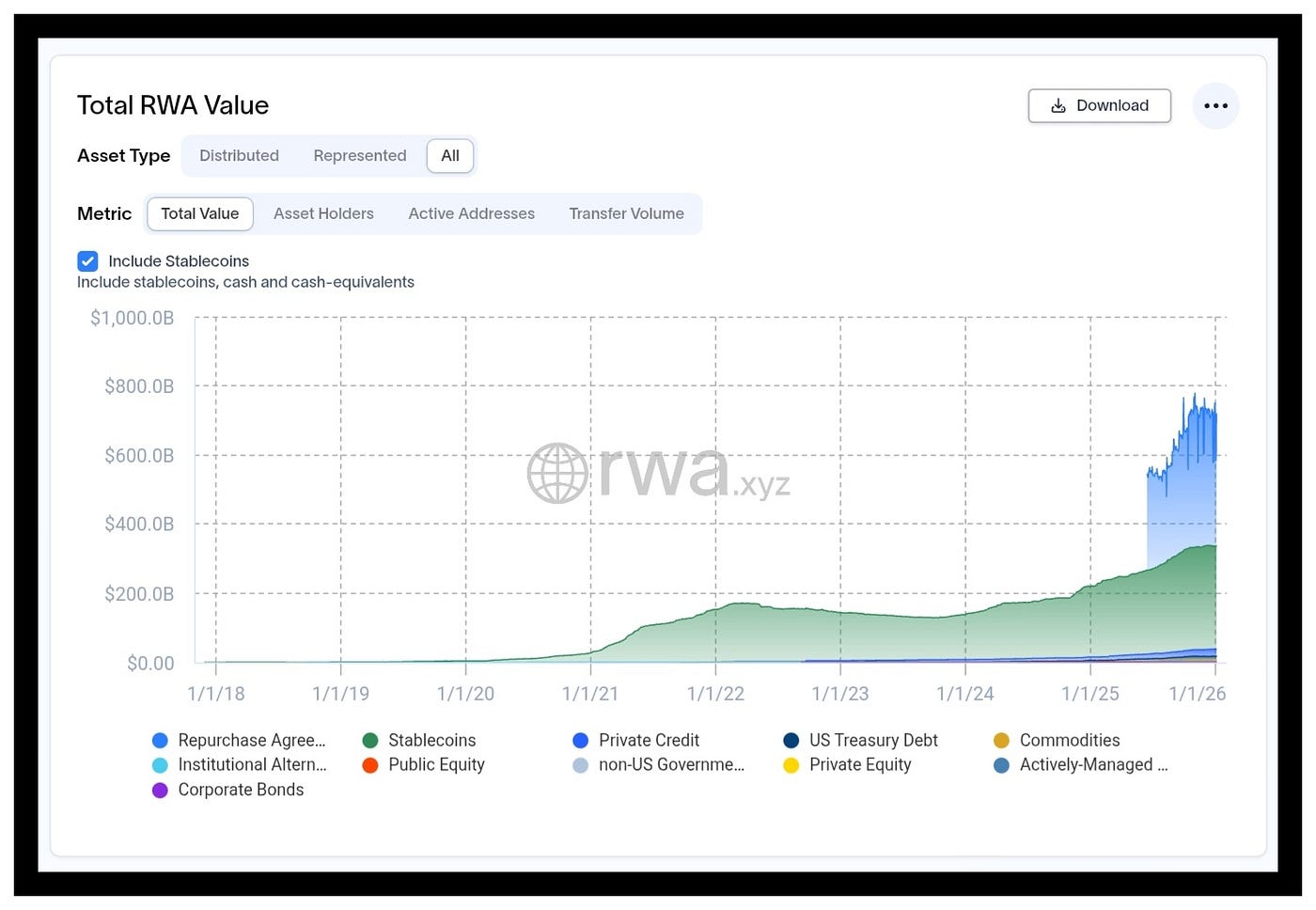
RWAs growth in the past year
By 2026, RWAs were no longer about proving a point. Tokenization itself wasn’t the blocker anymore. That part had been figured out years earlier. The issue was that capital didn’t have much reason to move. Being “on-chain” wasn’t enough on its own.
What changed was more practical than philosophical. Some workflows got cheaper. Settlement got faster. Visibility improved. Risk was easier to reason about. Once those things showed up in a real way, adoption followed. Slowly, then more consistently.
Reinsurance was one of the first areas where that shift was obvious. Why reinsurance works so well on-chain Reinsurance is already a professional, structured market. It’s about transferring clearly defined risk between parties that know what they’re doing. Most reinsurance contracts look roughly the same. They run for fixed periods. Risk is priced upfront. Premiums are predictable. Settlement, especially in legacy systems, is slow and not always easy to follow.
That structure fits on-chain systems better than people expected. There’s no custody problem to solve. Nothing physical moves. What matters is exposure, duration, and whether settlement happens when it’s supposed to. A lot of what makes reinsurance frustrating in traditional setups, manual reconciliation, delayed settlement, capital sitting idle, turns out to be exactly what programmable systems handle well.
What Re Protocol actually does
Re Protocol isn’t an insurer, and it’s not trying to replace existing reinsurance firms. It sits underneath the market and handles infrastructure. Capital enters through the Insurance Capital Layer. Participants deposit stablecoins like USDT or USDC. Those deposits are converted into protocol-native tokens that represent how that capital is exposed. reUSD is meant to stay lower-volatility and protect principal. reUSDe takes on first-loss risk and captures more of the underwriting upside. These tokens aren’t cosmetic. They’re how participation is tracked and how risk is actually expressed on-chain. Once capital is pooled, it’s deployed off-chain through surplus note agreements with licensed reinsurance counterparties.
Those surplus notes provide real regulatory capital backing real insurance programs. The trust accounts and capital deployment live off-chain, but balances and activity are reported back on-chain through oracles. It’s not a perfect system, but it’s a workable bridge between how reinsurance operates today and how on-chain systems handle accounting and transparency. Premiums accrue over time Claims are settled based on terms that are set upfront. The protocol enforces the rules and the reporting, while still interfacing with the existing reinsurance stack where it has to.
Why stablecoins and protocol tokens are essential

This only works if the money is stable. Premiums, reserves, and claims can’t swing around with market volatility. That’s why stablecoins like USDT and USDC are the entry point. Once deposited, those stablecoins are converted into reUSD or reUSDe. That separation matters more than it looks at first. Stablecoins handle settlement in and out. The protocol-native tokens handle internal accounting and risk exposure. It keeps the system predictable, which is non-negotiable in insurance markets. Without stablecoins, none of this scales. Without the protocol tokens, it becomes messy fast. Together, they make the setup usable. The size of the opportunity Reinsurance is already a very large market, measured in the hundreds of billions each year. It doesn’t need to move entirely on-chain to matter. Even partial adoption changes how capital behaves. Settlement cycles shorten. Capital efficiency improves. Access broadens. For insurers, that means more flexible ways to manage risk. For capital providers, it means exposure to underwriting returns that don’t look like everything else in a portfolio. At that point, on-chain reinsurance stops feeling experimental. It just starts to feel… practical.
What to expect in 2026
In 2026, a few things had settled. Regulatory frameworks were clearer than before. Stablecoin infrastructure was no longer fragile. Institutions had spent enough time around on-chain systems to stop treating them as ideological experiments. Re Protocol benefited from that timing. It moved out of the “interesting idea” category and into something people actually had to evaluate on operational terms. Not everything was solved, and not everything was perfect. But enough worked well enough to justify real usage. Re Protocol doesn’t reinvent reinsurance. It just removes some friction that the market had been living with for a long time, mostly because there wasn’t a better alternative. And that, more than anything, is why it started to get real attention around 2026.
메타데이터
- post_id
- 6efda2208bb2
- slug
- rwas-in-2026-re-protocol-brings-reinsurance-on-chain-6efda2208bb2
- url
- https://medium.com/@_Defispider/rwas-in-2026-re-protocol-brings-reinsurance-on-chain-6efda2208bb2
- canonical_url
- https://medium.com/@_Defispider/rwas-in-2026-re-protocol-brings-reinsurance-on-chain-6efda2208bb2
- author_url
- https://medium.com/@_Defispider
- status
- ok
- fetched_at
- 2026-06-27 10:07:59



