How and Why to Use Citations in Nonfiction
Citations rarely get the same attention as storytelling, argument, or voice, yet they’re essential to nonfiction works. References anchor…
How and Why to Use Citations in Nonfiction
Citations rarely get the same attention as storytelling, argument, or voice, yet they’re essential to nonfiction works. References anchor your claims, reinforce your credibility, and give readers a way to trace how you built your thinking. When you approach them with intention instead of dread, citations become a quiet strength in your work.
This article walks through the practical decisions behind citations, how to evaluate sources, and why a bibliography matters more than most people realize.
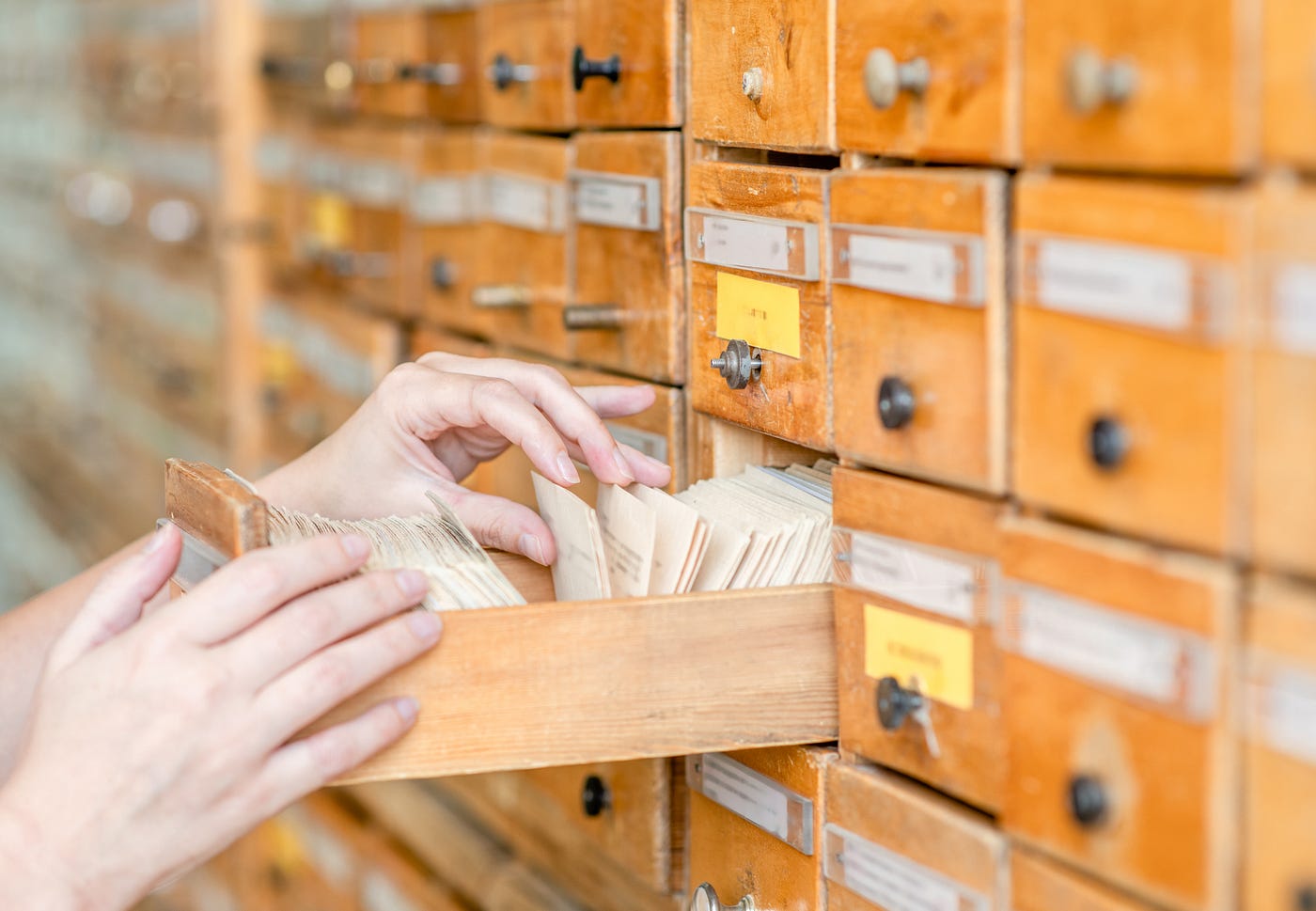
Bonus points if you know what this is.
What Is a Citation
Before we go any further, it helps to define a citation. A citation is a brief, repeatable road sign that tells readers exactly where a specific fact, idea, quote, or piece of data came from. It cites a source outside your book and allows readers to trace your logic back to its origin. In most published works, citations appear as superscripted numbers that link to either a footnote or an endnote. That structure keeps the evidence connected to the claim without interrupting the flow of the text.
You’ll occasionally see books that put the citation at the end of a sentence instead of using a superscript. That’s not the Chicago Manual of Style approach and usually signals a publisher following a house style that diverges from standard practice. Superscript numbers leading to footnotes or endnotes remain the most transparent and consistent way to cite your sources.
Why Citations Matter
Citations serve three critical functions in a book:
They reinforce your credibility. Nonfiction depends on trust. When you show readers where your facts, ideas, and quotes originated, you demonstrate that your work is grounded in something more substantial than intuition.
They protect your reputation. Accidentally misquoting or borrowing without acknowledgment can cause trouble in the long run. You could be accused of plagiarism without citing a source. If you misquote someone, depending on how egregiously off the mark you are, the statement could be liable. Precise citations eliminate those risks.
They give readers a path to see your logic. Even if most readers never open your notes section, the ones who do appreciate being shown where to dig deeper. Readers can trace how each of your ideas connects to solid facts. Those connections build confidence in your conclusions. And for the handful of readers who want to follow every breadcrumb, good citations turn your book into a guided tour instead of a dead end.
How to Evaluate a Source
A polished citation is only as strong as the material behind it. Evaluating a source is a skill you can build with practice.
Primary and secondary sources.
Primary sources sit closest to the event or idea you’re writing about. They include original documents, diaries, letters, birth and death records, court filings, interviews, photographs, artifacts, audio recordings, and raw data that haven’t been filtered through anyone else’s interpretation. Primary sources help you understand what happened in real time, not what someone later thought happened. They’re invaluable, but they aren’t perfect. Firsthand accounts can be emotional, biased, incomplete, or agenda-driven.
Secondary sources interpret or analyze those original materials. These include history books, academic studies, documentaries, long-form journalism, and essays that synthesize many pieces of evidence. Secondary sources help you understand context, patterns, and meaning. They’re handy when you’re working outside your own field and need an expert to help frame the big picture.
Both types of sources matter. Primary sources keep you grounded in reality. Secondary sources help you understand what that reality means. The key is knowing when each one strengthens your argument and when it might mislead you.
Authority of the creator.
Authority is about more than job titles or degrees. It’s the combination of expertise, experience, reputation, and intent behind the material you’re using. Start by asking who produced the source and what qualifies them to speak on the subject. A historian trained in archival research brings one kind of authority. A survivor of a traumatic event brings another. A well-regarded journalist offers yet another lens of objectivity.
You’re also looking for bias. Every creator has one. The question is how that bias shapes the information. A political or religious commentator may frame facts through their ideology. A company’s white paper may steer data to sell a product. A blog post may rely heavily on anecdotes because the writer lacks access to better sources. None of these sources is automatically unusable. You need to understand the lens they’re using.
Credentials aren’t everything, but they give you a starting point. A source produced by someone with demonstrated expertise and a track record of accuracy carries more weight than one circulating on social media without a name. Evaluating authority is less about gatekeeping and more about understanding how much trust you can reasonably place in the source.
Editorial standards.
Academic presses, reputable journalism outlets, and established publishers have better oversight than anonymous blogs or unvetted social posts. The latter requires more skepticism. Whatever you do, DO NOT under any circumstances use Wiki articles as citations. Never, ever, never, ever, ever. I don’t know how to stress that enough without calling you and telling you the same thing. Wiki has its place in giving a general overview of an unfamiliar topic, but that’s about it. Some Wiki articles do give citations, and those could be good places to start your search for a citation, but don’t always count on it.
Date of publication. Some information stands the test of time, and some doesn’t. Make sure the publication date aligns with the claim you’re supporting. This matters even more when you’re working with older sources. Plenty of eighteenth- and nineteenth-century newspapers cared more about selling papers than reporting anything factual. That trend carried into the early twentieth century as well. A good example is the 1909 Arizona Gazette headline announcing that a Smithsonian-backed expedition had discovered a massive cave in the Grand Canyon filled with Egyptian mummies, hieroglyphs, and artifacts. The story was sensational, widely repeated, and completely unverified. Entertaining — yes. Reliable — not even close. Always consider the era, the publication’s standards, and the motives behind the material before you lean on it.
Corroboration. A single source can mislead you. Multiple independent sources reduce that risk. When in doubt, check twice. If you find a striking claim, especially one that feels too perfect for your argument, treat it with suspicion until you see it supported elsewhere. Look for other sources that were created by different people, in different places, with different incentives. If only one obscure blog or fringe book makes the claim and nothing reputable supports it, you probably do not want to rely on it.
Corroboration is how you keep your work from resting on a single shaky plank. The more important a claim is to your thesis, the more you owe your reader a solid foundation underneath it.
Footnotes Versus Endnotes
Every nonfiction writer eventually reaches the question of where notes belong. At the bottom of the page, or gathered in the back.
Footnotes appear at the bottom of the same page as the reference. They keep the source close to the claim, which helps readers who want immediate verification. Academic disciplines often prefer footnotes because they support rigorous, in-the-moment checking while reading. The tradeoff is visual clutter. Footnotes can interrupt the reading experience.
Endnotes move citations to the back of the chapter or book. They create a cleaner reading experience and keep the narrative flowing without visual traffic. I prefer endnotes because they give layouts room to breathe. The limitation is that readers must flip or scroll to look anything up.
There’s a technical element here, too. Reflowable EPUBs do not support traditional footnotes. They break for reasons tied to how text reshapes itself on different screens. If your book will be published as a reflowable ebook, you’ll be using endnotes no matter what. Even if you love footnotes, the format won’t cooperate.
Your choice usually depends on your readership. Academic audiences expect footnotes, while narrative nonfiction and general nonfiction tend to benefit from the smoother look of endnotes.
A Real-World Example: When Things Go Sideways
Just this week, I did a developmental edit on a lead magnet book about mitigating business risk. The author had more than four hundred items in their bibliography. They didn’t have a single citation in the text. They couldn’t understand why that was a problem.
Here’s why: without citations, readers have no idea which of those four hundred sources support which claims. Readers can’t track where specific data came from or verify anything. The bibliography becomes a decorative list rather than a research tool. It signals quantity, not clarity. And it creates the impression that the author consulted a mountain of material without integrating any of it with intention.
A bibliography without citations is like a map with no markers. It shows the territory but not the route you took.
Why You Need a Bibliography
The bibliography is a list of every source you’ve used in your book. It shows the landscape of your thinking, not just the sources tied to specific claims in your text. A substantial bibliography benefits the reader and strengthens your authority.
A bibliography accomplishes several things:
- It reveals the depth of your research.
- It offers readers additional works to explore.
- It includes sources that shaped your understanding even when they didn’t appear on the page.
When a Source Belongs in the Bibliography But Not in a Citation
Writers often wonder why a source belongs in the bibliography even when it doesn’t appear in a footnote or endnote. The answer comes down to influence. Some sources guide your thinking without producing a direct quote or paraphrased claim.
This can happen when you read something purely for background. It can occur when you use a book or article to verify other information. It can happen when you study a broader subject to understand tone, context, or atmosphere. Even if none of those moments end in a citation, they still deserve acknowledgment in the bibliography because they contributed to your intellectual framework.
Final Thoughts
Citations aren’t busywork. They’re part of the craft of nonfiction and show how you know what you know. Impeccable sources support your arguments. And they serve the readers who want more than the surface. When you treat citations as part of your storytelling toolkit, they become easier to manage and are a suit of armor for your writing.
If you don’t want to mess with any of that, contact me. I can help.
My website: www.briankannard.com
Instagram: https://www.instagram.com/briankannard/
Facebook: https://www.facebook.com/profile.php?id=61579818699044
메타데이터
- post_id
- 6f4792252c6a
- slug
- a-how-and-why-to-use-citations-in-nonfiction-6f4792252c6a
- url
- https://medium.com/@briankannard/a-how-and-why-to-use-citations-in-nonfiction-6f4792252c6a
- canonical_url
- https://medium.com/@briankannard/a-how-and-why-to-use-citations-in-nonfiction-6f4792252c6a
- author_url
- https://medium.com/@briankannard
- status
- ok
- fetched_at
- 2026-07-20 16:49:03