What a blind corner is actually doing to your dog: The five-minute planning habit that changes the…
You’re not choosing the fastest route. You’re choosing the one with the most blind corners and your dog absorbs every single one of them…
What a blind corner is actually doing to your dog: The five-minute planning habit that changes the whole walk
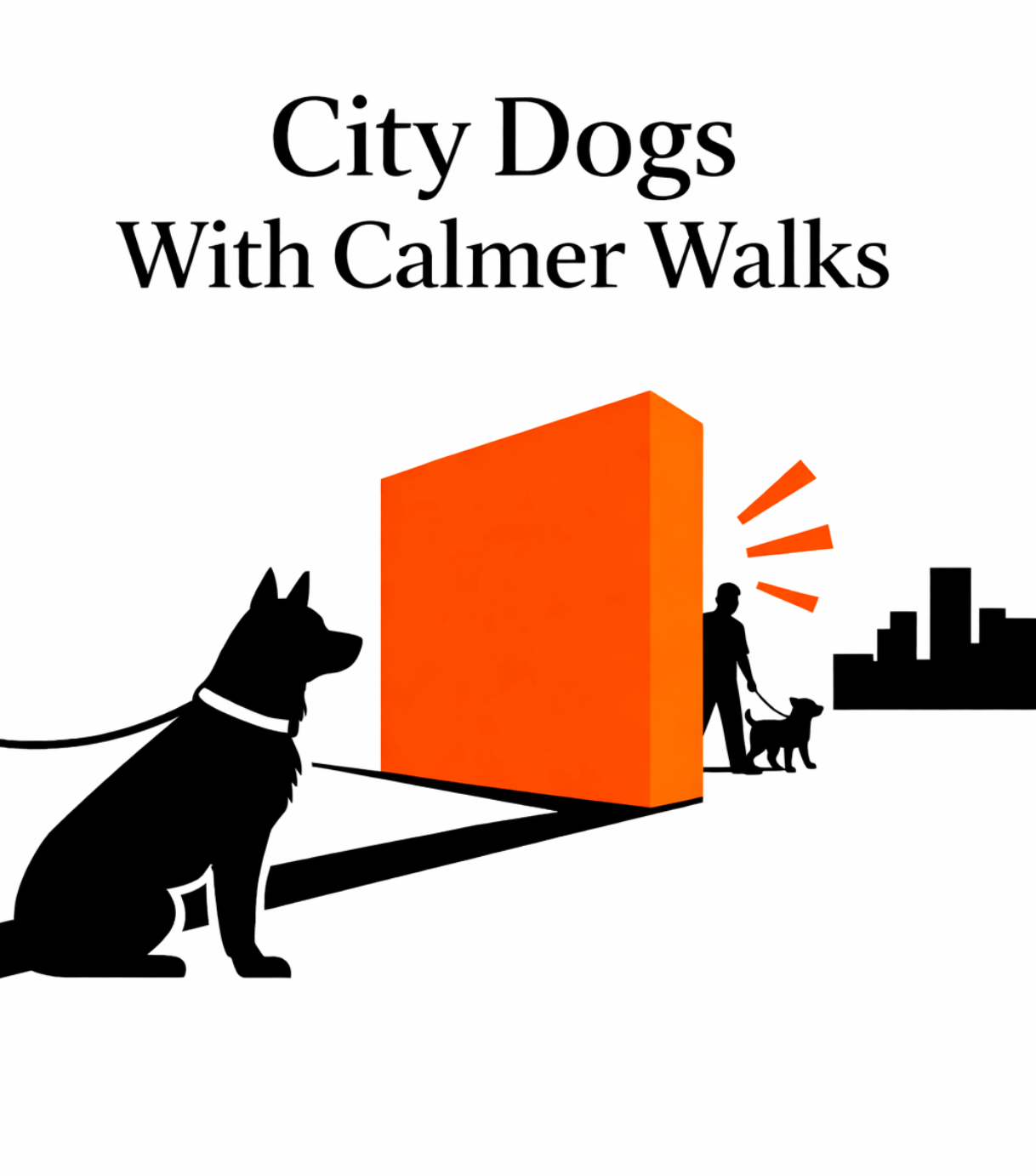
You’re not choosing the fastest route. You’re choosing the one with the most blind corners and your dog absorbs every single one of them before you’ve reached the end of the street.
You leave the flat with the best possible intentions. Lead clipped, treats in your coat pocket, maybe even five minutes to spare before work and by the third junction, it’s already gone wrong. The dog is spinning on the lead and something set them off at the narrow cut-through. A cyclist, then the gap between two parked lorries where the pavement suddenly pinches to nothing and there’s nowhere to go except straight through it.
You and the dog gets home stressed. You tell yourself tomorrow will be better. Then tomorrow, you take exactly the same route.
This isn’t a coincidence. The route is the problem not your technique, not the lead, not your dog’s temperament. The specific sequence of tight turns, blind corners, and narrow stretches you walk every morning is doing more damage than any single behaviour issue, and you picked it because it saved three minutes on the way to the high street.
The Morning Shortcut That’s Wrecking Your Walk Before It Even Starts
Dogs don’t process corners the way we do. We see a corner as a navigational point, a thing to turn at. A dog sees it as a moment where the predictable world disappears, everything visible ahead vanishes in a second. New sounds, smells, and sights arrive without any warning. A person, a bike, a child on a scooter, any of it can appear from nothing in the time it takes to complete the turn.
On a wide open street, a dog can read what’s coming. They see far enough ahead that nothing genuinely surprises them. Their nervous system stays at a manageable level but a tight corner on a busy city street strips all of that away. The world ends at the bend, and anything could be waiting on the other side.
“Three tight corners in the first five minutes and your dog has already been startled twice before the walk has properly begun. The barking that follows isn’t stubbornness. It’s the bill for an impossible morning route.”
By the time you’ve cut through the market alley, passed the school gate, and rounded the blind bend by the coffee shop, your dog has processed more unpredictable stimulation than most dedicated training sessions deliberately expose them to. They’re not being reactive for the sake of it. They’ve been asked to absorb far too much before the walk had any chance of settling.
Here’s the shift that makes the biggest difference, and it happens before you leave not at the corner where everything goes wrong, not during the walk but before the lead is even clipped on.
Look at where you’re going and count the blind corners in the first ten minutes. Not the total route, just the opening ten minutes. A blind corner is any bend where your dog cannot see what’s coming until they’re already in it; a wall right at the turn, a parked van blocking the sight-line, a narrow cut-through with a sharp right-angle at the end. Count them, if there are more than two, the route is working against you before you’ve done a single thing right on the lead.
The route check, run this before every walk
- Look at the first two corners, not just the destination. A longer road with open sight-lines almost always beats a fast cut-through that forces three tight bends in the opening ninety seconds.
- Pick the side with more pavement. Where the footpath runs alongside parked vans, café chairs, or market stalls, choose the wider side. An extra metre of space matters more than saving two minutes of travel time.
- Set your crossings before you leave. Know where you’ll cross, where you’ll pause, and which corner you’ll simply bypass if it’s already busy. Decide this at the front door not while you’re already facing it with a tight lead.
- Leave with a plan, not a hope. Your dog reads your first decisions before any bark begins. A walker who knows where they’re going moves differently to one who’s improvising and the dog on the other end of the lead notices both.
The three correction rule
There’s a simple test for whether a route is wrong for a given morning. If it asked you to correct, redirect, or shorten the lead three times in the first thirty seconds, it’s the wrong route for that walk. Not because your dog failed a test but because the environment handed them too much to process at once, and no amount of good handling compensates for a route that stacks problem on top of problem from the very first minute.
The useful question to ask at the front door isn’t “which way is fastest?” but “which way lets the dog meet the street without being surprised twice before the first junction?” In most cities, those are genuinely different routes. The faster one cuts through the market. The calmer one goes around it. For a dog that struggles with blind corners, the calmer one wins every time not because you’re avoiding the world, but because you’re giving the walk a foundation it can actually build from.
The same ten minutes — two different routes
Route A: Out the front door, left down the narrow terrace, right at the market alley where the café queue spills across the pavement, past the school gate with its noise and scooters, left into the cut-through that bends sharply right at the end. Four tight corners in under four minutes. Lead tight from corner two. Barking from corner three.
Route B: Out the front door, right along the wider residential road, cross early to the side with the broader footpath, follow the long gradual curve to the open junction. One genuinely blind corner in four minutes. Lead stays soft throughout. The dog settles into the walk rather than bracing against it from the start.
Route B is forty-five seconds longer but it is also a completely different walk for both of you.
Everything else, how you handle the approach, what you do when another dog appears, how you reset after a bark, works better when the opening five minutes gave the nervous system a chance to settle. You can have perfect technique at a corner and still lose the walk if the dog has already absorbed three unexpected encounters before that corner arrives. The nervous system doesn’t reset instantly. What built up at corner one is still present at corner three.
Plan the route first, make the opening five minutes as predictable as the city will allow. Keep the blind corners to a minimum, especially in the first half of the walk before the dog has found their stride. Give the walk a shape that works with your dog’s nervous system rather than against it from the moment you step outside.
The walk that starts well tends to stay that way. The walk that starts rushed, with a tight lead from the second junction onwards, almost never recovers, no matter how carefully it’s handled from there. Your dog isn’t struggling because they’re difficult. They’re struggling because the route is handing them the hardest possible start every morning and then wondering why things fall apart by corner three.
Change the route first, then everything else gets easier once you do.
The full guide is https://payhip.com/b/vWzu7
Route planning is just the beginning, there are four more methods in City Dogs With Calmer Walks
The Corner Buffer Method covers the complete picture: how to widen your line on approach, what to do with your body when another walker appears at the worst moment, the exact reset sequence after a bark, and the repetition routine that makes corners feel familiar instead of threatening. All five methods in one short, practical ebook written for real city streets.
메타데이터
- post_id
- 6f547165894f
- slug
- what-a-blind-corner-is-actually-doing-to-your-dog-the-five-minute-planning-habit-that-changes-the-6f547165894f
- url
- https://medium.com/the-polished-paw/what-a-blind-corner-is-actually-doing-to-your-dog-the-five-minute-planning-habit-that-changes-the-6f547165894f
- canonical_url
- https://medium.com/the-polished-paw/what-a-blind-corner-is-actually-doing-to-your-dog-the-five-minute-planning-habit-that-changes-the-6f547165894f
- author_url
- https://medium.com/@fevzbest
- status
- ok
- fetched_at
- 2026-06-13 12:55:53