Why Indians Living Abroad Feel “Something Is Missing” — And What Vastu Has to Say About It
A guide for NRIs in Dubai, the USA, UK, and beyond who want their home to feel like home
Why Indians Living Abroad Feel “Something Is Missing” — And What Vastu Has to Say About It
A guide for NRIs in Dubai, the USA, UK, and beyond who want their home to feel like home
You moved abroad. You worked hard for it.
The apartment is good. The neighbourhood is safe. The salary makes sense. And yet — there’s a restlessness you can’t quite name. Sleep isn’t as deep. Family decisions feel heavier than they should. Some months, the money flows; other months, it just disappears. The home looks right, but something feels off.

Many Indians living abroad quietly experience this. Most brush it aside as “adjustment” or “the expat life.” But a surprising number, when they finally look into it, find that the layout of their home — the direction their main door faces, where they sleep, where they work — is working against them rather than with them.
This is where Vastu Shastra becomes relevant. Not as superstition. Not as blind ritual. But as an ancient Indian system of spatial alignment that has very practical implications for how energy moves through your living space — and by extension, how you feel, decide, and grow within it.
Why Vastu Matters More When You Live Abroad
When you live in India, many things naturally align without you thinking about it. Homes are often built with some Vastu awareness. Joint family living creates a natural energy balance. Temples, morning routines, seasonal rhythms — these all act as subtle anchors.
Abroad, most of that disappears overnight.
You’re now living in a home designed by someone with no awareness of Vastu principles. The main door may face west or south. The master bedroom might be in the north-east. The kitchen could be in a direction that creates stress rather than nourishment. None of this was done with any intention — good or bad. It simply wasn’t considered.
And you, as an Indian living in that space, often feel the friction without being able to explain it.
The 5 Most Common Vastu Issues in NRI Homes
Based on consultations with Indian families living in Dubai, the US, UK, and Canada, these are the most frequently recurring concerns:
1. The Main Door Direction
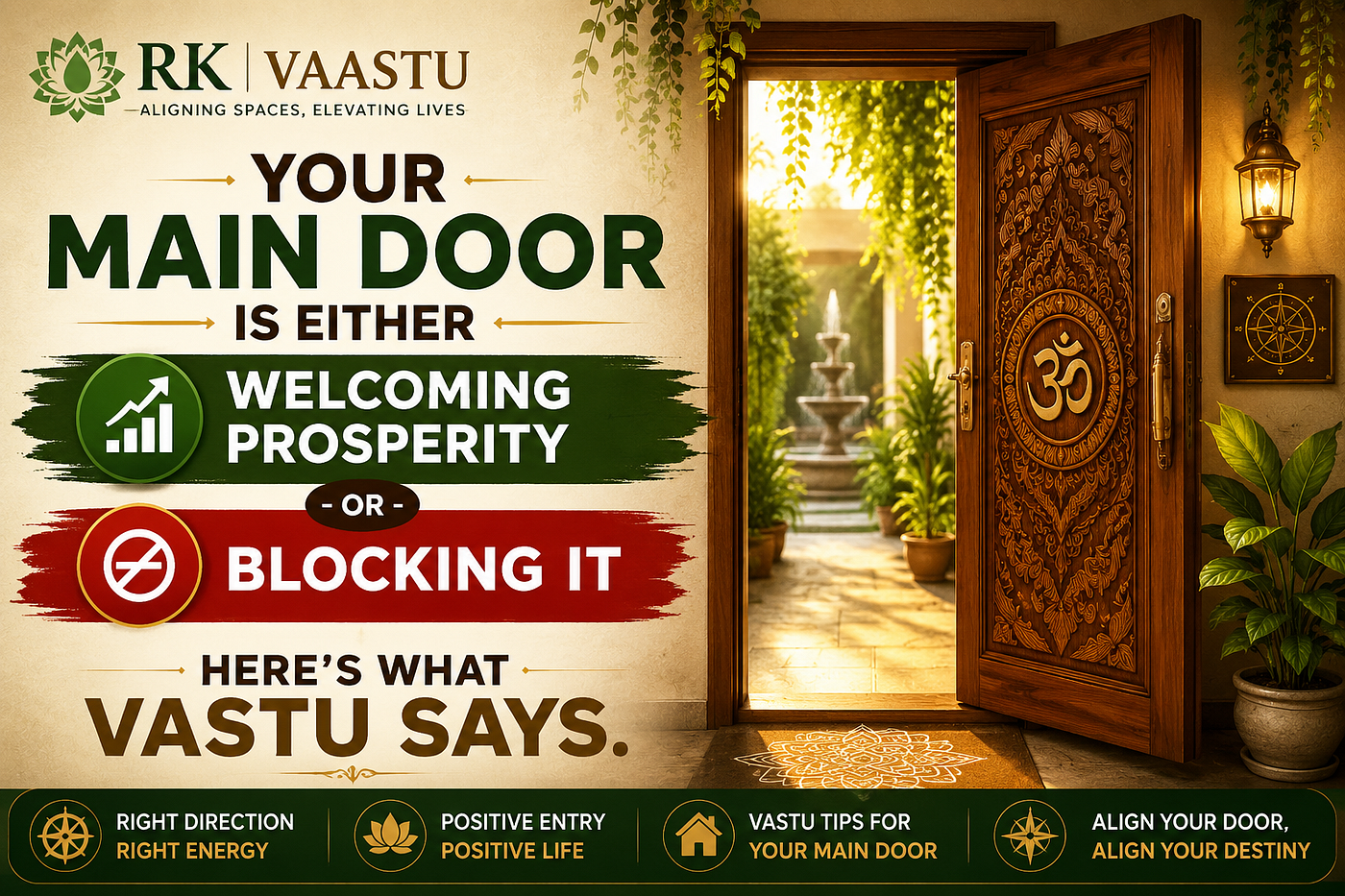
In Vastu, the main entrance is the mouth of the home — where energy enters. A north or east-facing entrance is generally considered highly favourable, inviting prosperity and positive movement into the household.
Many apartments in Dubai, London, or New York face south or south-west — directions associated with heaviness, delayed decisions, and financial inconsistency when not properly balanced.
If your main door faces south-west and you’ve been feeling stuck professionally or financially, this is worth examining.
2. The Master Bedroom in the Wrong Zone
The ideal placement for the master bedroom in Vastu is the south-west zone of the home. This direction is associated with stability, deep rest, and the energy of the head of the household.
In many Western-designed apartments, the master bedroom sits in the north-east — a sacred zone meant for prayer, meditation, and clarity. Sleeping here regularly can disturb rest, create mental restlessness, and affect decision-making over time.
If you wake up tired despite sleeping 7–8 hours, this placement is one of the first things worth checking.
3. The Kitchen in a Conflicting Direction
Vastu associates the south-east with fire energy — the ideal zone for the kitchen. When the kitchen is placed in the north-east or north, it creates a clash of energies that can manifest as health issues, digestive problems, and financial leakage in the household.
A very common complaint from NRI families: “We earn well but money doesn’t stay.” Often, the kitchen placement is a contributing factor that’s never considered.
4. No Dedicated Prayer or Meditation Space
In India, even a small corner — a shelf with a diya and a photograph — creates an energy anchor in the home. Abroad, many families skip this entirely. The north-east corner, left empty or used for clutter or a washing machine, loses its function as the zone of clarity and spiritual grounding.
Even in a rented apartment, a small dedicated north-east corner for prayer or meditation can create a noticeable shift in the household’s emotional tone within weeks.
5. Mirrors and Water Elements in Wrong Positions
A mirror facing the bed. A water feature placed in the south. A fish tank in the south-east corner. These seem like décor decisions, but in Vastu, water and reflective surfaces in the wrong directions amplify instability, restlessness, and sleeplessness.
Many NRI homes — especially those styled to look modern and international — unknowingly have several of these misplacements at once.
“But I’m in a Rented Apartment — Can Vastu Even Apply?”
This is the most common question, and the answer is: yes, absolutely.
You don’t need to knock down walls or do any construction to apply Vastu principles. Most corrections for rented homes are about:
- Placement of furniture — shifting where you sleep, sit, and work
- Colours and materials — using specific tones in specific zones to balance energy
- Small remedies — crystals, plants, symbols, or salt bowls placed strategically
- Activating positive zones — using the north-east and north zones intentionally
These are fully practical adjustments that require no permission from a landlord and no major expense. Many families who’ve done this report noticeable shifts within 30–60 days — better sleep, improved clarity in decisions, a calmer household atmosphere.
How Astrology Adds Another Layer
Vastu works with the space. Astrology works with the person occupying that space.
For NRIs, combining both creates a much more precise picture. Your birth chart tells a great deal about which directions are particularly powerful or challenging for you personally. Two people living in the same apartment can experience it very differently — and often do.
For example, if your chart shows a strong Saturn influence, south-facing spaces can feel particularly heavy for you, even if the same direction bothers someone else less. If Jupiter is well-placed in your chart, north-east activations will work faster and more powerfully for you than for most.
This is why generic Vastu tips from the internet can sometimes feel like they don’t quite apply. Because in many cases, they don’t — not without accounting for who you are, where you were born, and what your chart says about your relationship with space, direction, and time.
A Simple Vastu Check You Can Do Right Now
Before anything else, stand at your main door and look outside. Note which direction you are facing. Use a compass app on your phone.
- North or East facing: Generally favourable. Focus on keeping this entrance clean, well-lit, and clutter-free.
- South facing: Not inherently bad, but needs specific remedies — a bright light outside, certain symbols above the door, and careful attention to what’s placed immediately inside.
- West facing: Moderate. Good for stability, but can slow momentum. Activation of the north zone inside helps.
- South-West facing: Needs the most attention. Avoid placing heavy storage or clutter here. Keep this zone grounded and clean.
This is a starting point — not a complete analysis. Every home has a unique combination of factors that interact differently.
Every Home Tells a Different Story
The families who get the most out of Vastu consultation are the ones who come with specific questions — not just “is my home good or bad?” but “we’ve been trying to settle well here for two years, money is inconsistent, my husband and I argue more than we did in India, and our child isn’t sleeping well — where do we start?”
That level of specific context is where real Vastu guidance becomes valuable. It’s not about applying a template. It’s about reading your specific space, your specific situation, and your chart together.
RK Babbar is a Vastu and Astrology consultant who has been working with Indian families in Dubai, the Gulf, the UK, the US, and India for years. His consultations are conducted fully online — making it practical for NRIs to access personalised guidance without needing a physical visit.
If you’ve been feeling that your home abroad doesn’t quite support your life the way it should, a single consultation can give you a clear, actionable picture of what’s happening and what to adjust.
Ready to Understand Your Home Better?
You can reach RK Babbar directly for a consultation:
📲 WhatsApp: +91 98999 32327 🌐 Website: rkvaastu.com 📅 Book an Appointment: rkvaastu.com/book-online-appointment
Consultations are available online for clients in India, UAE, USA, UK, Canada, and worldwide.
Astrology and Vastu are belief-based guidance practices. Results and experiences vary from person to person. Consultations are advisory in nature and do not replace professional, legal, or medical advice.
Related reading on rkvaastu.com:
메타데이터
- post_id
- 6f5f3dfcb106
- slug
- why-indians-living-abroad-feel-something-is-missing-and-what-vastu-has-to-say-about-it-6f5f3dfcb106
- url
- https://medium.com/@rkvaastu/why-indians-living-abroad-feel-something-is-missing-and-what-vastu-has-to-say-about-it-6f5f3dfcb106
- canonical_url
- https://medium.com/@rkvaastu/why-indians-living-abroad-feel-something-is-missing-and-what-vastu-has-to-say-about-it-6f5f3dfcb106
- author_url
- https://medium.com/@rkvaastu
- status
- ok
- fetched_at
- 2026-07-28 12:19:09