Seven takeaways every procurement leader should know from Catalyst SF
If you skipped Catalyst SF hosted by the Art of Procurement because you assumed it was another AI panel parade, I have good news and bad…

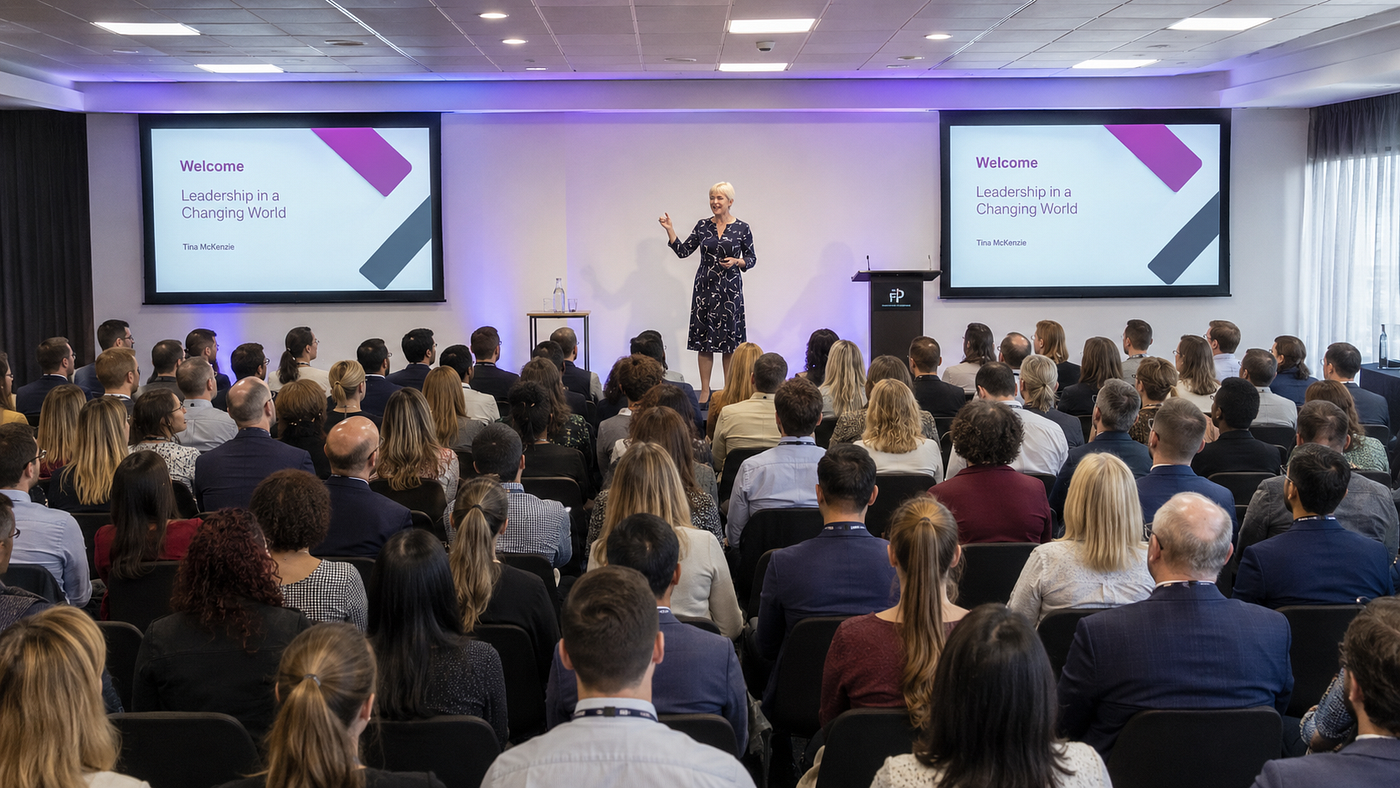
A successful Catalyst San Fran 2026. Do not miss the next one!
Seven takeaways every procurement leader should know from Catalyst SF
If you skipped Catalyst SF hosted by the Art of Procurement because you assumed it was another AI panel parade, I have good news and bad news. The bad news: you missed it. The good news: I took notes, and I’m not gatekeeping.
What follows are the seven takeaways I think every procurement function (direct, indirect, services, IT, marketing) should take away from the day. Each one is short and each one comes from a different speaker or panel. None of them are theoretical, all speakers used real and tangible examples that came from real life (imagine that). The patterns are getting clearer this year, and the procurement teams that act now will be in a different conversation by Q4 than the ones that wait. It is up to you to choose a lane.
1. Change management is critical, and it is Procurement’s job
Change management came up in nearly every session at Catalyst, often as the constraint that broke the schedule. It also surfaced at the WMP Spring Table I ran the week before. When the same theme dominates two unrelated Procurement rooms in the same month, it is a signal.
The connecting tissue between identified solutions and successful implementation is where change management often lives. Now it is not just about the mechanical steps every change manager will implement, but culture, adoption, fear and other more subjective areas are key to address for a successful change within an organization.
Michael Shields from Tropic has even implemented a different way to review partners. The 90 to 120 day pre-renewal sourcing cadence most procurement teams use is no longer enough time to evaluate alternatives, run change management with the budget owner, and execute a vendor switch. Markets are reshuffling on a quarterly cadence. The change management work is the bottleneck, not the sourcing decision itself.
Saurabh Gupta from HfS put a number on it. 95% of practitioners surveyed in a poll said AI is reshaping roles faster than the operating model can be redesigned. This gap needs to be closed by stronger yet agile change management teams.
The implication: change management is now a hiring priority, a deal-cycle constraint, and the difference between a successful AI rollout and a quietly failed one. If you do not have someone on the team who can lead change at the supplier interface, the engagement plan, and the user adoption layer, you are about to find out the hard way.
2. Hardware and compute access is the real bottleneck
This was the most concrete and eye-opening point of the day. Naveen Sastry from McKinsey ran the morning session, and an audience question pulled it forward in a way the slides did not.
The numbers, all confirmed in his answer:
- Power transformers and turbines for generation are sold out 3 to 4 years ahead.
- A server that cost $30K in October now costs $110K.
- A 96 GB memory stick went from $400 to 500 in October to $6,000 currently.
Hyper-scalers, model providers, and AI-native customers are all competing for the same finite supply chain. This is also why token discounting is structural, not commercial. A vendor would rather give scarce capacity to a customer paying full price than hand you 10% off.
Three recommendations Naveen put on the table:
Plan compute access for the next 24 months. If you wait until you need capacity, you will not get it at a workable cost. Bake it into your category strategy now.
Buy from a token factory, not a model provider. The hyper-scalers (Google, AWS, Microsoft, Oracle) own the underlying supply chain. Each one carries roughly two of the three frontier models, so securing tokens through a hyperscaler lets you swap models underneath the same contract as the frontier shifts.
Commit short or not at all. Discounts on token commits are minimal (5% or less unless you are buying in billion-dollar blocks). Use commitment leverage to extract engineering support and integration help instead. That is where the real value sits right now and is a lot easier to “give” than hard dollar discounts.
If your company is buying meaningful AI compute and your procurement plan is not engaging in the supply chain question, you are operating downstream of the actual constraint.
3. Become the “How to AI” leader
Saurabh Gupta’s most quoted line of the morning: “Do you want to be the Waymo or do you want to be the Alphabet?” The Waymo gets driven. The Alphabet shapes the algorithm.
His argument was clean. The “why” of AI is settled. OECD productivity is growing at 1% in developed economies and we all know inside of us that offshoring is exhausted as a lever. AI is the only realistic path to GDP-relevant productivity gains in the next decade. The “what” is also ready: hallucination rates dropped 50% in 12 months and technical metrics keep improving. AI will only become better and it is happening fast.
What is not settled is the “how”. How does the enterprise actually deploy this stuff at scale? How do you negotiate the contracts? How do you run governance? How do you connect AI tooling to the procurement function and the rest of the business? Nobody owns this question yet.
That is procurement’s lane. The enterprise vendor and services ecosystem will look fundamentally different in two years. Whoever builds it owns the strategy seat.
Saurabh’s directive for the next 90 days:
- Ban the word “POC” from your office. POCs are how AI initiatives die quietly while still consuming budget.
- Embed governance from day one.
- Start with what can go into production on day one, not what makes a good slide.
“If you want a seat at the strategy table, this is the work that will get you there”. His parting frame is one I am going to repeat in client conversations all year: “Leadership is a verb”.
4. Stop letting suppliers tell you how to organize
This was Linda Chuan’s most controversial argument of the panel, and I think she is right. For the past 20 to 25 years, procurement has let tech suppliers like SAP, Oracle, and Coupa (to name a few) dictate organizational structure through category management. Software buyers, services buyers, hardware buyers, each in their own swim lane.
Look at how the tech suppliers themselves work. Microsoft, IBM, Google (and many others) all assign one relationship director per major customer, because they want to see, sell, and negotiate against the “whole” spend. If the supplier is unified and procurement is siloed, procurement loses leverage on the categories that matter most.
Her recommendation: keep some category structure for subject matter depth, but concentrate resources on the top 5 to 10 strategic partners with full relationship coverage. For procurement teams that came out of COVID with strategic-partner tiering already in place, double down on that layer rather than have pure category SMEs across every single category of buy.
This is particularly relevant for anyone procuring from conglomerates with multiple lines of businesses. Negotiating one piece without seeing the rest leaves real leverage on the table. The logic applies to Microsoft enterprise agreements, Google’s product-plus-advertising relationship, and Salesforce’s cross-sell across Sales, Service, Marketing, and Slack. The supplier is certainly aggregating the view, and to level the playing field, you need to do the same.
5. Help the business make smart AI decisions
Michael Shields from Tropic made a useful argument here. Procurement should not just react to AI demand. It should shape how the business actually buys.
Build vs buy is harder than it looks. Total Cost of Ownership (TCO) is procurement’s go-to methodology, and it travels directly to AI build vs. buy decisions. Michael has watched companies pivot from buy to build because the build math looked cheap, then pivot back six months later at significant cost. The hidden costs people miss: engineering pull-in, hosting and infrastructure, scaling beyond the original team (service, maintenance, upgrades etc.), and ROI erosion when adoption is lower than projected. AI-native startups are also reaching enterprise scale fast enough that the initial internal approach of “we will just build it” can be outcompeted by a 200-person company that built the same thing AI-first.
Two operational moves Michael picked up from a procurement head he met at a dinner are both worth adopting:
Internal AI license certification. Anyone wanting an OpenAI, Claude, or similar license has to complete an internal certification first. Existing licenses get 90 days to comply. Monthly refreshers thereafter. Drove costs down materially because users started understanding token economics and risk implications. Procurement gets to embed in the use case, not just sign the contract.
AI usage as a QBR and OKR line item. Every employee carries an AI-tied goal. Procurement should be doing this for its own team too.
Michael shared a prediction that definitely hit home with many of us in the audience. “AI is or will shortly be the #1 strategic spend category for most companies in the room. Treat it accordingly”.
6. Where human judgment still belongs
The afternoon panel was the most quotable hour of the day. we identified five things to take home with us.
Are you comfortable with an audit of your AI tools? That was the question one panelist put to the room. If the honest answer is no, you have a governance gap to close before someone closes it for you. This is the test every procurement leader should run their function through before the end of Q3.
The best day to learn AI was yesterday. The 2nd best day is today. Ashish Gupta from Clorox said this with a firm face. His operational frame to get the team and the company to move towards AI: run a hackathon, open new windows, let people build confidence with the tools rather than waiting for the perfect rollout. Related goals that yoru team should understand better as part of theAI education: how to use less energy, drive lower usage cost, and partner with suppliers to set boundaries.
AI does the first draft and the first redline well. Usage plummets after that. David Tollen, a Harvard law graduate, legal expert and founder of Tech Contracts Academy, on the panel. Humans set up the work, set guardrails, and check at the end. Second-order consequences are what AI is least equipped to surface, which is where human review remains essential. A useful side benefit Tollen flagged is that the contract database itself becomes intelligence (volume discount visibility across the portfolio, anomaly detection, term consistency etc.).
In-house legal teams are adopting AI faster than procurement in some organizations because of privilege concerns. Legal touches every part of the business. If procurement does not lead on AI governance, legal will challenge from the side. Templates are the wedge: legal teams are building Claude into their template workflows now.
Disclose your AI usage. The potentially huge downside risk (including class action exposure) shrinks immediately when you disclose your usage of AI. This was the closing thought from the panel and worth pinning above your desk. Many of us may use different tools to help us draft or “finesse” work emails, analyze sales data to discover new insights or write a summary and to-do’s of a meeting you led at work. Be honest about your use. It does not reduce your value or quality of your deliverables to the company — it shows that you use your time to be a strategic thinker.
7. The C-suite conversation, simplified
Several panels throughout the day touched upon how to show Procurement’s commitment to lead to the c-suite.
Work on the narrative. Storytelling matters more than your savings number. Tony Uphoff was blunt about this. Most procurement leaders did not grow up trained in narrative, but it is teachable. Communication is a science, not art.
Be a problem solver, not a process owner. The functions that get the seat at the table are the ones that bring solutions, not gatekeeping.
Understand how the company actually makes money. A Procurement team that doesn’t understand the business of their employer will lose the seat quickly. Often Procurement is the last group to be able to add headcount. Show company spirit by supporting hiring in other, and revenue generating, functions before yours.
Help keep the CEO out of trouble. Procurement often are better at seeing risk. CEOs and other C-suite folks often are only focused on the good things of an opportunity. Help them by highlight risks they are not seeing. Never overpromise what you and your team can deliver, and keep the c-suite honest about this.
The two questions to ask your CEO (better than “what keeps you up at night”, which has a standard answer): “What are you worried about?” and “What is the Board asking for that makes you nervous?” Both these questions expose vulnerability on both sides. It helps you engage in a discussion that impacts the company not just highlight your latest savings deck.
Closing words
The day was riddled with excellent one liners that stopped you in your tracks and questions that changed your perception again and again. We have chosen three speakers with three different framings, conveying the same message:
Tony Uphoff: “It is a lot easier to embrace AI than getting it forced on you”. Linda Chuan: “You are either driving the bus or you might get run over by it”. Michael Shields: “If we do not see what is more important than savings, someone else will”.
The work isn’t theoretical anymore. Better to design the choices than discover them.
메타데이터
- post_id
- 6f7705cf14fd
- slug
- seven-takeaways-every-procurement-leader-should-know-from-catalyst-sf-6f7705cf14fd
- url
- https://medium.com/@christineadamssonmoore/seven-takeaways-every-procurement-leader-should-know-from-catalyst-sf-6f7705cf14fd
- canonical_url
- https://medium.com/@christineadamssonmoore/seven-takeaways-every-procurement-leader-should-know-from-catalyst-sf-6f7705cf14fd
- author_url
- https://medium.com/@christineadamssonmoore
- status
- ok
- fetched_at
- 2026-06-09 15:37:30