Tokenized Loyalty Programs: The Next Evolution in Retail Customer Engagement
Tokenized loyalty programs are rapidly displacing the traditional points-and-perks model that has dominated retail for decades. By issuing…
Tokenized Loyalty Programs: The Next Evolution in Retail Customer Engagement
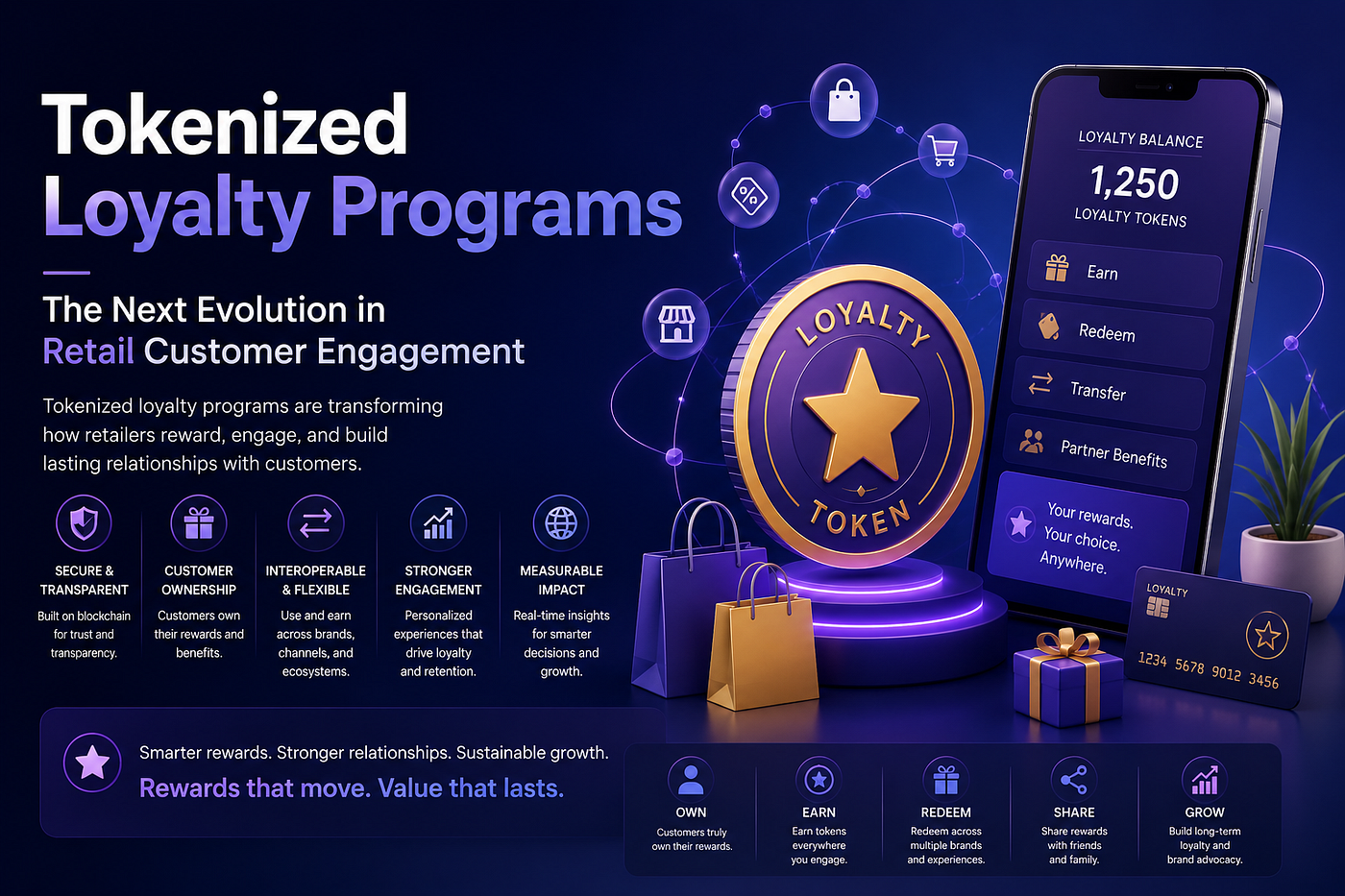
Tokenized loyalty programs are rapidly displacing the traditional points-and-perks model that has dominated retail for decades. By issuing blockchain-backed digital tokens instead of fragile, expirable points, brands are unlocking a new era of customer engagement — one built on real ownership, interoperability, and measurable financial value for the consumer.
In 2025, over 60% of enterprise retailers are actively exploring or piloting blockchain loyalty solutions. The shift isn’t just technological — it’s philosophical. Customers no longer want to accumulate points that vanish quietly on December 31st. They want digital assets they own, assets that grow in utility and value as their relationship with a brand deepens.
1. What Are Tokenized Loyalty Programs?
A tokenized loyalty program is a customer reward system in which loyalty points are issued as cryptographic tokens on a blockchain network. Unlike conventional points stored in a brand’s proprietary database, these tokens exist on a decentralized ledger — giving customers verifiable, portable ownership of their rewards.
The tokens typically fall into three categories:
- Fungible Loyalty Tokens: Interchangeable units (like currency) earned per transaction and redeemable across partner networks.
- NFT Loyalty Tokens: Non-fungible tokens representing unique rewards-exclusive access, collectibles, or membership tiers. Rare, owned, and tradeable.
2. How Blockchain Loyalty Rewards Work
- Customer completes a qualifying action — A purchase, referral, review, or social engagement triggers the reward event, captured by the loyalty platform’s API layer.
- Smart contract issues tokens automatically-AA pre-programmed smart contract mints the correct quantity of loyalty tokens and sends them directly to the customer’s digital wallet-no manual processing.
- Tokens are recorded on-chain-The transaction is permanently recorded on the blockchain (Ethereum, Polygon, Solana, or a private chain), creating an immutable, auditable reward history.
- Customer redeems, trades, or holds-Tokens can be redeemed for discounts, products, or experiences — or traded on secondary markets, gifted to friends, or held as an asset.
Understanding how blockchain loyalty rewards work is essential for any retailer evaluating this space. The mechanics are more accessible than most assume:
Brand gains real-time analytics-On-chain On-chain data provides unprecedented insight into reward velocity, redemption behavior, token holding patterns, and secondary market activity.
3. Tokenized vs. Traditional Loyalty Points
The contrast between crypto loyalty programs and legacy systems is stark:
4. Key Benefits of Tokenized Loyalty for Retailers
Dramatically higher customer retention rates
Web3 customer retention strategies powered by token ownership create a fundamentally different emotional relationship. When customers hold a financial stake in your loyalty ecosystem, churn becomes economically irrational. Early adopters show a 47% reduction in 12-month customer churn compared to traditional programs.
Viral organic growth through peer-to-peer token transfers
The ability to gift loyalty tokens to friends is among the most underrated growth mechanisms in blockchain-based retail rewards. Each gift is essentially a personalised brand referral with real monetary value attached-outperforming even generous traditional referral bonuses.
New revenue streams from secondary market activity
Brands that structure digital loyalty tokens thoughtfully can capture a percentage of secondary market trading fees. This creates a novel, ongoing revenue line that doesn’t exist in any traditional loyalty model-effectively monetizing customer enthusiasm.
Strategic Note: Retailers that launch tokenised programs in 2025–2026 gain a structural first-mover advantage. Token ecosystems gain value as more customers join — meaning early adopters lock in compounding network effects.
Rich, privacy-compliant behavioural data
On-chain analytics offer customer intelligence impossible to achieve via traditional CRM. Brands can observe how tokens flow-which customers are power-holders, who trades with whom, what triggers redemption-without relying on third-party cookies or personally identifiable data.
5. NFT Loyalty Tokens & Digital Collectibles in Retail
NFT loyalty tokens represent the premium tier of tokenized engagement. Rather than generic fungible points, NFTs are issued as unique digital items — the modern evolution of physical membership cards, collectible stamps, or limited-edition merchandise.
- Tier-gating: Holding specific NFTs unlocks exclusive pricing, early access, or VIP experiences-creating powerful status dynamics.
- Evolving assets: NFT tokens that visually change as the customer’s purchase history grows — gamifying long-term engagement.
- Co-branded collectibles: Partner brands issue joint NFTs redeemable across both ecosystems, amplifying network effects.
The most sophisticated implementations layer utility onto rarity:
Phygital integration: Physical product purchases mint a digital twin NFT-bridging offline and online customer journeys.
6. Real-World Brand Examples
These pioneers prove that tokenized customer engagement is no longer a speculative concept-it’s a competitive moat.
- Define token utility before blockchain selection — Decide whether tokens will be fungible, non-fungible, or hybrid. Map out earning triggers, redemption mechanics, and governance rules. Token utility drives chain selection — high-frequency retail rewards suit low-cost chains like Polygon or Avalanche.
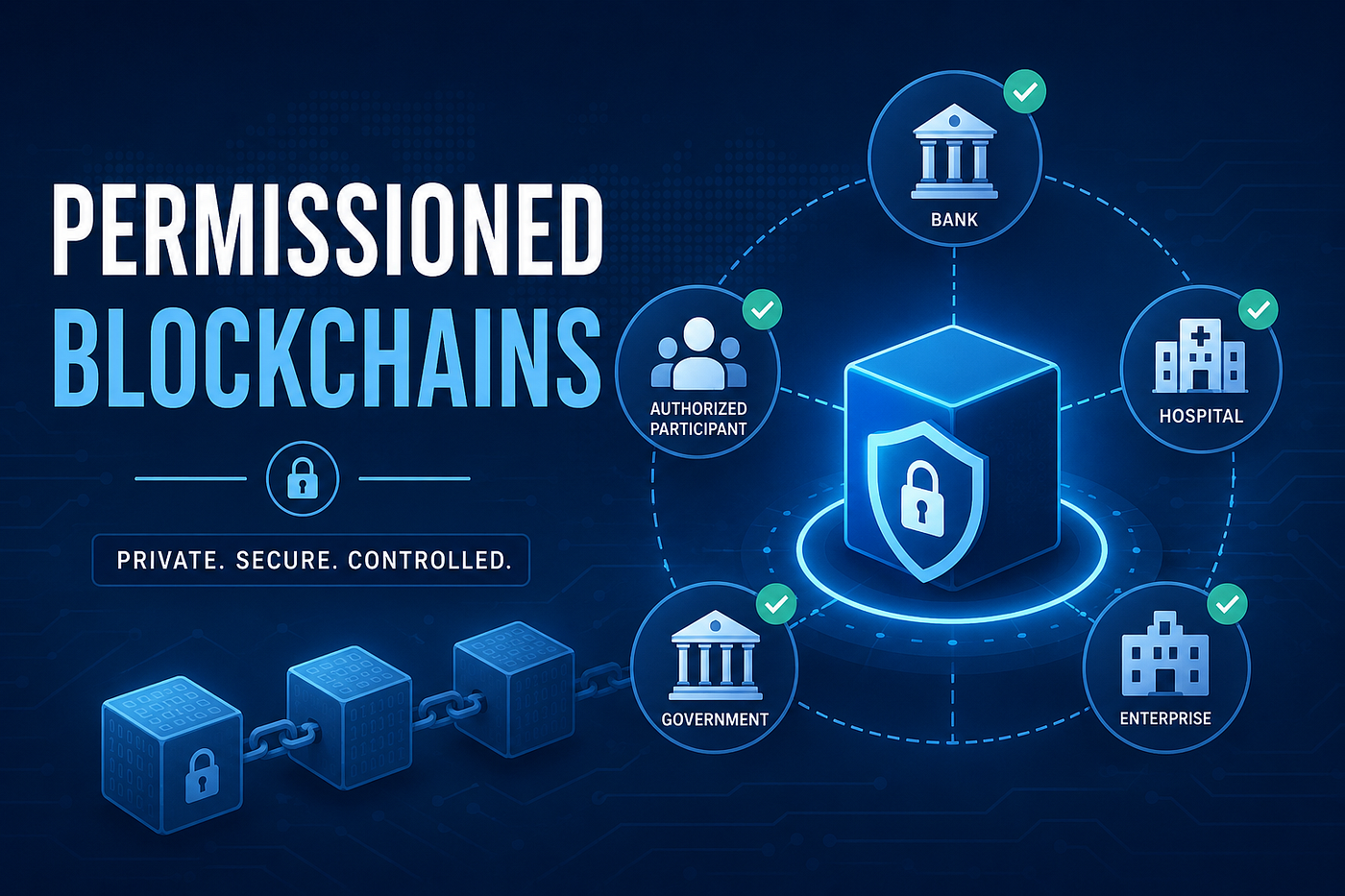
- Choose between public, private, or permissioned blockchain — Public chains offer transparency and secondary market potential. Private chains offer control and compliance. Permissioned chains balance both — ideal for most enterprise retail launches.
- Integrate wallet UX for non-crypto customers — Use custodial wallets embedded in your existing app (via providers like Magic.link, Privy, or Dynamic) so customers never see seed phrases or gas fees.
- Configure smart contracts for earning and redemption — Work with a blockchain development partner or use pre-audited smart contract templates. Ensure contracts are audited by a third-party security firm before going live.
- Connect to existing POS and CRM systems — Platforms like Salesforce Loyalty Management, Antavo, or Bakkt now offer native blockchain connectors. API-first architectures allow token minting to trigger directly from existing checkout flows.
- Launch with a clear customer education strategy — Invest in in-app tutorials, customer support training, and clear token-value calculators that translate blockchain complexity into plain language.
7. How to Implement a Token Loyalty Platform: 6-Step Guide
8. Challenges & Considerations
Regulatory landscape for loyalty tokens
Depending on jurisdiction, loyalty tokens may be classified as securities — particularly if they have speculative value or secondary market trading. Retailers operating in the EU, UK, or US must consult legal counsel familiar with MiCA, SEC digital asset frameworks, and local consumer protection laws before launch.
User experience and the Web3 literacy gap
Not all customers are crypto-native. The most successful decentralised loyalty programs abstract blockchain complexity entirely — customers experience a familiar app interface while the blockchain operates invisibly beneath. Prioritise UX over decentralisation theology.
Volatility and token value management
Tokens with real monetary value are subject to market volatility. Brands must choose between stable-value tokens (pegged to fiat) or appreciation-potential tokens (subject to market dynamics). Each carries different customer expectation management challenges.
Environmental considerations
Modern loyalty token implementations on Proof-of-Stake chains (Polygon, Ethereum post-Merge, Solana) have energy footprints orders of magnitude smaller than legacy Proof-of-Work systems. Retailers with sustainability commitments should choose PoS infrastructure and communicate this to environmentally-conscious customers.
Frequently Asked Questions
1: What are tokenized loyalty programs?
A: Tokenized loyalty programs are digital reward systems that use blockchain technology to issue, manage, and exchange loyalty points as cryptocurrency tokens or NFTs. Unlike traditional points, these tokens are owned by the customer, tradeable, and verifiable on a public ledger.
2: How do blockchain loyalty rewards work?
A: Tokenized loyalty programs are digital reward systems that use blockchain technology to issue, manage, and exchange loyalty points as cryptocurrency tokens or NFTs. Unlike traditional points, these tokens are owned by the customer, tradeable, and verifiable on a public ledger.
3: Are NFT loyalty programs better than traditional points?
A: When a customer completes a qualifying action, a smart contract automatically mints and sends loyalty tokens to their digital wallet. The transaction is recorded permanently on the blockchain. Tokens can then be redeemed, gifted, traded on secondary markets, or held as an asset.
4: Which retailers use tokenized loyalty programs?
A: NFT loyalty programs offer real monetary value, permanent customer ownership, and richer engagement mechanics. They require blockchain infrastructure, user education, and regulatory navigation. For brands targeting Gen Z and millennials with high digital literacy, NFT loyalty can dramatically outperform traditional programs.
5: Do customers need a crypto wallet to participate?
A: Starbucks (Odyssey on Polygon), Nike (via RTFKT NFT integration), Lufthansa (blockchain-based miles pilot), and Singapore Airlines (KrisPay wallet) are among the most prominent early movers as of 2025.
A: Not necessarily. The best implementations use ‘invisible’ or embedded custodial wallets managed by the brand’s platform, so customers interact through a familiar app without ever managing seed phrases, gas fees, or crypto exchanges.
Originally published at https://www.spydra.app.
메타데이터
- post_id
- 6f7eeb14d8d2
- slug
- tokenized-loyalty-programs-the-next-evolution-in-retail-customer-engagement-6f7eeb14d8d2
- url
- https://medium.com/@spydra/tokenized-loyalty-programs-the-next-evolution-in-retail-customer-engagement-6f7eeb14d8d2
- canonical_url
- https://medium.com/@spydra/tokenized-loyalty-programs-the-next-evolution-in-retail-customer-engagement-6f7eeb14d8d2
- author_url
- https://medium.com/@spydra
- status
- ok
- fetched_at
- 2026-06-12 07:40:50