WHERE STIMULUS DENSITY COLLAPSES,
THE TREE OF TRUTH EMERGES**
WHERE STIMULUS DENSITY COLLAPSES,
THE TREE OF TRUTH EMERGES**
The R – T Ascension: A Unified Theory of Reality, Recovery, and Coherence
By T. M. R. Tennakoon
R – T Series | Foundational Unified Article
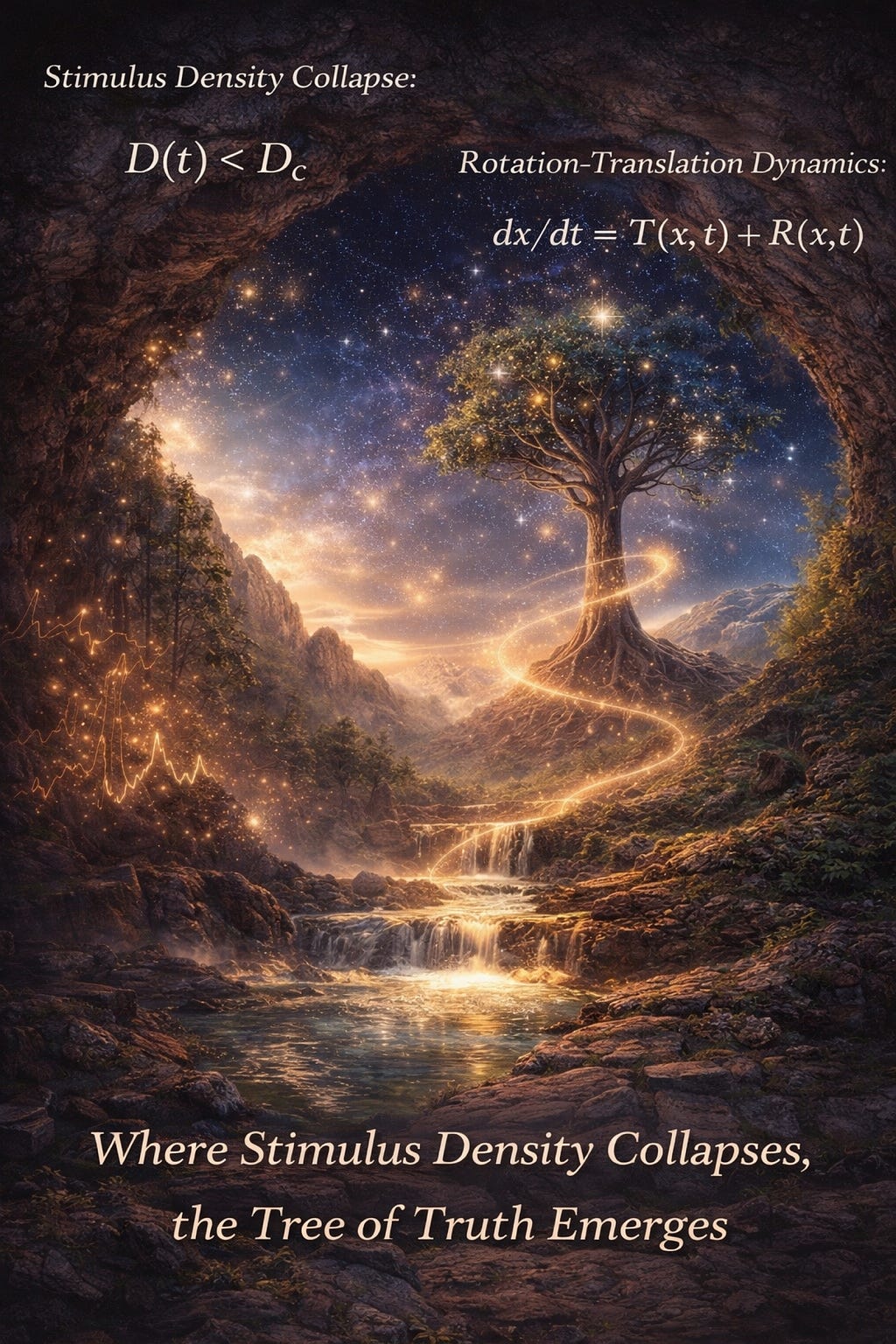
Figure 0. Where Stimulus Density Collapses, the Tree of Truth Emerges
This visual illustrates the core principle of the R – T framework. When total stimulus density D(t) falls below a critical threshold D_c, coherent structure emerges naturally without external intervention. The cave represents high-noise, survival-dominant regimes; the open landscape represents low-noise, maintenance-dominant states. The ascending path symbolizes rotation – translation (R – T) dynamics, where memory and motion remain proportionally coupled \frac{dx}{dt}=T(x,t)+R(x,t). The Tree of Truth represents hierarchical coherence across scales, from physical invariants at the root to biological, cognitive, and cosmological structure at higher levels.
Abstract
Modern science, medicine, and social systems largely assume that failure arises from internal defect, missing components, or insufficient intervention. This article advances a contrary, physically grounded thesis: most failure across scales is not damage but stimulus saturation. When environmental, informational, or operational load exceeds a system’s coherence capacity, the system enters a survival-dominant regime in which repair, integration, and optimization are suspended.
By unifying the concepts of Stimulus Density Collapse and The Tree of Truth, this work presents a scale-invariant framework explaining recovery, stability, and structure across biological, physical, social, and cosmological domains. Central to the framework is R – T coupling – the proportional balance between rotational dynamics (memory, feedback, cyclicity) and translational dynamics (motion, growth, exploration). From this invariant arise a set of coherence laws governing collapse, recovery, effective distance, time perception, and structural emergence.
Recovery is not engineered; it is revealed when interference drops below critical thresholds. Structure does not arise from force; it survives through coherence. Together, these principles form a unified theory of reality as a self-organizing, coherence-conserving system.
I. Introduction: The Persistent Error of Modern Thought
Modern civilization shares a quiet assumption:
That breakdown occurs because something inside a system is broken.
Across medicine, economics, education, ecology, and even physics, the dominant response to failure is intervention – more input, more control, more force. Yet this assumption increasingly conflicts with observed reality.
Biological organisms fall ill not when parts are missing, but when recovery capacity is exceeded. Societies destabilize not from lack of intelligence, but from informational overload. Technologies fail not because components vanish, but because operational noise overwhelms integration bandwidth.
This article advances a single unifying premise:
Most failure is not damage. It is stimulus saturation.
When stimulus density exceeds a system’s coherence limits, the system predictably shifts from maintenance to survival. What appears as dysfunction is often a reversible phase state. When interference falls below a critical threshold, regulation resumes automatically.
By unifying Where Stimulus Density Collapses with The Tree of Truth – R – T Ascension Edition, this article presents a coherent framework explaining why recovery, stability, and structure emerge naturally once noise is removed.
II. Stimulus Density Collapse: A Physical Model of Recovery
Living systems are not static machines. They are dynamic coherence systems balancing energy flow, information processing, and temporal rhythm.
Every coherent system is constrained by three finite limits:
• a finite recovery timescale
• a finite integration capacity
• a finite tolerance to stimulus variance
When the combined stimulus load – acoustic, photonic, thermal, chemical, cognitive – exceeds these limits, the system undergoes a phase transition. Resources are diverted away from repair, memory, and optimization toward immediate survival.
This state is often labeled illness, burnout, or failure.
From a physical perspective, it is neither abnormal nor pathological.
It is predictable.
When stimulus density drops below a critical threshold, the reverse transition occurs:
• internal regulation resumes
• repair processes reactivate
• coherence re-establishes itself without external force
Recovery, therefore, is not manufactured.
It is revealed when noise is removed.
III. R – T Dynamics: The Universal Condition for Stability
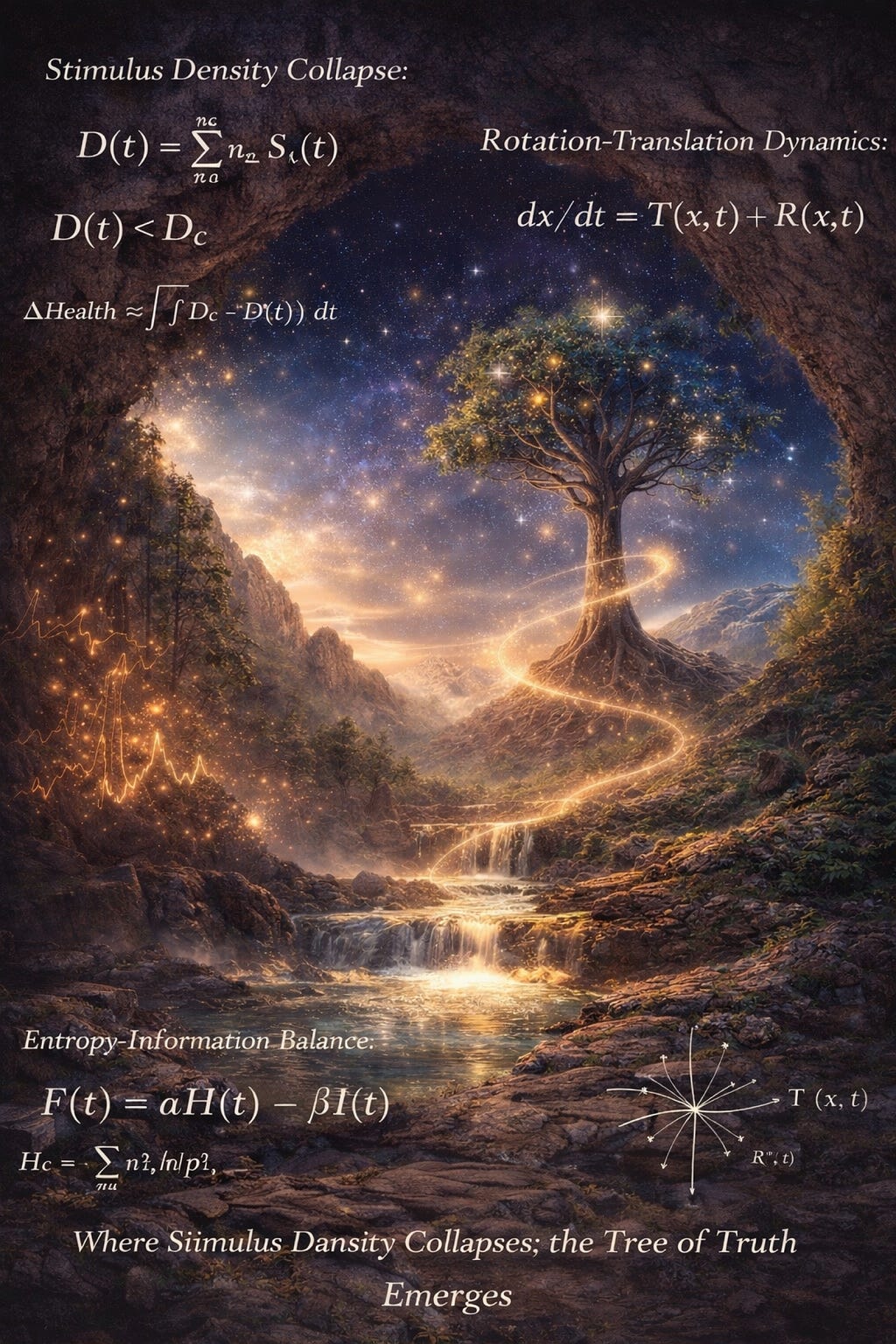
Figure 1. The Coherence Landscape and the R – T Stability Regime
This figure expands the R – T framework by illustrating the full coherence landscape under stimulus density regulation. The left region represents high-noise, high-entropy conditions where total stimulus density D(t) exceeds the critical threshold D_c, forcing systems into survival-dominant regimes. As stimulus density collapses below D_c, a phase transition occurs and coherence re-emerges. The ascending path and spiral geometry visualize rotation – translation (R – T) dynamics \frac{dx}{dt}=T(x,t)+R(x,t), while the Tree of Truth represents hierarchical stability across scales, from physical invariants to biological, cognitive, and cosmological organization. Entropy – information balance governs the transition between disorder and structure.
At the foundation of this framework lies a single invariant: R – T coupling.
All stable systems exhibit two simultaneous modes of motion:
Rotation (R)
Memory, feedback, cyclicity, conservation, rhythm
Translation (T)
Motion, propagation, growth, exploration
Neither mode alone is sufficient.
• Pure translation disperses structure.
• Pure rotation arrests evolution.
Stability exists only when rotation and translation remain proportionally coupled.
This principle governs:
• atomic and orbital systems
• biological rhythms
• learning and memory
• ecological balance
• societal continuity
R – T dynamics are not symbolic or metaphorical.
They are structural requirements of persistence.
IV. The Tree of Truth: Hierarchical Architecture of Reality
Reality organizes itself through coherence, forming a hierarchical structure best described as the Tree of Truth.
Roots – Coherence Fields
At the deepest level exist pre-geometric coherence fields. These are informational rather than material. Space, time, and matter emerge from their internal structure rather than containing them.
Trunk – Invariants and Constraints
From these fields arise stable invariants: symmetry, conservation, proportional R – T balance. These are not imposed laws, but configurations that survive coherence filtering.
Branches – Exploratory Complexity
Stars, organisms, ecosystems, and civilizations form branches extending into solution space. Growth occurs only while connection to invariant structure is maintained.
Leaves – Interfaces of Meaning
At the outermost layer, energy becomes information and information becomes experience. Consciousness emerges not as a substance, but as a coherence-monitoring interface between internal state and external reality.
The Tree does not grow by force.
It grows by alignment.
V. Fundamental Laws of Coherence Physics
From the unified R – T framework emerge a class of physical laws governing organization and stability across scale.
Law I: The Law of Coherence Conservation
Statement:
In a closed system, total coherence is conserved, though it may transform between structural, informational, and dynamic forms.
Expression:
d/dt (Cₛ + Cᵢ + C𝒹) = 0
Interpretation:
Coherence cannot be destroyed. Apparent disorder represents coherence displaced into inaccessible configurations.
Law II: The Stimulus Density Threshold Law
Statement:
Every coherent system possesses a maximum stimulus density beyond which repair and integration cease.
Expression:
Φ = S / (τ · R)
Coherence collapses when Φ > Φᶜ.
Interpretation:
Collapse is a threshold phenomenon, not structural failure. Reducing stimulus density restores function.
Law III: The R – T Stability Law
Statement:
A system remains stable if and only if rotational coherence remains proportional to translational expansion.
Expression:
R / T = k
Interpretation:
Growth without memory destabilizes. Memory without motion stagnates.
Law IV: The Effective Distance Law
Statement:
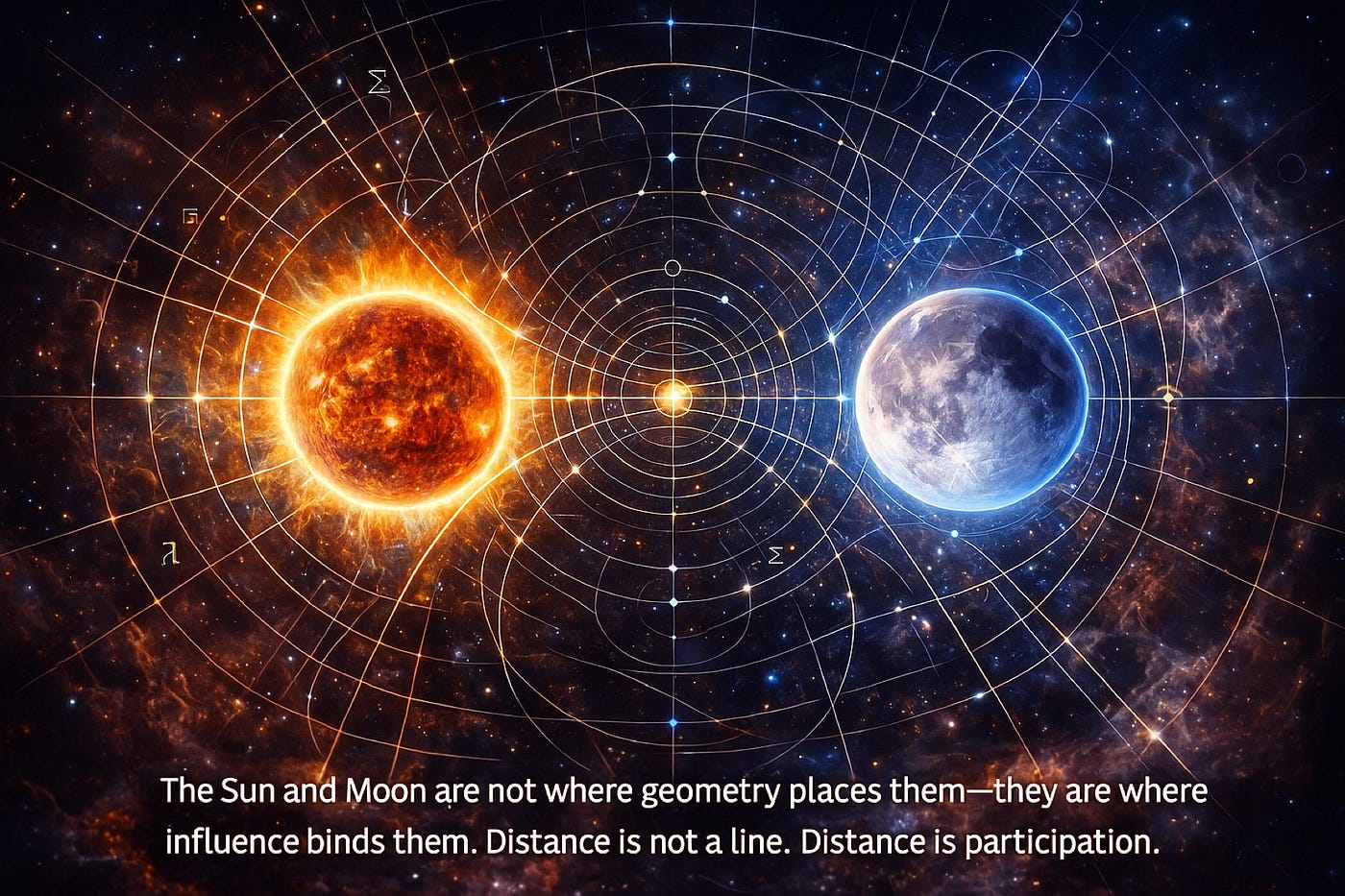
Effective distance between systems depends on coherence alignment, not geometry.
Expression:
Dₑff = d / Γ
Interpretation:
Interaction strength is governed by coherence compatibility.
Law V: The Law of Coherence-Driven Time
Statement:
Experienced time is inversely proportional to internal coherence density.
Expression:
Δtₑxp = Δt / C
Interpretation:
High coherence slows experienced time; low coherence accelerates it.
Law VI: The Silence Principle
Statement:
No new structure can emerge when stimulus variance exceeds coherence bandwidth.
Expression:
If σ²ₛ > Bc, emergence is suppressed.
Interpretation:
Silence is a physical prerequisite for creation, healing, and insight.
VI. Implications Across Scale
Applied universally, the same conclusion emerges:
• Illness is stimulus saturation
• Social collapse is coherence overload
• Environmental failure is boundary violation
Intervention fails when it increases complexity rather than restoring balance.
The universal solution is coherence restoration, not force.
VII. Conclusion: The Enduring Invariant
When stimulus density collapses, coherence becomes visible.
When coherence returns, structure follows naturally.
Across all scales of existence, one invariant remains:
Rotation and Translation, properly balanced, sustain reality.
Everything else is noise.
About the Author

T. M. R. Tennakoon is an independent researcher and theorist working at the intersection of physics, biology, consciousness, and systems theory. He is the originator of the R – T Framework, a unified coherence-based model exploring how stability, recovery, and structure emerge across scales – from cellular regulation to cosmological organization.
His work challenges intervention-centric models of science and medicine by emphasizing boundary conditions, noise reduction, and invariant dynamics as the true drivers of healing and persistence. The R – T Series represents an ongoing body of foundational research aimed at reframing reality not as a collection of isolated mechanisms, but as a coherence-conserving system governed by universal principles.
메타데이터
- post_id
- 6f7f6e0c542a
- slug
- where-stimulus-density-collapses-6f7f6e0c542a
- url
- https://medium.com/@ro317/where-stimulus-density-collapses-6f7f6e0c542a
- canonical_url
- https://medium.com/@ro317/where-stimulus-density-collapses-6f7f6e0c542a
- author_url
- https://medium.com/@ro317
- status
- ok
- fetched_at
- 2026-06-10 08:17:25