Essential Guide | Loire Valley — Everything You Need to Know
“Les bords de la Loire, si riches en aspects divers, me frappaient par leur douceur majestueuse; les longues lignes de peupliers, les eaux…
Essential Guide | Loire Valley — Everything You Need to Know
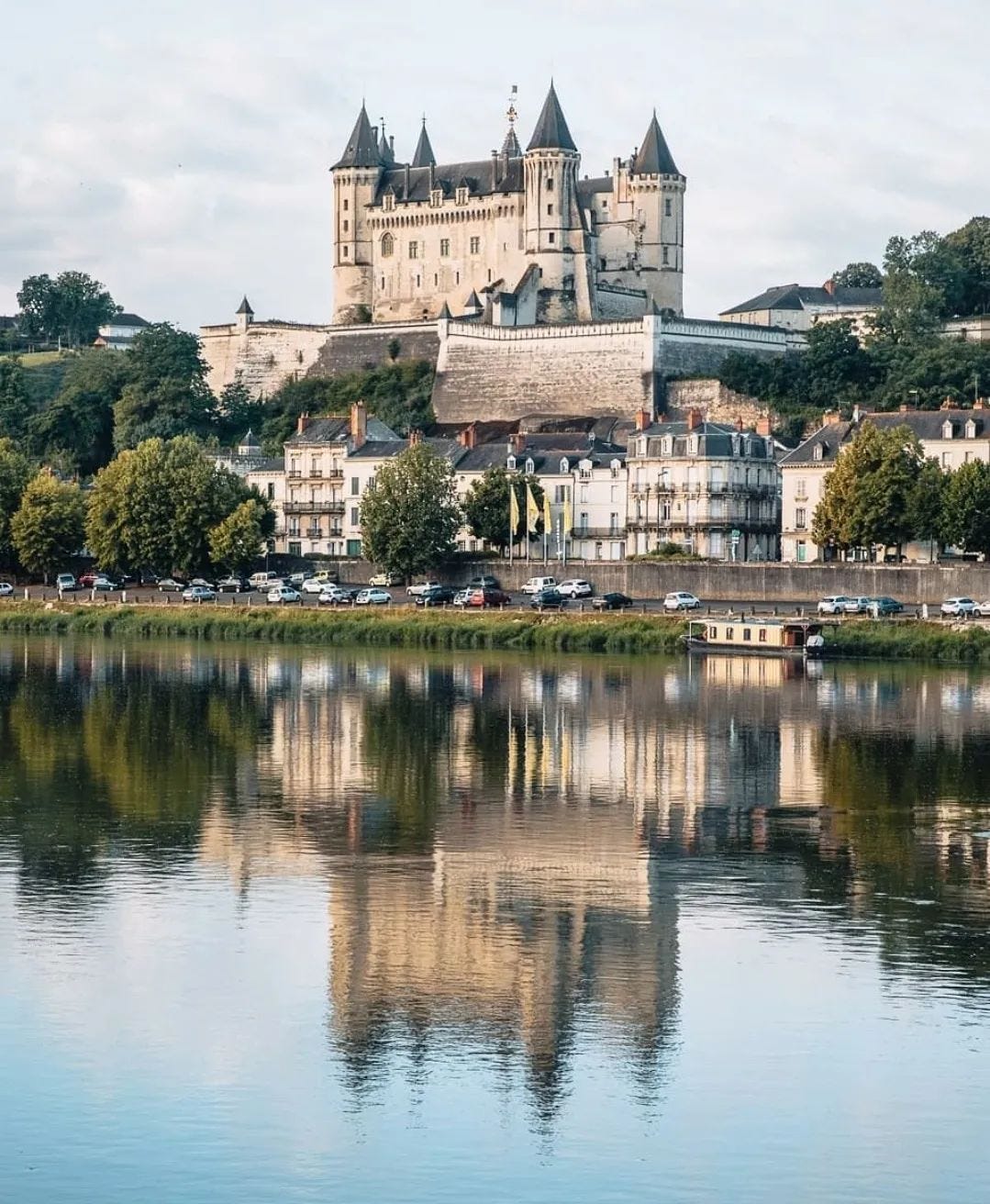
“Les bords de la Loire, si riches en aspects divers, me frappaient par leur douceur majestueuse; les longues lignes de peupliers, les eaux vives courant entre les îles verdoyantes, les moulins rustiques, tout cela formait un tableau vivant sous mes yeux émerveillés.(FR)
The banks of the Loire, so rich in varied aspects, struck me with their majestic softness; the long lines of poplars, the lively waters flowing between verdant islands, the rustic mills — all this formed a living picture before my astonished eyes.(EN)”
— Honoré de Balzac | The Lily of the Valley

Source: trybuszon
The Loire Valley, spanning much of France, is viticulturally segmented from west to east into Lower Loire, Middle Loire, and Centre-Loire. The terroir shifts from the oceanic-influenced western reaches to the distinctly continental eastern inland zones.


From west to east, the maritime climate’s influence wanes, giving way to a stronger continental climate across the terroir.”
The climatic diversity and varied soils of the region give rise to a rich array of wine styles: white wines, rosés, reds, sweet wines, and sparkling wines — most characterized by moderate alcohol levels, crisp acidity, and a refined minerality. The majority of winemakers eschew new oak fermentation and aging, allowing the wines to preserve their authentic flavors and offer a precise, faithful expression of the local terroir. Coupled with exceptional value, this has drawn renewed attention from importers, sommeliers, and wine critics to a region that once shone brilliantly in the Middle Ages.

Loire Valley
Today, the Loire Valley stands as France’s third-largest still wine region, following Bordeaux and the Rhône Valley, and ranks as the second-largest sparkling wine region after Champagne.
#1 HISTORY OF THE LOIRE VALLEY
The Loire Valley not only enjoys a stellar reputation in the wine world but also plays a profoundly significant role in European history, having been the stage for numerous earth-shattering historical events. Below, let’s briefly delve into the past and present of the Loire Valley.
The Earliest Emergence of Winemaking
The history of this region dates back to the 1st century AD, when the Romans arrived in what is now the Loire Valley. They discovered a refreshingly temperate climate, ideal for cultivating a variety of grape types, thus initiating the chapter of viticulture and winemaking in the area.
The Rise of Anjou
During the Middle Ages, the region came under the rule of the formidable Duke of Anjou, Geoffrey Plantagenet — also known as “Geoffrey the Handsome” — the renowned founder of the Plantagenet Dynasty.
Following Geoffrey’s death, his son Henry succeeded him as the ruler of the Plantagenet Dynasty. In the second year of his reign, Henry married another profoundly significant figure in European history — Eleanor, the Duchess of Aquitaine.
With this union, the powerful and prosperous Duchy of Aquitaine joined the Plantagenet fold. Henry subsequently inherited his father’s title as Duke of Normandy, continuing to govern the northern regions, before ascending to the English throne in 1153 as King Henry II.
The Golden Age of the Loire Valley
After Henry II’s ascension, British rule in France reached an unprecedented peak. The wines of Anjou, basking in the royal spotlight, gradually found their way onto the tables of palaces and nobility, becoming a favored choice of the royal court.
This surge in prestige catalyzed the region’s winemaking and trade, propelling them to new heights.
Over nearly a millennium, the leaders of England and France made significant contributions to the development and dissemination of wines from Anjou, and indeed the entire Loire Valley.
The fervent royal endorsement elevated the value of these wines, surpassing even those of Bordeaux at the time.

Folle Blanche Grape
A New Market in the 17th Century
By the 17th century, the Loire Valley emerged as a primary wine supplier for the Dutch, who extensively planted white grape varieties such as Muscadet and Folle Blanche to meet their demand for producing Brandewijn (brandy).
Decline After the Peak
In the 19th century, the development of France’s railway system enabled Loire Valley wines to be distributed nationwide, with trade reaching an unprecedented peak.
However, misfortune soon struck. In the late 1880s, the phylloxera epidemic that ravaged Europe also reached the Loire Valley, destroying most of the vineyards. Many vintners resorted to planting lower-quality hybrid grape varieties to combat pests, while others abandoned viticulture altogether.
The region’s vineyard area, now around 124,000 acres (50,200 hectares), has significantly diminished, roughly half the size of Bordeaux’s.
The Resurgence of Loire Wines
In 1935, France established the Appellation d’Origine Contrôlée (AOC) system for wine origin protection. The Loire Valley’s sub-regions secured a substantial number of AOC designations, ushering in a second golden age for the region. Once again, it reclaimed its place in the spotlight as a premier producer of fine wines.
France’s Premier Tourist Destination
The Loire Valley, a cradle of ancient French civilization, boasts a rich history and an abundance of cultural landmarks.
In 2000, UNESCO designated the region a World Cultural Heritage site, cementing its status as France’s top tourist destination.
The renowned French military leader and statesman General Charles de Gaulle once described this, the longest river in France, as the birthplace of the French spirit and the cradle of celebrated French artists and writers such as Leonardo da Vinci, Balzac, and Dumas.
Captivated by its breathtakingly picturesque landscapes, French nobility built castles here as retreats, indulging in the region’s fine wines and enchanting scenery. To this day, several magnificent and elegant castles remain as enduring testaments to this legacy.

#2 Climate and Geography
The Loire River originates at the volcanic peaks of the Central Plateau in central France, traversing much of the country before emptying into the Atlantic Ocean, making it the longest river in France.
The entire Loire Valley wine region is situated along both banks of the river, bordered to the north by Normandy, to the south by Cognac, and extending eastward to Burgundy and the Massif Central Mountain Ranges.
This vast west-to-east expanse of the Loire Valley results in a diverse range of climate types across the region, which can be broadly categorized as follows:
- Pays Nantais: Predominantly oceanic climate (influenced by the Atlantic and the Gulf Stream).
- Anjou-Saumur & Touraine: A blend of oceanic and continental climate influences, characterized by frequent storms, humid conditions, as well as notable diurnal temperature swings and distinct seasons.
- Centre-Loire: Primarily continental climate, with significant diurnal temperature variations and well-defined seasons.
The region generally lies at a high latitude with a cool climate, sitting at the very edge of the minimum temperature required for native grape varieties to ripen — a factor that poses significant challenges to fruit maturation. Consequently, the finest vineyards are almost always located on sun-drenched slopes with optimal exposure.
While this extreme climate can be a headache for many vintners, and vintage variations impact grape quality more noticeably here than in other regions, it is precisely this challenge that gives the Loire Valley the potential to produce truly great wines. The resulting elegance, vibrancy, bright acidity, and precise flavors are uniquely its own.
Although the Loire Valley is already a world-renowned wine region, beyond the celebrated sub-regions of Sancerre and Pouilly-Fumé, wines from its other sub-areas have yet to gain widespread recognition and appreciation. A considerable number of exceptional winemakers in these lesser-known areas still await discovery.
#3 Loire Valley Sub-Regions
We will explore the sub-regions of the Loire Valley in a west-to-east order, from the Pacific coast to the French interior.

Lower Loire
Pays Nantais
Key Varietals: Melon de Bourgogne Dominant Soil Types: Gneiss / Igneous Rock
Millions of years ago, this was an active volcanic zone. The appellation radiates like a fan from its epicenter, the city of Nantes, stretching east, west, and south.
Bordering the Atlantic coast, the region is plagued by dampness, abundant rainfall, and insufficient sunlight — conditions hardly favorable for optimal grape ripening. Thus, chaptalization (the addition of sugar during winemaking) is legally permitted when necessary.

Pays Nantais Vineyard
Subregion 1. Muscadet-Sèvre-et-Maine Named after the Sèvre and Maine rivers that meander through its terrain, this zone accounts for approximately 75% of the region’s production.
Some poetically describe it as “an ocean of vines” — with 12,100 hectares under cultivation, yields are prodigious, though most wines exhibit rather subdued flavor profiles. The wines are predominantly dry, often fermented in stainless steel tanks to achieve a crisp style that pairs exquisitely with local seafood.
The finest cuvées employ *sur lie** aging (a term frequently highlighted on labels), yielding wines with enhanced roundness and complexity.
“Like adding baby fat to a lean frame — sometimes with a whisper of effervescence.”——《Wine Bible》
Sur lie: Post-fermentation, the wine remains in contact with spent yeast lees until bottling. As yeast cell walls decompose, mannoproteins release glycoprotein molecules, imparting complex aromas of buttered toast and a creamy, velvety texture.
Middle Loire
ANJOU-SAUMUR
Key Varietals: Cabernet Franc / Chenin Blanc Soil Types: Diverse, primarily dark schist and a composite limestone known as Tuffeau — a blend of clay, gravel, and shale.
Undoubtedly the most captivating region of the Loire Valley, Anjou-Saumur boasts a mosaic of sub-appellations and soil types that yield wines of astonishing diversity. From rosé to robust reds, bone-dry whites to luscious dessert wines — even sparkling wines second only to Champagne — this is where the Loire’s soul truly shines.
Let us journey west to east through its crown jewels:

Subregions:
1. Savennières
Perched on the Loire’s right bank, this hallowed ground is synonymous with dry Chenin Blanc (though scant off-dry exceptions exist). Its wines are taut, laser-focused, and pulsating with vibrant acidity and flinty minerality. With age, they unfurl layers of honeyed citrus, crème pâtissière, and beeswax — a masterclass in Chenin’s transcendent potential.


▲ Savennières terroir map
These whites possess some of France’s most formidable aging potential. Visionary vignerons often cellar their finest cuvées for 15–20 years before release, allowing the wines to reveal their zenith: a kaleidoscope of tertiary nuances earned through patient evolution.
2. Quarts de Chaume • Coteaux du Layon • Bonnezeaux
These legendary subzones are temples of Botrytis-kissed Chenin Blanc. Quarts de Chaume, crowned as a Grand Cru, stands peerless — a nectar of mythical prestige.
The finest vineyards cling to steep riverside slopes of schist, where microclimates conspire for perfection: morning mists coax noble rot, while afternoon sun arrests its spread.

▲ Vineyards veiled in dawn mist
Such alchemy births ethereal wines — weightless yet profound, where Chenin’s razor-sharp acidity pirouettes with residual sugar. Each sip unfolds like a Baroque concerto: a harmony of apricot, saffron, and liquid limestone.
3. Anjou
Once the darling of royal courts, Anjou now seduces with Rosé d’Anjou — a semi-dry blush from the local Grolleau grape. Chilled to perfection, its gluggable charm (“gulp-gulp-gulp”) is irresistible.


▲ Rosé d’Anjou
For deeper hues, seek Cabernet d’Anjou (from Cabernet Sauvignon). By law, these rosés must be off-dry to sweet, often carrying Cabernet’s signature pyrazine lift (think crushed green peppercorns).
Yet to pigeonhole Anjou as rosé territory would be sacrilege. It’s the Loire’s most underrated gem, where pioneering vignerons craft:
- Chenin Blanc dry whites of chiseled brilliance
- Cabernet Franc/Cabernet Sauvignon reds with graphite grip and violet allure
4. Saumur
Famed for its sparkling wines, Saumur offers three distinct styles:
- Crémant de Loire France’s premier non-Champagne bubbly. Hand-harvested, gently pressed, and made via Méthode Traditionnelle (Champagne’s protocol), with ≥12 months sur lieaging + 1 month post-disgorgement rest.
- Mousseux (“Frothy”) Also traditional method, but with looser yield restrictions and ≥9 months lees contact.
- Pétillant (“Fizzy”) Half the pressure of Crémant — a delicate, featherlight sparkler for effortless sipping.
Middle Loire

TOURAINE
Key Varietals: Cabernet Franc / Chenin Blanc Soil Types: Tuffeau (the composite limestone mentioned earlier), Perruche (flint and clay), Aubuis (limestone and clay)
Venturing eastward into the continental heartland, centered around the city of Tours, this region is hailed as “The Garden of France.” Here, amidst landscapes that inspired Renaissance châteaux and made the Loire Valley a UNESCO treasure, the climate shifts subtly — marine influences wane, yielding to more pronounced continental traits.
This transition creates an idyllic stage for red grape cultivation, producing the Loire’s most distinguished dry reds (though exceptional whites still shine).
Subregions:
1. Chinon
Marking the climatic frontier where oceanic breezes retreat, Chinon’s terroir dances on three soils:
- Gravel & Sandstone: Best for Cabernet Franc, coaxing opulent fruit and perfumed intensity.
- Chalk: Reserved for rare whites, electrified by razor-shright acidity.
2. Bourgueil & Saint-Nicolas-de-Bourgueil
A Cabernet Franc sanctuary, crafting reds and rosés of startling depth. Occasional gems from Sauvignon Blanc, Gamay, or Côt (Malbec’s local alias) surprise with value.
Terroir’s Duality:
- Gravel/Sandstone Plains: Wines of sun-warmed generosity — blackberry compote, tobacco leaf, and plush tannins.
- Northern Tuffeau Slopes: Wines with alpine freshness — cranberry vivacity, crushed-stone minerality, and a finish that hums with acidity.
Here, soil writes the script: one appellation, two voices — both singing Cabernet Franc’s glory.
3. Vouvray & Montlouis-sur-Loire


While the central Loire is celebrated for its reds, it also boasts one of France’s most iconic white wine appellations: Vouvray. Along with its “sister” region Montlouis-sur-Loire, these twin terroirs are the purest expressions of Chenin Blanc — a grape that achieves dazzling versatility here.
Vouvray occupies prime real estate on the Loire’s right bank, directly facing Montlouis-sur-Loire across the river.
The Coolest Climate in the Loire
- One of the valley’s chilliest zones, with harvests stretching into November — among Europe’s latest.
- Soils dominated by Tuffeau limestone, historically quarried for château construction. The abandoned caves now serve as natural cellars, perfect for aging wines.
Wine Styles: From Ethereal to Unctuous
Vouvray’s wines are often described as “weightless yet intense” — shimmering with flavors of quince, honeycomb, and wet stone. The region’s delicate balance of sunlight and humidity fosters noble rot (Botrytis), yielding:
- Bone-dry (Sec) → Flinty, tense, age-worthy
- Off-dry (Demi-Sec) → Lush orchard fruits, kissed by residual sugar
- Sweet (Moelleux/Liquoreux) → Liquid gold, with botrytized layers of apricot and saffron
Chenin’s razor-sharp acidity ensures even the sweetest wines remain vibrant and balanced, with decades of aging potential.
Sparkling Wines: Tradition in Bubbles
Vouvray also produces:
- Pétillant (lightly fizzy)
- Mousseux (traditional method, ≥12 months sur lie) These sparklers showcase Chenin’s citrus-zest energy, often with a whisper of chalky minerality.
Montlouis-sur-Loire: The Understudy
Though less famed than Vouvray, Montlouis crafts similar styles — some producers rival their right-bank neighbors. Its Pétillant/Mousseux require slightly shorter lees aging but share the same lively precision.
Central Loire Valley

Key Varietals: Sauvignon Blanc Soil Types: Flint (Silex) → Electric minerality, gunflint smokiness; Terres Blanches (Kimmeridgian clay, akin to Chablis) → Depth and lush texture; Caillottes (limestone gravel) → Zesty citrus and white flower aromatics
When Sauvignon Blanc whispers its name in France, two appellations answer first: Sancerre and Pouilly-Fumé. Here, the Loire’s climate shifts decisively continental — with sharp seasonal swings, crisp air, and the ever-present risk of frost during budbreak and harvest.
Yet this very adversity forges the world’s most visceral Sauvignon Blanc:
- Unbridled (true to “Sauvignon” — from “sauvage”, meaning wild)*
- Steely (flint-sharp acidity)
- Smoky (gunpowder and crushed herbs)
- Pungent (gooseberry, grapefruit pith, elderflower)
The wines don’t just express terroir — they howl it.
Sancerre
“We don’t craft Sauvignon Blanc — we craft Sancerre.”
With artisanal pride, local vignerons express this terroir’s singularity. Undeniably one of the world’s greatest Sauvignon Blanc appellations, Sancerre’s wines are razor-edged, pulsing with crushed flint minerality — and to some, a hint of that infamous “cat’s pee”vibrancy (a hallmark of the grape’s thiol compounds).
Yet Sancerre also surprises with:
- Pinot Noir reds & rosés: Silken-textured, perfumed with plum and wild cherry, a whisper of Burgundian finesse.
Pouilly-Fumé
“Fumé” — French for “smoked” — aptly defines these wines.
Exclusively white (from Sauvignon Blanc), they thrive on:
- Limestone laced with flint (Silex) → Gunpowder smokiness, laser-like precision.
- Gravel soils → Lighter, fruit-driven styles (think passionfruit and lime zest).
- Clay-limestone (Terres Blanches) → Rounded, textural wines with honeysuckle weight.
After decades of Bordeaux mania and Burgundy worship, discerning drinkers and critics are finally turning their gaze to the Loire. Thanks to the relentless dedication of its vignerons, these wines — once overlooked — are now poised to lead the next revolution in terroir-driven excellence.
메타데이터
- post_id
- 6f9a706ef77a
- slug
- essential-guide-loire-valley-everything-you-need-to-know-6f9a706ef77a
- url
- https://medium.com/@w_qiran/essential-guide-loire-valley-everything-you-need-to-know-6f9a706ef77a
- canonical_url
- https://medium.com/@w_qiran/essential-guide-loire-valley-everything-you-need-to-know-6f9a706ef77a
- author_url
- https://medium.com/@w_qiran
- status
- ok
- fetched_at
- 2026-07-20 11:31:48