The Healing Potential of AI: Transforming Mental Health in the Digital Age
The Healing Potential of AI: Transforming Mental Health in the Digital Age
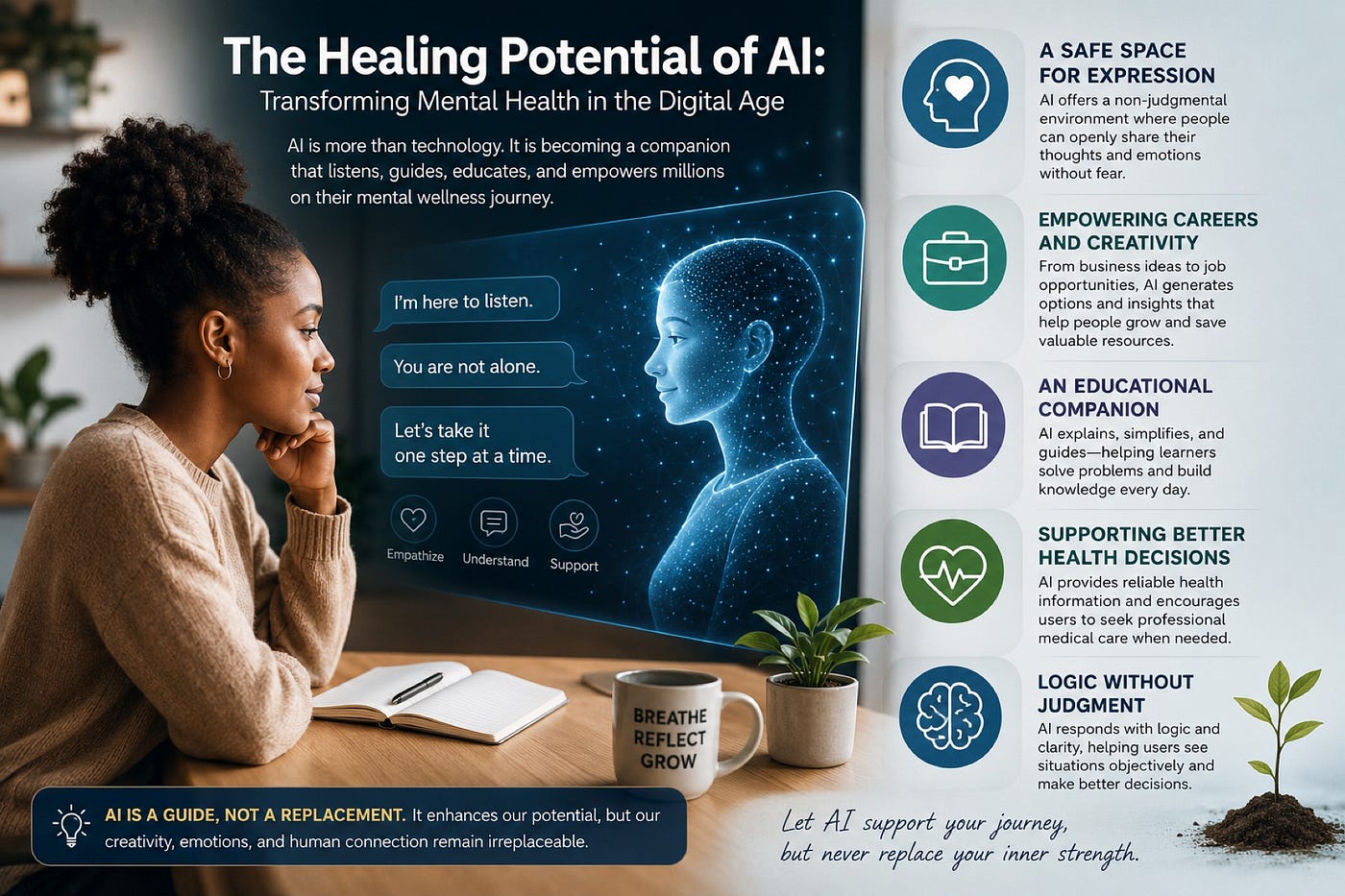
Introduction
The human mind is one of the most complex aspects of our existence. No one understands a person’s thoughts, fears, and emotions better than the individual experiencing them. This is why we often hear people say, “You won’t understand me.” Until our thoughts are expressed, they remain known only to us.
Sharing those thoughts, however, requires trust. Trust determines how much of ourselves we are willing to reveal. Because human relationships are often unpredictable, many people choose to withhold parts of their stories. Friendships have ended because of broken trust, businesses have suffered from breaches of confidence, and countless individuals have experienced the pain of being judged after opening up.
Despite these risks, the need to be heard never disappears. People still seek someone or something to listen. In recent years, Artificial Intelligence has emerged as an unexpected companion, providing millions with a space to express themselves without the immediate fear of criticism or rejection.
AI as a Safe Space for Expression
One of AI’s most remarkable contributions is the emotional comfort it can provide. While it cannot replace genuine human relationships or professional mental health care, it offers many people a non-judgmental environment where they can organize their thoughts and express difficult emotions.
I have personally experienced this. There have been moments when I shared my worries and frustrations with AI and felt a sense of relief afterward. The experience was different from speaking to another person because I did not have to worry about being misunderstood, judged, or regretting that I had shared too much. For many users, AI serves as a private space for reflection rather than a substitute for meaningful human connection.
Empowering Careers and Creativity
Beyond emotional support, AI has become a valuable tool for professional growth. Entrepreneurs, students, writers, and job seekers increasingly rely on AI to generate ideas, refine business concepts, and explore career opportunities.
Instead of spending significant amounts of money on consultations or brainstorming sessions, users can receive numerous suggestions within seconds, allowing them to evaluate different possibilities before making decisions. While AI should never replace human expertise, it can significantly reduce the barriers to accessing information and inspiration.
AI as an Educational Companion
Artificial Intelligence has also transformed the way people learn.
When I experienced problems with my laptop, ChatGPT became my first source of guidance. It explained the possible causes of the issue and suggested practical troubleshooting steps. Although the final repair required a technician, AI helped me better understand the problem before seeking professional assistance.
This educational role extends far beyond technology. Students use AI to simplify difficult concepts, professionals learn new skills more efficiently, and lifelong learners gain instant access to explanations across countless fields of knowledge.
Supporting Better Health Decisions
AI is increasingly becoming a helpful source of basic health information. It can explain symptoms, suggest possible causes, and recommend general self-care measures.
However, one of its greatest strengths is recognizing its limitations. Responsible AI consistently encourages users to seek evaluation from qualified medical professionals for diagnosis and treatment. Rather than replacing healthcare providers, AI acts as a guide that helps people make more informed decisions about their health.
Logic Without Judgment
Human beings naturally respond through emotions, experiences, and personal biases. While empathy is one of humanity’s greatest strengths, emotions can sometimes lead to misunderstanding or judgment when someone shares deeply personal experiences.
AI approaches conversations differently. It processes information logically, offering structured responses based on available information rather than personal opinions or emotions. This allows many users to explore difficult situations objectively before deciding how to move forward.
The Need for Balance
Despite its remarkable capabilities, AI should never become a replacement for human thinking. It was created through the creativity, intelligence, and innovation of people. Its purpose is to enhance human potential not diminish it.
Overdependence on AI can discourage independent thinking and problem-solving. The healthiest approach is to use AI as a guide, a learning companion, and a productivity tool while continuing to develop our own knowledge, creativity, and critical thinking skills.
Conclusion
Artificial Intelligence is transforming more than industries, it is transforming lives. From providing emotional support and educational assistance to encouraging creativity and improving access to information, AI has become a powerful companion in the digital age.
Yet its greatest value lies not in replacing human intelligence, relationships, or professional expertise, but in complementing them. Used responsibly, AI has the potential to reduce feelings of isolation, empower informed decision-making, and help people navigate life’s challenges with greater confidence.
The future of AI should not be measured by how much it can do for humanity, but by how effectively it helps humanity become stronger, wiser, and more connected.
메타데이터
- post_id
- 6faf99d75e9a
- slug
- the-healing-potential-of-ai-transforming-mental-health-in-the-digital-age-6faf99d75e9a
- url
- https://medium.com/@covenantudofe/the-healing-potential-of-ai-transforming-mental-health-in-the-digital-age-6faf99d75e9a
- canonical_url
- https://medium.com/@covenantudofe/the-healing-potential-of-ai-transforming-mental-health-in-the-digital-age-6faf99d75e9a
- author_url
- https://medium.com/@covenantudofe
- status
- ok
- fetched_at
- 2026-08-08 01:43:18




