The Night I Googled “How to Force Yourself to Sleep” at 4am
And What I Learned From It
The Night I Googled “How to Force Yourself to Sleep” at 4am
And What I Learned From It

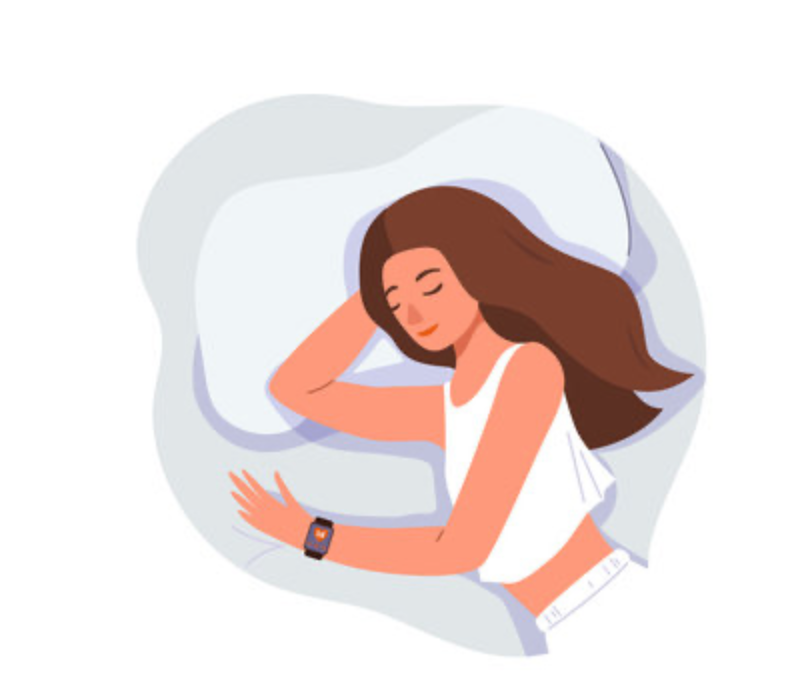
Photo by Marcus from Pexels
A different way of thinking about insomnia that actually worked.
It was 4:17am.
I’d been awake since 1am. I had a presentation at 9am. I had tried everything I knew — melatonin, chamomile tea, a podcast, deep breathing, counting backwards from 300.
Nothing.
So I did the thing everyone does at 4am when they can’t sleep: I picked up my phone and Googled “how to force yourself to sleep.”
Which, as you can imagine, did not help.
What I found instead were 47 different articles all saying variations of the same things I’d already tried. Avoid caffeine. Sleep in a dark room. Try meditation. Limit screen time.
I knew all of this. I’d been trying all of this. It wasn’t working.
Lying there at 4am, phone glowing in the dark, I had a thought that I’ve come back to many times since:
What if sleep isn’t something you can force? What if the whole way I’m thinking about this is wrong?
The forcing problem
Here’s what I was doing wrong, and what I think most people with insomnia are doing wrong:
I was treating sleep like a task to complete.
I would get into bed and try to sleep. Try being the key word.
When I couldn’t sleep, I would try harder. I would lie very still. I would control my breathing. I would try to clear my mind.
Trying to sleep is like trying to sneeze. The moment you make it an effort, it doesn’t happen. Sleep has to arrive — you can’t chase it down.
The problem was not that I wasn’t trying hard enough. The problem was that I was trying at all.
But there’s a deeper issue underneath that.
The reason I was trying so hard was that I was afraid. Afraid of another sleepless night. Afraid of being exhausted tomorrow. Afraid that something was wrong with me.
That fear — that quiet, persistent dread of bedtime — was generating cortisol. Cortisol is a wake hormone. I was chemically preventing my own sleep by being afraid of not sleeping.
Understanding this loop changed how I approached the problem entirely.
What you can’t control vs. what you can
You cannot control whether you fall asleep. You literally cannot make it happen.
But you can control every condition that makes sleep more or less likely.
This is the distinction that changed everything for me.
Instead of asking “how do I sleep tonight?” I started asking “what are all the conditions that help sleep happen, and which ones am I getting wrong?”
The answer, it turned out, was most of them.
Condition 1: Timing signal
Your body clock relies on consistency to know when to produce melatonin. I was giving it no consistency — different bedtimes every night, no predictable pattern.
Fix: Same bedtime and wake time every day. Your body learns the schedule in about 10–14 days.
Condition 2: Chemical environment
Caffeine at 4pm means caffeine is still 50% active at midnight. Exercise at 7pm means adrenaline is still elevated at 9pm. Dinner at 8pm means digestion is active at 10pm.
I was chemically wired every time I tried to sleep.
Fix: Caffeine before 2pm. Exercise before 4pm. Dinner 3 hours before bed.
Condition 3: Light signals
Your brain produces melatonin in response to darkness. Blue light from screens mimics daylight and shuts melatonin off.
I was on my laptop until 11:45pm and wondering why I couldn’t sleep at midnight.
Fix: No screens 2 hours before bed. Dim all lights after 9pm.
Condition 4: Physical environment
Body temperature has to drop to enter deep sleep. A warm bedroom prevents this.
My room was 72 degrees. I was never going into deep sleep.
Fix: 65–68 degrees. Blackout curtains. Silence or white noise.
Condition 5: The anxiety itself
This is the sneaky one. Once you’ve had enough bad nights, the bedroom itself becomes a trigger for anxiety. Your nervous system has learned “bedroom = failure.”
You can’t think your way out of this. You have to break it by improving sleep consistently over 2–3 weeks, while using breathing and journaling to manage the anxiety in the interim.
Fix: 4–4–6 breathing before sleep. Journaling to clear racing thoughts. Getting out of bed if you’ve been awake 20+ minutes (breaks the association of bed with wakefulness).
The 30 days
I fixed all five conditions over four weeks.
Week 1 was just the schedule. Same time every night. Same time every morning. Hard at first, easier by day 7.
Week 2 I added the wind-down. Two hours of no screens, no work. I read actual paper books. I took showers. I felt like a Victorian.
Week 3 I fixed the environment. 66 degrees, blackout curtains, phone evicted from the bedroom.
Week 4 I fixed the timing. No coffee after 2pm. Workouts moved to the afternoon. Earlier dinners.
By day 25, I was sleeping 7 hours.
By day 35, I was sleeping 7–8 hours consistently.
The 4am Google searches stopped.
What I would tell myself at 4:17am
If I could go back to that night and tell myself one thing, it wouldn’t be any specific tip or supplement.
It would be this: you’re not broken, and you don’t need to force anything.
Your body knows how to sleep. It’s been doing it for your entire life.
What it needs is the right conditions. That’s all.
The schedule. The wind-down. The dark cool room. The right timing. The patient approach to the anxiety.
Set these up properly and sleep comes back on its own.
It’s not something you do. It’s something you allow.
The practical part
I turned everything I learned into a system. Not because it’s complicated — it isn’t — but because having it written down with daily checklists made it easier to actually follow through.
The complete 30-day guide is here: GUIDE
It includes the daily checklists, the week-by-week protocol, troubleshooting for specific problems (waking at 3am, waking up exhausted, can’t fall asleep, jet lag, can’t sleep without pills), and the science behind why each piece works.
$25. 30-day refund guarantee.
But the framework I’ve described here is free and complete. Start with it tonight.
Pick your wake time for tomorrow. Set the alarm now, before you keep reading.
That’s the first condition. The rest follows.
If you’re reading this at 3am, put your phone down after this. Breathe in for 4 counts. Hold for 4. Out for 6. Ten times. You don’t have to force anything. Just breathe.
메타데이터
- post_id
- 6fb347f942e0
- slug
- the-night-i-googled-how-to-force-yourself-to-sleep-at-4am-6fb347f942e0
- url
- https://athousandlittlethoughts.online/the-night-i-googled-how-to-force-yourself-to-sleep-at-4am-6fb347f942e0
- canonical_url
- https://athousandlittlethoughts.online/the-night-i-googled-how-to-force-yourself-to-sleep-at-4am-6fb347f942e0
- author_url
- https://medium.com/@karrrrr
- status
- ok
- fetched_at
- 2026-06-14 11:28:49