I Thought I Was Being Ambitious. It Turned Out I Was Having a Manic Episode
This article is not substitute to professional mental health help.
I Thought I Was Being Ambitious. It Turned Out I Was Having a Manic Episode
This article is not substitute to professional mental health help.

Sometimes that’s true.
Sometimes it’s also a warning sign.
As someone living with bipolar disorder, I’ve learned that there is a difference between healthy ambition and the kind of drive that comes from a manic episode. Unfortunately, I learned that lesson the hard way.
Recently, I decided to take both the DELF B2 French exam and the CILS B1 Italian exam. Looking back, I can honestly say that I wasn’t fully prepared for either of them. Yet at the time, I felt unstoppable. I convinced myself that I could do more, study more, and achieve more than was realistically possible within the time I had.
What I didn’t recognise was that I was entering a manic episode.
The Build-Up
Mania doesn’t always arrive dramatically.
Sometimes it starts quietly.
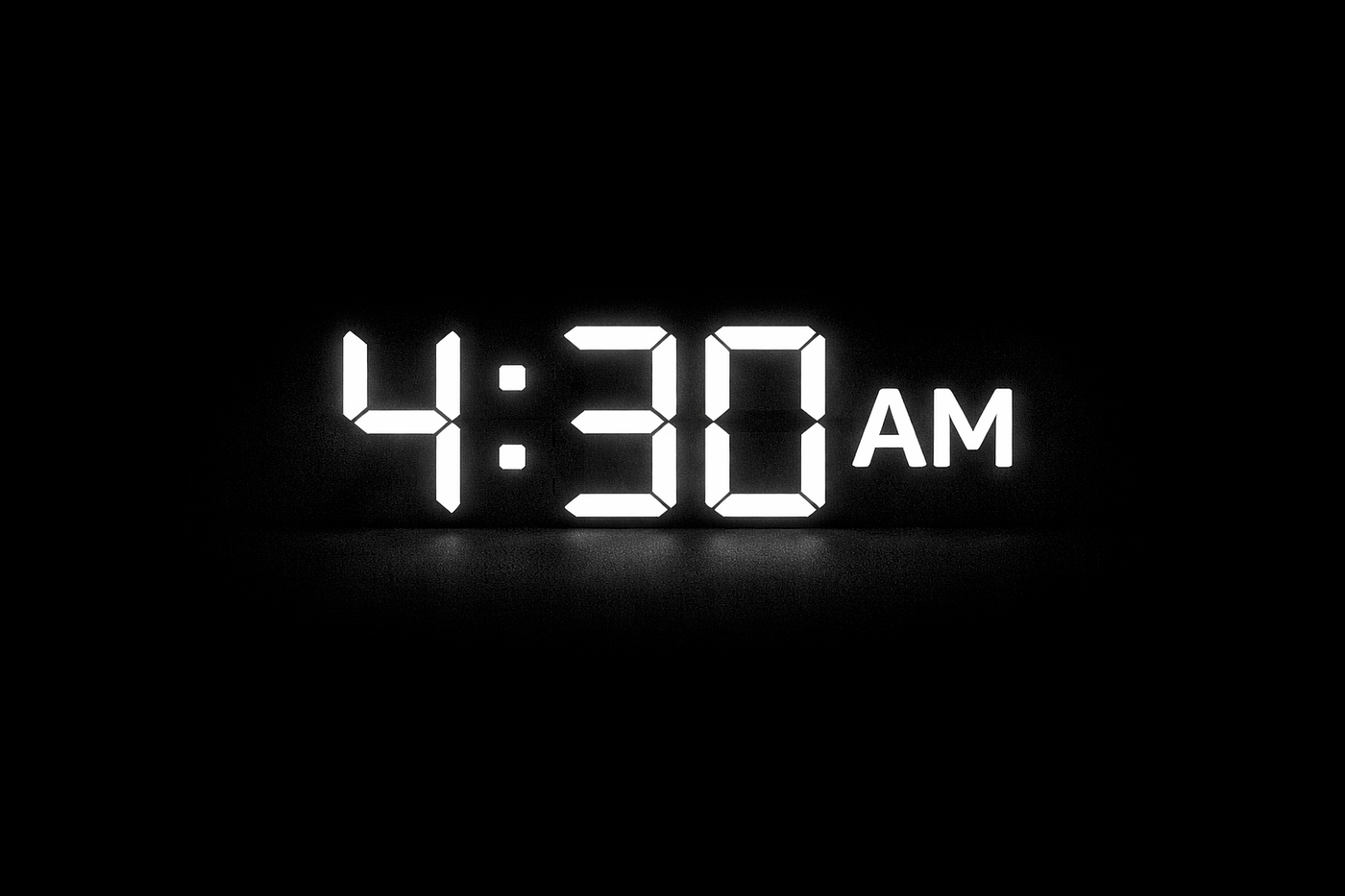
For me, it began with neglecting some of the most important aspects of self-care. I wasn’t sleeping enough. My stress levels were climbing. I was constantly focused on productivity and achievement rather than on recovery and balance.
Sleep, in particular, is something I’ve learned I cannot afford to ignore.
Many people view sleep as optional. They see it as something that can be sacrificed temporarily to reach a goal. For me, poor sleep is often one of the first warning signs that something is wrong.
As my sleep quality declined, my thoughts became faster. My confidence increased. My ideas seemed brilliant. I felt capable of accomplishing far more than usual.
At the time, it felt like motivation.
In reality, it was mania.
When Confidence Becomes Overconfidence
One of the most difficult things about mania is that it can disguise itself as success.
You feel energetic, productive, and capable.
The problem is that your judgment can become distorted.
I signed up for exams that, in hindsight, I should have given myself more time to prepare for. I believed I could simply power through the preparation process and make up for the lack of study time.
When you’re manic, every goal feels achievable.
Every challenge seems smaller than it really is, and every warning sign feels irrelevant.
The result is often a cycle of more ideas, more work, more ideas, you get the gist.
The Cost of Ignoring Mental Health
Mental health isn’t just about how we feel emotionally.
It affects our decisions.
It affects our judgment.
It affects everything.
When we neglect our mental health, the consequences don’t always appear immediately. Sometimes they show up weeks or months later.
For me, the warning signs were there:
- Poor sleep
- Constant pressure to achieve more
- Difficulty slowing down
- Taking on more commitments than I could realistically handle
I simply didn’t pay enough attention to them.
What I Learned
The biggest lesson was about self-care.
I realised that taking care of my mental health is not something I can postpone until after I’ve reached a goal.
It has to come first.
No certification, exam score, language milestone, or professional achievement is worth sacrificing my stability.
Today, I pay much closer attention to the basics:
Sleep
Sleep is non-negotiable.
If I’m not sleeping well, I treat it as important information rather than an inconvenience.
Stress Management
Stress doesn’t disappear when we ignore it.
I’ve learned that regular breaks, journaling, and simply slowing down can make a significant difference.
Self-Awareness
Living with bipolar disorder means learning to recognise patterns.
If I notice racing thoughts, excessive confidence, or an urge to take on too many projects at once, I stop and ask myself an important question:
“Am I in the driver’s seat, or have I been pushed to the passenger seat?”
Asking for Help
There is strength in reaching out when you need support.
Whether it’s a friend, family member, therapist, psychiatrist, or support group, having people who can provide perspective is invaluable.
Success is nothing without Stability.
We often celebrate achievement without asking what it cost.
I’ve come to realise that true success isn’t about how many goals you can achieve at once.
It’s about building a sustainable life.
The DELF B2 and CILS B1 taught me more than language skills. They reminded me that mental health isn’t something that can be put on hold while pursuing ambitious goals.
If you’re striving toward something important, whether it’s learning a language, advancing your career, or pursuing a personal dream, don’t forget to take care of yourself along the way.
Most importantly, remember that sometimes the most productive thing you can do is rest.
Your mental health is not an obstacle to your goals.
It’s the foundation that makes those goals possible.
메타데이터
- post_id
- 6fc4f8d2cc16
- slug
- i-thought-i-was-being-ambitious-it-turned-out-i-was-having-a-manic-episode-6fc4f8d2cc16
- url
- https://medium.com/@evelynna03/i-thought-i-was-being-ambitious-it-turned-out-i-was-having-a-manic-episode-6fc4f8d2cc16
- canonical_url
- https://medium.com/@evelynna03/i-thought-i-was-being-ambitious-it-turned-out-i-was-having-a-manic-episode-6fc4f8d2cc16
- author_url
- https://medium.com/@evelynna03
- status
- ok
- fetched_at
- 2026-06-10 18:44:10