AI in Baseball: How Data, Computer Vision, and Automation Are Changing the Game
AI in baseball is no longer a futuristic concept or a niche experiment tucked inside an analytics department. Across Major League Baseball…
AI in Baseball: How Data, Computer Vision, and Automation Are Changing the Game
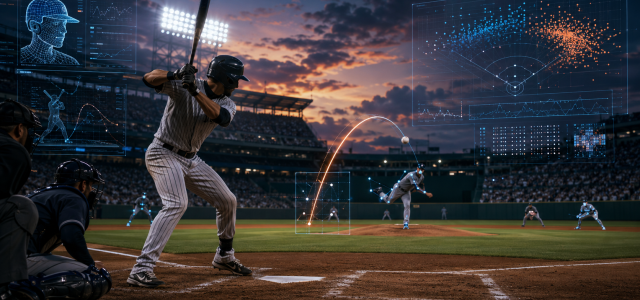
AI in baseball is no longer a futuristic concept or a niche experiment tucked inside an analytics department. Across Major League Baseball, artificial intelligence, computer vision, machine learning, and advanced data infrastructure are reshaping how teams evaluate players, develop talent, improve fan experiences, operate stadiums, and even support officiating. From Statcast-powered tracking systems to AI-assisted customer feedback analysis, baseball has become one of the clearest examples of how data science can transform both the product on the field and the business around it.
A Human-First View of AI in Baseball
In a recent ODSC Ai X Podcast conversation, Neil Weiss, Chief Information Officer of the Cleveland Guardians, described technology as a necessary competitive advantage for smaller-market teams. The Guardians cannot always compete with the league’s biggest payrolls, so they have to “be better at everything else,” including how they use data, technology, and people. As Weiss put it, “Technology is a huge leverage point for us, and it has been for a long time, and it continues to be, and it always will be.”
That mindset captures the most important point about AI in baseball: the technology is not replacing the sport’s human expertise. It is expanding what coaches, analysts, operations teams, and front-office leaders can see, test, and act on. Weiss summarized it well when discussing player development: “There aren’t computers doing the work. There’s computers and data enabling human beings to do the work.”
From Moneyball to Machine Learning
Baseball’s relationship with data long predates the current AI boom. The sport helped popularize modern sports analytics through sabermetrics, on-base percentage, and the Moneyball era. But today’s AI in baseball goes far beyond spreadsheets and historical statistics. Modern systems can track the ball, bat, and players in extraordinary detail, producing data streams that can be used for player evaluation, biomechanics, strategy, broadcast graphics, and fan engagement.
MLB’s Statcast system is central to this transformation. According to MLB, Statcast is now powered by Hawk-Eye’s high-speed camera system, which provides expanded tracking capabilities, including biomechanical tracking and bat tracking data such as swing speed and swing path. MLB notes that each club has 12 Hawk-Eye cameras arrayed around its ballpark. Google Cloud has also described Statcast as a decade-long data foundation that now supports AI-driven opportunities for fan experiences and team analytics.
This matters because AI systems need high-quality data. In baseball, that data includes pitch velocity, spin rate, exit velocity, launch angle, route efficiency, swing path, defensive positioning, and much more. The result is a richer understanding of how the game is played and how players can improve.
Computer Vision and Player Development
One of the biggest applications of AI in baseball is player development. Teams increasingly use computer vision, high-speed cameras, and biomechanical analysis to understand how athletes move. This can help coaches identify mechanical inefficiencies, reduce injury risks, improve pitch design, and translate complex motion data into practical coaching cues.
Weiss described how high-frame-rate video can help teams analyze a hitter’s force, movement, and contact mechanics, then translate those insights into coaching that improves outcomes like bat-to-ball contact and exit velocity. This is where AI becomes especially powerful: not as a black box making decisions, but as a tool that turns complex physical events into patterns coaches can understand and players can apply.
For pitchers, similar technologies can support pitch design, arm-path analysis, release-point consistency, recovery programs, and injury rehabilitation. For fielders, tracking data can help evaluate route efficiency, first-step quickness, positioning, and catch probability. On the public-facing side, Baseball Savant makes many Statcast metrics accessible to fans and analysts, including measures such as Outs Above Average and Fielding Run Value.
AI and the Fan Experience
AI in baseball is also transforming the business side of the sport. Teams are using data to understand what fans value, where friction exists, and how game-day experiences can be improved. That includes everything from parking and concessions to ticketing, service recovery, crowd flow, and stadium safety.
In the podcast, Weiss described how the Guardians use incident management data to understand patterns inside the ballpark, such as where fans may be experiencing dehydration on hot days. That information can guide decisions about misting stations, water access, and messaging. He also explained how AI tools can analyze thousands of survey responses in minutes, helping teams identify themes such as parking issues, food complaints, or positive fan feedback much faster than manual spreadsheet review.
Generative AI and agentic systems are beginning to play a role as well. AI assistants can help fans renew tickets, get basic game-day information, or self-serve routine questions. The goal, when done well, is not to eliminate human service teams. It is to let people who prefer self-service move quickly while freeing human representatives to spend more time with fans who need personal support.
Officiating, Automation, and the Future of the Game
AI and tracking technology are also entering the rules and officiating conversation. MLB announced that the Automated Ball-Strike Challenge System will be used beginning in the 2026 season across Spring Training, regular season, and postseason games. Under the challenge format, human umpires continue calling balls and strikes, but players can challenge certain calls using the automated system.
This hybrid model reflects a broader pattern in AI adoption: the most practical systems often combine machine precision with human judgment. Baseball is deeply traditional, and the best uses of AI will likely be those that improve accuracy, speed, safety, and experience without stripping away the human character of the game.
FAQ: AI in Baseball
How is AI used in baseball today?
AI in baseball is used for player tracking, pitch analysis, swing analysis, scouting, injury prevention, fan feedback analysis, ticketing, stadium operations, and officiating support.
Is AI replacing baseball coaches or scouts?
No. In most cases, AI supports coaches, scouts, and analysts by surfacing patterns faster and providing better data. Human judgment remains central to decisions about talent, development, and strategy.
What is Statcast’s role in AI in baseball?
Statcast provides the tracking data that powers many modern baseball analytics use cases, including pitch metrics, batted-ball data, player movement, defensive metrics, and bat tracking.
What’s Next for AI in Baseball
The future of AI in baseball will be defined less by flashy tools and more by practical integration. The biggest gains will come from teams that connect data to real outcomes: healthier players, better coaching, smarter roster decisions, smoother ballpark operations, and more compelling fan experiences. As Weiss noted, organizations need to focus on “process and people and outcomes” rather than using technology simply because it seems exciting.
For baseball, that may be the real lesson of the AI era. The teams that win will not simply be the ones with the most data. They will be the ones who know how to turn that data into better decisions, better experiences, and better performance.
메타데이터
- post_id
- 6fc5dd73b4ab
- slug
- ai-in-baseball-how-data-computer-vision-and-automation-are-changing-the-game-6fc5dd73b4ab
- url
- https://medium.com/@odsc/ai-in-baseball-how-data-computer-vision-and-automation-are-changing-the-game-6fc5dd73b4ab
- canonical_url
- https://medium.com/@odsc/ai-in-baseball-how-data-computer-vision-and-automation-are-changing-the-game-6fc5dd73b4ab
- author_url
- https://medium.com/@odsc
- status
- ok
- fetched_at
- 2026-06-09 19:06:51