Git & GitHub: The Complete Guide Every Developer Should Know
By School of IT Skills, MSDC | Manipal
Git & GitHub: The Complete Guide Every Developer Should Know
By School of IT Skills, MSDC | Manipal

Introduction
If you have ever written code, worked on a project with friends, or accidentally deleted an important file, you have already faced the problem that Git was designed to solve.
Today, Git and GitHub are among the most essential tools in modern software development. Whether you are building websites, mobile applications, machine learning models, or contributing to open source projects, understanding Git and GitHub is no longer optional — it is a fundamental skill.
Many beginners think Git is just a collection of commands that developers memorize. In reality, Git is much more than that. It is a powerful version control system that enables developers across the world to collaborate, experiment, and build software efficiently.
In this article, we will explore Git and GitHub from the ground up, understand why they matter, and learn how they transform the way software is built.
What Exactly Is Git?

Git is a distributed version control system created by Linus Torvalds, the creator of Linux, in 2005.
At its core, Git helps developers:
- Track changes in code.
- Maintain multiple versions of a project.
- Collaborate with teams.
- Restore older versions when mistakes happen.
- Experiment safely without breaking the main project.
Think of Git as a “time machine” for your code.
Instead of saving files like:
project_finalproject_final_v2project_final_latestproject_final_final_really_final
Git stores every meaningful change in an organized history, allowing you to move backward or forward whenever needed.
Why Do Developers Need Version Control?

Imagine building an application over six months.
You add new features, fix bugs, redesign interfaces, and optimize performance. Suddenly, a new update breaks everything.
Without version control, recovering older code becomes a nightmare.
Git solves this problem by keeping a detailed record of:
- Who made changes.
- What was changed.
- When the changes were made.
- Why the changes were introduced.
Version control provides:
✅ Safety
✅ Collaboration
✅ Transparency
✅ Backup
✅ Productivity
Git vs GitHub: Understanding the Difference

One of the most common misconceptions among beginners is that Git and GitHub are the same thing.
They are not.
GitGitHubA version control systemA cloud platformWorks locally on your computerStores repositories onlineTracks changes in codeEnables collaborationCommand-line basedProvides a graphical interface
In simple terms:
Git is the engine. GitHub is the garage where you park and share your projects.
Git can exist without GitHub, but GitHub depends on Git.
What Is a Repository?

A repository, often called a “repo,” is a storage space that contains:
- Source code
- Images
- Documentation
- Configuration files
- Project history
To create a Git repository:
git initThis command initializes Git in your project folder.
The Core Git Workflow

Most developers follow a simple workflow:
Step 1: Create or modify files
Write code, add features, or fix bugs.
Step 2: Check changes
git statusThis shows which files have changed.
Step 3: Stage files
git add .This prepares files for committing.
Step 4: Commit changes
git commit -m "Added user authentication feature"A commit acts like a snapshot of your project.
Step 5: Push to GitHub
git push origin mainYour code is uploaded to GitHub.
Understanding Commits
A commit is one of Git’s most important concepts.
Think of commits as checkpoints in a video game.
Good commit messages:
✅ Fix login validation bug
✅ Add responsive navbar
✅ Optimize database queries
Bad commit messages:
❌ Update
❌ Changes
❌ Fixed stuff
Clear commit messages make collaboration easier and improve project history.
Branches: The Superpower of Git

Branches allow developers to work on new features without affecting the main codebase.
The default branch is often:
mainSuppose you want to build a dark mode feature.
Create a branch:
git checkout -b dark-modeNow you can experiment safely.
Once complete:
git merge dark-modeYour feature becomes part of the main project.
Branches encourage innovation while protecting stability.
Why GitHub Changed Software Development
GitHub transformed programming from an isolated activity into a collaborative ecosystem.
GitHub allows developers to:
- Host repositories.
- Collaborate with teams.
- Review code.
- Manage issues.
- Contribute to open source.
- Showcase portfolios.
- Automate workflows.
Today, millions of developers contribute to projects on GitHub every day.
Some of the world’s largest open-source projects — including frameworks, libraries, and tools — are maintained there.
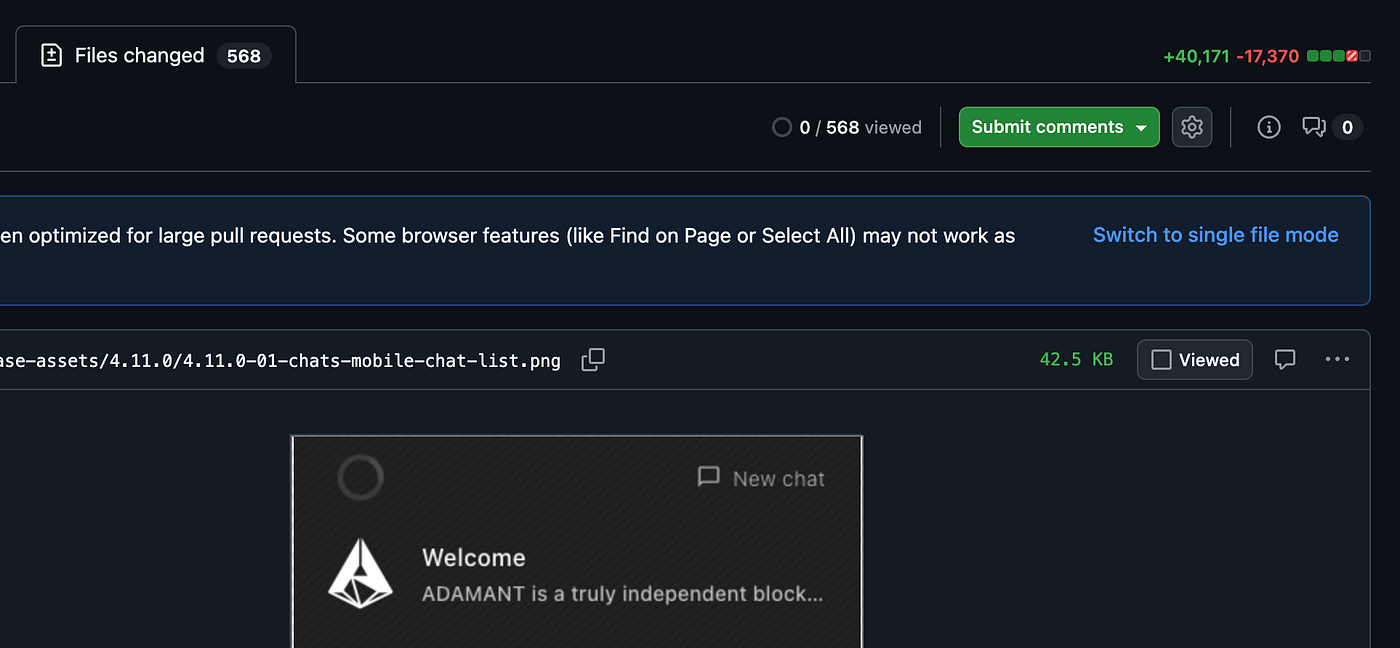
Pull Requests: Collaboration in Action
A Pull Request (PR) is a request to merge code into another branch.
Typical workflow:
- Create a feature branch.
- Make changes.
- Push changes to GitHub.
- Open a Pull Request.
- Team members review the code.
- Discuss improvements.
- Merge the code.
Pull Requests improve:
- Code quality.
- Team communication.
- Documentation.
- Learning.
For many developers, reviewing Pull Requests becomes one of the fastest ways to improve coding skills.
The Power of Open Source
GitHub made open source accessible to everyone.
As a beginner, contributing to open source helps you:
- Read production-level code.
- Learn best practices.
- Build confidence.
- Expand your network.
- Improve your resume.
- Gain real-world experience.
You do not need to start by writing thousands of lines of code.
You can begin by:
- Fixing typos.
- Improving documentation.
- Reporting bugs.
- Testing features.
- Adding small enhancements.
Every contribution matters.
Essential Git Commands Every Developer Should Know
Initialize a repository:
git initClone a repository:
git clone <repository-url>Check status:
git statusAdd files:
git add .Commit changes:
git commit -m "message"Push code:
git push origin mainPull updates:
git pull origin mainCreate a branch:
git checkout -b feature-nameSwitch branches:
git checkout branch-nameMerge branches:
git merge branch-nameView commit history:
git logCommon Mistakes Beginners Make
Many developers struggle initially with Git because they:
- Commit too infrequently.
- Use unclear commit messages.
- Work directly on the main branch.
- Forget to pull before pushing.
- Ignore
.gitignore. - Fear merge conflicts.
The good news is that every developer — even experienced engineers — has made these mistakes.
Git is not difficult; it simply requires practice.
Tips to Become Better at Git
Here are a few habits that can dramatically improve your Git workflow:
- Commit small, meaningful changes.
- Write descriptive commit messages.
- Use feature branches.
- Learn how merges work.
- Explore open-source repositories.
- Read commit histories of popular projects.
- Practice Git daily.
The more you use Git, the more natural it becomes.
Final Thoughts
Git and GitHub are far more than tools — they are the foundation of modern software development.
They empower individuals to collaborate across continents, contribute to open source, and build software at an unprecedented scale.
Every application you use today — from social media platforms to operating systems — depends on version control in some way.
If you are beginning your journey as a developer, investing time in learning Git and GitHub will pay dividends throughout your career.
Because in software development, writing code is only half the journey.
Managing, sharing, and evolving that code is what turns a programmer into a professional developer.
Happy coding!
Blog written by
Ananya V Hegde Technical Trainer School of IT Skills, MSDC | Manipal
At the School of IT Skills, MSDC | Manipal, we believe that understanding AI is no longer optional — it is an essential skill for the future. The goal is not merely to keep pace with technology, but to harness it responsibly to innovate, solve meaningful problems, and create lasting impact.
메타데이터
- post_id
- 6fc8d7989c05
- slug
- git-github-the-complete-guide-every-developer-should-know-6fc8d7989c05
- url
- https://medium.com/@msdc.itskills/git-github-the-complete-guide-every-developer-should-know-6fc8d7989c05
- canonical_url
- https://medium.com/@msdc.itskills/git-github-the-complete-guide-every-developer-should-know-6fc8d7989c05
- author_url
- https://medium.com/@msdc.itskills
- status
- ok
- fetched_at
- 2026-07-15 14:13:45