The Confluence of Compassion: A Life Blueprint for Exploring “Common Good” and Self-Transcendence…
I. Introduction: The Convergence of the Universal Call for Common Good and Cosmic Compassion
The Confluence of Compassion: A Life Blueprint for Exploring “Common Good” and Self-Transcendence through Taoist Philosophy
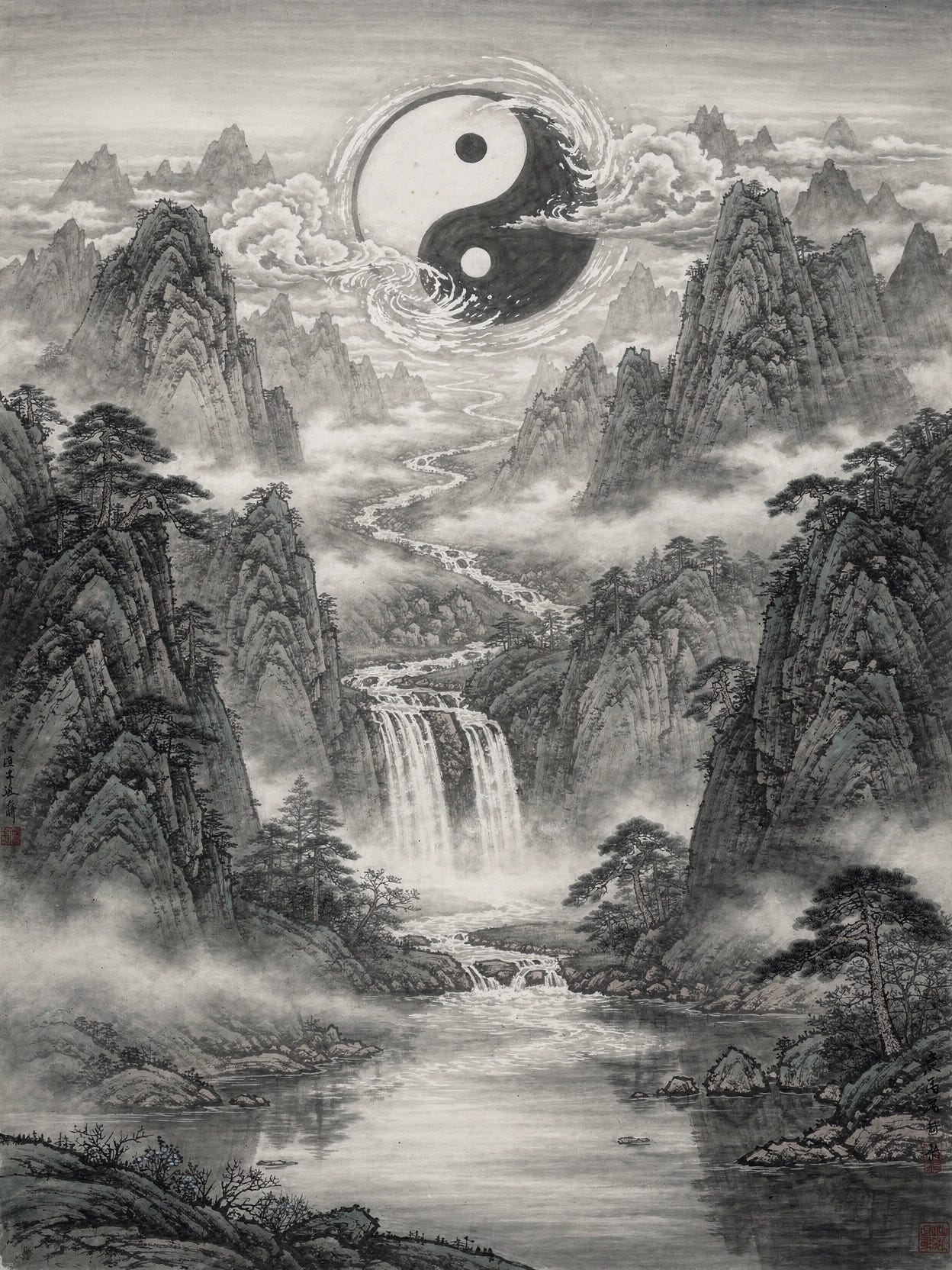
I. Introduction: The Convergence of the Universal Call for Common Good and Cosmic Compassion
Throughout the long and winding history of human civilization, we have always cherished a deep longing for peace, joy, and an ideal society. This longing transcends the barriers of race, culture, and region, becoming the core and most tender concern of major philosophical and religious traditions.The Second Vatican Council, in its “Gaudium et Spes” (Constitution of the Church in the Modern World), introduced the world to the divinely radiant definition of “The Common Good.” This elevates our understanding of “good” from the moral actions of a single individual to a systemic and structural level encompassing the “totality of the conditions of social life.” The Constitution compassionately states that these conditions must selflessly serve the entire social community and each of its members, with the ultimate goal of enabling every soul to “achieve self-realization relatively fully and easily.” This is a universal declaration that leaves no one out.。
When we approach this definition with reverence and gently place it within the vast context of Eastern Taoist philosophy, we are pleasantly surprised to discover a profound ontological resonance that transcends time and space.Taoist philosophy’s yearning for cosmic harmony, its compassion for the coexistence of all things, and its supreme wisdom of “governing by non-action” provide an extremely rich source of life and a practical path for this “sum of conditions for social life.” From the simple and profound Lao Tzu’s Tao Te Ching to Zhuangzi’s Nanhua Jing’s philosophy of carefree living and equality, the Taoist sages gently remind us that true “goodness” and the most perfect “sum of conditions” do not come from artificial coercion or cumbersome formalities, but rather from the flow, inclusiveness, and unconditional nourishment of conforming to the natural laws of the universe (i.e., the “Tao”).Through this spiritual dialogue that transcends faith and discipline, this article hopes to humbly and systematically explain how Taoist philosophy gently enriches the meaning of “common good,” and to examine how psychology, sociology, and various religious traditions, like rivers flowing into the sea, collectively point to a pure land on earth free from oppression and full of compassion.
II. Psychological Mechanisms of Social Living Conditions: Achieving Self-Realization Through Love
To deeply understand how the common good becomes the soil that nourishes life, we must first gently explore the role that “social living conditions” play in the subtle psychological mechanisms of humankind.All branches of modern psychology reveal a beautiful fact: our external social environment and our internal psychological state are always in a dynamic connection that reflects each other and is inseparable.
1. The expansion of cognition, behavior, and universal identity
Social psychology research tells us that the human psyche deeply craves a sense of belonging, and our behavior and identity are profoundly shaped by the groups and environments we inhabit. Tajfel’s theory of social identity states that identification with “us” is a basic life need. However, when a society’s living conditions are filled with exclusivity, antagonism, and the fear of scarcity,The boundaries of this “we” shrink, leading to callous tribalism and selfish incest. Conversely, if social conditions — including education, culture, and resource allocation — are filled with inclusiveness, love, and universal brotherhood, the boundaries of social identity will expand infinitely to all of humanity. This aligns perfectly with the Taoist ideals of “all things being one” and “the unity of heaven and humanity.” On this psychological foundation, conflict is eliminated, and the seeds of a harmonious world can sprout in everyone’s heart.
Batson’s “empathy-altruism hypothesis” further warms our perspective, confirming that when people are immersed in social conditions that foster genuine empathy, altruistic motivations with the ultimate goal of improving the well-being of others will naturally emerge. This means that the social conditions for the common good must be a set of cultural and institutional mechanisms that can continuously awaken and safeguard empathy. This perfectly echoes the Taoist virtue of “producing without possessing, acting without relying,” illustrating that when institutional design can stimulate innate human empathy, a natural flow of mutual assistance and compassion will emerge in social networks, rather than stemming from external moral preaching. Furthermore, the theories of “choice framing” and “nudge” in behavioral psychology also inspire us that through clever and benevolent environmental design, we can guide people to make choices that benefit themselves and the whole without depriving individuals of their freedom. This is similar to the Taoist principle of “governing by non-action,” which follows nature, avoids artificial intervention, reduces the internal friction of the human mind, and makes kindness and mutual assistance the most intuitive and natural preset options for society, allowing social order to operate smoothly in harmony.
2. Hierarchy of Needs and the Development Space for Freedom from Fear
Abraham Maslow’s hierarchy of needs theory states that self-actualization is the highest aspiration of the human mind to grow towards the light. However, this beautiful flower must be rooted in the soil where basic needs such as physiological, safety, love and belonging, and self-esteem are gently satisfied.
The common good, as the “sum of social conditions,” has its most sacred and primary task: to ensure that every brother and sister in society no longer has to live in fear and trembling for basic survival and security. In a society where resource allocation is extremely skewed and rife with competition and exploitation, most suffering souls will be trapped in the struggle for survival at the bottom, unable to look up at the stars of self-realization. The Taoist philosophical ideas of “contentment prevents disgrace” and “few desires” are like a refreshing nectar, providing a psychological antidote to the ills of excessive consumption and resource plunder in modern society.It gently calls on us to let go of our greed for external things, to stop exploiting and harming others, so as to preserve enough space for survival and development for all members of society and even the entire Earth’s ecology, so that every life can “relatively and easily” shine its own light.
III. The Dao gives birth to them, and Virtue nourishes them: A cosmological ontology of social living conditions
By gently placing the definition of “common good” within the profound perspective of Taoist philosophy, we are struck by the realization that the “sum of conditions” is far more than a cold accumulation of human social systems; it is an extension of the boundless compassion of the universe. Chapter 51 of the Tao Te Ching tenderly states: “The Tao gives birth to them; Virtue nourishes them; things take shape; circumstances bring them to completion. Therefore, all things honor the Tao and value Virtue.” Here, “Tao” is the source of the continuous life and unity of all things in the universe; while “Virtue” is the manifestation of this primordial love in concrete existence — the gentle force that unconditionally nourishes and nurtures the growth of all things.
Universal Virtue: The Most Perfect Cradle of Life
In the Taoist cosmology, which is characterized by a sense of unity, all things are born from the same pure “qi,” and are therefore fundamentally equal and mutually embracing. Nature (the manifestation of Tao and virtue) provides the most perfect and selfless environment for all things to grow, which is the cosmic prototype for the ideal “living conditions” that human society constructs. Lao Tzu used the most beautiful language to describe this virtue of nature: “It nurtures and sustains, it matures and protects, it nourishes and covers. It gives birth to them without possessing them, it acts without claiming credit, it nurtures them without dominating them; this is called profound virtue.”
This profound virtue, known as “Xuande,” paints an ultimate blueprint for ideal social living conditions:
First of allUnconditional nourishment (giving birth without possessing)An ideal social structure and natural environment should provide all the support needed for life to grow, like a loving mother, but should never regard these vibrant lives as property that can be privately owned, controlled, or exploited.
followed bySelfless dedication (doing without claiming credit)The operation of all systems and the provision of public services should stem purely from a deep concern for the well-being of all life, rather than from the vanity of the rulers or the private interests of the privileged class.
FinallyUncontrolled guidance (growth without control)The sole purpose of social order is to assist and accompany the growth of individuals, not to exercise autocratic domination and suffocating oppression.
When human society can humbly emulate this “profound virtue” in its governance, we can create the sum of conditions on earth that best aligns with the “common good.” In this ecological and social network filled with compassion, support, and inclusiveness, every group and individual no longer needs to expend precious life energy to resist oppression and injustice, and can thus peacefully and “relatively and easily” display the most beautiful aspects of life, achieving true self-realization.
IV. Absolute Justice and Dignity: The Theory of Equality of All Things and the Systemic Justice of Heaven and Earth’s Indifference
The definition of the common good contains a particularly moving emphasis on the well-being of “social groups and each of their members” (or as individuals). This means that true good must be built upon absolute equality that leaves no single life behind. Daoist philosophy, through Zhuangzi’s “On the Equality of Things” and Laozi’s “Heaven and Earth are not benevolent,” laid a profound and unshakeable foundation for this undifferentiated equality and the sacred and inviolable dignity of humankind.
1. The Theory of the Equality of Things: Dissolving Dual Oppositions and Embracing the Diversity of Life
In his “Discourse on the Equality of Things,” Zhuangzi wisely points out that the endless strife, oppression, and suffering in the world often stem from humanity’s narrow perspective, arbitrarily categorizing all things into binary categories of nobility and baseness, size, beauty and ugliness, good and evil. However, “from the perspective of the Dao, things have no inherent nobility or baseness.” If we can elevate our perspective to the macrocosm and compassion of the universe, we will understand that all life forms, all groups, and every unique individual are wondrous manifestations of the Dao, possessing absolute equality and irreplaceable intrinsic value.
This concept of “the unity of all things” possesses a revolutionary power to bring reconciliation and healing to the development of modern society. As the United Nations has passionately proclaimed in promoting initiatives such as the “International Decade for People of African Descent,” eliminating racism and systemic discrimination is a prerequisite for building a world full of equality and dignity. Taoist philosophy gently yet firmly reminds us that any discrimination and prejudice based on skin color, class, gender, wealth, or belief violates the laws of universal harmony. A society truly committed to the common good must bravely break down these artificially constructed class barriers and passionately acknowledge and safeguard the inalienable sacred dignity in every individual’s life. Under the warm glow of “the unity of all things,” differences between individuals are no longer cold standards for dividing classes and allocating resources, but are seen as beautiful elements enriching the garden of humanity as a whole.
2. Heaven and Earth are indifferent: the ultimate in fairness and selflessness, and a shield protecting the vulnerable.
Chapter 5 of the Tao Te Ching contains a famous saying that is often misunderstood: “Heaven and earth are ruthless, treating all things like straw dogs; the sage is ruthless, treating the people like straw dogs.” On the surface, this seems like a cold declaration, but when we carefully consider it, we will find that it actually expresses an ultimate fairness and love that transcends worldly bias.
The term “unfeeling” here means not falling into human bias or personal likes and dislikes. Heaven and earth treat all things as they would straw dogs used in sacrifices, providing them with the space and sunlight they need to grow, allowing them to develop naturally according to their nature; neither interfering excessively out of favoritism nor destroying them out of aversion.When this cosmic level of justice is applied to social governance, “the sage is not benevolent” means that rulers or public institutions must possess a clarity and selflessness that transcends any particular interest group or personal relationships.
Contemporary political philosopher John Rawls proposed the famous “Veil of Ignorance” thought experiment, arguing that if people make rules without knowing their future social status, they will inevitably tend to design fair systems that protect the most vulnerable groups.The Daoist concept of “Heaven and Earth being impartial” is precisely a cosmological version of this systemic justice. In a society with conditions conducive to the common good, the underlying logic of its laws, institutions, and resource allocation must be as objective, clear, and just as Heaven and Earth, showing absolutely no bias or favoritism based on an individual’s birth, wealth, race, or power. Only in such an absolutely safe and fair environment can the most vulnerable groups be spared from the exploitation and trampling of power, and can every life truly enjoy equal opportunities to pursue self-realization in peace.
V. Acting without acting: Creating empowering and peaceful social governance.
In exploring how to construct social conditions that facilitate self-actualization for members, we cannot avoid the choice of governance models. Modern society often painfully oscillates between “overly interventionist totalitarian control” and “cold-blooded laissez-faire extreme individualism,” causing countless anxieties and divisions. The Taoist philosophy of “Wu Wei,” with its unique and flexible wisdom, illuminates a third path for us to transcend this binary dilemma.
1. The psychological implications of non-action: the unobstructed flow of life.
We must understand that “wuwei” (non-action) is by no means passive inaction or shirking responsibility, but rather refers to “not acting recklessly” and “not forcing things,” a graceful action that does not violate the natural laws of development. From the perspective of contemporary cognitive science and behavioral psychology, the state of “wuwei” highly aligns with the “flow” state proposed by Mihaly Csikszentmihalyi, which is also known as the “optimal arousal level” in neuroscience.
When an individual is in a state of “non-action,” their actions are heartfelt, fluid, and perfectly resonate and harmonize with the world around them.In contrast, in modern society, when living conditions are filled with overly stringent performance evaluations, suffocating red tape, and rigid moral dogma (i.e., “governance by action”), individuals’ precious psychological energy is largely consumed in resisting these external pressures and anxieties. The soul is exhausted and unable to enter a state of creative flow.Therefore, in order to truly promote self-actualization, the sum total of conditions for the common good must strive to reduce these unnecessary institutional frictions and provide people with a psychological and social space where life energy can flow naturally and without distortion.
2. The principles of non-interference and subsidiarity in governance.
Extending the concept of “non-action” to the level of social governance, Lao Tzu depicted a deeply moving picture: “I do nothing, and the people transform themselves; I prefer stillness, and the people correct themselves; I am inactive, and the people become prosperous; I have no desires, and the people become simple.” This philosophy of governance resonates profoundly with the wise “Principle of Subsidiarity” in Catholic social teachings. The Principle of Subsidiarity gently advocates that higher-level social organizations (such as the state) should not overstep their bounds by interfering in the internal lives of lower-level organizations (such as communities and families) or individuals, but should instead play the role of a guardian, providing support and empowerment only when necessary to assist in their autonomous development.
In contrast to “governance through action,” which relies on power and relationships for rent-seeking, “governance through inaction” represents a spontaneous, bottom-up order. The primary responsibility of the government or the highest ruler is not micromanagement of everything, but rather, with a selfless heart, to maintain a stable, fair, and just systemic environment (i.e., upholding the macro-order of “Tao”), and to dedicate themselves to eliminating structural barriers that hinder individual development (such as resource monopolies, extreme poverty, and unjust class replication).After these obstacles are removed, the autonomy and creativity of life are returned to social groups and individuals.
As Harvard scholar Michael Sandel lamented in his reflections on the “tyranny of merit,” social systems that overemphasize brutal competition and winner-takes-all are relentlessly eroding the common good, plunging society into internal strife and alienation. The principle of “governing by doing nothing” firmly opposes this oppressive elimination mechanism. It advocates for the gentle wisdom of “non-competition,” allowing each individual to find their own meaning in life peacefully, according to their unique talents and rhythm, in a fear-free environment. Under such a social effect, internal strife is quelled, and the common good is no longer eroded by private interests, but becomes a solid foundation for the harmonious operation of society.
VI. The highest good is like water: the flow of compassion and the impartial distribution of justice.
The realization of the common good cannot merely remain at the level of abstract philosophical speculation or lofty governance concepts; it needs to be transformed into concrete resource allocation mechanisms and social support networks imbued with compassion and warmth. Lao Tzu used “water,” the softest yet most resilient element in the world, as a metaphor for the highest morality and ideal social operating mechanism, providing us with the clearest and gentlest guidance for building a pure land on earth.
1. Compassion flowing to the lowest levels: a robust social safety net
Chapter 8 of the Tao Te Ching left behind an eternal masterpiece: “The highest good is like water. Water benefits all things without striving, and dwells in places that others disdain. Therefore, it is close to the Tao.” The greatness of water and its proximity to the essence of the Tao lies in its ability to nourish all things without reservation, yet never vie for light or high position. What is even more moving is that water always flows silently to the lowest, darkest, and even most neglected or disliked places.
If we translate this profound wisdom into the design of social living conditions and distributive justice, it means that:A truly benevolent and ethical society must ensure that its resources, attention, policies, and love flow, like water, first to the lowest levels of society — embracing and supporting the poor, the sick, the elderly living alone, the marginalized, and the oppressed. This compassionate spirit perfectly aligns with the Catholic Church’s strong emphasis on “preferential option for the poor”; it also deeply resonates with Islam’s Zakat system, which is full of mutual aid, and Judaism’s sacred mission of “restoring the world” (Tikkun Olam).
In the East, the Confucian classic The Great Harmony similarly depicts this water-like blueprint of social welfare with a warm touch: “So that the elderly may have a place to end their days, the strong may have a place to use their talents, the young may have a place to grow, and the widowed, orphaned, lonely, and disabled may all be cared for.” When the sum total of a society’s conditions can truly, like water, gently yet firmly cover and support every individual about to fall, ensuring that the “hellish beings” of modern society are never abandoned in darkness, this society displays a compassionate “great mercy” akin to that of a Bodhisattva — like the gentle compassion of Avalokiteshvara Bodhisattva who hears the cries of suffering and the grand vow of Ksitigarbha Bodhisattva, “I will not become a Buddha until hell is empty.” Only in this way can the common good receive its most solid and immortal guarantee.
2. The Seven Virtues of Water: Accumulating Social Capital Filled with Love
Lao Tzu further refined the virtues of water into seven positive aspects: “Dwelling in a good place, having a deep and still heart, being kind and benevolent, speaking truthfully, governing justly, acting skillfully, and moving at the right time.” These seven virtues, like seven bright pearls, constitute the core elements of high-quality social capital, pointing us to the golden rules of interpersonal interaction and social operation.
In human connections, the principles of “being kind and benevolent, speaking with integrity” remind us that social interactions should be filled with selfless love and genuine trust. In today’s defensive world, rife with the “epidemic of loneliness,” this sincerity is the only antidote to rebuilding social trust and healing the coldness in people’s hearts. In public administration and economic operations, the principles of “just governance and efficient action” require us to pursue fairness, justice, and high-efficiency service, but we must always remain clear-headed, not regarding these achievements as capital for pride, but purely as a compassionate means to improve the well-being of all. At the same time, the social system must possess the wisdom of “acting wisely at the right time,” having a high degree of flexibility and adaptability like water, keenly perceiving the changes of the times and the joys and sorrows of the masses, and adjusting policies and the flow of resources in a timely and gentle manner.
By humbly emulating the seven virtues of water, our society can steadily safeguard the depth and humility of the mind (the mind is like a deep pool) while pursuing material wealth and technological progress. This ensures that the power of all material things and technologies ultimately serves human self-realization and happiness, and never becomes a cold tool that enslaves or devours humanity.
VII. Transcending the “Small Self”: From Self-Realization to Universal Harmony — Self-Transcendence
In the early framework of traditional Western psychology, “self-actualization” was often interpreted as the ultimate realization of personal potential and the maximization of personal value. However, when we reverently integrate the concept of “common good” with the profound spiritual wisdom of the East, such as Taoism and Buddhism, the connotation of self-actualization undergoes an incredibly beautiful transformation and sublimation. It no longer remains within the boundaries of the individual but points to the ultimate sacred realm of “self-transcendence.”
1. Losing Myself: Dissolving Egocentrism and Returning to Oneness
In his “Discourse on the Equality of Things,” Zhuangzi subtly reveals the supreme state of “losing oneself.” This is a kind of liberation that comes after a profound spiritual awakening. It means that, illuminated by wisdom, the individual is finally willing to let go of the “false self” (ego) constructed layer by layer by endless worldly desires, socially imposed labels, and deep-seated inner fears, thus releasing their gripping hands and peacefully returning to the “true self” that is one with the universal Tao. In the compassionate teachings of Buddhism, this is called a profound realization of “anatta” and “sunyata”; while in the grace of Christianity, it is the wondrous state praised by the Apostle Paul: “It is no longer I who live, but Christ who lives in me.”
We must painfully acknowledge that as long as human consciousness remains confined to the narrow, fear-ridden “ego,” society will inevitably descend into a quagmire of frantic resource competition and zero-sum games, and the common good will forever be relentlessly threatened by “self-interested egoism.” Only when each individual, supported by a well-developed and loving social environment, is no longer afraid of basic survival, dignity, and scarcity, can their minds find sufficient space for introspective spiritual exploration, thereby peacefully achieving the great leap from the ego to the greater self.
2. A harmonious dance between shared good and individual transcendence
Reassuringly, in his later years, Maslow, with greater wisdom, revised his hierarchy of needs theory, placing “self-transcendence” at the very top of the pyramid of human needs. In this sacred stage, profound individual happiness and peace no longer stem from the accumulation of wealth, fame, or achievements, but rather from the inexhaustible source of selfless dedication and dissolution towards a larger whole — whether it be society, the natural environment, the vast universe, or sacred faith. This perfectly corroborates the findings of contemporary neuroscience and ethical psychology: when the human brain engages in pure, selfless altruistic behavior, it experiences the deepest joy and an irreplaceable sense of meaning.
This is precisely the wondrous paradox revealed in Chapter Seven of the Tao Te Ching: “Is it not because of his selflessness that he is able to achieve his own ends?” When a person is willing to transform all their life energy into the compassionate spring rain, dedicating themselves to the great cause of promoting the “common good,” and acting selflessly for the well-being of the whole, they not only do not lose themselves in the process, but also achieve the ultimate and most perfect self-realization. In this state full of love, the high wall between the individual and the community collapses, the distinction between self-reliance and other-reliance dissipates, and the boundaries between the secular and the sacred merge. The entire society will transform into a vast organic life form full of love, wisdom, and compassion, resonating in unison with the universe.
VIII. A Symphony of Ultimate Visions: Peace, Great Harmony, a Pure Land on Earth, and the Hope for the Messiah
The deeper exploration and contemplation of the “common good” will inevitably guide our gaze towards the ultimate vision of human history and spiritual development. This beautiful vision, though expressed in different languages, symbols, and myths across diverse civilizations and belief traditions, reveals a striking and awe-inspiring unity in the peace, joy, and sacred order it depicts. It is a symphony composed from the very depths of the human soul.
Throughout Chinese history, Taoist thought has nurtured the vision of “Great Peace,” imbued with messianic redemption. In the compassionate conception of the Taiping Jing (Scripture of Great Peace), the future Great Peace will be an era that completely bids farewell to disease, disaster, exploitation, and oppression. There, society will function in perfect harmony with the rhythms of Heaven, Yin and Yang will be in balance, resources will be shared selflessly, and justice and public welfare will be fully realized. This is not only an absolute clarity of the political system but also a complete restoration of the lost order of the universe, where humanity and nature will finally reconcile and achieve perfect symbiosis.
This yearning for peace resonates with the “Great Unity” envisioned in the Confucian classic The Book of Rites. In such a society, “the world belongs to all” is not merely a slogan but a reality. Leaders are elected by the people for their genuine virtue and wisdom; every resource and every drop of sweat flows for the common good, never to be greedily hoarded by a few. The vulnerable receive comprehensive and gentle care, and trust among members of society is maximized. These two ancient visions together provide Eastern civilization with a brilliant blueprint for the highest level of human social living.
Turning our attention to Buddhism, the Pure Land school of thought, particularly Amitabha Buddha’s Pure Land, presents us with another ultimate and solemn expression of shared good. In this vision known as the “Earthly Pure Land,” all social conditions — whether it be a tranquil environment, beautiful sounds, a pleasant climate, or wise companions — exist solely for the purpose of gently helping all beings effortlessly eradicate inner afflictions and achieve ultimate enlightenment and liberation. It is worth pondering that the Pure Land school places great emphasis on salvation through “other-power” (Tariki), that is, relying on Amitabha Buddha’s unconditional compassionate vows. This inspires us that in the arduous process of building a harmonious world and promoting shared good, while human “self-power” (wisdom, policy, moral effort) is indispensable, we must humbly acknowledge the limitations of self-power in the face of the world’s profound structural evils and shared historical karma. When we recognize and accept the unconditional embrace of the vast “other-power” of the universe, we can be completely liberated from the heavy burden of anxiety and self-justification. From then on, every action we take to promote social change is no longer a struggle out of fear or anger, but a joyful repayment to the boundless and merciful grace of the universe that has always existed.
In the grand narratives of Abrahamic faiths (Judaism, Christianity, Islam), this ultimate social and cosmic restoration is affectionately referred to as the “Messianic Age” or the divine community. It is a sacred age where God’s love personally rules the earth, where lions lie docilely with lambs, swords of slaughter are forged into plowshares, and all oppression, cruelty, and injustice are replaced by eternal love and justice. This fervent yearning for ultimate world restoration (Tikkun Olam) resonates profoundly with the Taoist ideal of peace, the Buddhist ideal of Pure Land, and the Confucian ideal of Great Harmony, all resonating deep within the human heart. Transcending doctrinal differences, they become the most powerful driving force propelling the wheels of history forward, empowering us to overcome all despair and darkness.
IX. Conclusion: Let us build an ideal realm of love and light together with compassion and humility.
When we resonate with the lofty ideal of “common good” and the profound philosophy of Taoism and the wisdom of the world’s major sacred traditions, we clearly and deeply see a path to the fulfillment of life. This path gently yet firmly requires us to: in designing systems, emulate the selfless clarity and systemic justice of “Heaven and Earth are impartial”; in allocating resources, practice the profound compassion and humble humility of “the highest good is like water”; and in governing society, utilize the wisdom of “governing by non-action” to create a fearless and empowering space for development for every unique life.
We firmly believe that as these “total conditions of social life” gradually become complete through the collective efforts of humankind, every individual and group in society will no longer be coldly regarded as a competitor or a tool to be used and discarded at any time. Instead, they will be cherished as incomparably sacred and indispensable beautiful nodes in the endless network of life in the universe. In such a loving environment, self-realization will no longer be a difficult climb filled with blood and tears, but a “relatively complete and easy” natural bloom, like a flower in spring facing the warm sun. Ultimately, this beautiful self-realization will be sublimated into selfless self-transcendence in gratitude, converging into a force powerful enough to gently change the entire world, leading all humankind, hand in hand, to stride towards the promised Messianic era, the world of Great Harmony, and the Pure Land on earth.
Because we deeply understand that the true evolution of human civilization has never been about the endless plunder of material wealth, nor about the blind accumulation of cold technology; the pinnacle of civilization lies in the great consensus on truth and love deep within the human soul, and whether we are willing and able to transform this sacred consensus into a compassionate social condition that supports every life.
Humble declaration and gratitude dedication
I am keenly aware that, with my extremely limited understanding and knowledge, attempting to integrate the profound and extensive teachings of Catholic society, the mysteries of Taoist philosophy, the rigor of psychological science, and the vastness of the sacred visions of the world’s major religions is undoubtedly a foolish and presumptuous act. This article is by no means perfect. In its interpretations that cross between classics and theology, any omissions, misinterpretations, inaccuracies, biases, or crude simplifications of the rich connotations of various sacred traditions are all due to my lack of scholarship and shallow wisdom, and are by no means the fault of the respective schools of thought, classics, or sacred traditions themselves.
This article is merely a very small record of self-reflection and introspection from the author’s spiritual journey and academic exploration. Readers are kindly requested not to be attached to any of the literal wording — words are like a finger pointing at the moon, not the moon itself. Readers are earnestly requested to verify this through the original scriptures of various schools, the compassionate teachings of virtuous teachers, and their own sincere practice and conscience. If any viewpoint or terminology in this article offends or makes readers uncomfortable, it is entirely due to the author’s limited understanding and is not intended; the author sincerely asks for your forgiveness. (This article is welcome to be forwarded and shared by all, may wisdom and love spread.)
I am deeply grateful for the vast and boundless universe, for Mother Earth who gave us life, and for all the benefactors and kind teachers in my life.
Namo Amitabha Buddha
Assalamu Alaikum (السلام عليكم), may the Lord grant you peace.
God bless you.
Om Shanti Shanti Shanti (May there be peace, peace in three aspects: body, mind, and world).
May your life be as sparkling as the stars, filled with peace and joy every moment; may everything unfold naturally like a flower blooming, bringing you good fortune and fulfillment; may your pure heart blossom with hope, granting you all your wishes; may your life be as radiant as the full moon, forever blessed with happiness and completeness. Even after millions of years have passed and countless light-years have been traversed, my sincere blessings will forever remain with you.
메타데이터
- post_id
- 6fddd62f226e
- slug
- the-confluence-of-compassion-a-life-blueprint-for-exploring-common-good-and-self-transcendence-6fddd62f226e
- url
- https://medium.com/@eking8011/the-confluence-of-compassion-a-life-blueprint-for-exploring-common-good-and-self-transcendence-6fddd62f226e
- canonical_url
- https://medium.com/@eking8011/the-confluence-of-compassion-a-life-blueprint-for-exploring-common-good-and-self-transcendence-6fddd62f226e
- author_url
- https://medium.com/@eking8011
- status
- ok
- fetched_at
- 2026-07-09 13:13:48
