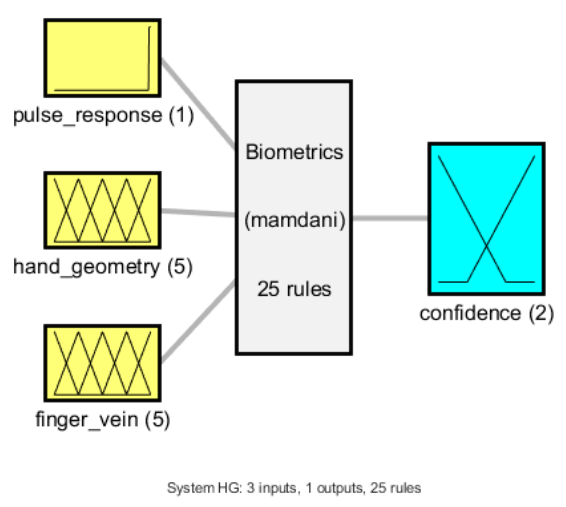
How to design a Fuzzy classifier in three hours without knowing the mathematics (part 1/6)
Link for part (2/6)…
How to design a Fuzzy classifier (inference system) in three hours without knowing the mathematics (part 1/6)
Link for part (2/6): https://medium.com/@reh.yawar2/how-to-design-a-fuzzy-classifier-in-three-hours-without-knowing-the-mathematics-0ff605dffdd9
Link for part (3/6): https://medium.com/@reh.yawar2/how-to-design-a-fuzzy-classifier-in-three-hours-without-knowing-the-mathematics-46b9e8038844
Link for part (4/6): https://medium.com/@reh.yawar2/how-to-design-a-fuzzy-classifier-in-three-hours-without-knowing-the-mathematics-d1b5d5d2e5f0
Link for part (5/6): https://medium.com/@reh.yawar2/how-to-design-a-fuzzy-classifier-in-three-hours-without-knowing-the-mathematics-part-5-6-9392ac902d45
Link for part (6/6): https://medium.com/@reh.yawar2/how-to-design-a-fuzzy-classifier-inference-system-in-three-hours-without-knowing-the-mathematics-76ef7ff4a0a1
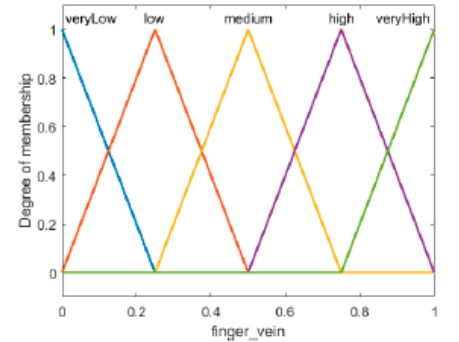
Fuzzification of finger vein system (Figure from the paper: https://doi.org/10.3390/electronics9111916)
(part 1/6)
Well, in the today’s web-log or blog as we say it, we will discuss about designing the Fuzzy classifier on real-world applications. I think this mathematics tool can be understood, learned, and practiced on any real-world application in three hours. A handy tool isn’t it. And this all would be done without knowing too much of mathematics.
I don’t know why I am focusing more on “the three hours”. Maybe I am a student who is used to attend all semester long classes and then needs to explain the concepts of the whole course in three hours to a very busy friend.
Friend: please help me in learning the Fuzzy course or else I will fail …
Me: yes my friend, I am here to guide you through the unseen terrain … don’t worry
Friend: I have three hours only
Me: three hours it is
Well, that was a very bad joke. Please ignore. Anyways, lets get down to business. Let us first discuss about the three Ws (double-you-es) that is Why, What, and How about the learning of the Fuzzy classifier and its application.
Why the Fuzzy thing?
Readers must be wondering that why we need to waste our time on this useless tool. Can it be of any use? The answer in my opinion is smiling YES :) … we can use this whether one is a final year student who is working on the final year project and needs to implement some sort of logic to make things work, a teacher who can evaluate the performance of a students in the class, a cattle farmer who needs to keep track of the relationship between the cattle feed and cattle weight, or a person who owns a hair (or web) designing business and needs to evaluate the feedback from the customers to make things better … there are many possible applications that we can create with this tool. Yes we can make this all work just like that in three hours.
What is this Fuzzy thing?
Lets unveil the Fuzzy world by taking a journey into everyday intelligence …
In our daily lives, we navigate a sea of vague, qualitative, and imprecise terms like “small,” “hot,” or “around 2 o’clock.” Surprisingly, these basic linguistic elements support complex human actions and decisions, influencing everything from process control and driving to financial choices and legal judgments. The significance of these imprecise terms and their processing mechanisms cannot be overstated; they play a pivotal role in shaping our everyday experiences.
Traditional concepts and classical mathematics fall short in providing adequate mathematics for designing such models that can understand these vague linguistics elements. So, is it possible to make a mathematical model that can understand our day to day language semantic of language and translate this concept to computers? Luckily the answer is Yes.
The year 1965 marked a groundbreaking moment with Professor Lotfi A. Zadeh’s paper, “Fuzzy Logic,” laying the foundation for the Fuzzy Set Theory. The subsequent decades witnessed the integration of Fuzzy Logic into various domains:
1970: Fuzzy Logic finds application in Control Engineering.
1975: Japan makes a significant entry into the Fuzzy Logic scene.
1980: Empirical verification of Fuzzy Logic gains traction in Europe and Japan.
1995: The USA intensifies interest and research in Fuzzy Logic.
2000: Fuzzy Logic becomes a standard technology, widely applied in business and finance.
Fuzzy Logic, is a branch of mathematics that enables computers to model the real world just as humans do. It offers a straightforward approach to handling vague, ambiguous, imprecise, or noisy input or knowledge.
Fuzzy Logic uses a rule-based methodology to solve problems, departing from traditional mathematical modeling. For instance, in the Fuzzy Logic system can be made by making the rules for the control of an industrial furnace, if the temperature is hot, then the pressure is elevated; if the temperature is cold, then the pressure drops significantly.
The key difference between the Fuzzy and Boolean Logic
In the realm of Boolean Logic, every statement is confined to the binary world — true or false, with a truth value of 1 or 0. Boolean sets adhere to rigid membership requirements, demanding absolute inclusion or exclusion. However, there exists a paradigm shift with the introduction of Fuzzy sets, bringing a more flexible approach to membership.
In stark contrast to the binary nature of Boolean sets, Fuzzy sets embrace a more flexible membership criterion. Here, elements are not strictly confined to an all-or-nothing relationship with a set; instead, they can possess partial membership. Everything becomes a matter of degree, introducing a spectrum where elements can belong to a set to varying degrees or values.
Fuzzy sets thrive on the concept of degrees of membership, acknowledging that elements can exhibit partial belonging. This departure from the binary nature of Boolean Logic allows for a richer representation of real-world scenarios, where not every assertion is a definitive truth or falsehood.
As we dive deeper into the principles of Fuzzy Logic, we will know that the Boolean Logic can be perceived as a subset of Fuzzy Logic. While Boolean Logic provides absolute certainty and precision, Fuzzy Logic accommodates the inherent uncertainties of the real world, treating exact reasoning as a limiting case of approximate reasoning. This can be understood with the help of the following figures.

Figure 1: an example of a Boolean system

Figure 2: an example of a Fuzzy system
We can understand the Boolean system with help of the figure shown in Figure 1. If in a subject a student obtains [0, 80] percent marks, the student will be assigned with the 0 value (or degree) of the membership function. The name of the membership function in this example is Intelligent students. However, when a student obtains [81, 100] percent marks, he will be assigned with the membership value (or degree) of 1. There would not be other state or value or degree of the membership function. Well, this is how in academics the student test papers are evaluated and I think it shows the amount of time the student spend in studies. I think there is no correlation between the student grades and intelligence. Intelligence in not quantitative, means we cannot measure the level of intelligence.
Anyways, on the other hand, as shown in the Figure 2 a degree of membership function will be assigned if the student get marks in the range [70, 100] percent. At 80% the membership value assigned to the students is 0.5. At 90% marks the membership value is 1 and from 90% to 100% the membership value remains 1. In conclusion, Fuzzy allows us to assign the richer representation of a process by assigning the membership values in range [0, 1] instead of the definite values of 0 and 1.
Further in this topic we will explore more about the Fuzzy Logic and its applications and understanding how it shapes the intelligence of systems in our daily lives.
* From the lecture notes of my respected teacher Professor Dr. Mukhtar Ali Unar Sahib
메타데이터
- post_id
- 6ff552132bbe
- slug
- how-to-design-a-fuzzy-classifier-in-three-hours-without-knowing-the-mathematics-6ff552132bbe
- url
- https://medium.com/@reh.yawar2/how-to-design-a-fuzzy-classifier-in-three-hours-without-knowing-the-mathematics-6ff552132bbe
- canonical_url
- https://medium.com/@reh.yawar2/how-to-design-a-fuzzy-classifier-in-three-hours-without-knowing-the-mathematics-6ff552132bbe
- author_url
- https://medium.com/@reh.yawar2
- status
- ok
- fetched_at
- 2026-06-09 15:37:30