When users hate the pipe: NTT Docomo’s financial pivot amid network anger and tariff hints
- Series: Japan Fintech Layers
When users hate the pipe: NTT Docomo’s financial pivot amid network anger and tariff hints
-
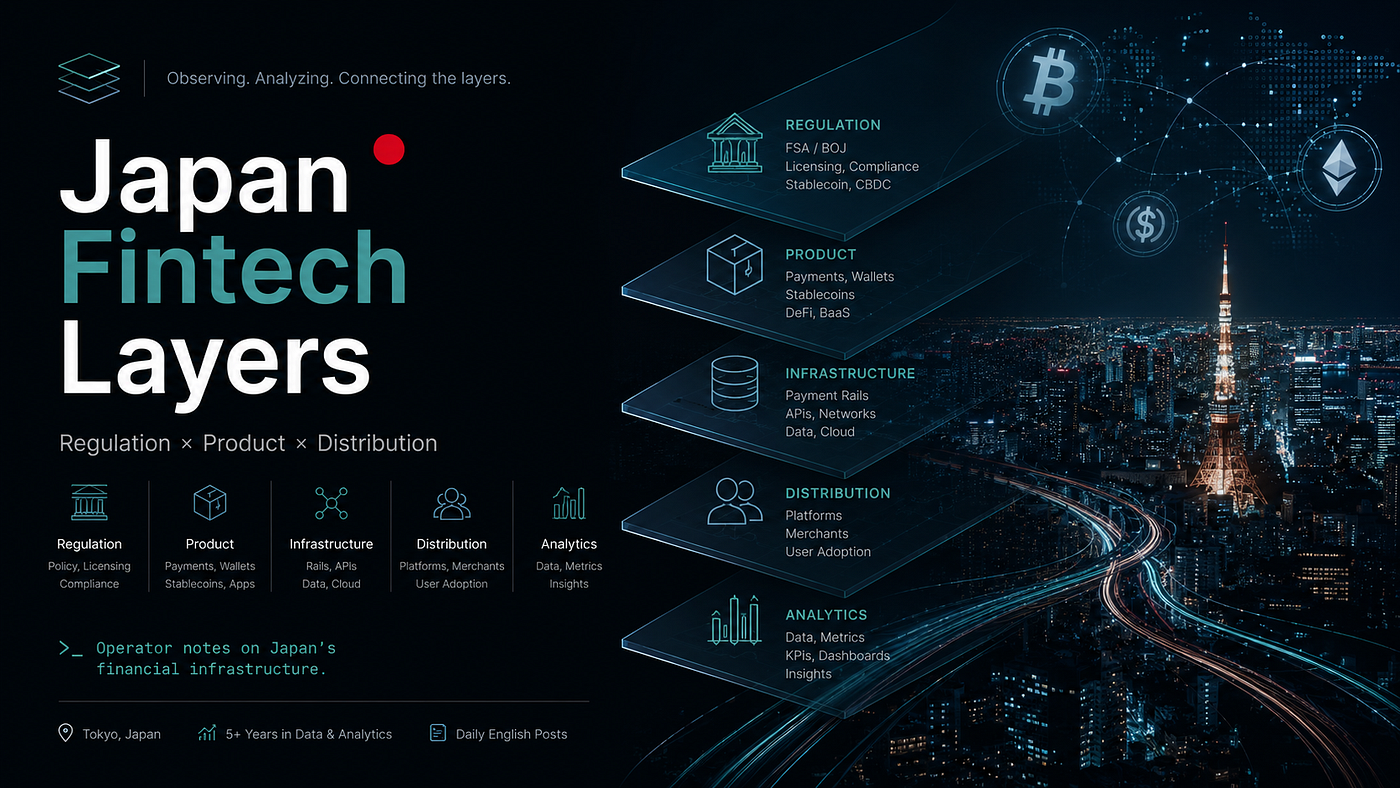
Series: Japan Fintech Layers
-
Series tagline: Regulation × Product × Distribution
-
Date: 2026–05–10
-
Source: https://news.yahoo.co.jp/articles/c4614353bc014f24fb4fab4cb7223bbcd78663bd (CNET Japan via Yahoo!ニュース)
-
Topic: NTT Docomo / telecom profitability / financial group spin-up / trust vs cross-sell
-
Tags: ntt, docomo, telecom, fintech, japan, strategy
-
Positioning: Platform Strategy + Trust Risk
## Why this matters
Japanese mega-carriers are trying to rewrite their growth story around finance and AI.
Yet public sentiment around NTT Docomo suggests a brutal mismatch: management is signaling structural pivots and potential tariff adjustments, while customers anchor trust on something far simpler — radio quality that works where they live.
That tension is not a PR issue alone. It is a distribution and consent problem for any cross-sell motion into banking-like products.
## Key facts from the article
Per CNET Japan coverage of NTT Docomo president Maeda Yoshiki’s FY2025 results briefing (May 8):
-
Maeda said the company must consider how to revise pricing overall — language that keeps existing-plan increases on the table (“考えていかなければいけない”).
-
Docomo had not followed peers with blanket hikes across all legacy plans: KDDI moved in 2025; SoftBank is doing so in 2026. Maeda stressed there was no single blocker preventing hikes — rather, about 25 old and new plans coexist, each with different terms, so a uniform increase is not a simple fix (operations and system changes matter).
-
Cost pressure was acknowledged: various costs are rising, and the need for price adjustments was not denied; timing is still under review.
-
Docomo MAX (launched June 2025) has already driven effective ARPU uplift via migration to large-data tiers and bundled “pick-two” perks (e.g. streaming). Subscribers exceeded 3 million by March 2026; high-capacity plan share rose from 25% (FY2024 end) to 31% (FY2025 end). Handset ARPU is targeted at JPY 4,010 in FY2026 (+JPY 50 YoY).
## Additional context (broader reporting and sentiment)
-
Group-level targets and a July launch of NTT Docomo Financial Group (finance / AI focus) have appeared in related Japanese coverage; pair with primary-source pricing signals above when framing strategy.
-
Public commentary often contrasts network-quality frustration with tariff talk — useful as a distribution and trust lens even when not quoted in the CEO briefing piece alone.
## My analysis
### 1) The dumb-pipe trap makes finance look like an escape hatch
Telecom infrastructure demands relentless capex — spectrum, densification, legacy maintenance — while pricing power remains politically sensitive and competitively constrained.
When the core service feels commoditized on upside but expensive on downside, operators naturally hunt for margin layers above connectivity. A standalone financial group can look like governance hygiene and capital clarity — but markets will still ask whether it is strategy or symptom.
### 2) Lost trust in the core product collides with finance’s minimum viable credibility
Finance is not just another bundled SKU. It requires durable belief that the institution will not monetize friction, mishandle outages, or prioritize promotion over stability.
If customers experience the carrier’s primary promise as unreliable, cross-selling loans, wallets, or wealth features risks converting distribution advantage into reputational drag — especially when tariff hikes are simultaneously on the table.
### 3) Incumbent ecosystems raise switching costs; subsidies may not be affordable
Japan already hosts tightly integrated retail-fintech ecosystems with habitual user pathways and reward mechanics.
Winning meaningful financial share from those rails typically demands expensive acquisition mechanics or unusually crisp product-market fit. If the balance sheet is already stressed enough to consider raising mobile prices, the “subsidy war” route becomes structurally uncomfortable.
## What operators should watch next
-
Will NTT Docomo Financial Group lead with trust primitives (transparent SLAs, outage accountability, simple dispute paths) before pushing enrollment funnels?
-
How will tariff changes interact with churn and ARPU — does revenue recovery accelerate, or does it leak subscribers into rivals?
-
Can AI-led personalization convert without triggering privacy backlash in a market already sensitive to carrier power?
Strategic question: If you were designing Docomo’s first financial product wave, what single proof point would you ship before any price increase so customers accept that you deserve a second wallet relationship?
## One-line takeaway
A pivot to finance can amplify a telecom’s story — or expose it — because connectivity trust is the substrate on which every bundled financial relationship still rests.
메타데이터
- post_id
- 6ff9ea1b6029
- slug
- when-users-hate-the-pipe-ntt-docomos-financial-pivot-amid-network-anger-and-tariff-hints-6ff9ea1b6029
- url
- https://medium.com/@bo4911/when-users-hate-the-pipe-ntt-docomos-financial-pivot-amid-network-anger-and-tariff-hints-6ff9ea1b6029
- canonical_url
- https://medium.com/@bo4911/when-users-hate-the-pipe-ntt-docomos-financial-pivot-amid-network-anger-and-tariff-hints-6ff9ea1b6029
- author_url
- https://medium.com/@bo4911
- status
- ok
- fetched_at
- 2026-06-14 13:58:26



